

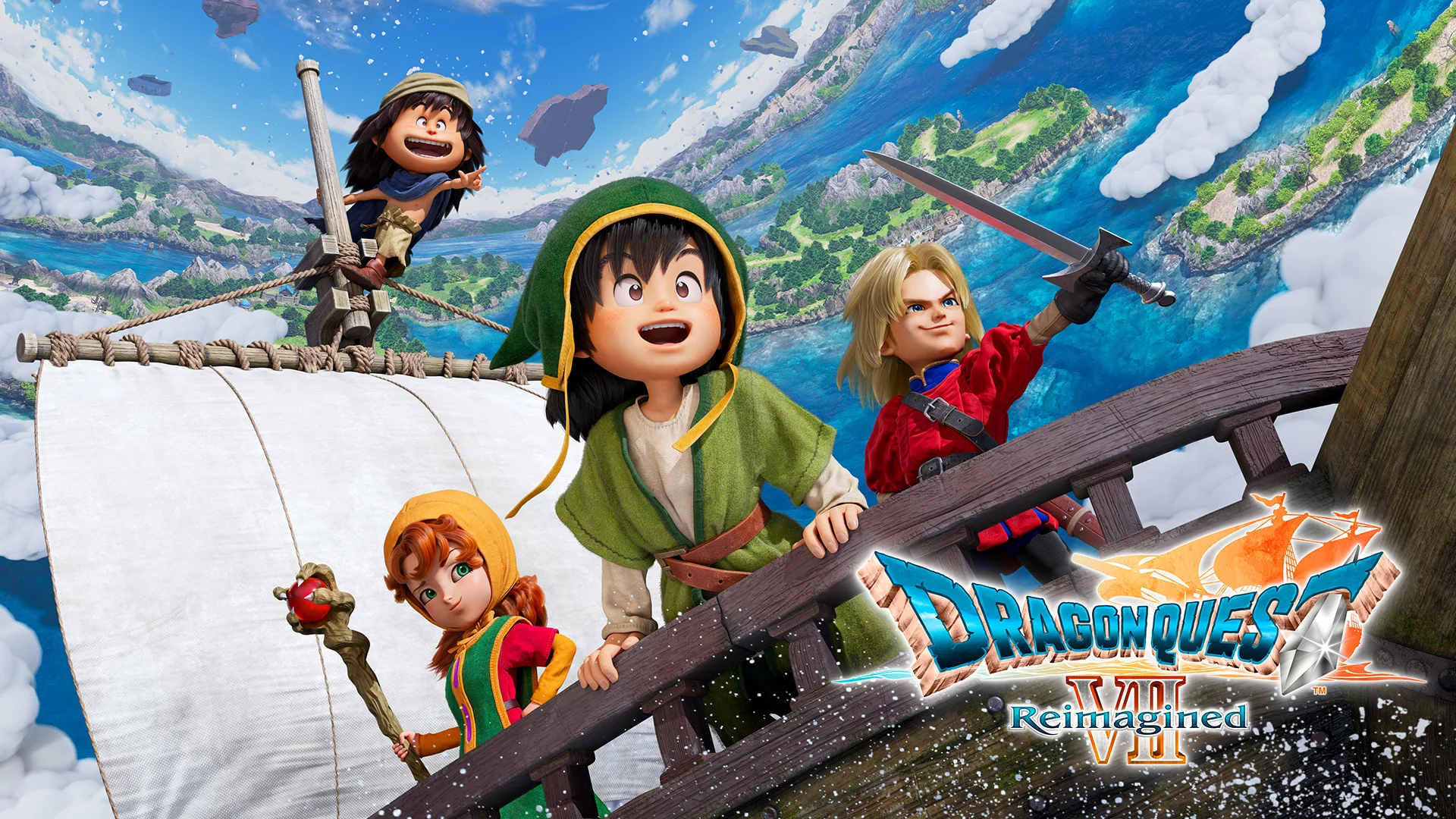
It should probably be prefaced, before I even begin, that Dragon Quest VII is not one of my favorite games in the Dragon Quest series. Having beaten it on PlayStation and the 3DS, the ins and outs of this particular game in the series were familiar to me going into the experience. That isn’t to say I don’t like Dragon Quest VII. All of this is to structurally set up just how shocked I was by how this particular remake won me over, which I was not expecting.
If we are being fair, it’s the core structure of the title that has turned me off in the past, and here it isn’t thoroughly different. The player takes on the role of a mute protagonist, as usual, who lives on a small island. In fact, this island is the only one in the entire world. Despite this, Prince Keifer and your character are pretty confident that there is, in fact, something out there waiting to be found. This has involved them building a ship to set sail for adventure.
This shifts early on, however, as, in fact, this is the only island in the world, but not by choice. Soon, the player discovers these stone tablet pieces that combine in a temple near the player’s house and, shock surprise, take the characters to the missing islands that should populate the earth. The twist here is that these islands are stuck in the past when they were lost. The players need to do the JRPG thing and save them by fighting enemies and building up to a big bad somewhere on the island.
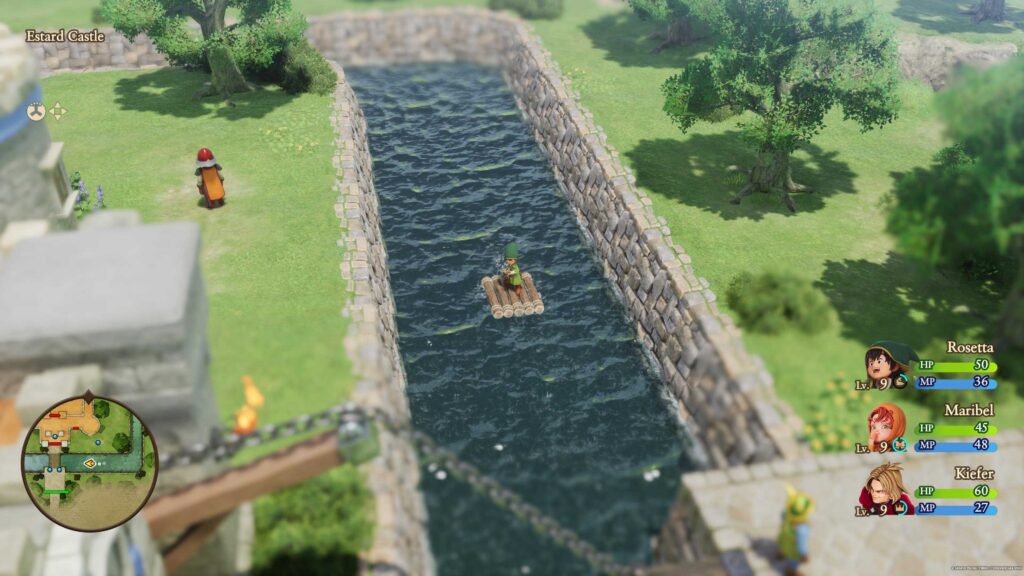
This gives way to two points at which the player traverses between these small islands, running between objectives until you have ‘freed’ the island, and the present, where these once lost islands start to appear. One of the better points of this process is that you never lose access to any of these locations, so you can traverse them at your own time. These areas also offer new encounters and some secrets to unlock, encouraging exploration at either point in history, with modern conveniences to make the collecting process of finding chests or tablets a much easier process than it was prior.
On the flip side of this experience, though, the original game was released back when RPGs padded their experience through confusion. I remember running around the islands, which are small, to be fair, but since I had no idea who to talk to, it took forever. On the original PlayStation, I did this myself (the internet wasn’t remarkable, then awful, then okay yet), but on the 3DS, there was never a chance I wouldn’t just use a guide. Here, though, you need neither.
Dragon Quest VII Reimagined‘s biggest convenience is outlining where the next story beat will be. Knowing that, I started breezing through the islands in 30 to 40 minutes. It was an odd feeling, making my way through so quickly, but it kind of laid bare how light the story actually is. There are plenty of added cutscenes and well-depicted narrative beats that help invest you even further than previous versions, which is what you want. When you get to the main story, though, it’s still evident.
The further issue with this is how disjointed the narrative is. Each island brings a new story from a new period and new players who almost exclusively only matter in that instance. There is an overarching story, after all. The question becomes WHY these islands are missing, and they explain that. The issue is it is vague for a while, with enemies referencing something that, in all honesty, you could easily miss if you blink. So this leaves you with stories that don’t tend to impact each other until much later on. We are talking about the 40-50 hour mark if you are taking your time and trying to take in the scenery.
About the time this starts to come into focus, the game also hits the brakes, starting to become more of a chore than the first half was. Part of this is the tablets, which are largely given as part of following the narrative, with some obvious exploration. In a sense, you brought the island to the present, so maybe go explore the dungeons there. In the second half, they start to be less straightforward, which, even in this version, can brick your progress slightly. Thankfully, this version has much clearer objectives to follow when searching for this stuff to help you get through.
The second reason is Dragon Quest VII Reimagined refusing to be the game to buck the experience grind the series has always had. In perspective, the first island saw me gain possibly 10 levels before I was finished with it and returned to the present and then moved on to the next one. The next four islands saw me raise a collective 5 levels between them. Classic Dragon Quest. This only really catches up to you later on, forcing some light grinding amid feeling like there is nothing to do but move forward, which you need to do.
This experience becomes padded out by the structure of the turn-based experience, as, like most modern turn-based games, it improves on this by allowing you to skip in. At a high enough level, you can slash an enemy in the field and clear them instantly. The issue with this is that it’s more of a punishment than a benefit, and the kicker is that this is one of the best additions. A few enemies I measured this out with typically rewarded me with 100 exp on the low end when I fought them in turn-based combat. Those same enemies upon Insta delete rewarded me 20 exp, a significant markdown.
My problem with this is that your party quickly outpaces enemies. This was evident as several newly introduced enemies were defeated instantly upon their introduction. This feature is basically like a sneak attack to damage and gain advantage (in cases where you still go into combat), so using it only to watch an enemy I had not yet fought fizzle away felt like a letdown. It left me confused as to if I even wanted to aim for an advantage since this could just create a slower grind than I already have. Gold and vocation points lead to a hit through this method as well. The latter is annoying, as the ability to actually change vocations isn’t unlocked until you feel you have wasted hundreds of these points on the void. Since this is how characters gain skills, it matters.
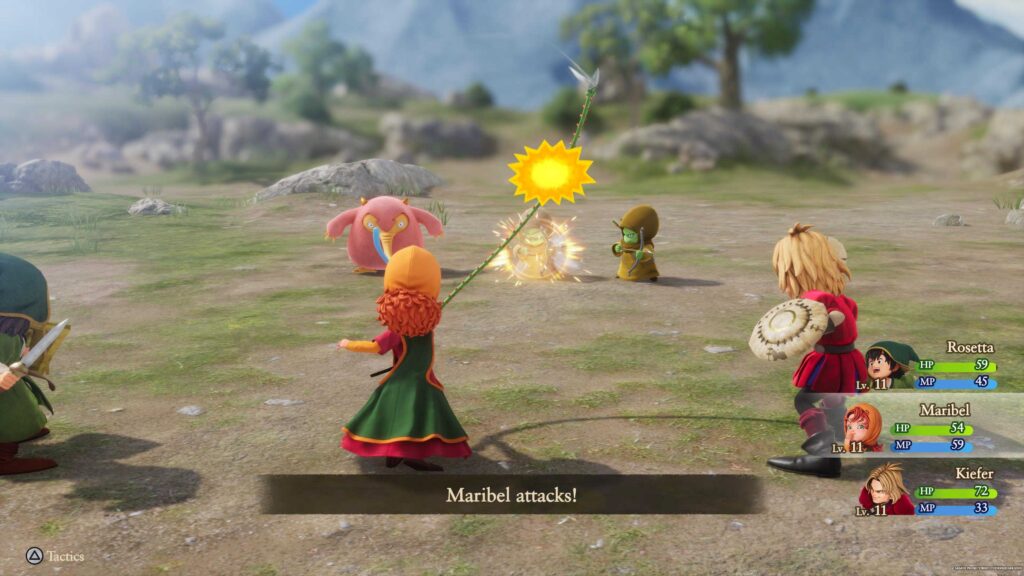
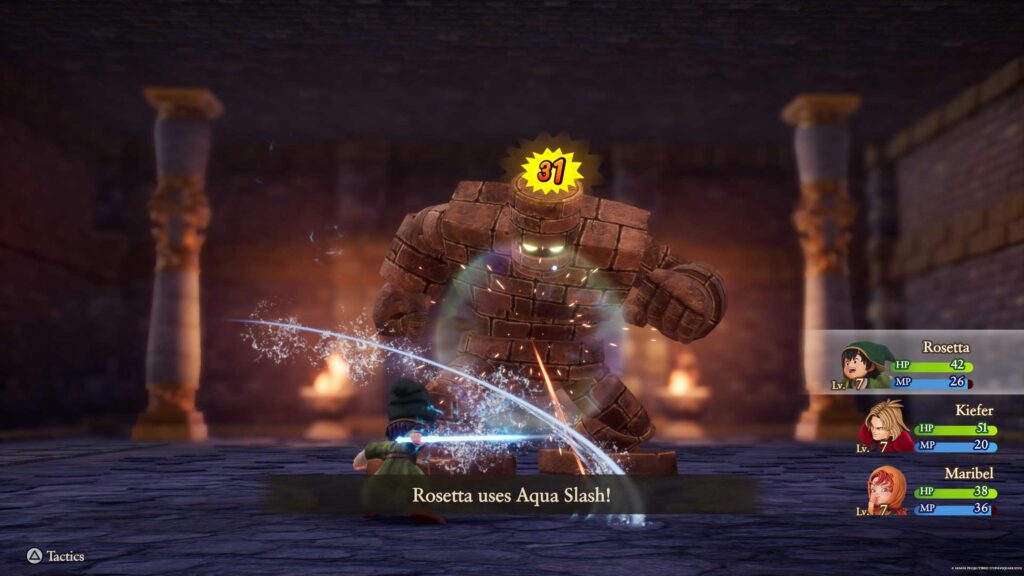
Combat, though, if you have played any other games from the long-running franchise, should be familiar. Characters take turns in a true turn-based system with magic and physical attacks at their disposal. There are a few improvements, though, that are helpful, starting with the quick icons for the effectiveness of attacks. The Dragon Quest series is slightly confusing, as the attacks can range once you get beyond the basic fire and ice moves, so knowing this was beneficial. There is also an auto-battler that actually plays the game smart. At one point, I even used this function against a boss, and we won. I’m not saying skip the core experience of the game, but you are welcome to lighten your load.
Thankfully, what the game truly succeeds at is the exceptional art direction that the experience takes. This is so good that even when you are annoyed, you will be urged to muscle through just because the presentation of the experience is so engaging. This is with the voice acting, which, while in line with other Dragon Quest games, still manages to be fitting. Maribel, despite my feelings on this game in particular, is one of the best characters in the series, and hearing all her sass is as satisfying as I always thought it would be. Keifer’s voice was on par with expectations as well, but that’s Keifer being Keifer, so grumble, grumble, whatever, I guess.
The true triumph of the art style starts with how they took the Toriyama character models from 2000. They gave them a hyper polish that is somehow on par with the originals, gorgeous to look at, and lets them feel modern, all at the same time. The game retains its traditional perspective, so it feels like part of a classic RPG, but it looks like a game that couldn’t exist in that era. There was a fine line to walk, and the team walked it expertly. The battle screens also featured some of the best lighting and shadowing I have ever seen in an RPG, like, ever.
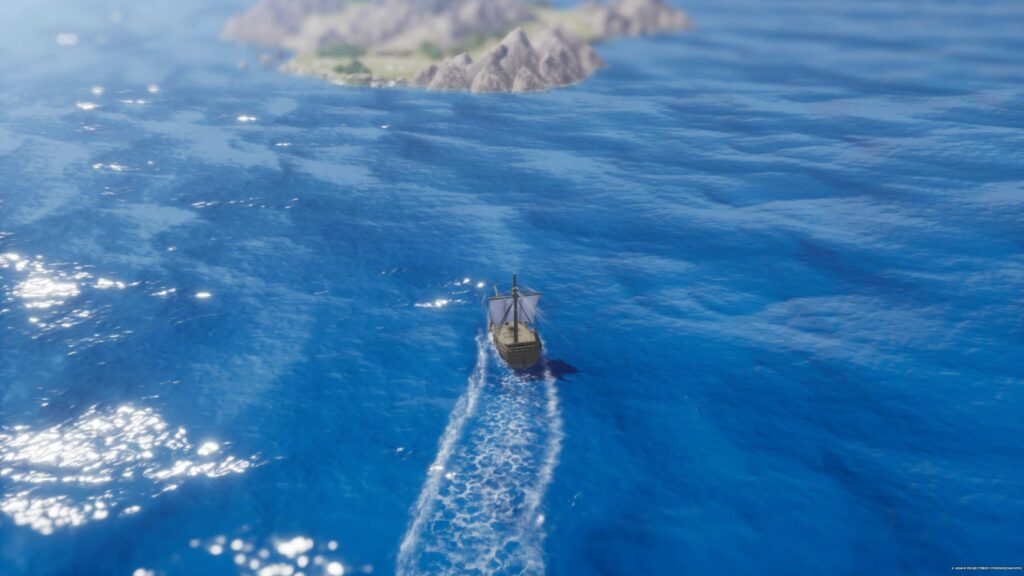
There is also a slight glow on the edges of the screen, evoking a fairy tale quality to the overall exploration, as you wander the beautiful islands and dungeons. Similarly, the cutscenes look beautiful and honestly do the material, and by extension, the late Toriyama, justice. The only place the art let me down was the oceans, which you do sail a lot as you traverse the islands. The reason, though, is that the islands have some of the best-looking waterways, rivers, and oceans I have ever seen. The open ocean, though, just felt dialed in by comparison, which creates a noticeable juxtaposition.
Verdict
Dragon Quest VII Reimagined is one of the best-looking RPGs out there and offers a genuine alternative approach for Square Enix to the 2.5D approach popularized with Octopath Traveler. I want more games like this! That’s the problem, though. I want more games like this. As I followed the beats, my mind kept wandering to which games I want to get this kind of treatment, and there are a few. If you have never played Dragon Quest VII, this is an outstanding package for a first-time experience. Even if you have played it before, it’s well worth the time commitment. The thing is, it needs to be a stepping stone, not a plateau.
Remember to follow us on Twitter, Facebook, and Bluesky to keep up to date on everything we have going on!
Reviewed for PlayStation 5, also available on Xbox Series, Nintendo Switch, Nintendo Switch 2, and PC
Developer/Publisher: Square Enix
Release Date: February 5, 2026
Pros:
+Beautiful art direction
+technical improvements and conveniences
+Fun exploration
+enjoyable voice acting and characters
Cons:
-Bland story
-sloggish progression, especially in the back half.
-
Dragon quest VII Reimagined

1 Comment
Great article.