

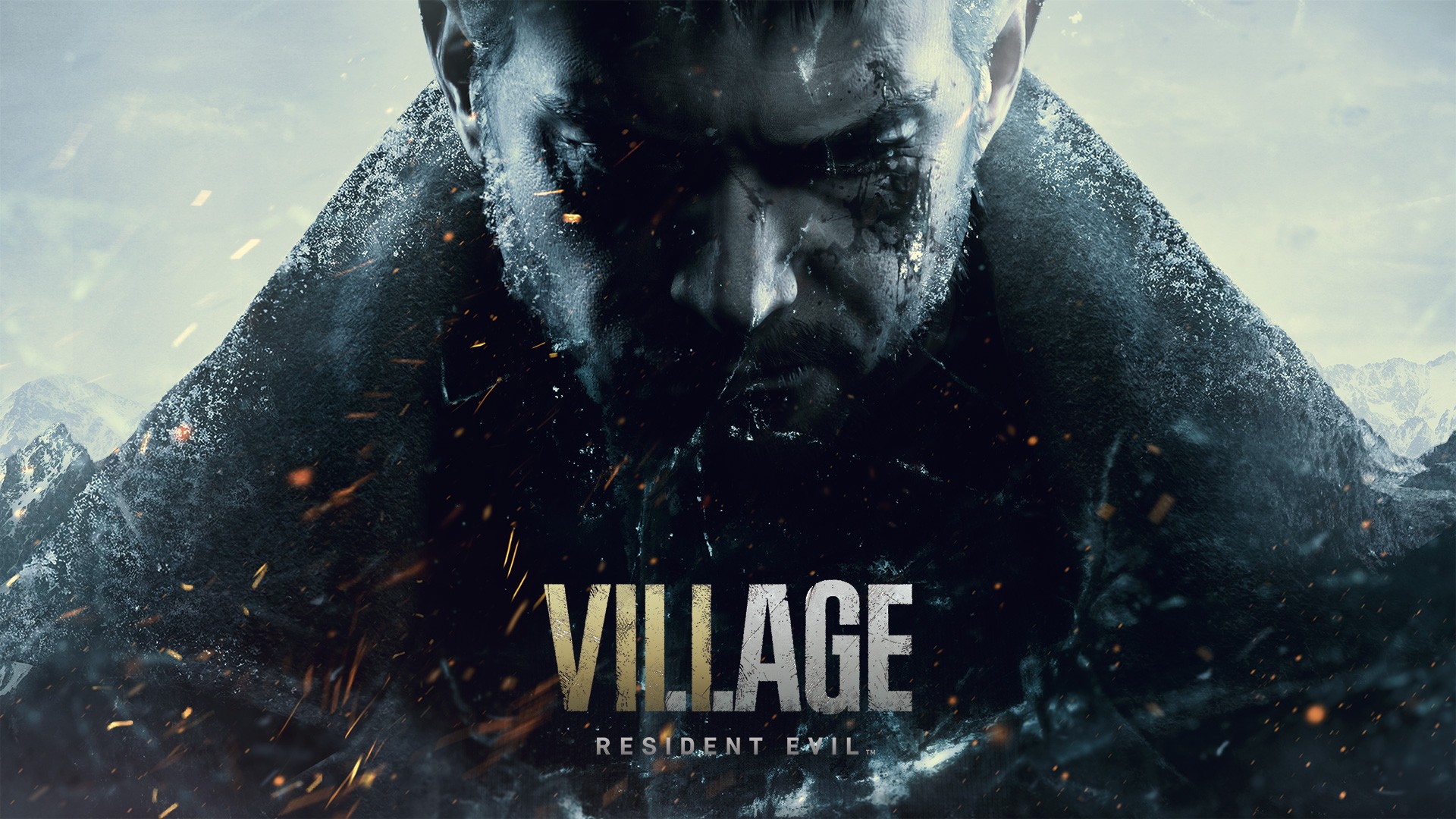
Similar to Resident Evil 7: Biohazard, Resident Evil Village made its way to the Nintendo Switch. In fact, it arrived only a year after it was released on every other platform. Unfortunately, they were both released as cloud streaming games, meaning that you could buy and stream them over Wi-Fi if that were a functional option for you, but your experience was highly dependent on your connection. As somebody who champions the PlayStation Portal regularly basis, I have no issues with cloud gaming, and it has gotten much better, but it’s frustrating when it is required and not an optional alternative to the experience.
With the Nintendo Switch 2, we have seen that a lot of these games that missed being part of the experience when they launched, so finally Resident Evil Village is available as an experience that can be played on the go, in conjunction with the previous game through the generations pack. In my playthrough of both games, I will admit this was the experience I was most worried about. However, my trip through some eastern European town became one of the best experiences I had on the console since launch, saved maybe my time in Midgar.
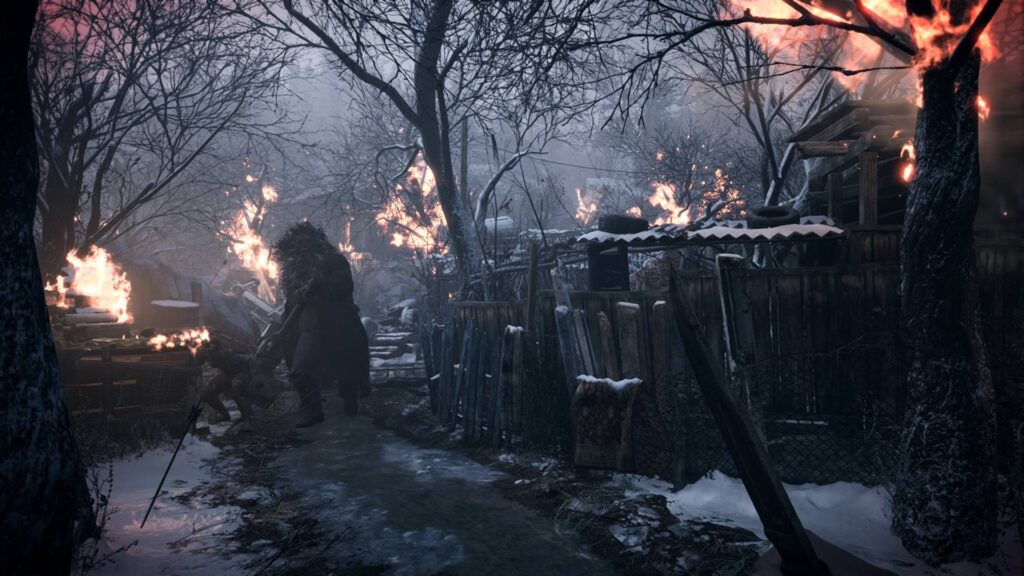
Once again, players take the role of Ethan Winters, three years following the previous title, with him and his no longer missing wife, Mia, in hiding. They also have a baby named rose The setup to this narrative might be the most outlandish of any Resident Evil game, and this is a bizarre franchise. For starters, your wife seems to be going through psychosis, bubbly and happy, where they are after a literal nightmare, Chris Redfield starting at zero chill, then going into a more antagonistic role, which, if you follow the series, isn’t a convincing rug pull even here. What’s even weirder is that if things go wrong, the company loads you into a van to move you, only for it to overturn right outside the titular village.
Here, we discover the whole point of what is happening concerns a group of big bads, one a literal Big Baddy (don’t pretend you don’t know who I am refering too, Lady Dimitrescu has become a staple of the industry), all of whom want to sacrifice your daughter for… Reasons, screw you, you need motivation, so here it is. What I can’t help but wonder is, why was your hiding house within driving distance from such a major threat? That just feels like bad planning.
In fairness to this title, even more so than the previous one, your burning questions that the game starts with do eventually get answered. The next game in the series is set to start a new chapter for the franchise. Even some of the dangling threads from 7 see some sort of conclusion here, as this game is about bridging the narrative to the universe as a whole. This isn’t a bad thing to do; the last title felt like it could have been something completely different if not for the name, but looking back, there was something special in that it didn’t try to fit in.
For Resident Evil Village, the goal is to create a more traditional experience, even if it features a more linear progression than its predecessor. The game has much faster movement, nowhere near as sluggish. Killing enemies drops cash or ammo, similar to 4-6, keeping you from needing to rely on stealth or avoidance, as you can start blasting if you need to. Along with all this, guns can be upgraded or bought through a store run by the Duke, who makes direct references to another merchant of the same kind. If we are being fair, there are a lot of Parallels that can be drawn between this and Resident Evil 4, beyond just being set in an isolated village.
There is a moment, early on, that gives a strong differentiation, though, at which point protagonist Ethan Winters helps two survivors get into a villa where other survivors have congregated. It’s a rare moment in the series when you get to see normal, or as close to normal as you can get, interacting with each other, even if it only lasts a few minutes. You never arrive prior to everything going haywire, but in this case, you are given more of a glimpse into what is being lost amid the horrors of this village. It’s interesting and honestly stays with you, despite not a single person in that scene getting more dialogue than the villains of the game.
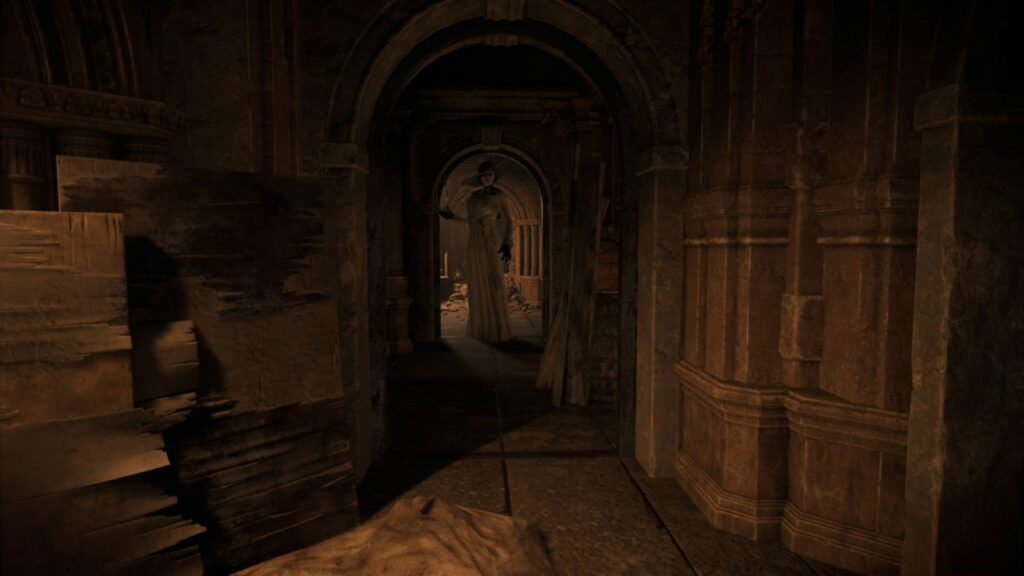
The village itself serves as a centralized hub for Ethan to explore, but like everything, it is pretty straightforward. There is explorability, with side areas to find, but the maps aren’t that complicated. The way this game functions is that outside the village are alternate areas that function as closed spaces you explore while dealing with the boss of this region. These areas are disjoined but not in a bad way; each takes on a different form of challenge to overcome. The first area, for instance, features Lady Dimatrescue and her daughters stalking you through the halls, similar to the Baker family of the previous game.
Unlike that experience, though, the zones in which you are constantly stalked are more replaced by specific set pieces. In the main hall, at any point in time, they are likely to show up and give pursuit, but while exploring a corridor, they will show up in scripted moments to overcome, occasionally building up to a showdown with them. This is a drastically different experience from the next area, in which you are the prey being pursued by something grotesque.
Boss fights are much more satisfying than the previous entry, too, which is saying something because a few mini bosses play out in tight areas. Since Ethan is more capable this time around, avoiding attacks is much less of a chore. In first-person mode, looking over at the enemy can still be met with them attacking right to the side of you, though, so it does feel like the character could use more tools than running and hoping the enemy takes their time before charging you.
This is the Gold edition game, which saw a number of improvements, one of which is the addition of the third-person mode. In third-person, you have much more awareness of the situation, which can break the immersion, but with a trade-off of peace of mind that you aren’t being as easily blindsided. Both play styles are worth the experience, so mixing it up is worth it. The only drawback is that you need to exit the game to switch perspectives, which can be frustrating if you want to experience areas in both during a single playthrough.
This being said, the main boss fights are some of the most fun you can have in the series. They are still these big grand showdowns with deformed monsters, but for the first time, I feel you get the space between them and you to operate. Most of these play out in wide open spaces, or the game at least creates that sense, such as fighting flying enemies that both stalk you on a tower before taking flight and coming at you from long range. There is a sense of traditionalism mixed with modernism that complements the play while expanding it.
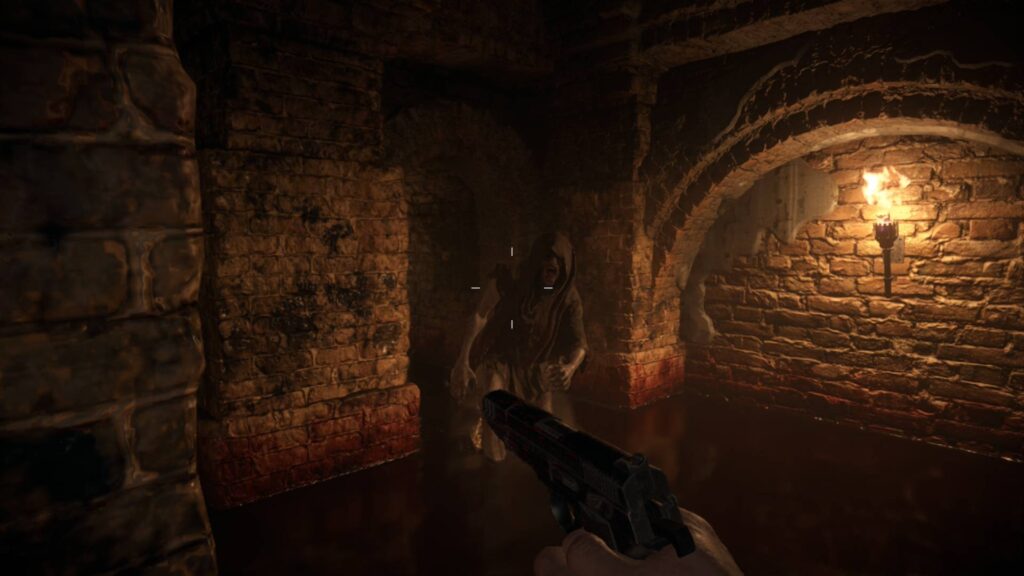
Standard enemies are also more enjoyable, at least in terms of variety. The standard enemies you fight are werewolves, not passive as they square up against you, but slow to make their move as you line up your shot. Mixed in with this are undead enemies with big blades that lumber straight, and others. Again, we tend to see one type monopolise the conflict, but they feel varied in their own individual approaches to keep these conflicts fresh. Minor improvements, such as the menu pausing the game so you have time to think, also help to create a more enjoyable combat experience, rather than getting tossed around by Jack Baker with no time to craft a desperately needed healing item.
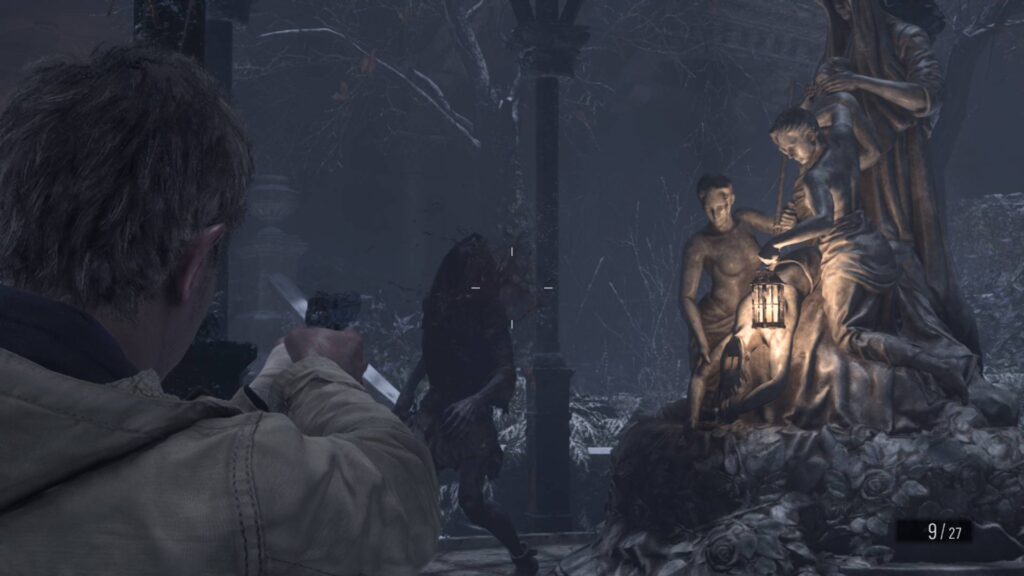
All the better, the game runs near flawlessly on the Nintendo Switch 2. I was expecting some issues, maybe some framerate dips, but I was surprised to get barely any across both docked and handheld modes. The lightingis also much better in Resident Evil Village as well, making one of my core complaints of the Port of the previous game much less of an issue here. Maybe it’s the lack of a visual filter as they had in that title.
The world is also just fun to explore, even without some form of massive depth. In between areas, the village opens up more, giving you another house to dig through. Maybe you find a key, maybe that key goes to a house across the way, maybe you kill everything between you and that location for a gun attachment that makes targeting enemies easier. Since improving your guns comes down to spending money on them, and enemies give you the money, there is a benefit to this beyond just pointless killing.
Verdict
I might be in the minority on this, but having just played both chapters in the Ethan Winters saga back to back for this review, I personally found Resident Evil Village to be the more enjoyable of the two. It starts with a ton of minor improvements that make this game flow better. Ethan has a legitimate run, the menu pauses action, and the boss battles don’t feel like claustrophobic nightmares. There is also an enjoyable set of areas to get lost in, even if puzzles are far more straightforward than last time. Best yet, Resident Evil Village runs great on the Nintendo Switch 2 and should easily be a showcase of the enhanced power we have been promised.
Remember to follow us on Twitter, Facebook, and Bluesky to keep up to date on everything we have going on!
Reviewed For Nintendo Switch 2
A review key was provided by Capcom for the purposes of this review.
Developer/Publisher: Capcom
Release Date: February 27, 2026
Pros:
+ Great Nintendo Switch 2 performance
+ Quality improvements over predecessor
+ Enjoyable action combat
Cons:
- More linear puzzle progression
- Overly complex narrative
-
Resident Evil Village
