

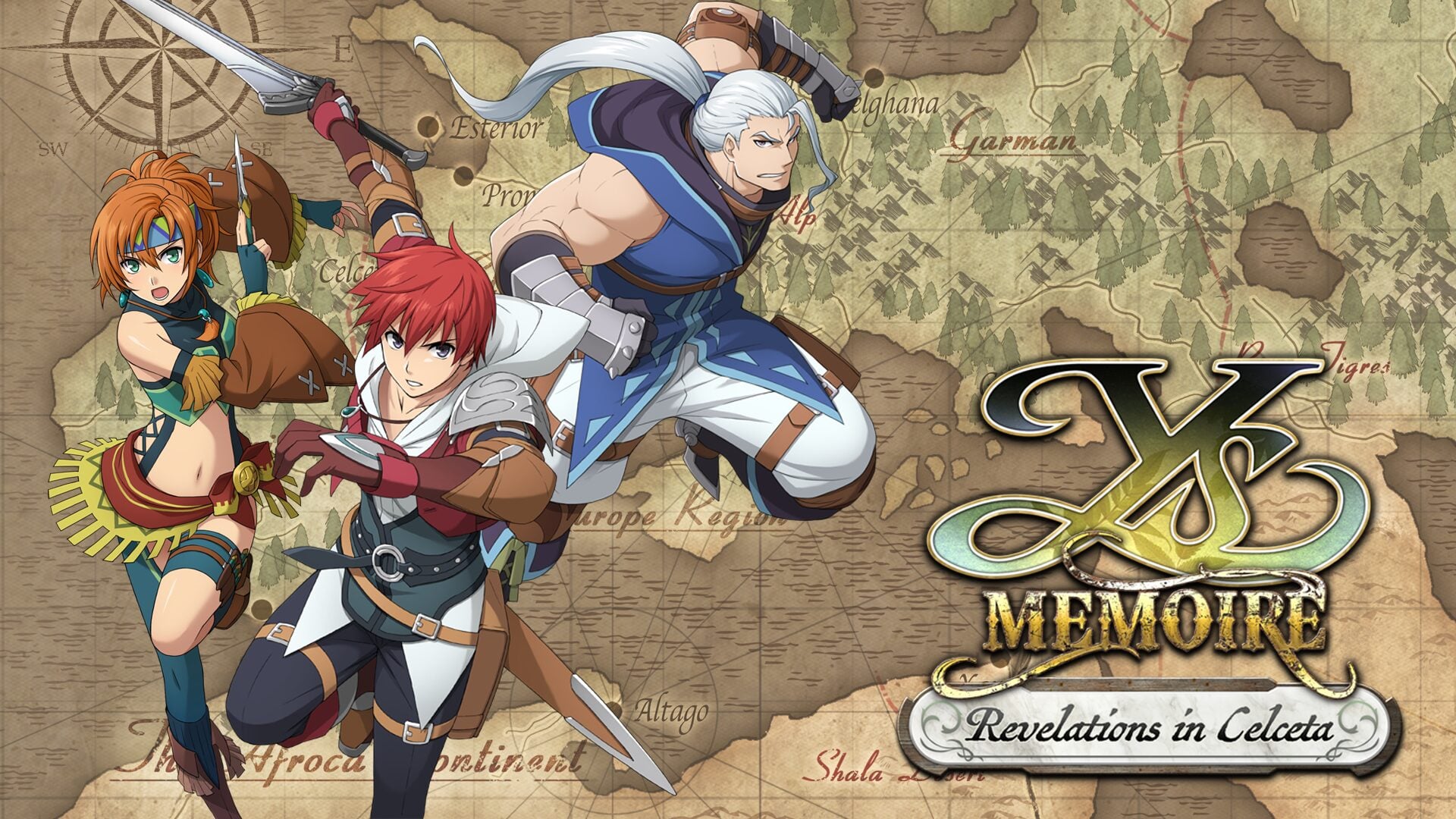
The fourth entry in Ys has, quite possibly, the most interesting history in the entire series. In 1993, two separate games were released by developers Hudson Soft and Tonkin House, respectively. Ys IV: The Dawn of Ys and Ys IV: Mask of the Sun literally have nothing to do with each other. Both were born out of collaborations with Nihon Falcom after key developers, including the creator behind the series, Masaya Hashimoto, and Tomoyoshi Miyazaki, left the team, and they lacked the internal staff to develop it. The one thing these two games had in common, one of the only things tying the unrelated games together, was that both feature lead protagonist Adol Christin traveling to the land of Celceta, though even that wasn’t consistent.
Two decades later, Nihon Falcom would release an official game to fit into this point in chronology, taking elements from both named Ys: Memories of Celceta. That version was the one I beat on my Vita at least 5 times. That game is placed in the timeline between the second and third games and has been the official Celceta game… Until now. See, the third game was released last year, now bearing the subtitle of Memoire, most likely a brand name for rereleasing the classic titles, which are all on PC, as it seems they are mostly coming to console. Memories of Celceta is strangely the second game to get this treatment, but with a new title of Ys Memoire: Revelations in Celceta.
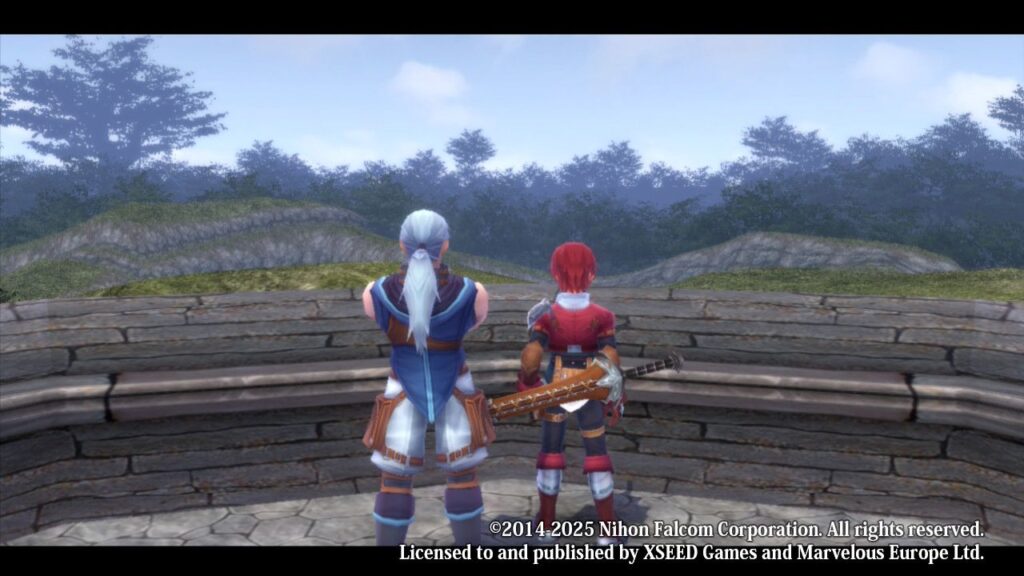
It isn’t odd to rerelease a game, and let’s be fair, there is over a decade between the original release and now. Because it kept getting added to new platforms like Windows in 2018, and PS4 in 2020, it makes another release, especially with a brand new name, so out of place. More so, confusing. All this being said, again, I beat this game five times prior. If you haven’t taken the trip to Celceta, I want you to go.
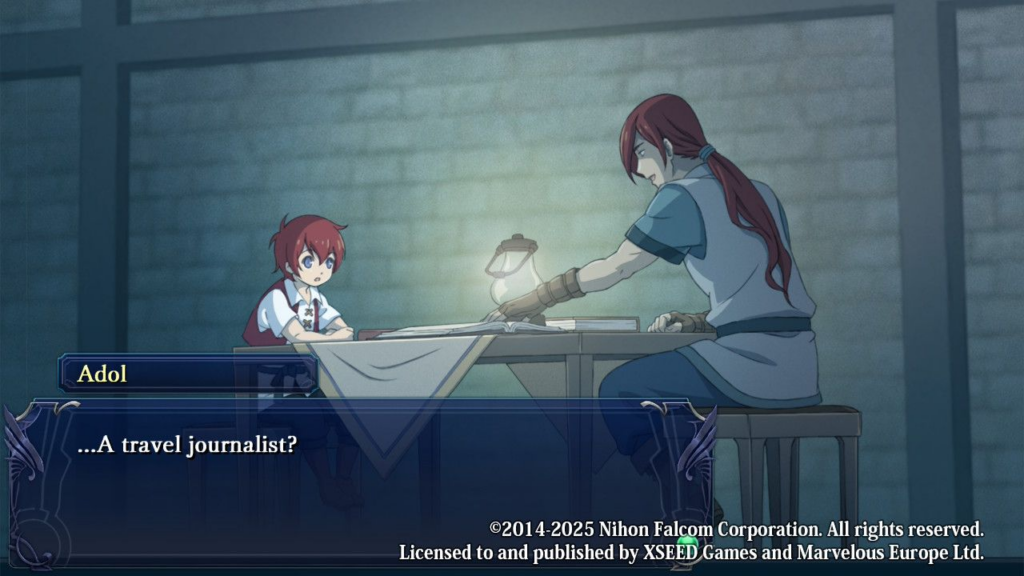
Amnesia has been a trope in the Ys games prior, mainly to reset Adol for the next adventure, but only Revelations of Celceta makes it a core feature. Better yet, through this function, players and fans of the series get some of the best looks at Adol’s childhood, and discovering these lost memories is well constructed. This is jumping ahead, though, as the game begins with Adol wandering into the main city, Casnan, having returned from a forest where nobody apparently returns. He, however, has no memory. Joining him this time is not the typical compatriot Dogi, but a new ally named Duren. In typical Adol fashion, being a skilled cartographer, he is hired to chart the uncharted forest.
Most likely, players best know this era of Ys VIII: Lacrimosa of Dana, with this generation of the series having really started with Ys Seven. Possibly because of this, and because it was originally designed for the Vita, there is a part of the experience that feels stuck between the past and the future. While Adol leads the exploration, he is joined by several characters along the way, whom you meet among the several villages you will discover on your journey.
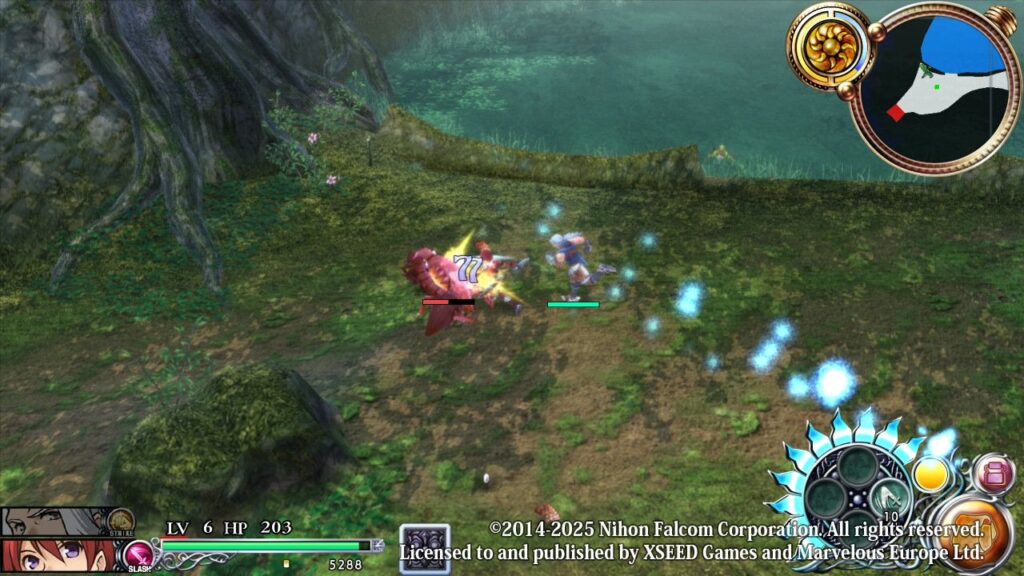
The way this real-time combat system changes itself is through the attack type system. This divides all party members into three types of attacks that are either effective or ineffective, creating the need to shift between your crew to deal with the varying enemies in dungeons and on the field. This puts the character you’re playing at risk, while your secondary two tend to do minor attacks at times and bottom out at one HP. Unfortunately, I had forgotten how the lock-on could be very ineffective, leading to some characters feeling like they attack around enemies rather than hit them.
There is also a lot of grinding that will need to be done if you want to level up. Standard enemies feel like they get outpaced rapidly, which is an issue with most action RPGs that have areas filled with enemies. The issue is that you can see almost no XP growth when fighting most enemies, leading to combat with a few more powerful enemies, with higher HP, that need to be fought to make meaningful progress. You beat them, you rush out of the area, you rush back, and you repeat. It’s a process that can become a little tiresome, though even on normal, the game isn’t the hardest Ys.
The weapon leveling system might contribute to that to some extent. While the player buys weapons to increase stats, they can also be upgraded, but not in a traditional sense. Upgrades boost several status effect properties of your character’s weapons, which, while very fun to subjugate your enemies to, will make you overpowered. At one point, I was hitting every enemy with poison and stun, so they couldn’t even fight back. Boss enemies are sometimes immune, but not always, so you might even get that going for you. Of course, again, I have 5 completions in this game from years ago. It was like riding a bicycle.
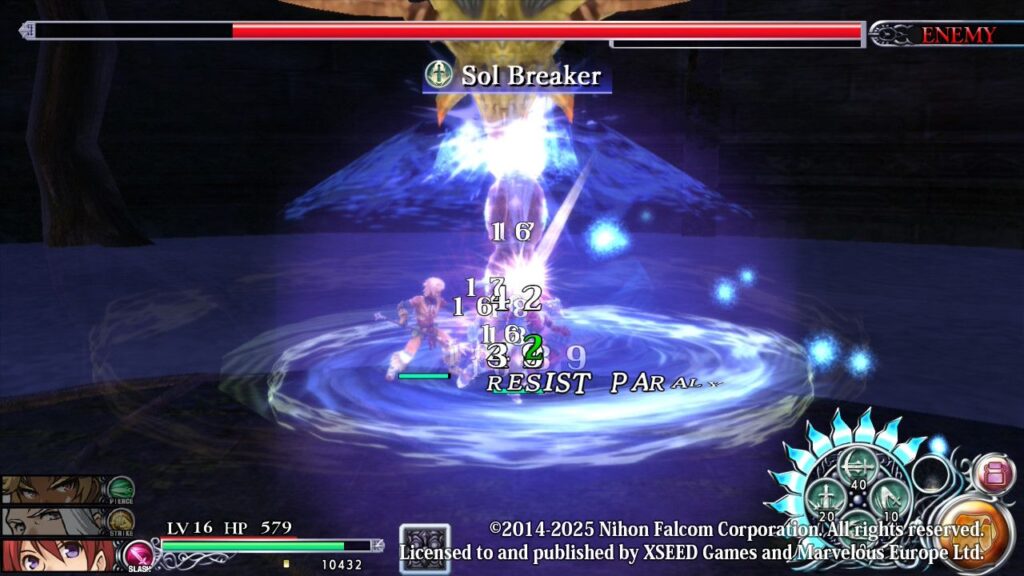
Since your party had yet to have a jump at this point, there were a few enemies, especially one boss with a singular weak point on its head that could prove to be frustrating as well. Combat itself is a pretty solid experience until it struggles with what it wants to be. You know it will become that; they nailed it with VIII. At the time, you wouldn’t think anything of it, but it becomes a product of the team’s future success, which is a good thing in the grand scheme.
The land of Celceta is one of my favorite places to explore in the series, and for the most part, it continues to hold up. Revelations in Celceta is a new name, but not much has changed. Better graphics and frame rates are definitely a plus, but there are a few functions I would have loved to see overhauled. The first of these is the zoom function that I never really liked, but gets in the way all the time. In a perfect world, the ability to shift the camera would have been a great addition here, but the ability to turn this off would have also been nice. I love a good rearranged orchestral score, giving the game a new and great sound while you play, but that can feel less impressive when it feels like this was a great time to slip in a few additional fixes, and there just aren’t.
One of the main discoveries, as stated above, is fragments of Adol’s memory scattered among the many locations you will explore. While you might think this will help fill in the events prior to the game and what he did before the memory loss, they actually go deeper. A lot of these memories explore Adol’s relationship with his father and his departure to become an adventurer. The game even opens, stating this will be the story of when Adol decided to call himself an adventurer, adding A LOT of interesting narrative context for fans of the franchise. Maybe you can skip it and lose a little, but it is also worth the experience.
Verdict
Ys Memoire: Revelations in Celceta is at its worst, extremely dated, and outdone by every experience that has come after it. The change in name, especially for a game that is still around, feels like a dubious decision. I mean, I get it; the Memoire series seems like it is designed to recontextualize older games in the series into a new series. I genuinely do hope to see more (please do Ys Seven next), though in this case, I could see some confusion. The game still has all the parts that make a Ys adventure the experience they are, though. Adol charting new lands, tons of fights to overcome, a great cast of characters to meet along the way, and a sense of wonder that never goes away.
Remember to follow us on Twitter, Facebook, and Bluesky to keep up to date on everything we have going on!
Reviewed For Nintendo Switch
A review key for this title was provided by Xseed Games for the purposes of this review.
Developer: Nihon Falcom
Publisher: XSEED Games
Release Date: April 28, 2026
Pros:
+Great Narrative, albiet with some pacing issues.
+Amnesia plot makes the story good for fans of lore, or newcomers
+Full party cast with dynamic abilities
+Action combat system
Cons:
-Can feel grindy
-Combat suffers from some dated mechanics
-Lack of meaningful fixes or updates.
-
Ys Memoire: Revelations in Celecta
