

Nioh 3 is the latest entry in the Samurai Action series and Team Ninja’s magnum opus. Here is our comprehensive guide.
Nioh 3 has finally been released after almost a year-long announcement and a sweet try of its alpha demo. Many of its mechanics, either carried over from its previous games or entirely new to this entry, are baffling to wrap your head around in the beginning. Because, unlike the previous entries, this is a seamless open world, or Team Ninja’s Elden Ring, it can be difficult to choose which way to go or what to do. It is at this moment that I invoke the words of Silksong’s dev, “Allowing a higher level of freedom within the world means that you have choices all the time about where you’re going and what you’re doing.” The same philosophy can be applied here.
To some veteran’s chagrin, Nioh 3 is undoubtedly the most accessible entry in the series. A relief to casual fans—like myself—this full-blown open world makes it so that there is no possible way to stumble upon a hard wall, unable to progress (unless you really want to). There are so many little changes to the formula, like stealth, enemy camps, and more, that it can all be a little too overwhelming, especially for new players. If you are trying to learn the brutal gameplay mechanics to make it just a bit more approachable, this is the right place. Here is my beginner’s guide for a smoother ride on Nioh 3:
Two Is Better Than One
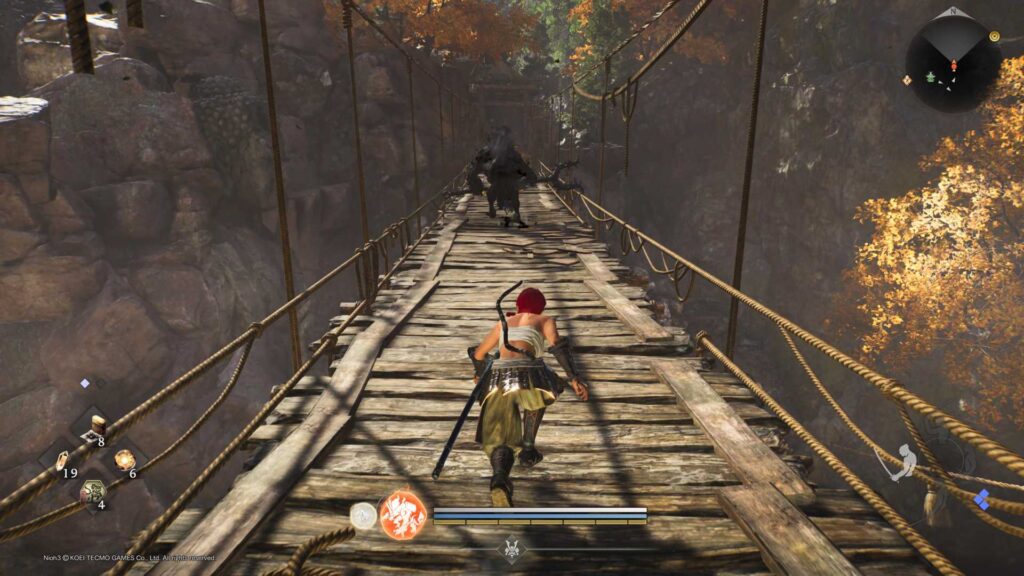
What sets Nioh 3 apart from its predecessors is its unique approach to gameplay. Being able to choose between the Samurai and Ninja stances freely, learning, and investing in both of these mechanics is fundamental. The Samurai, while heavier, will usually do more damage. The Ninja, as nimble as it is, will not inflict as much pain on enemies, but its overwhelming barrage of attacks can stun them for longer.
In exploration, there is a special skill the ninja can use to dodge mid-air. Going further, the Samurai can change his position to a high and low stance, opening up your arsenal of skills and Ki/stamina consumed. The Ninja, conversely, can use Ninjutsu to complement the combat skills. Powerful fire bombs or bolts of lightning can be accessible from this swift stance.
In the Equipment menu, because both stances exist separately from each other, it is important that when optimizing your build, you do it for both of them. Some players might not welcome this dual ability to carry combat, but the game is developed in a way that it is imperative to play off of each other. Certain enemy attacks that glow red can be parried to take a considerable chunk of their Ki. By changing your stance to interrupt their attack, you can eventually break their stamina bar. Which reminds me of…
Remember to Use Your Ki Pulse
The most essential of all lessons: running out of stamina is no fun in ANY game. In Nioh 3’s case, though, they implemented a nifty mechanic called the Ki Pulse. If you master it, you will practically never run out of stamina. Only available for the Samurai stance, a few seconds after you perform several light or heavy attacks, a white circle will revolve around your character. If you time it correctly and press R1, this will regenerate your Ki instantly, making it possible to keep attacking your enemy.
Mastering the use of the Ki Pulse benefits in more ways than one, because certain enemies leave a mist that virtually stops your Ki from regenerating. This mist can be removed by performing a Ki Pulse in the middle of it. Nioh 3 is a fast-paced action game, and learning each of the mechanics, while not overwhelming, takes some time getting used to. As I said, there is nothing worse than running out of stamina, because if you’re attacked in this vulnerable state, foes will do more damage, and it will take longer for your unfortunate character to recover from this stunned state.
Learn the Deflect Ability to Parry
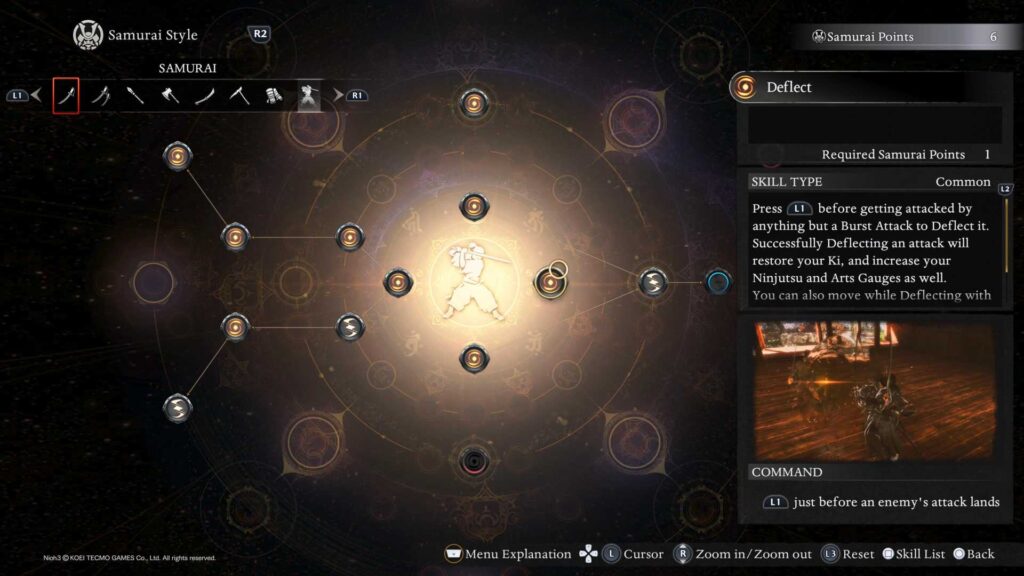
While exploring the open world, you will find yourself earning Samurai and Ninja points. These skill points open up a world of possibilities for your character. I urge you to take the time to read the various abilities on offer to tailor your experience. Chief among these moves that I wholly recommend is the deflect ability. As straightforward as it sounds, this ability transforms a timed guard with L1 into a parry, which will briefly stun soldiers and yokai alike and remove a bit of their Ki. Above all, it makes an extremely satisfying sound when done properly.
Be Aware of Your Surroundings
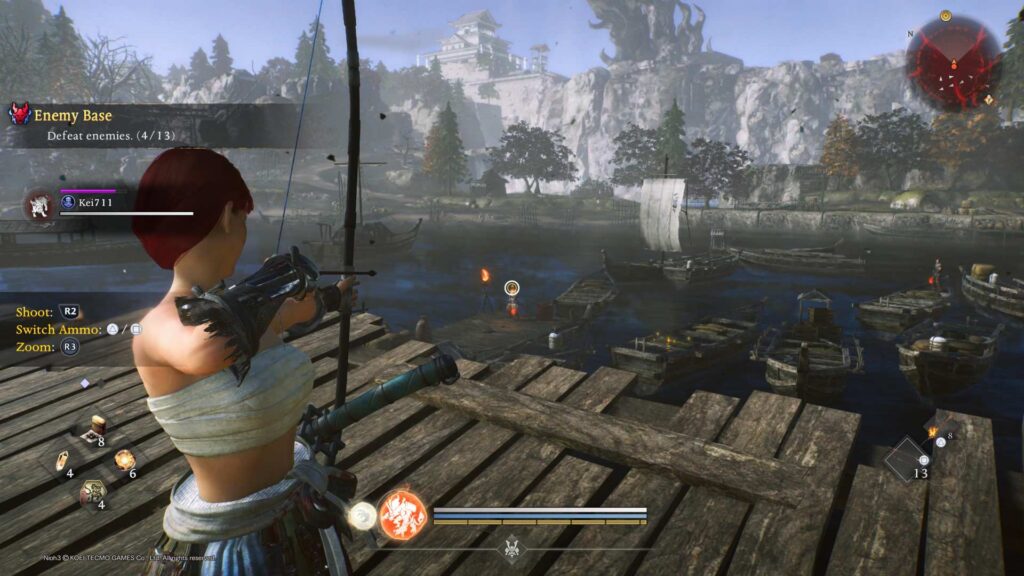
The Nioh series has been described as “masocore,” a portmanteau of “masochism” and “hardcore.” Because this third entry is a sprawling open world instead of tight mission-based levels like the previous two, you’d think there would be fewer traps. You’d be wrong. Because there is no underlying rule as to how many surprises are in each area you explore, it’s difficult to say exactly where you will be assaulted. Of course, there are several predictable traps the game goes to.
Enemies patiently waiting above a carefully placed chest is the most common of tricks to catch you off guard. Always look up or press R3 to lock onto an enemy in confined spaces like huts, cabins, or caves. When a demon ensnares you in such a scenario, it is likely they will drain you of all your life. Shrines to respawn closely abound, but losing all your souls, or Amrita as they are called here, can feel especially deflating. A staple of the series, you can also find mimics, but they do not necessarily need to be dealt with violently.
Mimics Are Your Friends
Ah, mimics. The age-old enemies masquerading as chests targeting loot goblins like myself. Well-known in the Nioh series, these monsters will transform into a copy of yourself once knocking you out. The easy way out is, clearly, to fight to the death. But there is another way to do things if you are so inclined. Various emotes in Nioh 3 allow you to engage with characters beyond violent resolutions. When the doppelganger first appears, it will emote in a particular way that if you reciprocate, something wonderful will happen. Instead of making you fight for your well-earned loot, they will just wave goodbye, leaving behind the shiny items that you crave so much. You can watch an example here.
Get Rid of Extra Loot
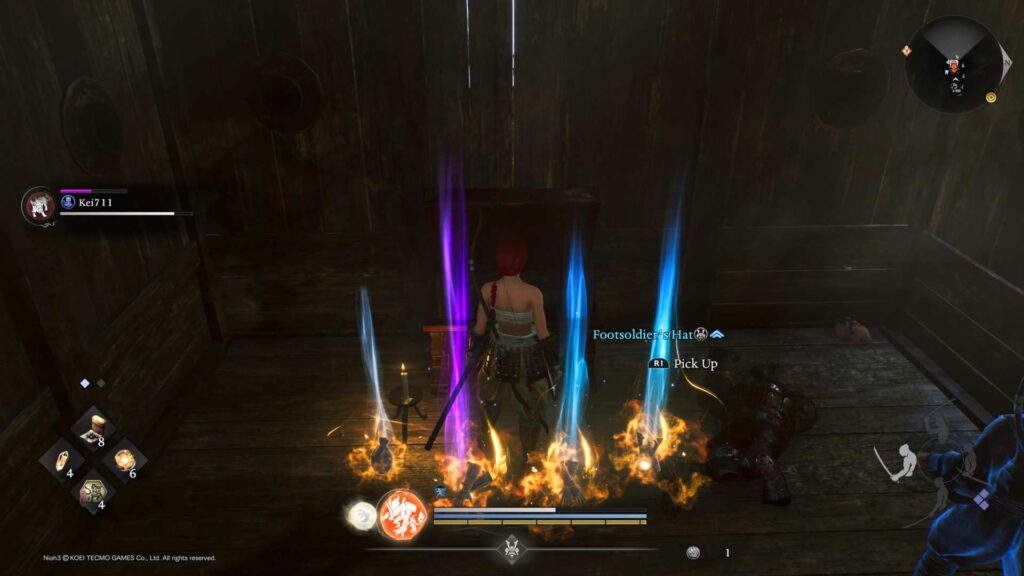
Talking about treasure, Nioh 3 gives a lot of it. Like, A LOT. This can eventually become cumbersome when trying to find a rare new kusarigama you just pocketed. The developers clearly know this and have found an ingenious way to get rid of all of it in one fell swoop without having to worry. And I will give you this precious knowledge now.
In the main menu, when you go to Settings > Basic Game Settings, the last tab has a very useful feature—arguably the most useful—that lets you get rid of your loot you have marked every time you pray at a shrine. The color scheme goes as white, yellow, blue, and purple, showing their rarity as normal, uncommon, rare, and very rare, accordingly. With the options to offer the items for Amrita, dismantle them, or sell them, you can choose up to which rarity of items you can get rid of. No more manually selecting which loot to get rid of. Neat, huh?
While you’re at it, Nioh 3 is quite insistent in reminding you of how buttons work, which at the 10-hour mark or beyond just becomes annoying. These tutorials can be removed by going to User Accessibility > Show Controls > No. You’re welcome.
Use Stealth Often
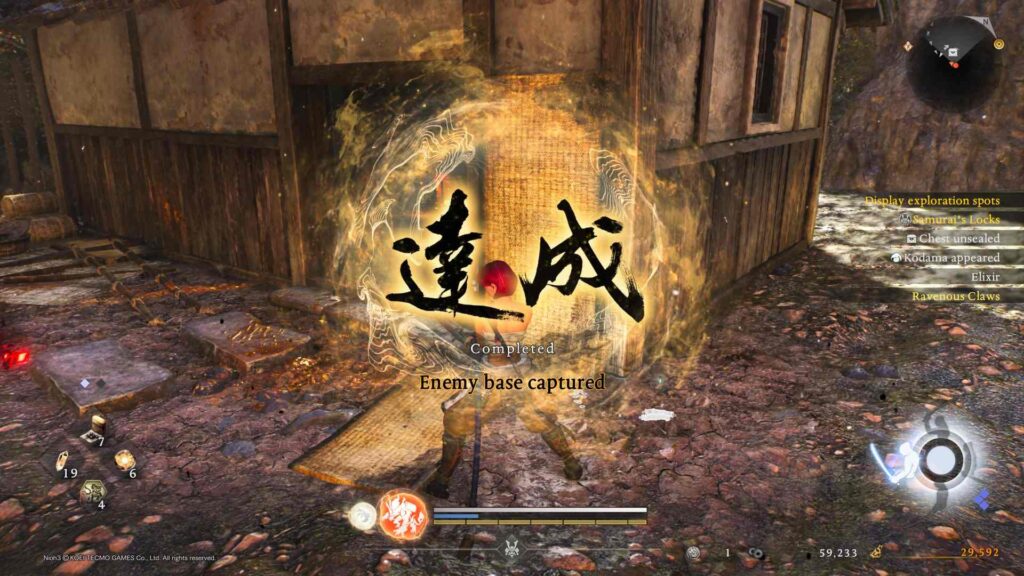
Hiding in the shadows is more of a mandate in Nioh 3 than even before. Taking cues from their previous epic, Rise of the Ronin, the crouch button should be used freely and often. If you approach an enemy from behind, a red reticle will appear, indicating you can perform a Death Blow. As the name suggests, this ability will cause massive damage to foes big and small and, in some cases, outright kill them before engaging in battle. In areas like enemy camps, this is especially useful to save health options, or elixirs, and other resources to not have to always engage in battle.
Be Curious
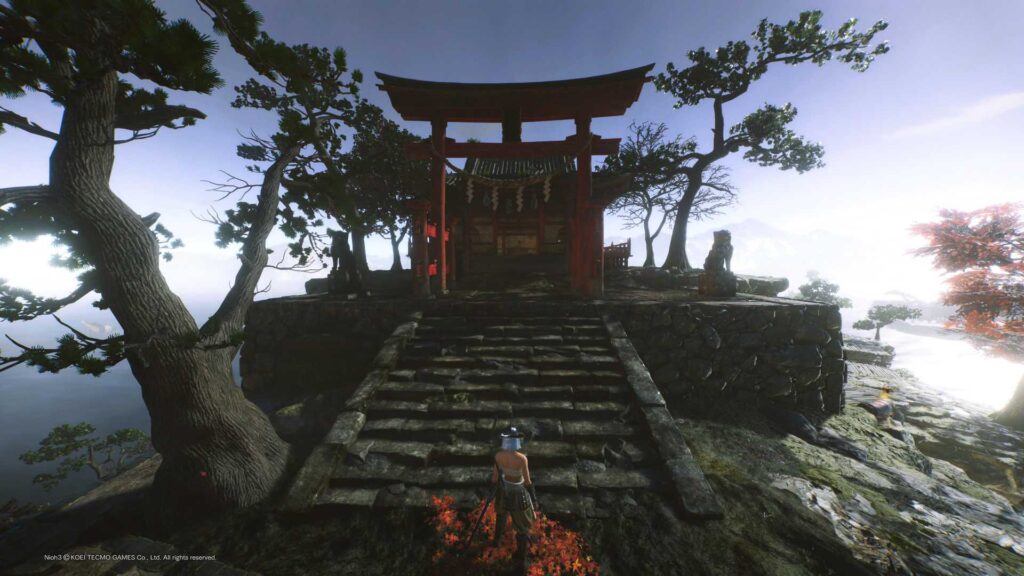
Going further, being curious is fundamental to having a fuller experience. Where Nioh 3 triumphs compared to, say, the methodical and cookie-cutter activities of Assassin’s Creed is the fact that they all go by rather quickly. Yes, the persistent main quest will always be there in your minimap, but the amount of benefits you will reap by going off the beaten path cannot be overstated. While there are bigger areas called the Crucibles filled with demons, smaller gauntlets called Lesser Crucibles will challenge you with several yokai in a row to defeat, only to increase your Spirit abilities when winning those fights.
There is so much to explore at every corner that it might sound daunting at first, but it can all be manageable as the game separates it into compact regions. Once you clear said crucible or a certain side quest in a district, anything you might have missed will pop up on the map for you to go directly to. Imbued to no end with Japanese folklore, little critters that will help you on your journey are decidedly worth looking for. The kodamas (little green spirits), Chikijos (magical ferrets), Scampuss (cats), and more devious kappas (water monsters) all have their rewards for exploring. The best part of it is that it can be done rather quickly.
Wells around the world with rocks can be hit to pull up surprises from their buckets below. Typically it will be something beneficial, but for other times it might be more than you bargained for. This is where the game’s added verticality helps.
Jump Around
Jump up, jump up, and get down. Alright, now that I have that out of my system, the double jump is what makes Nioh 3’s open world all that more fascinating. Whereas the ability to jump was nonexistent in the first game, the introduction of it in 2 and being fully embraced here is used to its advantage. Rock formations offering chests you would not see the first time, hidden secrets, and unique traversal mechanics called Spirit Veins can only be accessed by looking up. There is much to find with a curious mind.
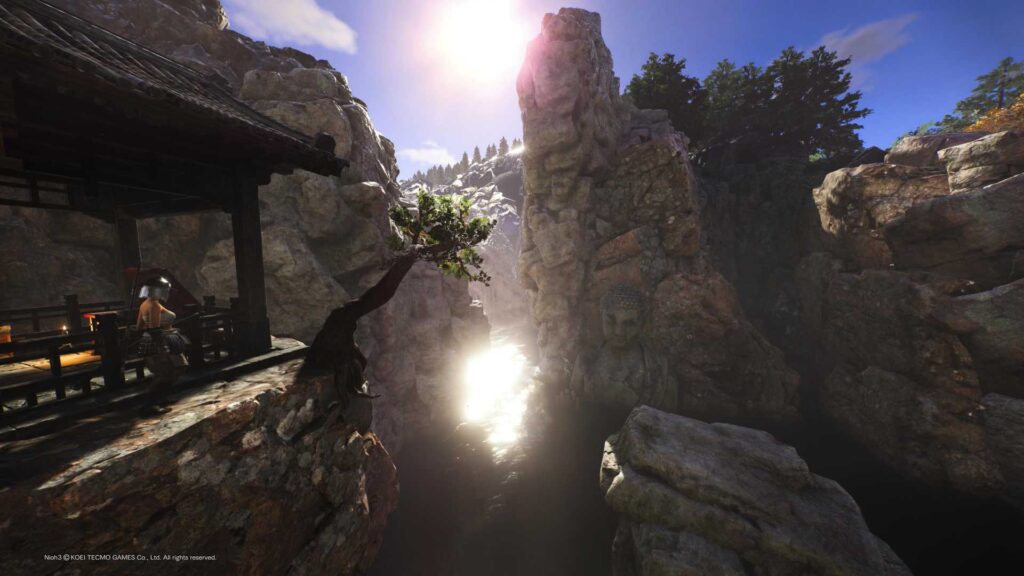
What helps a lot from jumping is that it is silent. This means that if you are stealthily crouching from behind or approaching from a rooftop to pounce on an enemy, they will not see it coming when you double jump and perform your death blow. Easy peasy.
Adjust Your Shortcuts
On the bottom left corner of the screen are your shortcuts. In the very beginning, of course, there will only be the elixirs to restore your health. As time goes by, there will be a rich variety of items that should be used to ease your adventure. From balms to cure poison to talismans that can summon yokai or elemental skills, they all should be considered when organizing your equipment. Because there are 8 shortcuts in total that you can access, and the game is so generous with its gift-giving, do not spare any expense utilizing these shortcuts to your aid.
Skill Management Helps In A Pinch
One of the benefits of exploring every nook and cranny of this ancient Japanese landscape is the finding of scrolls that unlock secret skills. Divided into Common, Samurai, and Ninja skills, these can be accessed in the Skill Management section of the Shrine menu. These can help in a tight spot because of how direct they are. Some might restore Ki if you perform a perfect parry, others will increase your defense/attack, or allow you to use Omnyo magic skills faster. They might not be life-changing, but in the heat of the moment, a well-executed dodge might mean the difference between life and death.
Spend Prestige Points Earned from Titles
An oft-forgotten mechanic: by performing several abilities successfully, these will earn you prestige points to spend in your main pause menu. Being more stealthy when crouching is among the most memorable of them, with others like making more damage with death blows or increasing the health restored by your elixirs also welcome. Because the game itself only briefly adds a small exclamation point, and it adds so many of them, it’s likely that you will tune them out. Not the prestige points, as investing those points gives a long-term buff to your journey.
Get More Hits In
The core goal of Nioh 3’s combat is to reduce the enemy’s Ki bar to then perform a finishing blow and cause catastrophic damage to them. While this goal can be achieved by mixing and matching the many abilities you have, from ninjutsu skills to straightforward light attacks, once their stamina is drained, a common mistake arises. Instead of going instantly to execute the Death Blow when the enemy is down and his Ki bar is regenerating, try getting a few more normal hits once they are down. Being a little too greedy and missing the window to do the Death Blow can also occur, so be mindful of that bar to make maximum damage before they get back up.
Don’t Forget The Righteous Jasper
The Righteous Jasper is an item that lets you spawn a Benevolent Grave in fellow Nioh 3 players overworld to be summoned by them. Not directly you, but an asynchronous NPC version of you that will hopefully aid them in their plight. This will give you useful items to use in your journey in turn, such as Ochoko Cups to summon help yourself. Glory, a currency that can be used in the Hidden Teahouse, will also be earned to buy new weapons, consumables, and emotes, among other useful items. A win-win situation, if you ask me.
Respect The Bloodedge Demon
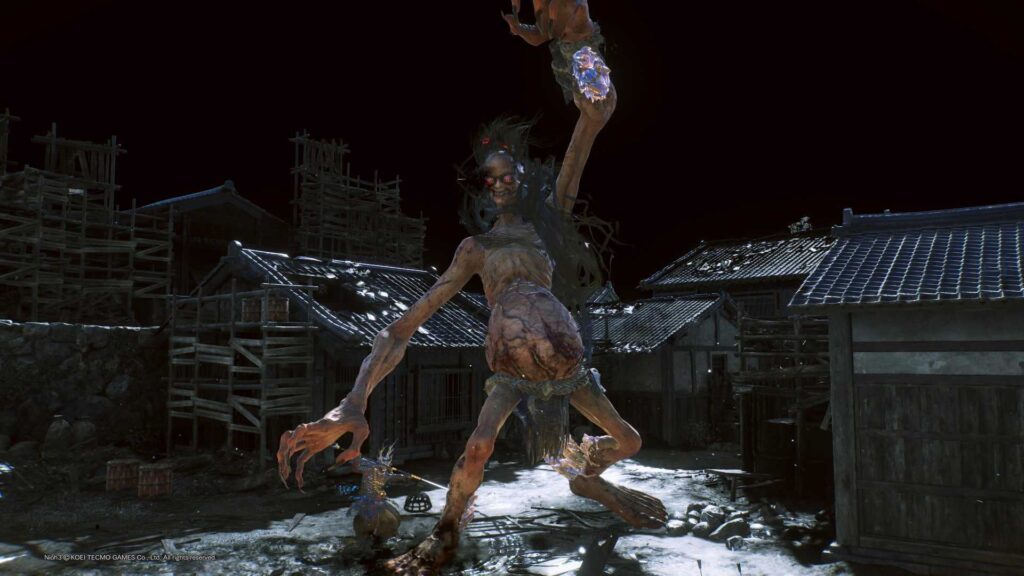
The longer you play Nioh 3, the longer it feels like a cakewalk because of how many benefits you have accumulated over time. One of the ways the game humbles you is by adding the bloodedge demon on the field. This yokai, with a longer life bar and even stronger attacks, is not to be trifled with. If defeated, the rewards will be plenty, but the spike in difficulty harkens back to what made Nioh 3’s predecessors legendary among the community. Similarly, humans that can be challenged, called Masters, will also prove a worthy challenge to look out for when you want to truly test your skills.
This guide was complemented with the help of Nioh enthusiast and passionate writer Hana No Maude, which you can find at DearGamers. Her one message to prospecting players is, “Nioh is a series made stronger by its community. A group of gamers who genuinely want to share what they’ve learned and help each other grow.” Resonating with that powerful quote, I also encourage new Nioh fans to either reach out to friends online, summon help, or find support where they can if things get too stressful. After all, the goal is to have fun.
For more advice, you can find out Ghost of Yōtei guide here.
