
The original Greedfall was not a game I expected to love. It was one of those titles I skipped at launch, having not liked a previous title from Spiders, eventually playing it two years later or so. Sure, there was a little jank there. Ok, a lot of jank. They aren’t a top-tier developer. But there was something there, winning me over every step of the way. Eventually, I would own the game on about three systems, and it is in there with Cyberpunk 2077 and Kingdom Come: Deliverance as an RPG I could pick up at any point in time and just lose myself, which is saying something.
Greedfall: The Dying World, my hope was, would carry on that torch. It’s great when a sequel comes out and makes you never want to play the original, not because the first was bad, but because the second is such a step forward. This was what I was hoping to occur. Maybe I still am. Ultimately, I don’t think this will be the case. In the way that the first statement is such a great thing, being driven back into the arms of familiarity because of a sequel that is a step back is a demoralizing experience.
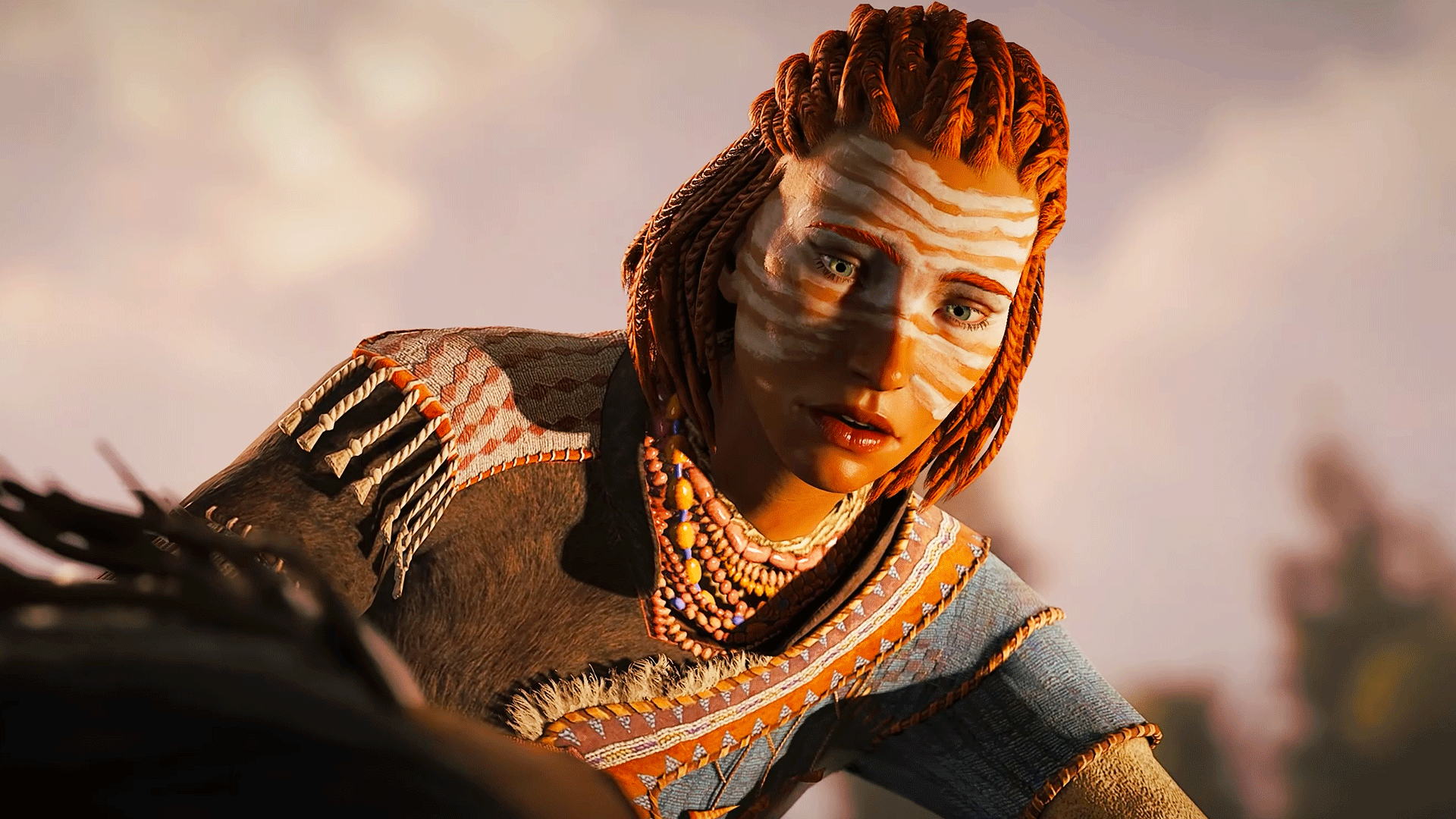
The first introduction to Greedfall is actually pretty positive. In the way that the first game explores colonization and manifest destiny, with a fantasy world inspired by the conquistadors of the 16th century, we get to see that from the other side here. The player takes the role of an indigenous tribe member in a land being encroached upon by other cultures and alliances, setting up bases nearby. The first few hours play out in this, having to navigate complex politics because your people never felt you could own the land that provides.
Soon, building into the main plot, you and your companions are captured and shipped across the ocean, again, a painfully familiar situation from our own world that the game draws upon. From here, you play a character who feels in some part comparable to Pocahontas, though your character is able to escape, building up alliances along with their party in an attempt to return home. Achieving this requires back-room dealings, forming connections, and discovering the inner workings of this new world you have found yourself in.
There are even some moments in this setup that have genuine emotion attached to them, such as a character you spent time with in your first few hours dying in captivity, while all you can do is watch. This is made even more impressive because I felt something. This is in contrast to the often unintentionally hilarious character models that made me feel other things. This is what I am talking about, though, the moments where there is a showcase, they can tell a narrative amid the multitude of limitations their games have.
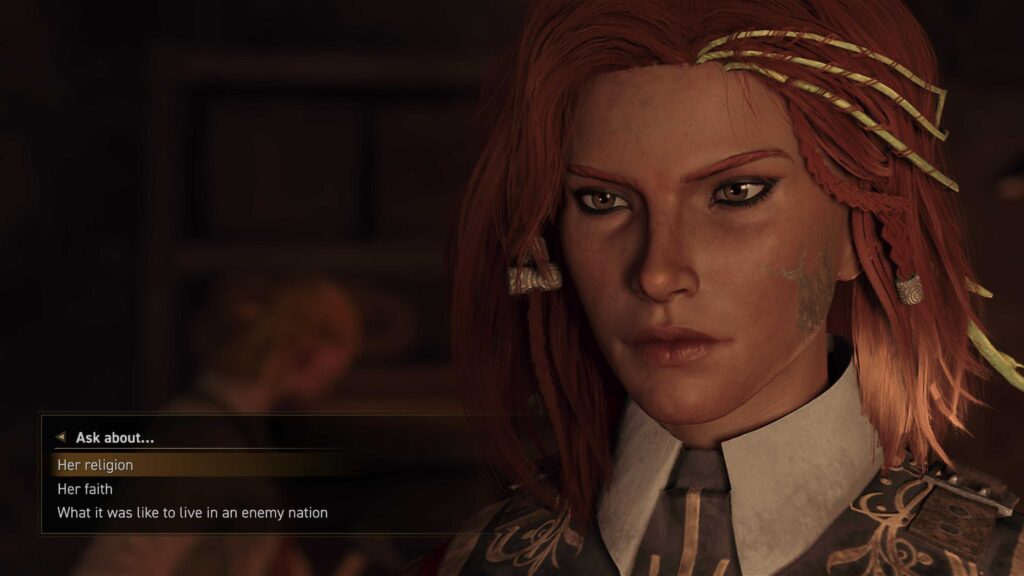
The game also features an awesome voice cast to bring the world to life. For starters, your time has its own language woven into the voice acting, with you being introduced to the lead speaking English with a foreigner. This is interesting because it hides the fact that the lead three party members will predominantly speak this fictitious language for much of what might be considered the tutorial. This language never goes away either, with characters switching between it and English depending on who they are conversing with, a beautifully vibrant touch to the world.
Since much of the game is dialogue, with some old-school RPG dialogue-driven gameplay, the fact that every dialogue has some depth to performance rather than feeling like it is being read off a script. You also get those shifts from characters, even minor ones, when the nature of the conversation has changed, making conversations a high point. Since a lot of problems in the game can be solved with a good check of these, it makes it a worthy element to get lost in.
While the elements of the early hours can be fun, unfortunatly it goes on for far too long. The opening segment takes about 5 hours to clear. Much of it is interesting narrative, but it can drag on. The bigger issue is that several of the tutorials in this period explain mechanics, but not how a mechanic works. They became noticeable at a few points, such as when the tracking feature was introduced, and there were some subtleties I couldn’t grasp until much, much later after using it across multiple segments. This involved me running around in circles through the woods, padding this time.
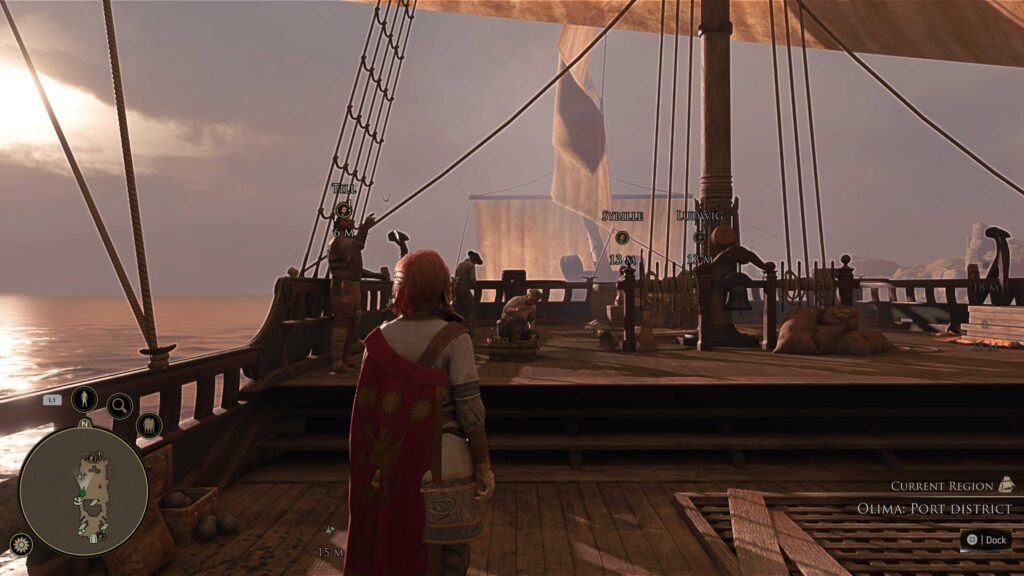
The game eventually opens up when the player gets a ship to explore multiple areas segmented across the map. However, you jump across multiple areas prior to gaining this in a way that makes the game feel linear and disjointed. I failed to complete a task in the first area that you are locked out of for doing so, so jumping between these areas made me nervous that the entire game would be this way. The feeling is bolstered by not having a clear indicator that I was going to pass the point when I would be locked out of the map for the time being, until I could sail back.
Once the game picks up, you get many more options as to how to interact with the world. For starters, party members would not allow you to speak with them until you reach this point. You have this feature early on, but gain a multitude of allies at a point at which you don’t have this function, which feels odd given the familiarity this feature offers, especially compared to how much this game changes from the previous title.
One of the weirdest features is the companion quests, which unlock around this time. Accepting one locks you out of all others until you complete it, and locks that party member to your group until you complete the task. This isn’t, while you are completing the task either. If you go someplace else to complete another task, say one you think you might have less struggle with, this character remains locked into the party, for some reason, until you actually complete their task. It’s a baffling design choice.
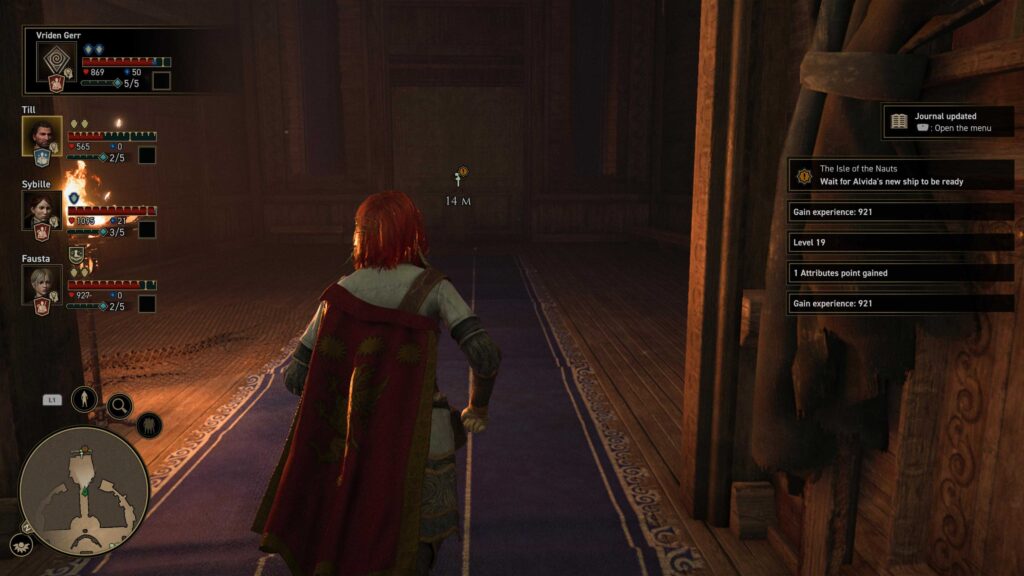
The biggest of these changes is the combat system, which is drastically shifted. I have heard the comparisons in the years since it entered early access being made to something like Dragon Age: Origins, but really, where this comes from is the use of a painfully retro RNG system that harkens back, but ultimately feels too dated to be good. Remember the days of watching your character unleash flurries of attacks at the word dodge appears over an enemy’s head over and over again, maybe broken up by a 14. So much flipping fun.
The game features a tactical combat system that, again, was heavily criticised in Early access, so what we get now is a three-mode system with none of them feeling particularly good. The tactical and Hybrid mode feel very similar; basically, the character you control does so in real time, with secondary characters doing their own thing. In both of these modes, though, your party AI is insanely stupid. During one early boss, we occasionally had AOE attacks against us that the party outside of my character would not avoid. Since these could deal half the health of some characters in a single hit, it was paramount to, you know, avoid these.
What these modes come down to is that you need to then go into a tactical menu to issue orders to party members, and again, I remind you, the tutorials aren’t really that good. Even with a pause in action, these attacks can happen so fast that issuing effects might even take too long to be meaningful. It comes across like part of the challenge of the game, or at least what they think a tactical game is, is that characters are too dumb not to die unless you’re smart enough to instruct them against their basic instinct. What did the death note say? You can always dictate to somebody to end their own life since it’s a natural human instinct. It’s on full display here.
The third and final mode gives them slightly more autonomy, though not by much. The bigger thing here, since this is the full action mode, is that the only noticeable thing it does is kill the pause effect on tactical choices. This becomes a noticeable negative when you try to trigger, say, a healing spell after your ally takes one singular hit, and then they are somehow dead before you can cycle the menu, select them, and then trigger the heal. Its a very constant thing.
I will say this, though, both on the difficulty and combat, the player is allowed to forgo the presets and tailor them to what they want. The combat starts slightly frustrating, with enemies feeling almost unilaterally scaled much higher than the player’s party, blowing up into full-blown torture by the time the game opens. Changing these options with some minor tweaks did help salvage my experience when I really wanted to walk away.
For a large chunk of the game, your character is wanted by… Well pretty much every faction in the game. This means that even in a city, you have to watch where you go because streets might be blocked by guards, or worse yet, look perfectly normal only for assassins to poof straight in for some god-forsaken reason. These fights are easy to avoid, which is good because of how much combat had already turned me off. Even at their best, they felt like wading through molasses. At worst, they feel particularly rigged against you, with base enemies having 3x the health of you and having the ability to stun you every ten seconds. The combat system requires far longer to learn than the grace period the game affords you.
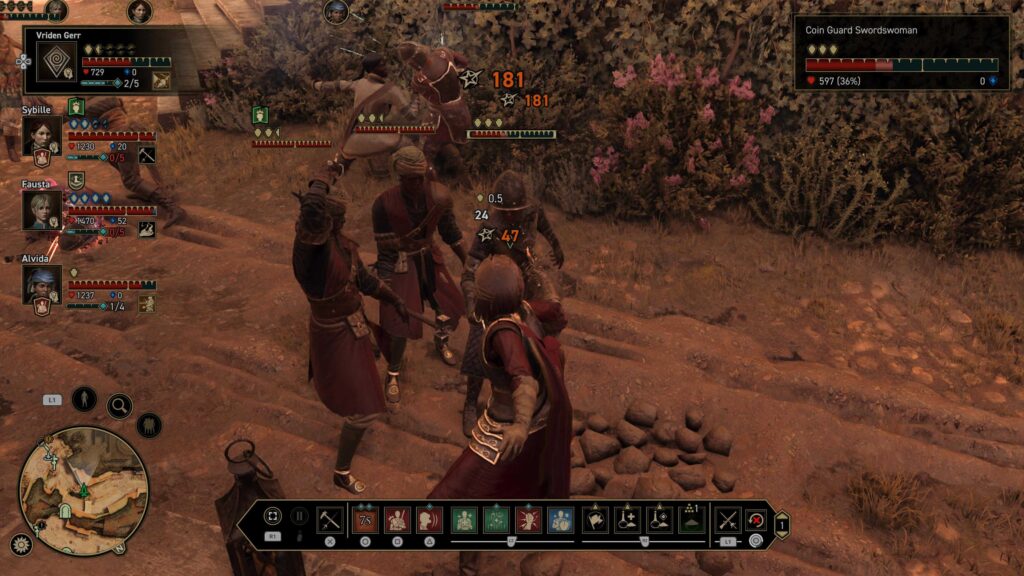
And as quickly as the game opens up, it finds ways to force you to engage in combat. This begins with several escort missions that allow you to move around patrols, but often block main routes with unavoidable combat situations. Going through a minor story situation, too, might often end with your party walking straight into a fight they aren’t prepared for, but need to save scumm to actually do the prep work for. The issue with this can often be that you were doing just fine RIGHT up until you now have no way of avoiding the situation. It becomes an expectation before too long and I… I just hate everything about the combat; it’s not fun, like at all.
This is in contrast to every time you have the option to avoid a fight, which I loved. The game has a robust leveling system with skills for weapons (that are very easy to mess up), stats to increase, and, most importantly, RPG checks for doing almost everything else. Lots of narrative fights can be avoided with a persuasion check, and oftentimes, you learn the fight would have been pointless anyway. The kicker, a persuasion check nets you more experience than a fight anyway. A room with traps filling it (a weirdly frequent occurrence) can reward you with the same amount of experience as four or five fights, making it feel weird that they even force you into some.
This is even before factoring in the frustrating stealth segments that lack all the nuance of what you want from stealth. For starters, you get a stealth damage check that offers some increase to damage, but it is genuinely like cutting their finger rather than hitting an enemy with a sword from behind. Breaking stealth also causes every enemy in the area to run over, so it’s like you accomplished nothing. They sometimes offer pathways, but not as often as one might like, and it is shockingly easy to get spotted if there isn’t a designated shrub or something to conceal you.
You don’t even get tools like a rock to distract an enemy. The best aspect is that these aren’t forced segments, but the alternative is even more annoying. These segments come up more than just once or twice, too, with many narrative points requiring this. The players can use disguises in some cases, but finding them can be a very confusing endeavor. Much of the gear system can be that way in fairness, with sellers rarely having the good or right gear you need to get past segments, causing undue struggle.
I don’t want to think I’m glossing over it either, as Jank returns in a big way. For starters, multiple tactical controls can be insanely finicky. At one point, I needed to move my characters between multiple standing plates to open a door. This was one of the first times it was really noticeable how hard it can be to get characters to do what you want. Some commands require multiple selections to trigger, and can be very hard to undo. It was challenging to get one character to move off the point I sent them, and in two cases, I couldn’t even get the character to attack after commanding them. It’s also easy to cancel out of your attack string, and even easier to not notice.
Enemies occasionally glitch out of bounds, and at one point, I lost complete control of my character mid-fight. It doesn’t always benefit the computer either. It can be hard to see traps, for instance, and I walked right into a room full of them, and yet not one triggered. I could stomach the back-end ones, but too often do they affect the core experience, painfully so, since I was already disliking combat.
Verdict
Greedfall: The Dying World does the thing that annoys me more than anything else. It does a lot of good things that make me like it, enjoy it, and want to keep playing. Then it goes ahead and does a lot of bad things, sometimes bafflingly so, given that the prior game did not, that frustrate me to no end. It’s almost better to make something irredeemably bad rather than something where the vision is so clear yet so unfulfilled.
There is a great narrative here that is engaging and a driving feature. It feels familiar yet fantastical in some of the best ways. I can ignore the character models because of that and the fantastic voice work that gives the game life. The fact that you spend the first five hours bouncing between the English of foreigners and the native tongue of your people is SO SMART that it grants you this connection to the world.
Then the world opens up, and suddenly it starts to go wrong. The combat is dated and frustrating. Stealth sections are frequent and pin you between bad segments of that or overwhelming fights. Much of the complex mechanics is poorly explained and confusingly implemented in a way that was not conducive to a good time. This is on top of glitches and bugs. All of these created an experience that began wearing on me and never really stopped. At the end of the day, combat should be the most exciting element of a game where it is so heavily involved, not something you avoid at all costs.
Remember to follow us on Twitter, Facebook, and Bluesky to keep up to date on everything we have going on!
Reviewed on PlayStation 5, also available on Xbox Series and PC
A review key for this title was provided by Nacon for the purposes of this review.
Developer: Spiders
Publisher: Nacon
Release Date: March 12
Pros:
+Very engaging narrative
+Great Voice Acting
+Leveling System
+Social RPG Aspects
Cons:
-Horrendous Combat System
-Some Character Models
-Confusing mechanics with poor tutorials
-Stealth Sections
-noticeable bugs/glitches
-
Greedfall: The Dying World
