

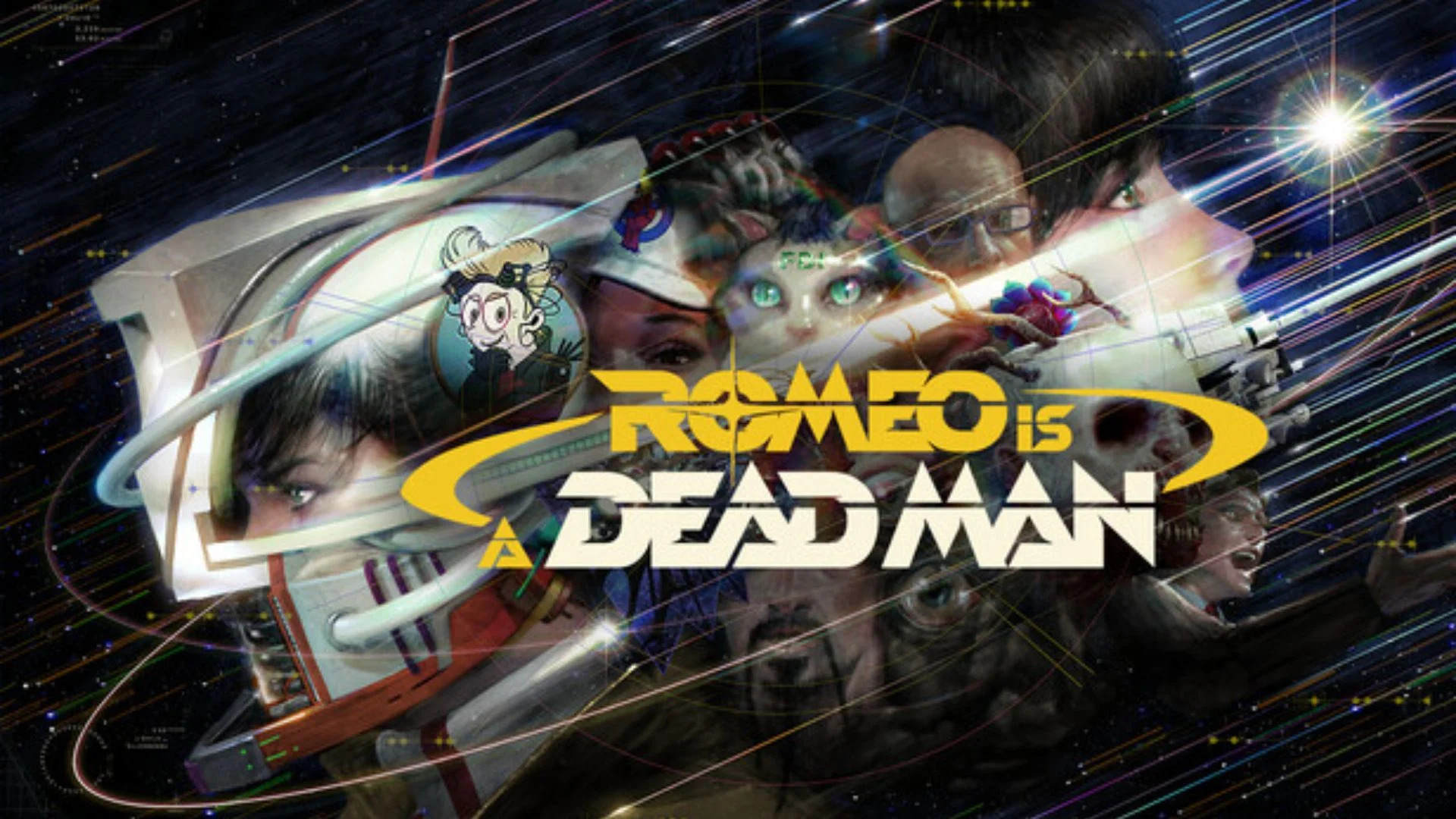
Suda 51 has had a fairly substantial impact on my formative years of gaming. This was a time before, or at least early on, in the indie market, in which double-A developers in particular had to take significant risks trying to crack that space with nothing but a desire to be as not mainstream as humanly possible. That was Goichi Suda in a nutshell, and that’s why I loved Romeo is a Dead Man.
It’s not like Suda ever went away; he has been developing titles consistently since the 90’s and last year teamed up with developer Swery to release Hotel Barcelona, which we also reviewed and enjoyed. There was this sort of golden age in all this, when his studio, Grasshopper Manufacture, released a string of great and absurdist hack-and-slash titles from No More Heroes, Lollipop Chainsaw, and Killer is Dead. It’s by no means all they did, or how they even started, but it is the most relevant to this conversation.
Romeo is A Dead Man brings back that classic, action-oriented focus in a package that feels new but also manages to feel like the progression we have been waiting for all these years. An imperfect extension of games that, while they themselves are imperfect, manage to nail down the fun factor in a package that long stays with you by design.
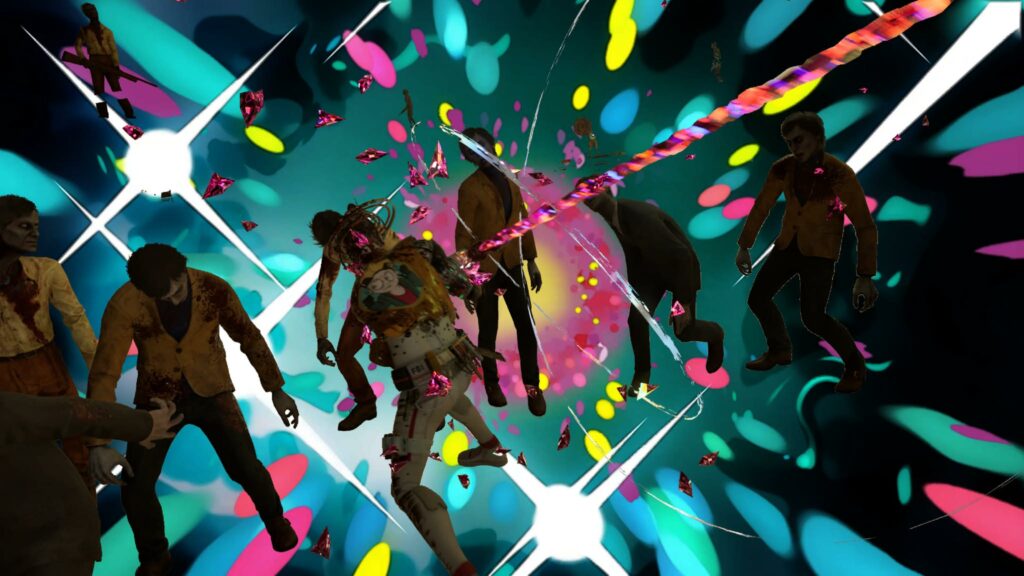
While the name doesn’t outright suggest it, there is an extremely bizarre take on Romeo and Juliet in Romeo Is a Dead Man, though it isn’t straightforward. Starting from a point of Twin Peaks, Romeo is a sheriff in a small American town. While on patrol, he finds a girl named Juliet in the middle of the road. He saves her, they fall in love, and they are going to get married. Hooray! This is about as normal as the story gets.
Juliet is a space alien, wanted by the space police, and Romeo gets part of his face just ripped straight off. His grandfather saves him with a device that bores into his head and turns him into a cybernetic-headed, half-dead man, shortened to Deadman because Half-Deadman is hella lame. Also, your grandpa dies and literally becomes a talking patch on the back of Romeo’s jacket, which is just this thing that happens sometimes.
Now, Romeo is recruited by the space police, who are actually a branch of the FBI (yes, the American one), as he sets off to try to find Juliet, whom he needs to kill across several timelines as he searches for his version of her. And, I know you probably want to complain about spoilers, but I literally have not said anything that does not appear in the first cutscene of the game. Seriously, that’s before you even draw your blade.
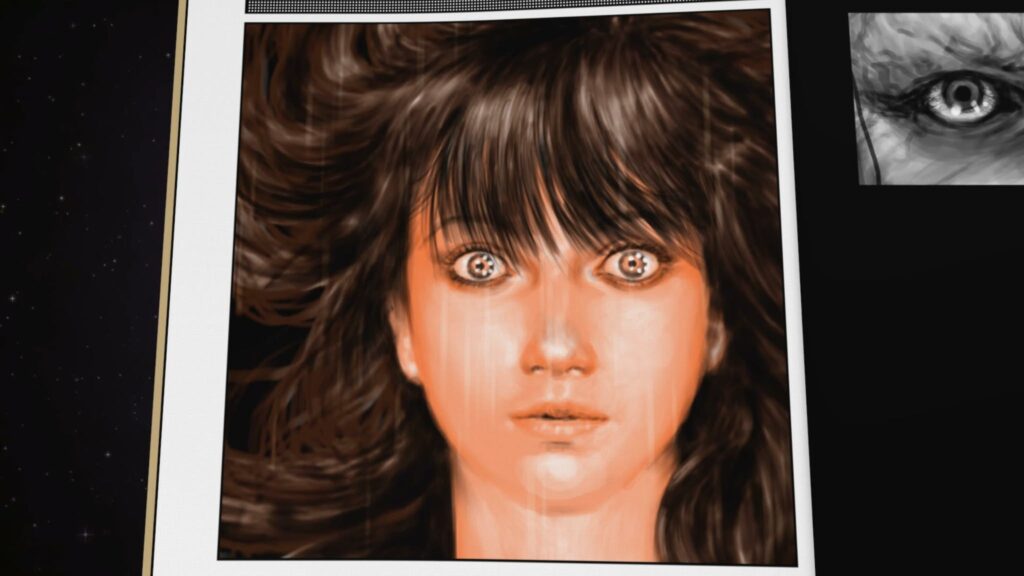
One might argue that there is too much backdrop as they open with minature town, then segue into a cutscene, then a comic book style narrative drop, all of which feel slightly at odds with each other, and in one case seem to contradict each other. The comic style, which has a distinct and well-crafted art direction, appears more often than the others. This works given that the normal cutscenes range from good to less, so depending on their placement. Romeao has a weird head, and that’s all I will really say about that. I wish miniatures appeared more, but the game shifts style so often that it’s difficult to truly complain.
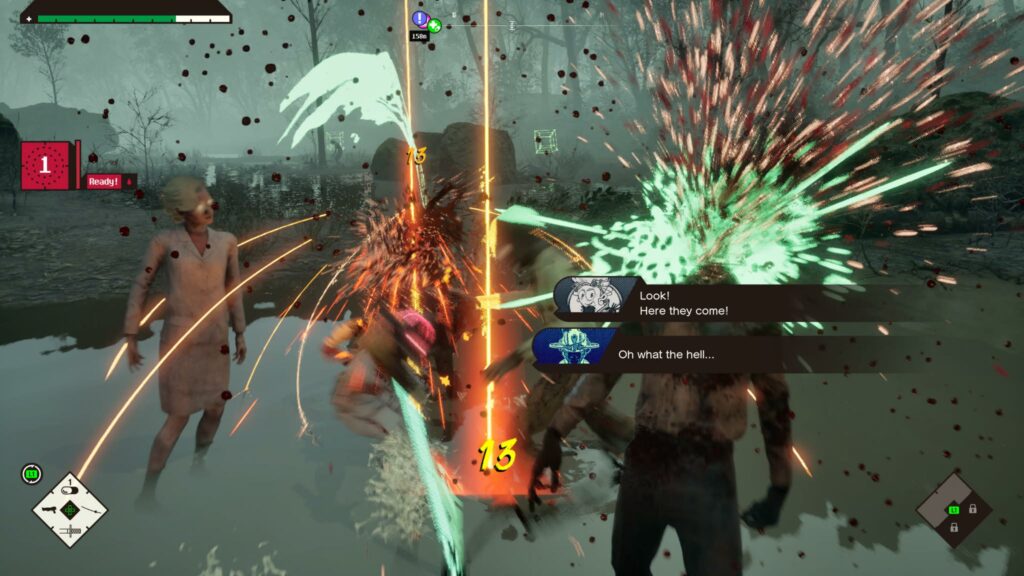
Romeo then traverses the galaxy to go into these partitioned dimensions that serve as the stages you need to complete, all of which are modeled after different periods in America, like a mall in the 1980s or an insane asylum in the 90s. There are a few weapon choices you can run through, but in particular, you have a heavy and light attack for your melee weapons and a gun for ranged attacks. Players need to navigate these areas, fighting enemies along the way, as they attempt to open up a boss door and fight a big bad at the end of it all.
In practice, this feels a lot like Grasshopper’s classic games, with many having a forward progression through the area, taking on enemies that are fought in locked arenas. All of that is here, too, but it’s the way it subverts how those older games capitalized on the experience that makes it flow much better. For starters, the game draws some inspiration from the Souls games in how progression works.
The base enemies you fight are zombie-like humans that charge at you. They are easy enough to slay, but these enemies often swarm you and rarely stop coming after you, no matter where you are. Besides the fact that these enemies make great fodder for your fast-paced slashing, they actually act more as a buffer to keep the more powerful enemies from being your primary focus, and letting them crowd you with abilities like throwing out bombs or charging straight through. When you heal at a save point, it revives the enemies you cleared, keeping stages engaging long beyond normal.
This is good because levels are designed as non-linear spaces to explore, in which you need to find keys or navigate through a second overlapping space in the area to find keys that open up other portions of the level. All in all, most stages took me around 2 hours to complete, but I have never been great at finding my way. Since leveling up just involves gathering a material that can be spent later, getting lost actually benefits you eventually, making the aimless wandering feel less intrusive.
As stated above, levels take place over two planes. The physical one is the level itself, which is easy enough to tell what you are doing in. Hallways that you run through, identifiable locals like a plaza in the mall. These are well-designed, not huge, but identifiably well crafted. The second world is a digital local connecting TVs around the stage that allows you to traverse to locked areas.

This area is fully traversable and overlaps the physical map, though you wouldn’t be able to tell. One mission saw the main lobby of the area become an indistinguishable mess with towers to traverse and a massive open space with locks that sort of sit in the center, not stripped of everything identifying to know which route you are popping open. The area was just a mess of pulsating cubes that don’t form a solid mass until you get closer to them. In the next stage, these were mostly just straight lines from point A to point B, so even at the game’s worth, it is spotty with its frustration.
It doesn’t help that this realm had my least favorite mini activity in it, a mandatory interaction with orbs that you need to adjust to make pathways appear. These are similar to moving the control sticks to overlap two key points to click, just done so much weirder, and I am not really sure why. The more obnoxious point is this non-descript area connects to areas you have yet to see, either to connect them or just get an item to use where you were. Since it’s hard to measure against the world at large, this can often lead to confusion in your location. Even with some guideposts available, it is easy to get lost, which is kinda the crux of the point here.
The game’s biggest strength, though, is just how often it bends genres, maninging consistant themes throughout as it shifts. Action is a constant throughout, but this shifts up when you visit the insane asylum and are forced into a stealth section moments after a jump scare or two. Before that, you are running around a mall trying to kick on the power generators while getting swarmed by zombies. And this is beyond just hanging on your spaceship with a retro 16-bit aesthetic. Even the music, which is an absolute highlight, feels all over the place in the best of ways.
Of course, combat isn’t without its flaws, which is to be expected from a Grasshopper game. That is usually why I point out how great their games are; they can overcome even the most glaring flaws when they are firing on all cylinders. Romeo has a jump, but it can be very ineffective. He can’t grab higher platforms, so trying to slash higher enemies or traverse up can be less ideal. The jump showcases its limitations much more when you get surrounded, and the jump and dodge mostly do nothing, pinning you down and forcing you to hopefully slash your way out. There might be too many enemies, or you are stuck in a stun lock, but it can become unenjoyable quickly.
What I did love was that the ranged weapon doesn’t feel useless, which is often an issue with games where you are SUPPOSED to melee( Looking at you, Devil May Cry). The gun isn’t spectacular at the start, but it is upgradable and fits into combat at any point you want to control the field. What Romeo is A Dead Man, smartly does is link the powerful charge move that both deals a high amount of damage and heals you, to a blood gauge that requires proximity to the carnage. In this way, you get punished for using the gun, but not in a way that devalues it.
Romeo is a Dead Man also makes the content outside of slashing your enemies to bits fun as well, with almost everything offering a tiny mini game along with doing this. Leveling up in the game is literally a Pac-Man-inspired game that involves putting the experience you acquired into a machine to move the character and pick up the upgrades you want, though it could use the ability to zoom out more on the screen.
Traveling to stages is also a ship-flying mini-game in which you travel and pick up space debris. Along this route, you get side dungeons and the quick ability to replay levels, which offer loads of replayability even before you reach the end credits roll. The ones when you beat the game, not the unskippable ones at the end of each chapter. There are far more functions across your skip to get lost in, and none of them felt bland, even when one in particular felt really weird.
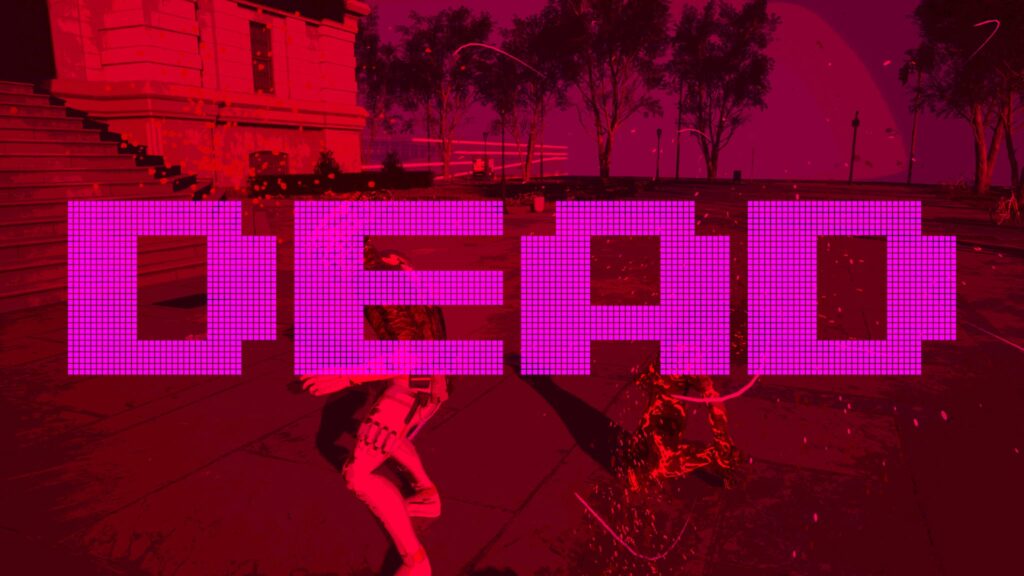
Each level is capped off by a boss; of course, these are some of the best moments, though they can be frustrating as well. The first stage of the game has you running across a burning field, fighting a gigantic Juliet. Dodging and jumping fire still sends chills. It also helps that this was the first moment I got the game’s disturbing death screen. Bosses tend to be easier in the first half of the fight until they shift up their strategy. It keeps it engaging, but as a boss later hammered home for me, their endgame can instantly kill you cause it happens, and you have yet to process how this will impact you. Then you’re dead.
A complaint I would lodge is just how clearly the lock-on function becomes problematic against bosses. One fires a beam that flies around the field, and another starts jumping across the chandelier while dropping a toxin. In the case of that latter one, it happens so fast and spasms the camera so fast that you could get whiplash. From there, you can’t even see what is killing you because all of this goes down in the way it does. It’s weird because lock-on never breaks like it might when enemies change range in other titles, which I wanted to be happy about, but ultimately, you get really messed up.
Verdict
There are some imprecise controls in Romeo Is A Dead Man that would hold any other developer back. With a Suda 51 and Grasshopper Manufacture game, you are probably well aware of what you will get. For the trade-off, you get epic action and fast-paced gameplay that never fails to be fun. You get a bizarre story that gets more engaging the further into it you delve, and tons of replayability along with that. There are plenty of functions to discover and abilities to mix into your combat. This is Suda 51 doing what he does best, and a return to form with an experience that feels nostalgic yet modern. Suda is back, baby, tell a friend!
Remember to follow us on Twitter, Facebook, and Bluesky to keep up to date on everything we have going on!
Reviewed on PlayStation 5, also available on Xbox Series, and PC
A review key for this title was provided by Grasshopper Manufacture for the purposes of this review.
Developer: Grasshopper Manufacture
Publisher: Grasshopper Manufacture
Release Date: February 11, 2026
Pros:
+ Fast paced high octane combat
+Unique blend of genres and art styles
+Plenty of Replayability
+Engagingly bizarre narrative
+Tight level structure that keeps action at forefront
Cons:
- Sometime disjointed and confusing in narrative structure
- Navigation can occasionally be challenging
-occasional lock-on and camera issues.
-
Romeo Is A Dead Man
