

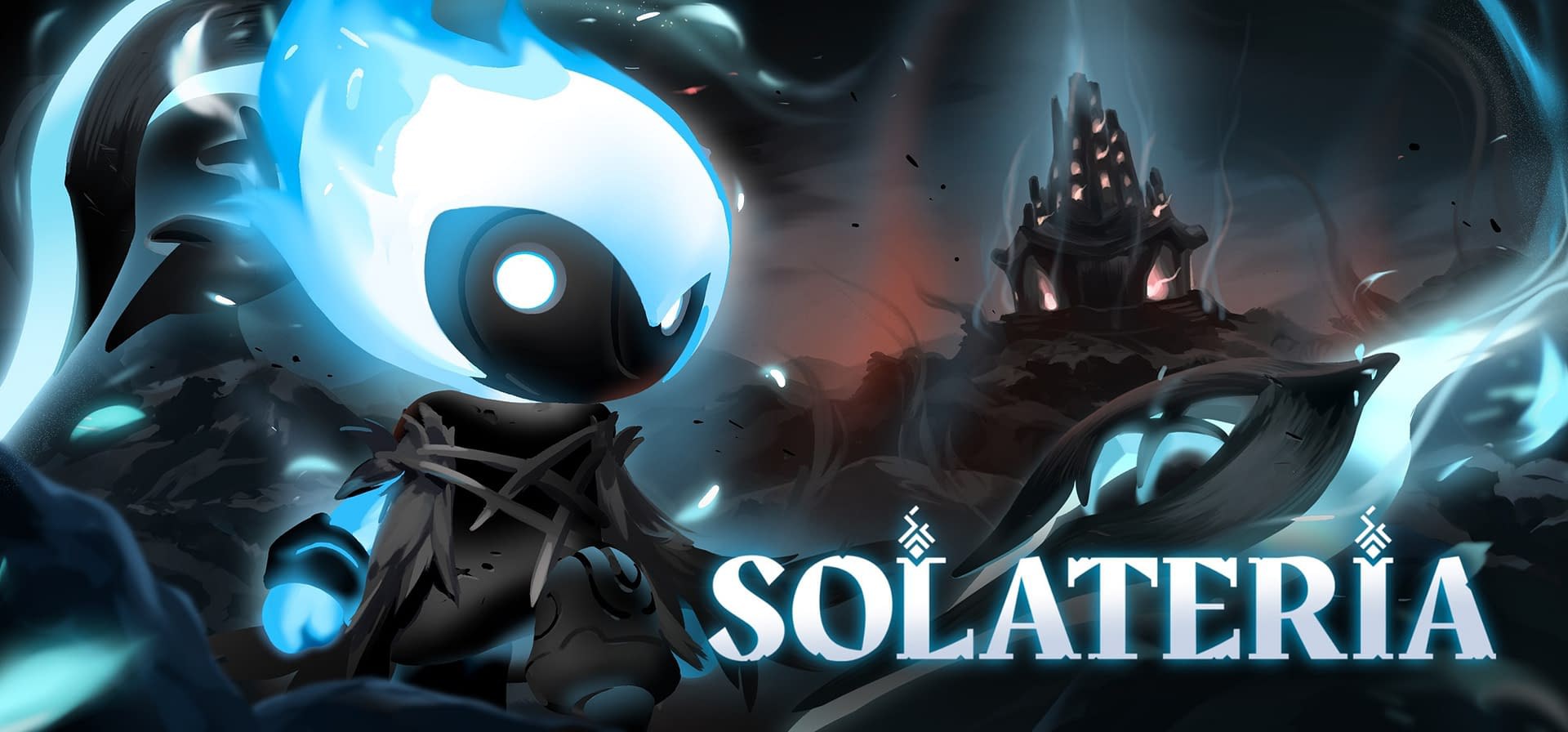
Solateria is a fine Metroidvania that, while it does not reach the same highs as other games in the genre, certainly drips in atmosphere.
There has been an ongoing surge of descriptions that I truly detest, and that is to catalogue games like popular entries in the genre. Abominable names such as “Clair Obscur-like” to refer to a JRPG or “Silksong-esque” when the Metroidvania moniker already exists. While I cannot blame the writers who write such titles for search engine optimization purposes, a fetish, or just to get a kick out of it, I find it disrespectful to the people that work hard on this art form. Working for three or more years to see someone behind a screen simply disregard your work and say, “This other game is better,” sends me into a spiral.
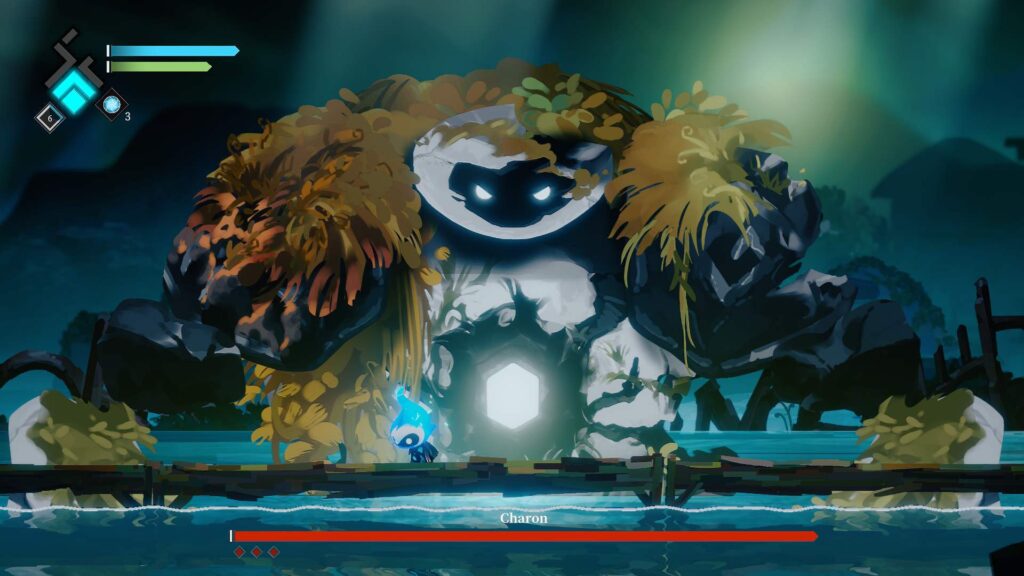
Games deserve to be recognized for what they are, not for what they aspire to be. All of this is to say that Solateria does a good job at mimicking the genre it is set in. Never reaching the highs of the genre, it is a fine entry in the annals of Metroidvanias. Its painstakingly hand-drawn biomes would at times surprise me with their imagination. Looking at colorful alien flora full of exciting, if a little abusive, new enemies is wondrous. A rocky, desolate landscape with a tower siphoning energy, prevalent in most third acts in superhero movies during the late 2010s, reminds us it is a gorgeous game.
And not only that, but it does feel like their characters have a memorable personality. For instance, your protagonist, Tott, a shy, small, but insistent fire warrior, will meet several folks on their journey. Solateria is based in the middle of a catastrophic crisis called the Shadow Plague, in which its inhabitants have either died or lost their minds. Against such a backdrop, meeting a stoic, unbreaking knight by the name of Cor seems a refreshing change of pace. Their first meeting goes as expected, disregarding the spry young warrior, but as they keep stumbling upon each other, he breaks down. Seeing so much death in his lifetime has affected him irrevocably.
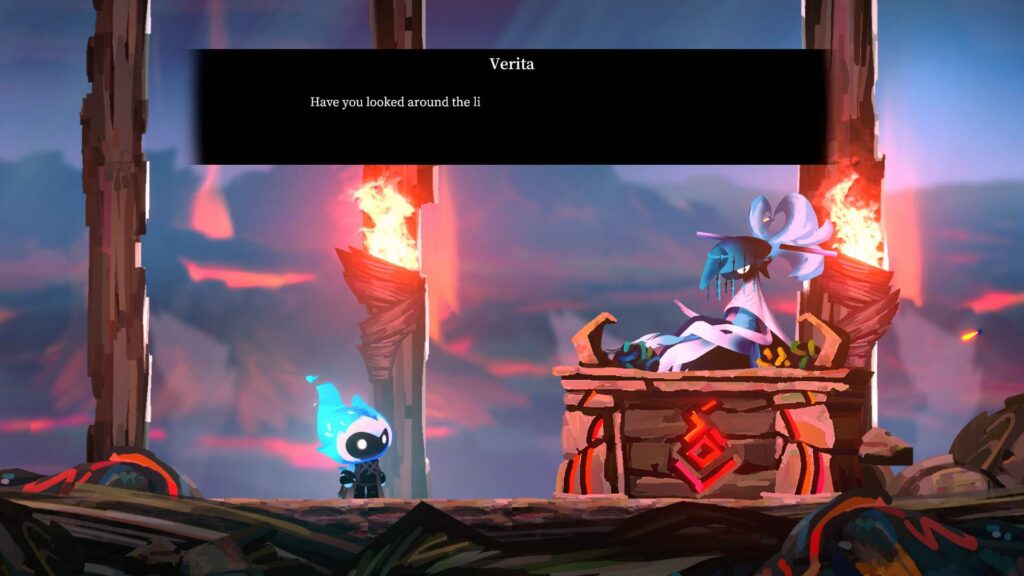
Then you have Cardamime. A frightful merchant that was forced to sell her wares because her father was a victim of this disease and she needed to eat. Among her items, there are two personal documents of her father, described in-game as useless information that buying will ultimately free her from her grief. Slowly but surely, she opens up and begins to trust you as you primordially light up her fire and everyone you meet on your journey.
Each of the 14 main bosses that you will encounter has a similar story to tell. Either misguided by their sense of duty or poisoned to the point of no return by the plague, killing them off seems like the most merciful act. Talking about the game mechanics, as the parry is quite prominent, it is refreshing that every boss has creative movesets that will have you scrambling to learn them. Tott, as the small candle he is, is susceptible to water, so a water boss was particularly challenging because you need to dash the liquid away to move properly.
Solateria’s level design itself is well done. You can notice this is developer studio Doodal’s first stab at a Metroidvania because at this time, if you are a fan of this genre, then you might have seen it better executed elsewhere. That does not mean this one is undeserving of praise. Exploring every nook and cranny until you find the right way to go next or a new skill that will unlock a new path is truly a feature of this genre that never gets old if done correctly.
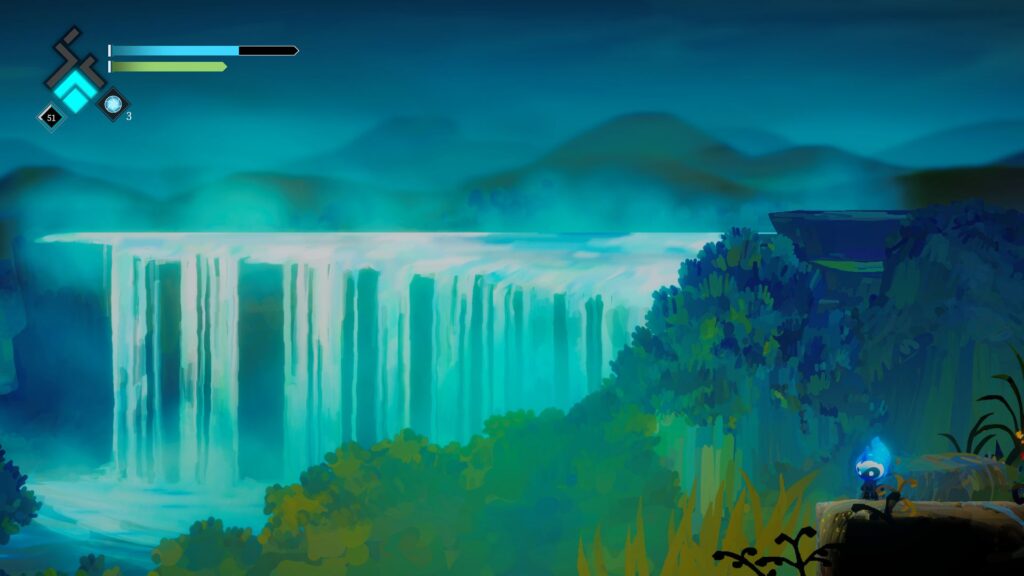
Fighting for an uncertain future is a theme most of us can resonate with. Who will be standing when the rubble settles, and what will be lost in the process? Solateria is a melancholic Metroidvania that borrows heavily from its counterparts but carves its personal path. The damaged characters you meet, the tragic bosses you fight, and the rich biomes you explore all have something to say. It is not simply a recreation of what people loved from other games but a true identity of its own. Whether that identity is better or worse than others is beside the point.
Reviewed for Steam.
A review key was provided for the purposes of this review.
Developer: Studio Doodal
Publisher: SHINSEGAE I&C
Release Date: Out now
Pros:
+ Tragic, melancholic story
+ Plenty of levels to explore
+ Gorgeous hand-drawn biomes
Cons:
- Parry is a little slow
- Movement is stifled
- Not as precise platforming
-
Solateria
