

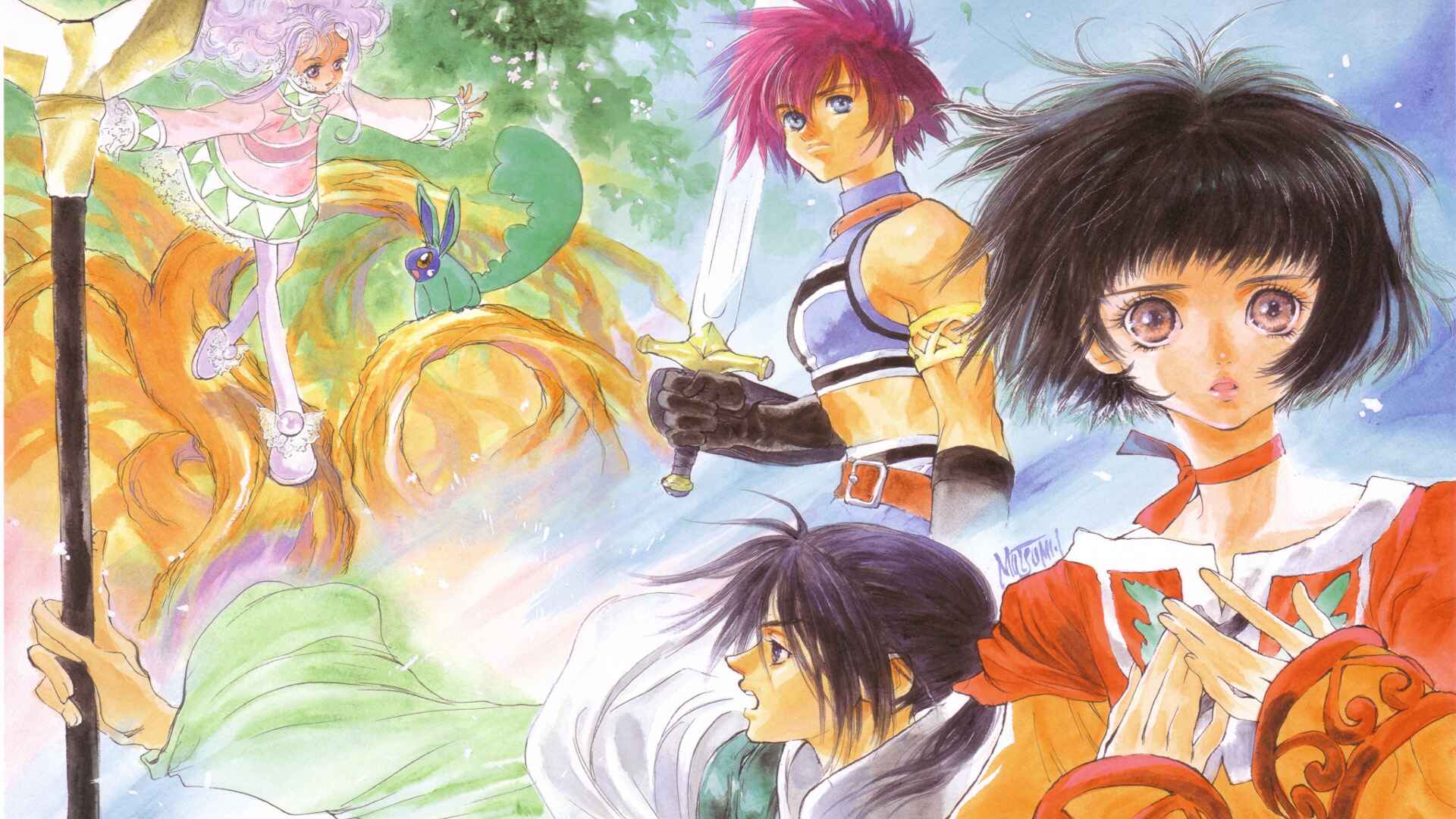
Allow me to be vulnerable for a moment. It is always hard for me to review remasters, especially for games from over two decades ago. Where does one start? Do you grade these games by today’s standards, or try to put them into perspective of when they were originally released? How much does nostalgia factor in, and is that fair? I remember spending more time than I wanted to putting my thoughts in line when I had reviewed City Hunter, and mentally, I feel those same conflicts reviewing Tales of Eternia Remastered.
Despite it having a different name at the time, I had played the game around when it originally released. I was around 12 years old at the time, and this is one of the titles, along with Lunar, that I would credit with helping me branch out from Final Fantasy to the JRPG genre as a whole. I was always going into this with rose-tinted glasses. The thing is, though, I probably haven’t played Tales of Eternia in almost as much time. I have, however, played nearly every fully 3D title in the series at like 4 times a piece. I was excited to return to a simpler time.
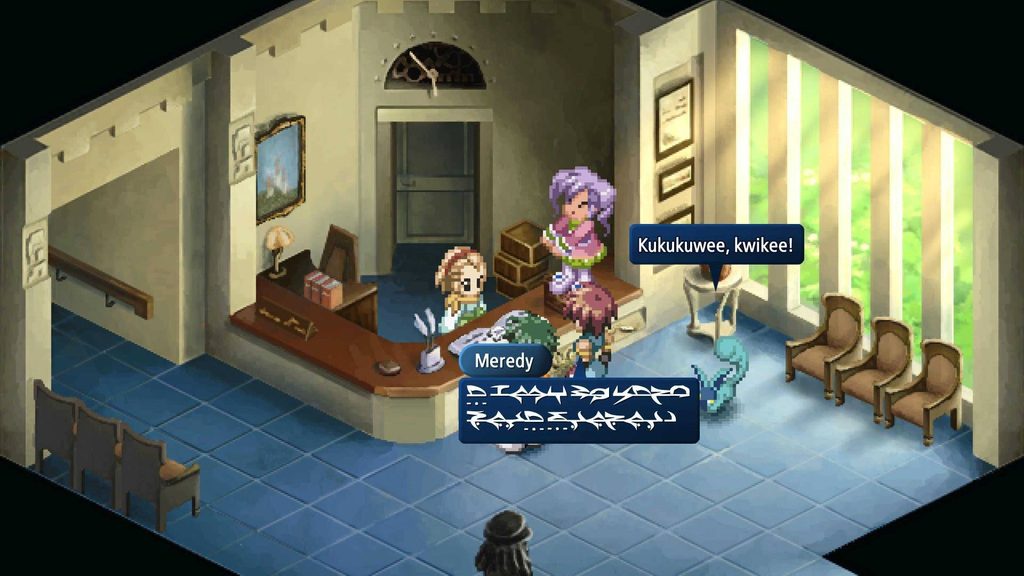
Tales of Eternia has a lot of the hallmarks of the series, or even narrative points, such as two worlds feeding off of each other in some way. This forms the crux of the player’s journey as they take the role of Reid Hershel. Drafted by his best friend Farah to help the strange girl named Meredy, she fell from the sky in her spacecraft and doesn’t speak the language. Meredy, for her part, also feels like a precursor to characters such as Sophie in Tales of Graces, who was… For a brief moment… Known as the Tiger Festival.
The first thing our protagonists try to do is alert the village elder and ask for help. Meredy has different-colored skin, though, and speaks this other language. She must therefore be a threat. This isn’t me reading into anything either; this is literally the reason the characters are given as to why she must go. Our protagonists depart the village simply hoping to be of help to this stranger, because it is THE RIGHT THING TO DO. Obviously, though, the story only gets more JRPG-ish from there.
As it turns out, there is this growing black spot in the sky that they discover between these two worlds, that might spell out the end of humanity. The institutions will not listen, though; that would be heresy to claim such things, and when somebody finally does listen, it results in… And you cannot make this up… Needing to find a bridge between these worlds that only exists in fairy tales clearly makes this an act of aggression, and we need to kill all of them before they kill all of us.
It’s such a weird feeling, and typically my go-to in a conversation like this will be Eternal Sonata. There, I did; I made an excuse to mention Eternal Sonata. That’s YOUR GAME, Bandai Namco; friggin’ remaster it! Sorry, side rant. That is typically my go-to to remind people that Japanese developers have a long-standing tradition of criticizing war, as made clear by Claves’ 40-minute philosophical dying internal monologue. This title being even older than it should be, no surprise. A product of Article 9, I assume.
This said, some of these criticisms and critiques of society feel like they never lose their relevance. Do I need to spell out why Tales of Eternia, with what it has to say, returning now, feels almost serendipitous? In the grand scheme of the series, this probably isn’t my favorite war tale. That conflict brews in the background until much later in the game. If I’m being fair, Tales of Graces remains the most solid on that front, but some moments felt as if they paralleled the news right now.
In between this, you also get some moments of genuinely enjoyable voice work. The English was rerecorded, as it seemed that the script was rewritten. I can’t honestly say how good or bad the original was, but I did catch a few typos throughout. You can choose the original Japanese if it suits you, but this new cast has both a classic feel to them while sounding more polished, if that is your thing. I enjoyed it, though, despite the voiced dialogue being few and far between. I would point out that, not to criticize, Final Fantasy Tactics was dubbed for the rerelease, which I think is a metric one might use to judge the work put into a remaster.
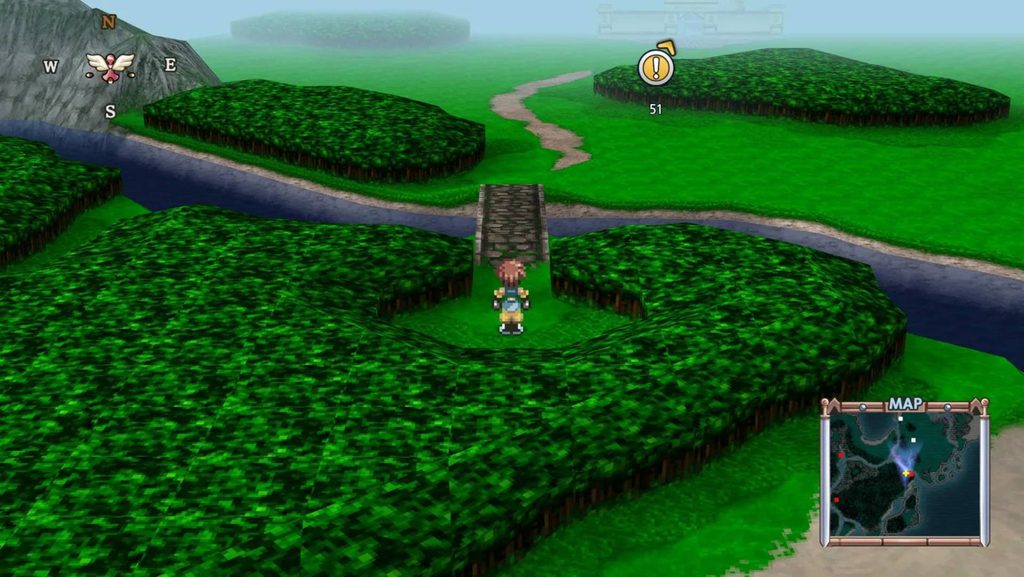
A welcome feature in Tales of Eternia Remastered is that you can switch between the original and remastered versions of both the graphics and soundtrack. Either way you go with the music, you are in for gorgeous renditions of an already wonderfully engaging score. The graphics are both great in their own right too, but you can genuinely see the visual improvements across towns and the world map, and you can swap between them in the menu with just a few button pushes. My only complaint would probably be that I would have preferred the classic graphics to have the aspect ratio they were built for, as they can feel stretched on a wide screen. CRT options would have also been nice, but that is not as much of a concern for me.
You know what Tales of Eternia has? A world map, and it’s about as memorable as one might expect—definitely one you can get lost in. One thing I wasn’t expecting is that you get the option to cross oceans fairly early, and not how you expect to. It was easy for me to end up in one or two places where everything murdered me for, like, no reason. But that was the fun of the RPGs I grew up with; you couldn’t possibly fathom that one minor wrong turn was all it took for a fun adventure to get dark quickly.
The thing that always gets me, though, is when a remaster like this adds in guide points to help you. There is always a marker pointing towards your next objective, which is good, since you can’t get lost. That said, these titles made their time commitment by confusing the hell out of you, so it does feel strange to just know what I am doing.
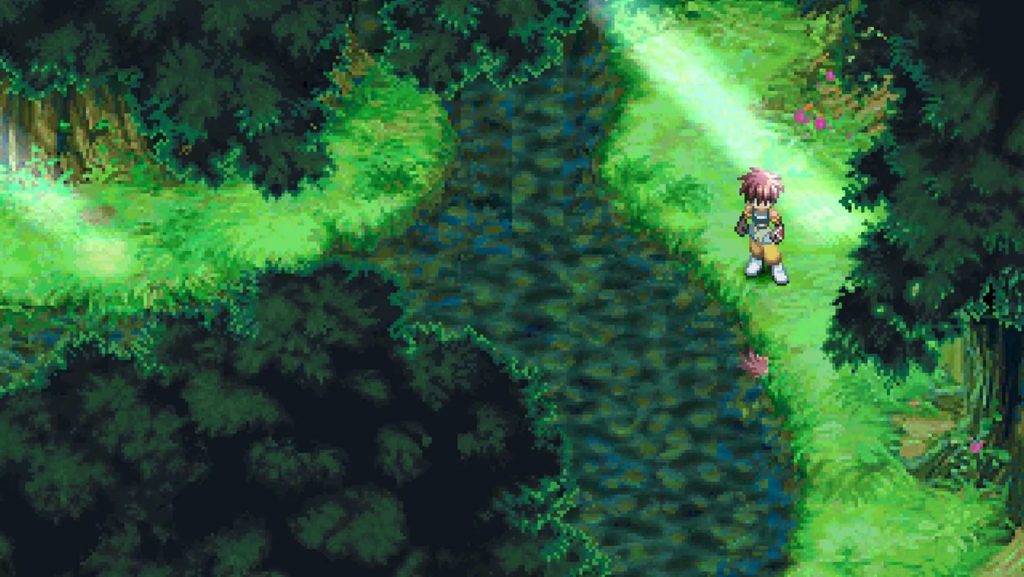
Less so, though; the game has (or at least calls them) subquests, but they aren’t really quests; they’re more like hidden scenes you could probably stumble into. Each one of these also gets markers, which, while I appreciate the thought, feels like it undercuts the impact of finding or discovering them on your own. Some appear to be time-sensitive and halfway across the map, so I do understand why the developers might want to stave off some annoyance players might undergo trying to find these.
That said, most of these scenes add very little, with a few following this character traveling. Great to see her pop up from time to time, but it’s usually just her getting into some situation with a local, or being lost; missing them doesn’t lose much overall. The oddest thing I found is that while they added these reticles for scenes, stores don’t have clear indicators before you enter them. In a few towns, I needed to try every shop before I found the weapons store. Some have obvious markers, but you would be amazed how many do not.
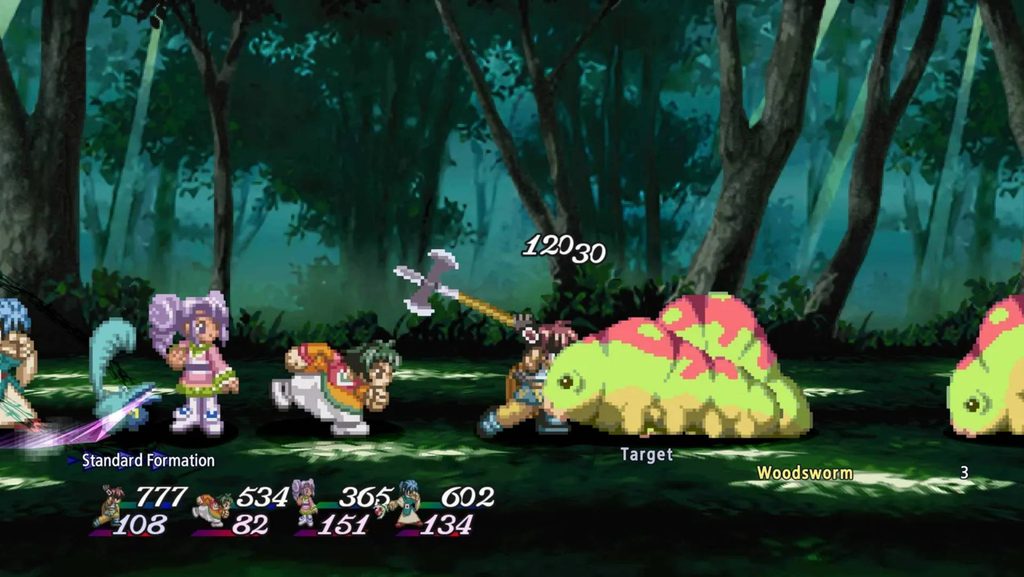
The combat was what blindsided me most, and again, I have played the game before. That said, playing the recent entries a ridiculous amount, I clearly forgot the humble beginnings it came from. The combat plays out in a 2D plane with your characters lined up behind each other, with enemies doing the same on the other side. Occasionally you get enemies on both sides of you. Even at the time, combat was free-flowing, which is part of the series’ charm.
This is where it’s difficult to really judge the game. The fights are enjoyable but obviously not as good as later games. Can you really criticize it for that, though? Of course, a game that predates games that use the system will be less good than later games. That’s kind of how that goes. I guess the thing I can say is that the combat piles up on itself, which can make it harder to track, with character combos having less of a flow to them. The way it is structured, magic users should be played back with attackers forming a sort of barrier to protect them, which makes combat feel more limited than anything else.
There was this one fight against a boss that in particular highlighted just how limited this structure is. The enemy was fast and pushed my entire party into a corner on the screen that I could not escape from. Worse yet, his big move was a sword slash that breaks guard and hits the entire team in a wide range, making for the most draining fight that I had had up until that point. I would later figure out that the semi-auto combat mode that I was in offers a reaction to your opponent that makes it hard to push past to switch sides, which was why that happened.
Verdict
What can I say about Tales of Eternia Remastered? Well, I loved every minute of it. I made a complaint when I reviewed Tales of Berseria Remastered that while I enjoyed the game, it vexed me that so many games in the series feel left behind. Then we get a remaster of a recent game you could play on your PlayStation 5 already. Every issue I have with this title adds to its charm—its classic retro charm—and the story is still poignant even now and still needs to be told. The world of Eternia is inviting and engrossing, and I just don’t want to leave.
You can follow us on Twitter, Facebook, and Bluesky to keep up to date with all our coverage and be part of the conversation.
Reviewed for PlayStation 5, Xbox Series X/s, Nintendo Switch 2, and PC
A review key for this title was provided by Bandai Namco for the purposes of this review.
Developer: TOSE Co.
Publisher: Bandai Namco
Release Date: October 16, 2026
Pros:
+Poignant and timeless story that feels as relevant now as it did then.
+Ability to toggle classic graphics and soundtrack easily.
+Many elements clearly feel reused in later games, giving new fans an opportunity to experience those.
+Exploration and combat is classic and charming, that said...
Cons:
-Combat structure is very dated compared to recent entries.
-Buildings could use indicators.
-Side quests shouldn't have been given indicators, given they are mostly hidden scenes.
-
Tales of Eternia Remastered

1 Comment
Pingback: Dragon Ball Xenoverse 3 Release Window Following Player Feedback - Pixel Byte