
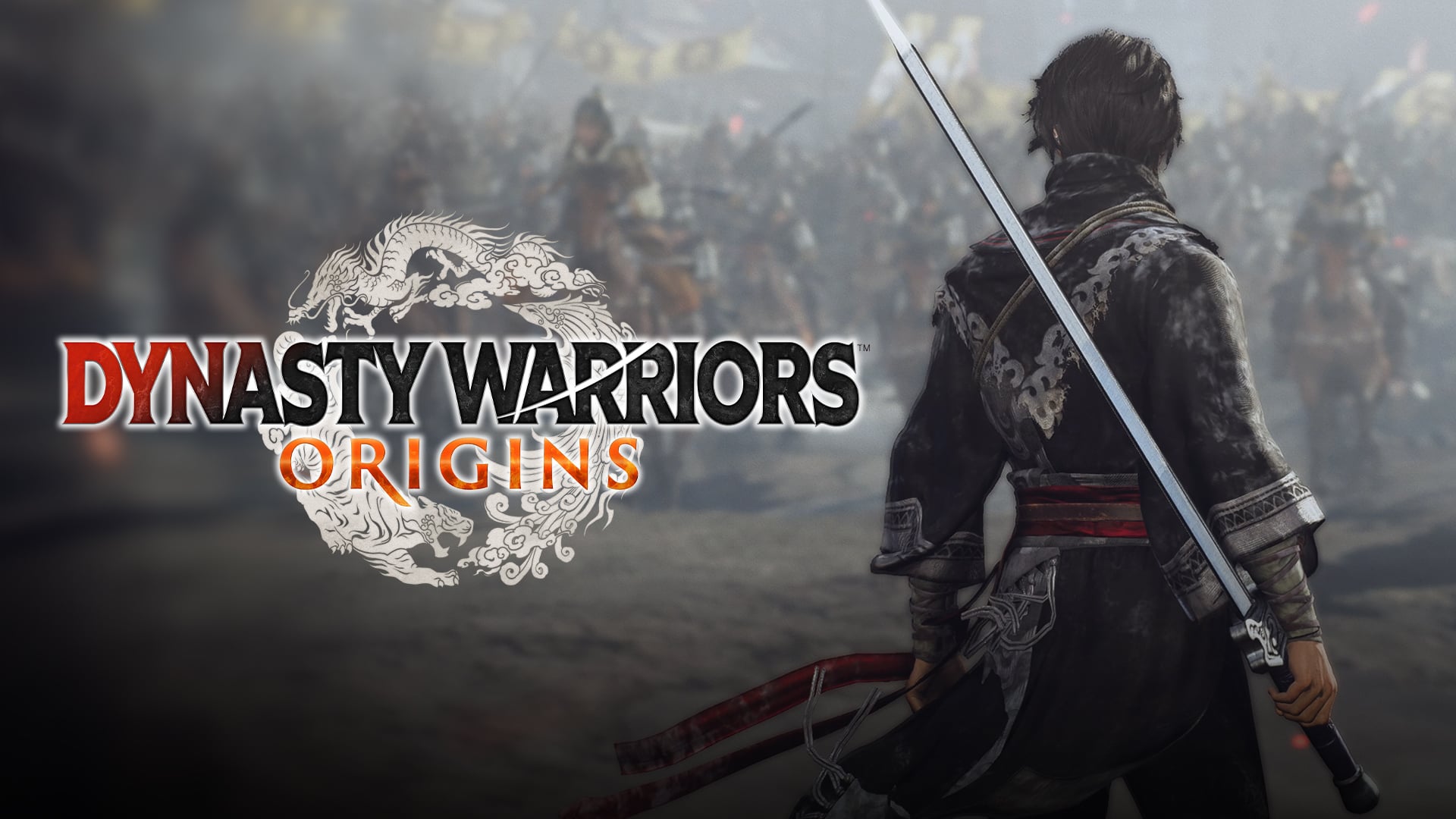
Listen, sometimes you want to just swing a weapon around and kill everything around you in whatever radius that might be. I’ll admit, it took me a lot longer than I care to admit for me to figure out there is a certain zen in the action. Dynasty Warriors Origins, developed by Omega Force and published by Koei Tecmo, understands that, but clearly picked up from the many spin-offs over the years that maybe JUST swinging a sword and just conquering the battlefield is a little boring too. You need to have something in there to struggle against, and in this case, not an open world where you can’t find the next waypoint.
For a game with origins in the title, there are parts of Dynasty Warriors Origins that don’t ‘feel’ like an origin. Several characters you should know are aged down, and noticeably so, with Cao Cao and Liu Bei in particular standing out as having what Tommy Wiseau might refer to as a baby face. This contrasts with the confident leaders of previous games, but the plot should still feel familiar.
I mean, this is the 10th mainline game in a series that explores a very specific period in Chinese history, with a gameplay loop of dominating the enemy. Of course it isn’t going to leave much in this period of history that hasn’t been covered. The opening narrative starts with the Yellow Turban Rebellion, which is par for the course since most games in this series have players cut their teeth against them anyway.
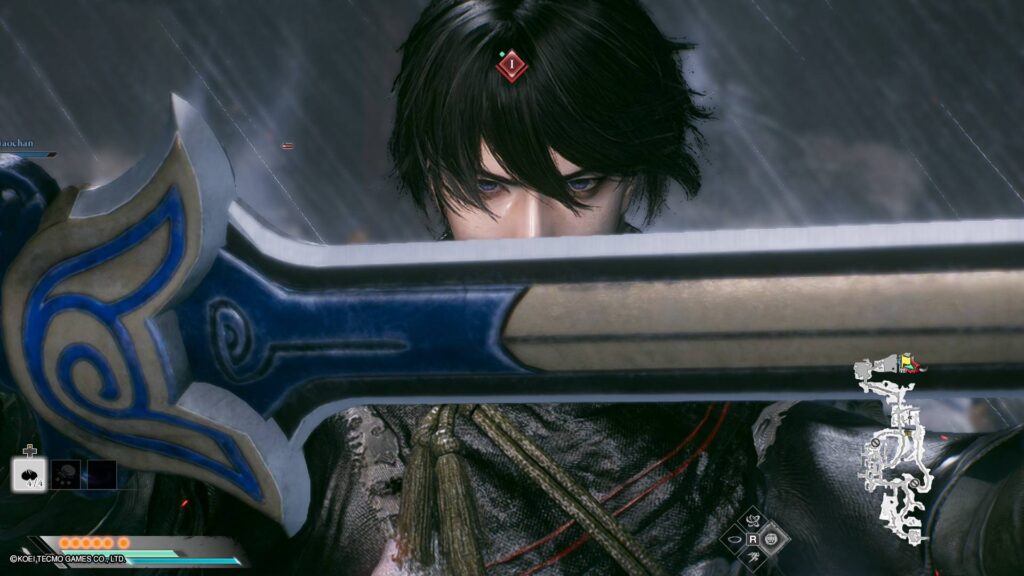
The biggest and most pivotal shift to Dynasty Warriors Origins, though, is that the narrative is centralized around one character referred to as The Wanderer because… Of course… He joins the battlefield as an amnesiac because, again, of course, he becomes embroiled in the conflict brewing in the land. The other key shift here is that the game doesn’t force the choice in the path you want to follow early on, having the player bounce between allegiances during the part in the story where everybody is loosely allied. Early on he follows Liu Bei’s volunteer army, shifting allegiance to Cao Cao as there are growing threats of Dong Zhou, all names I’m not convinced I didn’t make up.
Why this works is that these characters are often structured as being at odds with each other, even from the get-go, since the game often requires you to commit to the character you will support (Liu Bei is bae, I die on this hill). We know, though, that historically this was far more complex, and through one character trying to pick their peace, we are shown them unilaterally at their best and worst, which puts more weight on the fracture between these military forces later on.
Centralizing the story behind one character also effectively lets these characters have weight to themselves as well. Bonding missions, moments of narrative, and even having them on the battlefield all feel more impactful to the player’s relationship with them as they are allies and not gigantic pools of characters you are constantly bouncing between. There is a criticism to be lodged against the lack of choice in the playable character; only now it is because I have been sold on a character through their narrative rather than the combat style I would really like to try in battle, only to be limited by a stand-in character. Even if you have the ‘occasional’ option to switch to a second, with some limited results.
This being said, though, you don’t genuinely lose anything by only having one character to pick between. Instead of choices in heroes, you get choices in weapons, which run the gamut of tools you are usually picking between anyway. You start with a sword, eventually grab a spear, and then dual axes; you get the picture. Each can be leveled by doing what a Dynasty Warrior does best (psst, mowing down enemies), which adds to your overall level and unlocks a multitude of skill trees. The great sin of the franchise has been overindulgence. The fact that they bring that to every aspect of the game is utterly impressive.
Voice acting is arguably the weakest point when experiencing the story, which, in any other game in the series, might be overlooked, but not when Origins is running on all cylinders through every other aspect. English voices often feel out of sync with the character and are delivered in a chunky fashion with weird gaps in delivery constantly. I wonder if that was an attempt to sync them up properly. This is before pointing out that several characters just don’t feel cast right, making it feel like a weirdly bad anime dub, but I admit, this isn’t anything new. Thankfully, you have more choices, so you aren’t limited like you would have been in the PS2 era.
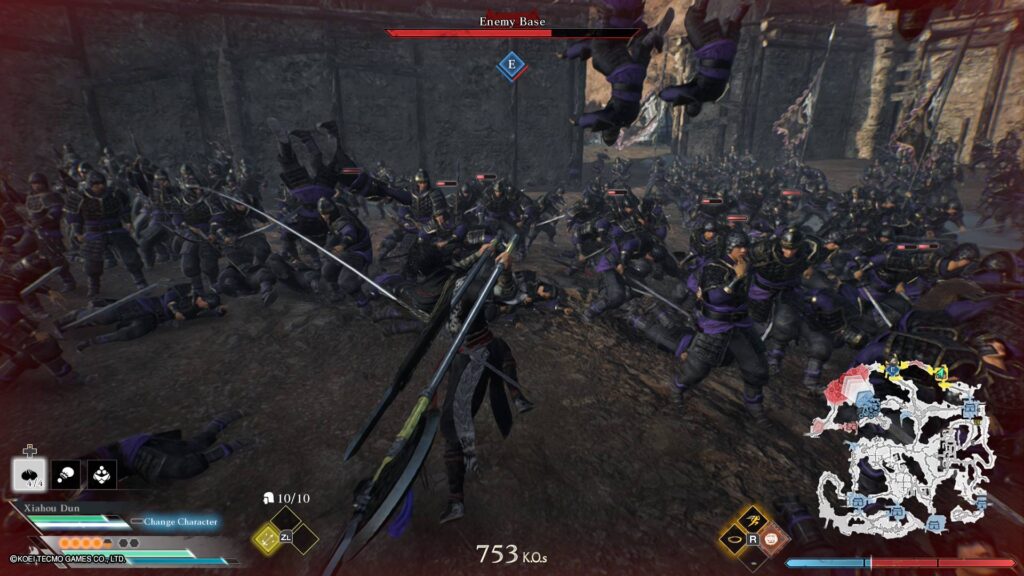
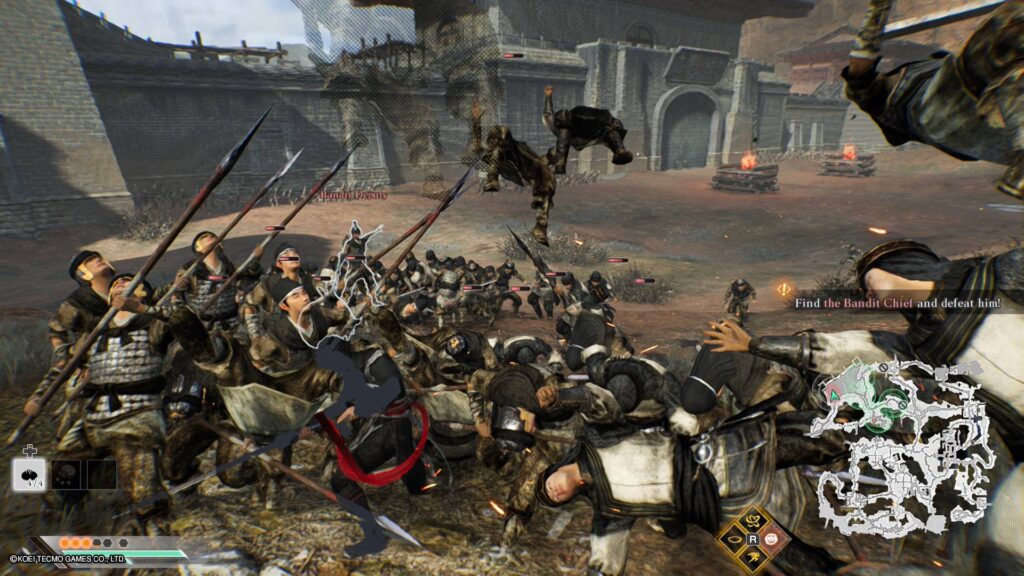
Combat itself remains partially unchanged, which makes the actual changes feel that much more impactful. You start on a massive map with only a few blue areas, and you charge in to take red bases and bosses until you have taken the whole area. There are objectives, but even with a battle prep screen that explains the game plan, you can ‘kinda’ just do your thing. Eventually, as the combat progresses, dynamic objectives will pop up of scrimmages you should properly jump into and help with. Not always does this matter, but these usually indicate a fight raging on between an enemy and an ally you definitely can’t just let die.
Even with a horse you can summon to traverse, these stages can be large. Sometimes, too large. They are clearly indicated, with the wide areas being where combat is almost 100% going to occur and the narrow pathways linking them. Another element that isn’t entirely new. While an enemy push could force combat in a corridor where you meet them to hold the line, these moments are few and far between, with these roads predominantly being something you race through as fast as you can. With objectives, it is very frequent to have two battles that need your help on the polar opposite sides of the map, breaking the flow of everything to see you race to the opposite side in hopes you are not too late.
This is because enemy generals have received a substantial amount of skill and strength compared to previous games, where they are enemies with more health that occasionally knock you back. Because of this, you find your key allies in peril a lot more than just some scripted event where they require you to rescue them. This puts some emphasis on actually following the plan, or at least knowing where the important fights will occur, but despite a few tools to track everything, so much is going on that it can still feel almost impossible.
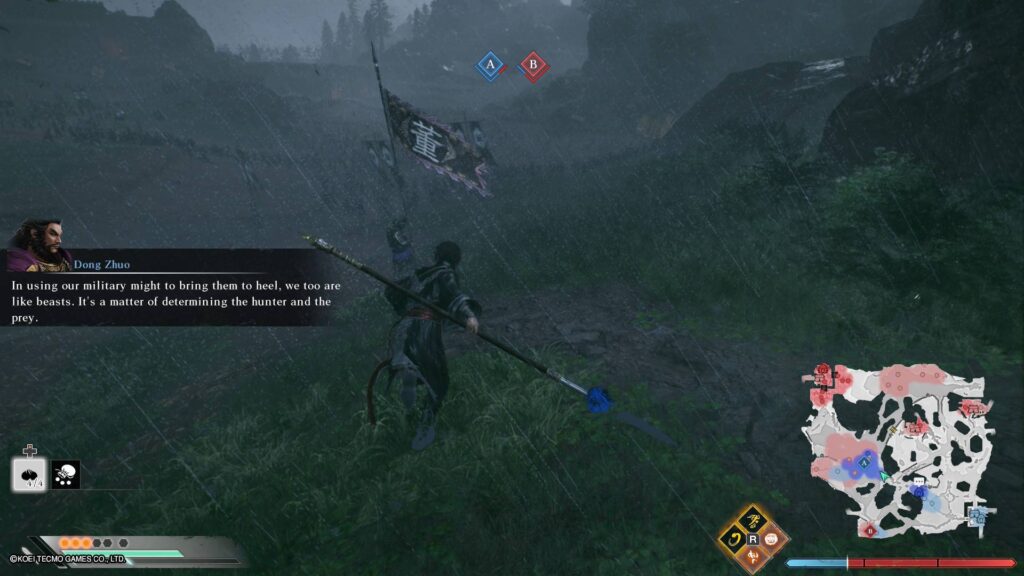
Fighting these generals is now a spectacle, as you need to perfect the basics of combat to win against some of these. Locking onto a general and following the entire fight in the base through them is a good start, but understanding how to parry or land a perfect dodge will really help control the flow you have. If you simply attack them, they can wipe your health with a few well-placed hits, something that is very new for the Franchise outside of Lu Bu being Lu Bu. These moments can get intense, too, as the game progresses to throwing three to four of these characters at you in large armies.
This is where the great strength of these improvements can be a double-edged sword, as Dynasty Warriors Origins will still pack the screen with hundreds of enemies that these mini-bosses can get lost in. There were points where I could not get any timing right because I could barely see the attacks coming. This can also lead to loops where everybody has a knockback, and you just watch your character fly through the air for a minute. It isn’t egregious by any stretch of the imagination, but still a little frustrating.
The biggest annoyance, however, is the respawn during battles, which acts as a rewind to an earlier point in a battle, usually when you have completed or defeated something important. These can erase large chunks of combat, though, leading to needing to complete things that took you an annoying amount of time the first time. What’s worse, weapon drops, mainly new weapons, tend to fall from critical enemies that give you a checkpoint. These weapons also have unskippable scenes upon grabbing them… Meaning at several points, my respawn began with a 10-second unskippable showcase of the new weapon I grabbed.
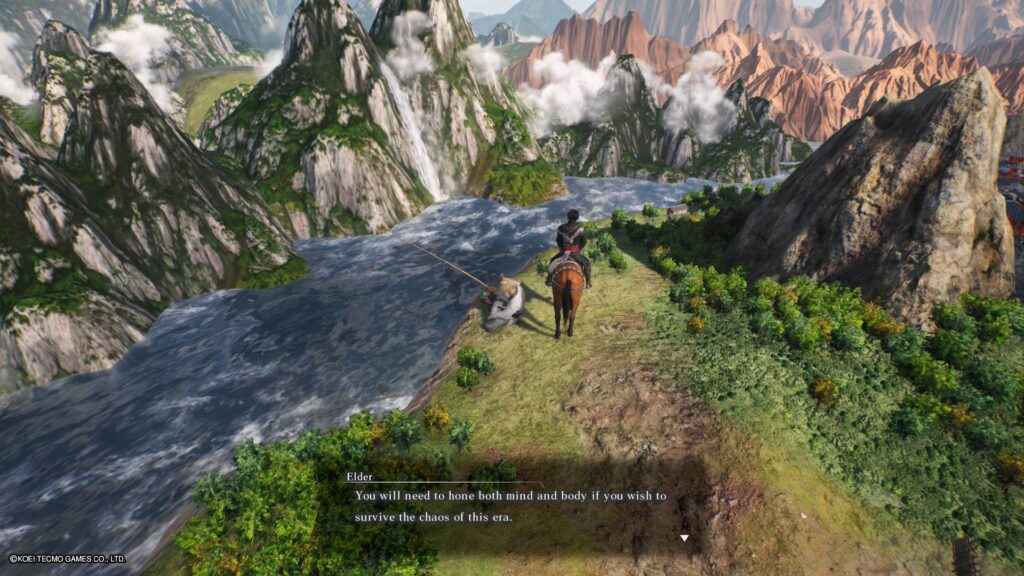
Outside of combat, the game offers a lot to enjoy in just how they designed exploration; with an old-school style open world, you can wander around. The bond missions are found here, along with many things to collect. Everything from finding weapons to upgrading your gems is made easy, so the long-running franchise has never felt more accessible. Best yet, there are constant battles popping up around the world that are fun, albeit short, so you don’t feel funneled into the main story, especially when you are struggling with it and need a level or two before returning.
This goes hand in hand with the game’s struggle to offer compelling objective-based missions that aren’t all about killing everything. One in particular, in which you need to escape a botched assassination attempt with Cao Cao, particularly frustrated me. You run from an overpowered Lu Bu, have to fight multiple enemies that can wreck you, and need to protect an overly aggressive Cao Cao, who seemingly wants to die. What’s worse, though, is that escaping requires taking a secret tunnel in the opposite direction of the enemy layout, and with so much going on, it’s easy to lose track of yourself. They don’t even tell you about the secret tunnel; you just have to remember it from an earlier battle, which is where all my trouble started.
The biggest kicker of the experience, though, is just how well it runs on the Nintendo Switch 2, which feels like a dream come true. I know this isn’t the only Dynasty Warrior to grace the Switch platform, so it’s not super crazy or anything, but given this entry’s appeal to modern hardware, it is still an impressive feat. Having all those enemies on screen as you cleave through them, or the technicality of fighting a general and adjusting to his moves, all at a steady frame rate, is incredible and makes Dynasty Warriors Origins an easy recommendation for any growing Switch 2 library.
This isn’t to say there isn’t some buffering and stuttering, which there is. It is mostly related, though, to the start of cutscenes or transitioning to the battle prep screen. On the open world map, I also saw one or two when transitioning from one region to another, though these were few and far between. I could stomach all of that, though, for the fact that during battles, there was nothing but smooth action, even when a cutscene played out. They clearly understood priority and got it the best we could hope for, which is impressive on every level.
Verdict
Dynasty Warriors Origins tries plenty of new things, though not things the team at Omega Force is unfamiliar with, to breathe new life into a series that has been going on since 1997. For the first time, though, I really didn’t feel like I was playing just another Musou, just another Dynasty Warriors. Yes, it’s just as fast-paced as it has always been and just as zenning if you let it, but no longer will it just let you have your way on the battlefield. It bites back, making the process more engaging.
The story also feels like the most engaging it has been, even with the voice acting being a weak point. With one character interjected into the middle of the narrative, you get the ability to experience an expected challenge mixed in with the one you know. It keeps the experience from feeling like a retread of everything that came before, as the story continues to focus on the same figures and the same period. Dynasty Warriors Origins does feel like an origin, but for a new breed and era of Musou games that buck the conventions of old and blaze forward a path into the future.
Remember to follow us on Twitter, Facebook, and Bluesky to keep up to date on everything we have going on!
Reviewed for Nintendo Switch 2, also available for PlayStation 5, Xbox Series, and PC
A review key for this game was provided Koei Tecmo America for the purposes of this review.
Developer: Omega Force
Publisher: Koei Tecmo
Release Date: January 22, 2026 (NS2)
Pros:
+Engaging Narrative
+Engaging Fast Paced Combat
+Beautiful open-world with retro influence
+Challenging enemies
+Great Switch 2 Performance
Cons:
-Some objective based missions
-Disconnecting Voice Acting.
-
Dynasty Warriors Origins
