

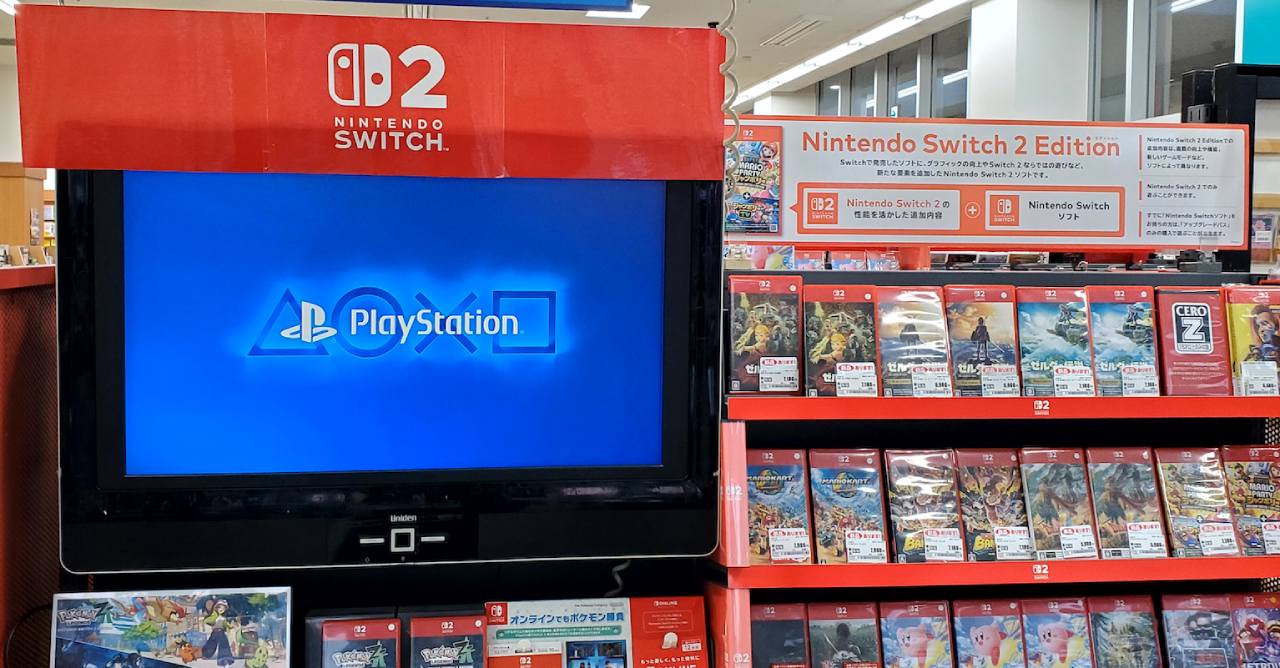
This is a guest article written by author J.D. Nyle, who is based in Japan. In it, he analyzes the overall presence of Nintendo in its home country.
I’ve made a couple of videos analyzing what Nintendo does that makes them so dominant in Japan and the issues PlayStation has to overcome. Since then, I have seen some improvements from PlayStation, such as the region-locked console and using Astro Bot for branding at shows, LINE Stickers, and even job recruiting. Even more fun was seeing a PlayStation 5 ad in the middle of a Switch 2 display. However, I also had a few more observations that not only discuss console domination but also even within Nintendo’s platform.
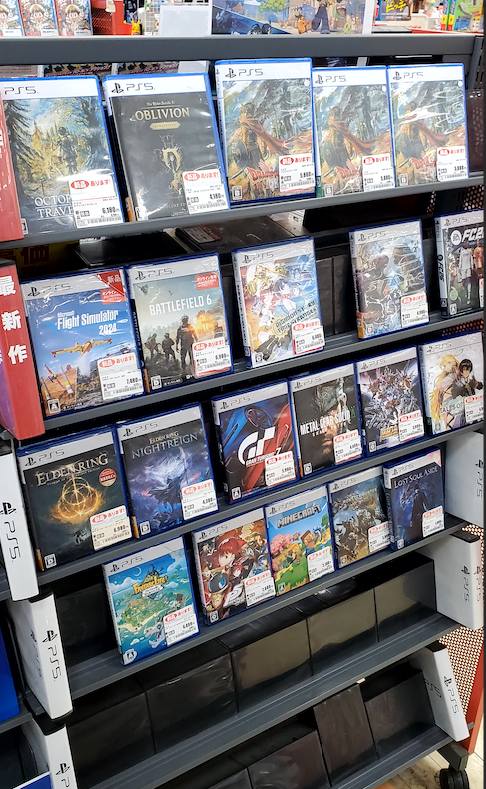
In my video, I mentioned before that sales data indicates even third-party games sell better on Switch than PlayStation, but if we look closer, the physical sales of third-party games are only high at launch, not later. Nintendo, however, is high all the time. Why is that?
Yes, there are the established reasons that Nintendo games hold value longer: Nintendo does not put them on sale too often, and so on. But what if that’s a chicken-and-egg situation? If you go to the big electronic stores, then the vast library is available for purchase, but remember how Nintendo is also present at smaller shops in Japan? And by the nature of being a smaller shop, what games would more likely be ordered for inventory?
I went to a smaller recycle shop that also sells new games, and I counted the Switch 2 library and the PlayStation 5 library. Switch 1 is still much bigger and had more variety of publishers, but especially on the Switch 2 side, most were from Nintendo. Games like Ys X: Proud Nordics, which I knew were available on the platform, were not stocked.
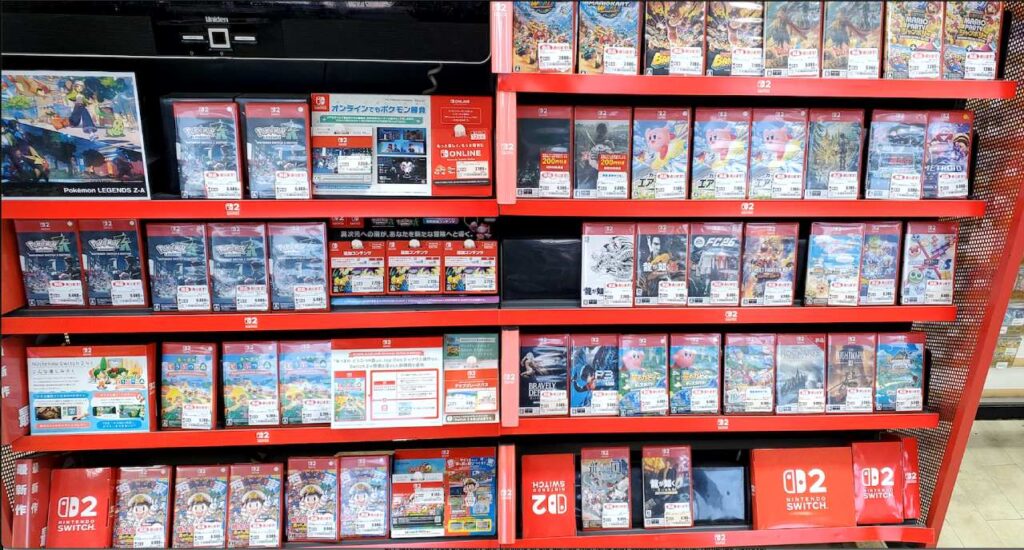
Another thing I noticed when counting is that the PlayStation section is minuscule. Even though both PS5 and Switch 2 each had only 32 titles selling as new, that really sends a message to consumers that PlayStation 5, which is over 5 years old, does not have many games.
Sure, PlayStation has shifted mostly to digital, but that’s another thing. PlayStation does not even have the redeemable code presence in stores. Nintendo does, and that makes them available even at convenience stores, which again stock primarily Nintendo games and select third-party titles. In other words, PlayStation only truly marketed to its shrinking loyal fanbase (sales numbers are lower each generation in Japan). Nintendo, however, is always showing that it has both digital and physical games. Instead, the one aspect that was not advertised in the store so much was the vouchers to get 2 games for 10,000 yen.
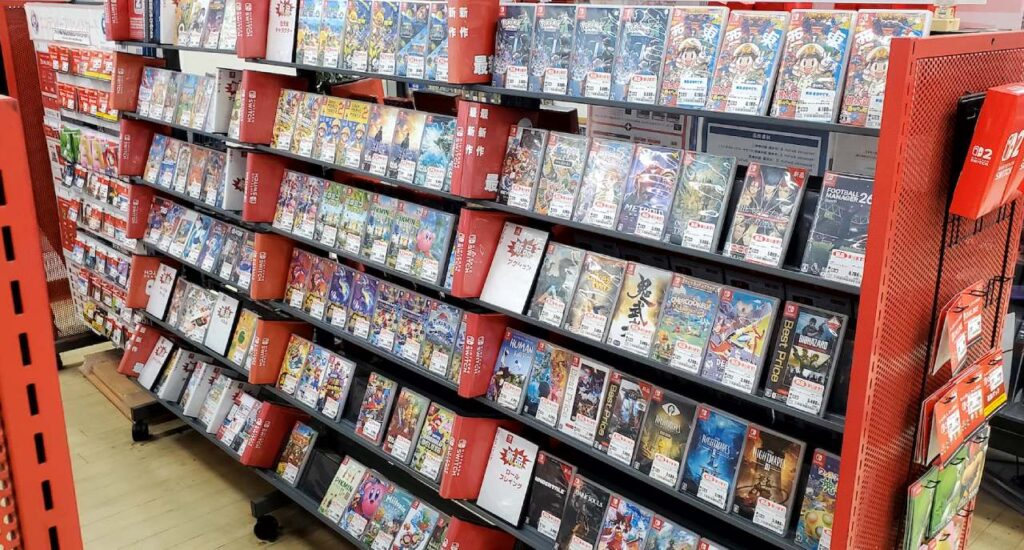
Another insight I want to expand upon is the type of games associated with the platforms. When you think of PlayStation, you are probably thinking of big games with long play sessions or online. Nintendo, however, is local and easy to put down. And yes, that means the lack of online capabilities is actually a strength. Monster Hunter selling well is more the exception than the rule.
Ever since my kids were born, I could not play online games because I needed to be available to respond to their needs. And if I get a new game, my wife is waiting for me to finish it before her patience runs out. At the same time, she does not want the kids to have too much screen time. I do not think this is a rare situation in Japan. This puts the Switch and offline games at a huge advantage.
As Nintendo has had many years of experience with portable games, they have retained strategies for shorter playtimes and making it appealing to parents. Parental controls are advertised frequently enough even within the console. The portable nature means the TV does not get hogged. Suspend mode and a battery allow for pausing the game for a long period of time. And Nintendo’s game design often has clear divisions or points of saving and being easy to jump back in.
Something you may hear some people complain about is how Nintendo is in its own bubble. However, what I have been noticing is that they actually do pay close attention to their customers. Not the kid with a tantrum for some minor thing or the devoted fan who scours the internet, but the players who just want a good time and the parents who walk through a store and have the real control on what gets played.
—–
J. D. Nyle is an author of stories and runs the YouTube channels Developing Opinions and Simply Nihongo while based in Japan. He is also active on Bluesky.
