
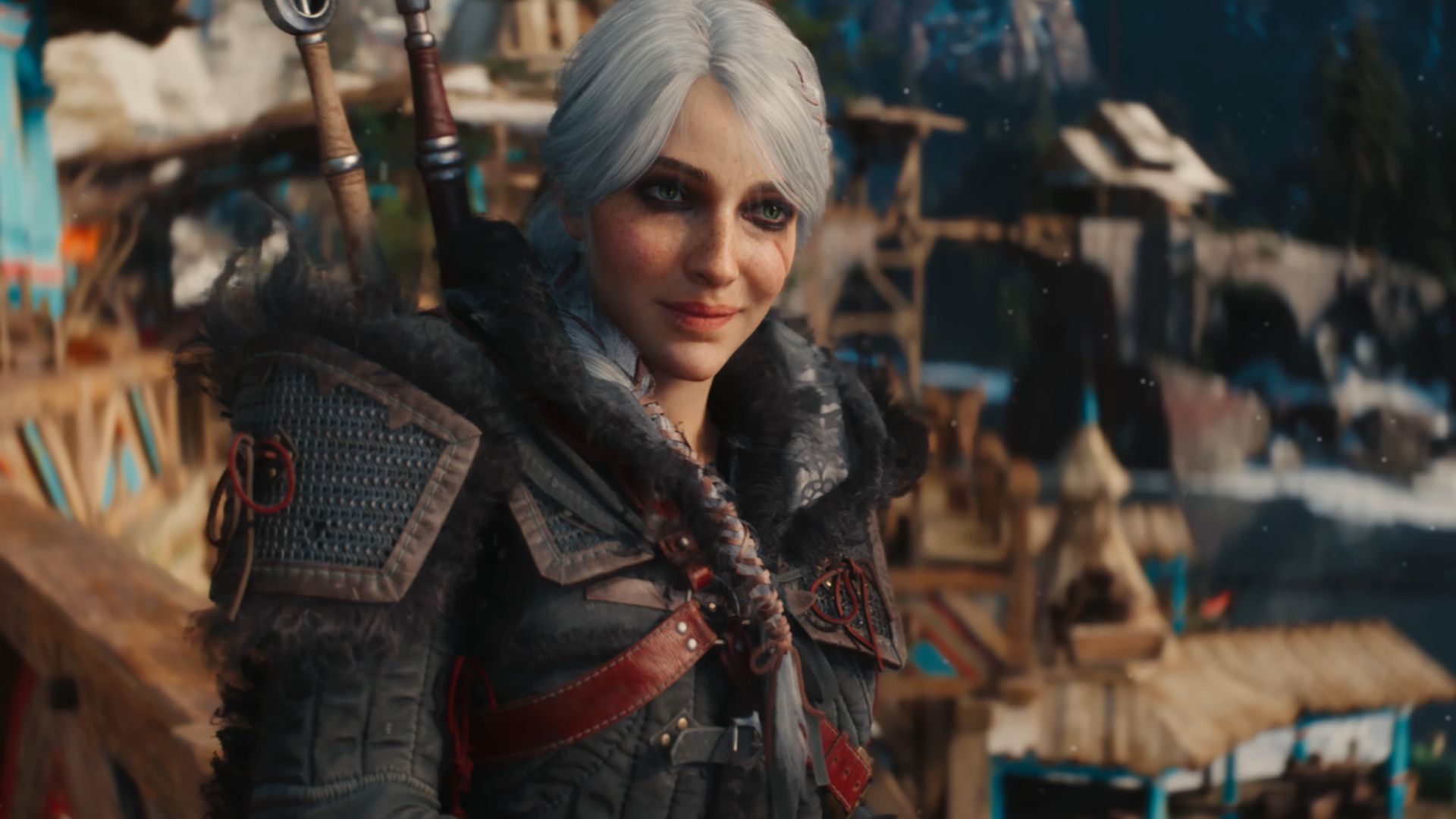
CD Projekt has committed to a plan to release the next three games in the The Witcher series, a Ciri-led trilogy of games starting with The Witcher 4, within a 6-year timeframe. This is an ambitious plan, given the current game development cycles and the size of a traditional Witcher game. This was brought up during a financial call, in which Jjoin CEO Michal Nowakowski, who stated that the company “should be delivered in a shorter period of time.” This is due in part to the development shift to Unreal Engine 5, which will additionally be used for development on the 5th and 6th entries in the series.
Nowakowski stated in full during this call:
We’ve been using UE5 for The Witcher 4 for almost four years now, and we’re very happy with what we’ve achieved. I think you could have seen some of that with your own eyes with our tech demo reveal at Unreal Fest couple of months ago, and we’re very happy with the results of that as well – we’ve already said that, but I’m always happy to say it again – and we’re happy with how the engine is evolving through the Epic team’s efforts, and how we are learning how to make it work within a huge open-world game, as TW4 is meant to be.
In a way, yes, I do believe that further games should be delivered in a shorter period of time — as we had stated before, our plan still is to launch the whole trilogy within a six-year period, so yes, that would mean we would plan to have a shorter development time between TW4 and TW5, between TW5 and TW6 and so on.
To put this into some context, The Witcher 3: Wild Hunt was released four years after The Witcher 2: Assassins of Kings. The Witcher 4 began pre-production in 2022, with full development in 2024, and, assuming this clock starts upon the release of their next entry, that would mean the next two entries are planned to feature 3-year development periods before release.
This is not an ‘unrealistic’ period per se, and other developers such as Square Enix have stated that a similar time period would be taken for games like Final Fantasy Remake Part 3. Companies have argued that advancements like Generative AI, as well as streamlined tools in Unreal Engine 5, should reduce development cycles, though the payoff of this, especially in the triple-A space, has yet to materialize. Clair Obscur: Expedition 33, for instance, is estimated to have taken 6 years from conception to release, which has become a common timeframe for developers. Ghost of Yotei, also released this year, is also estimated to have had a 5-year timeframe.
CD Projekt has suggested there are no plans to release The Witcher 4 in 2026, having also ruled out the possibility that it will appear during this month’s Video Game Awards, set to be held on December 11. According to financial reports, the title has 447 employees working on it, which is up from a previous report in July. This is the studio’s current focus right now, placing The Witcher 4 as the next title CD Projekt will release. This COULD mean we are looking at a 2027 release at the earliest, but this remains to be seen.
CD Projekt also has a sequel in development to Cyberpunk 2077, which was recently announced to have crossed the 35 million copies sold threshold, a major feat for the title. There has been some talk about what new features will be present in this sequel, such as an additional new city, but the title is in pre-production, presumably until we get closer to The Witcher 4‘s release, despite development being handled by two separate teams. Currently, around 135 employees are working on the title, with that number expected to rise to near 400 sometime in 2027.
Remember to follow us on Twitter, Facebook, and Bluesky to keep up to date on everything we have going on!
