

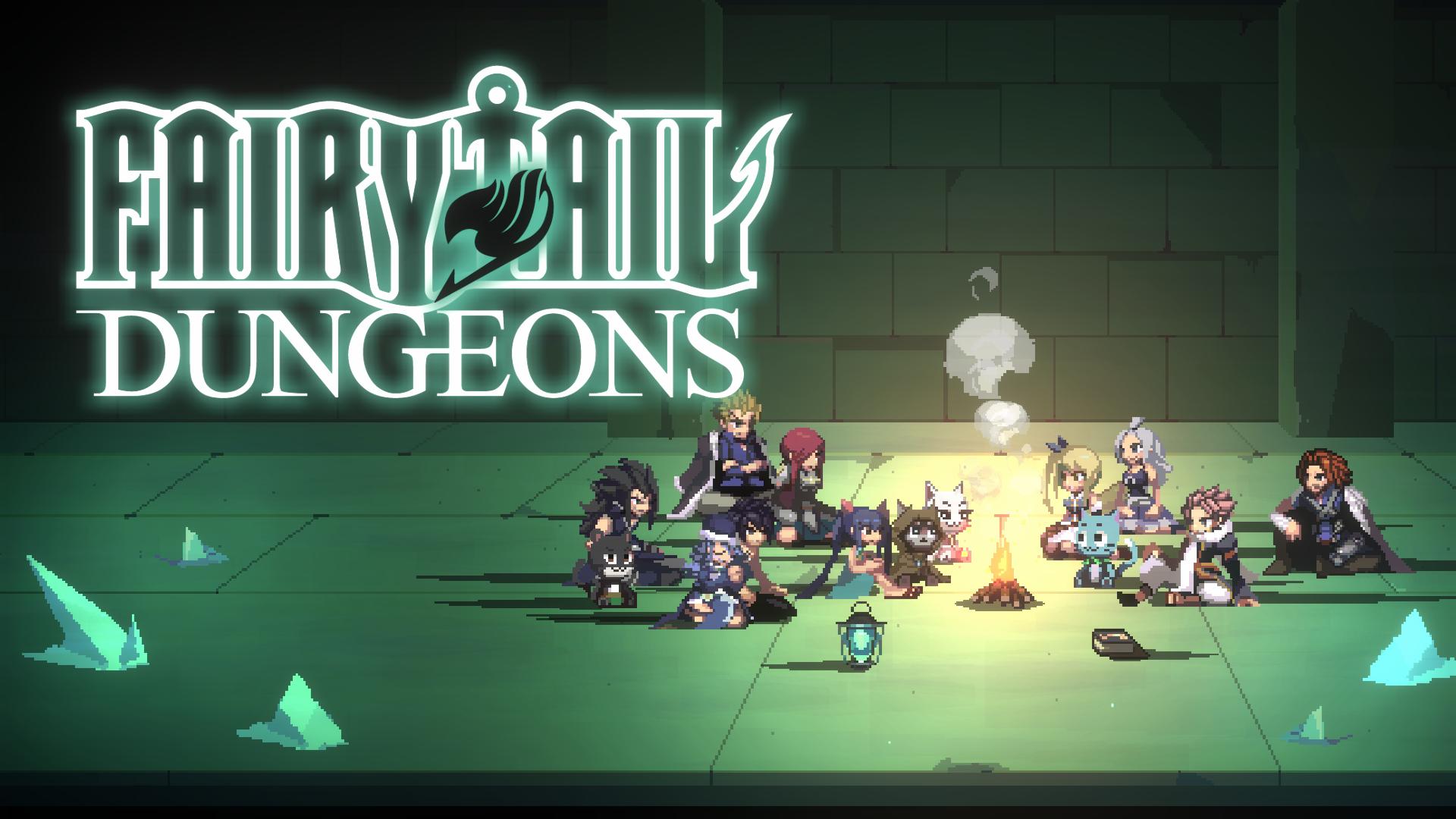
Let me start by prefacing that I have never actually watched Fairy Tail, so I had very little to go by when entering Fairy Tail Dungeons. I have had some people tell me I should, others who tell me I absolutely shouldn’t, and, on a personal level, I just don’t truly enjoy shōnen anime. The point here is that I didn’t genuinely have context coming into this game apart from, as people have told me, Fairy Tail has a lot of fan service. A weird singular point to know, given the game has virtually zero fan service.
The narrative, for someone like me, is also pretty straightforward to grasp. A door opens up on the bottom floor of the Fairy Tail Guild, which is where the main cast operates out of, and the series protagonist, Natsu, gets pulled into it. At least, at first. Inside this dungeon, the player gets set on the loose task of saving a person named Arthur, who is trapped somewhere within the dungeon itself, guided in part by his partner, a small flying creature named Lapi. So little of what is introduced feels dependent on familiarity with the series as a whole, and spoilers beyond a cast you might want to be familiar with don’t really emerge, making it newcomer-friendly.
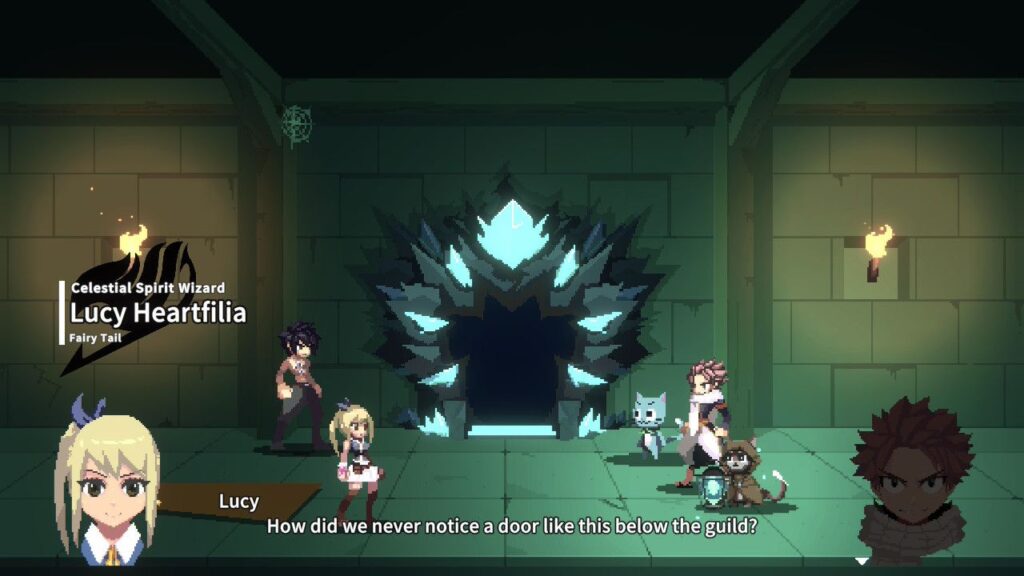
To accomplish this task, the player partakes in a roguelike experience of moving around a grid board, fighting bosses, and then repeating this again on the next floor. The grids follow a similar formula in that they are made up of tiles that you can traverse, with the path you are on being filled out as you move without the ability to move backward. This keeps you from knowing if you are walking straight into a monster or if you will find a chest along your path. Or at least, not know before you can prevent a collision.
All of this is done with a pretty enjoyable retro aesthetic, feeling in part like I’m playing a lost Fairy Tail game that released on the Game Boy Advance. The characters all have sprite models, and the dungeons have a very classic and simple mechanic while you explore. On top of this, even the soundtrack helps to set this mood. Even more so when you factor in the slight repetitive nature of it. Still good, though.
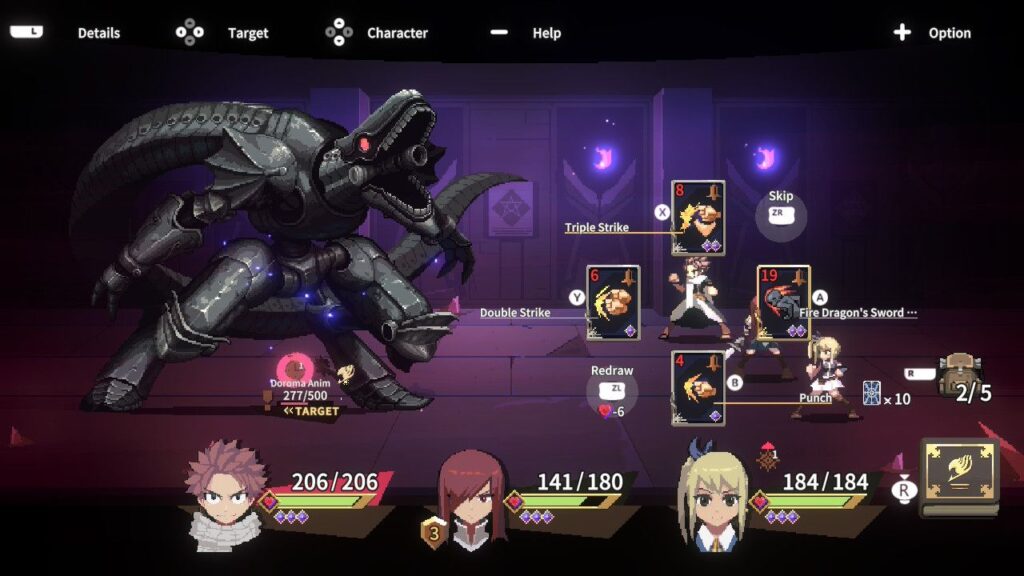
The true loop within this is a card-based, turn-based combat system that revolves around using the Fairy Tail characters, each with unique decks, to take down enemies and, more importantly, bosses that break the levels of the dungeons apart. On the grid, monsters pop up but can, to some degree, be avoided. What exploration gets very right is breaking up the rewards that can be gained among several aspects, like event squares or chests, as well as monster fights. This forces you, when you could just avoid these entirely, to seek them out for the benefits they offer moving forward.
The combat itself is fun, for a time, but it quickly became something I wanted to avoid despite the rewards. Early combat isn’t so bad; enemies have low health, and while your attacks are probably weak, you can handle them easily. No enemies are so powerful that they can wipe you out; the game instead focuses on the constant wear and tear of exploration to eventually wipe you out. It doesn’t stop later fights from being grindy and dependent on luck or chance to a heavy degree.
There are layers to the combat. Abilities might offer stat buffs or debuffs when using them, and others in specific combos might improve each other. This is mixed into abilities like the Magic Chains and Union Chains that progressively get better over time and make combat more manageable by getting two card damage buffs. The problem is, you need to complete dungeons to reap the rewards. If you are struggling to do that, progress can feel stagnant. With every upgrade, you can become vital, but with a bad run where you don’t find any, say, health upgrades or strong cards, it can be devastating later on, making the lengthy runs feel like wasted time.
This culminates in frustratingly lengthy boss fights that require slowly wearing down the enemy to progress. These bosses often can summon high-health enemies, meaning you often have to grind it out further to already overcome these moments. In fairness, it’s not incredibly hard. I went multiple floors before losing started becoming a normality, which has its own annoyances. The issue is that these moments stop being fun far sooner than I would hope.
This is where the randomness of the card battler hits a very hard wall. Bosses largely come down to moments in which they set up a powerful attack with criteria to prevent it. These attacks are probably the only things that could wipe out a party member who still has high health, even with defensive abilities on them. These moves can range from dealing 50 damage in a turn to unleashing multiple magic chains. You unlock magic chains as you progress, so the earlier bosses could have one or two, and on the occasions you need to do this, it can be challenging to set up.
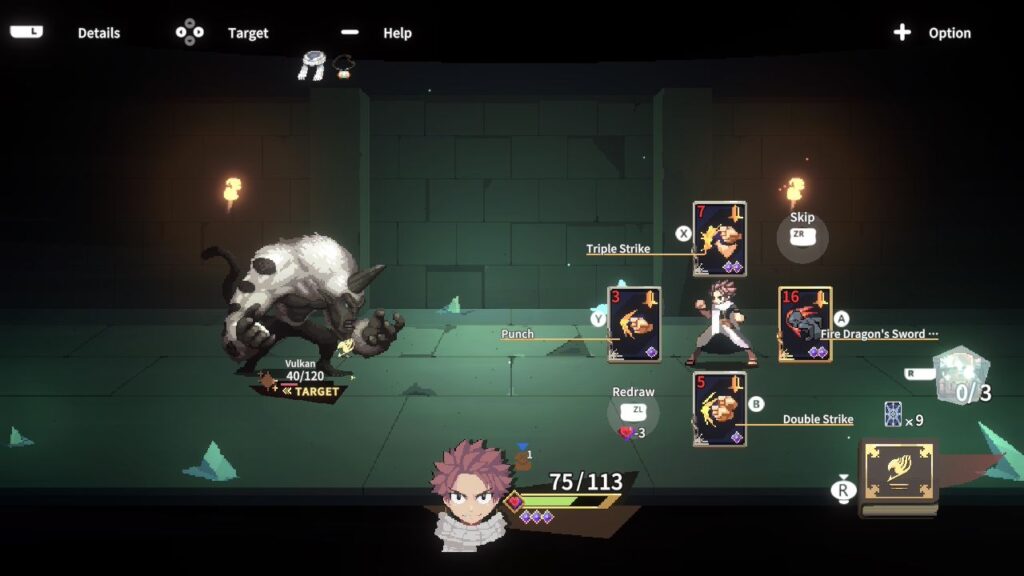
If you are trying to save the cards you know you have equipped to do this, this could create a loop where you might not be able to attack for several turns to make that work. On an enemy that is hammering away at your health, this might not work for you, since the reprieve might not come anyway. The damage ones are easier, but they are weird, sometimes not triggering across multiple characters despite stating one turn instead of only one character, which can mean different things as you progress. Another, requiring you to burn four magic points, is particularly annoying since you start with three, and it requires such specific and not at all guaranteed circumstances to break this setup early on.
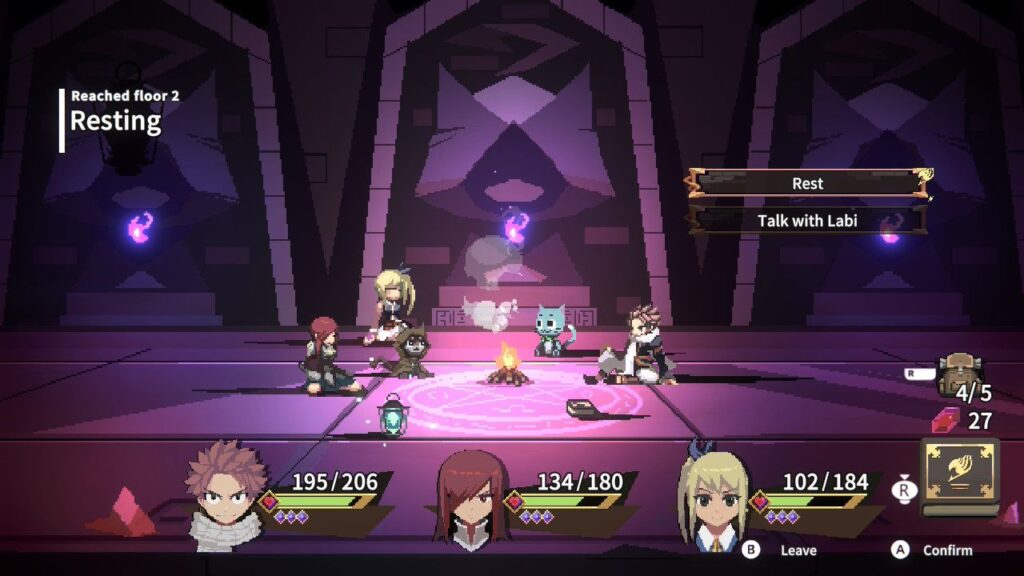
This brings us to building out your character, which, despite explanation, can be confusing. Explorations revolve around tomes built for each cast member. You can only build these in the solo dungeon at the beginning of the game, and since every subsequent stage requires more tomes, you need to rerun this dungeon with any character you want to use. All characters have extremely unique combat styles and cards, along with status effects, so there is room for deep growth as you mix members of your party and, along with their skills, should you progress far enough. The issue is that it requires some painfully boring grinding to do so. There is a level system that unlocks new things at the end of each run that does help, not requiring a full victory to go up, unlike tomes, which are only set upon winning.
From there, the game begins to structure itself weirdly, as not all the dungeons allow for the same things. Some have you find boosting books to improve your stats in the run, with all the progress reset after victory. The first dungeon allows you to create a tome to use early on, but you cannot improve upon that tome on subsequent runs until later. This means, specifically, if you get stuck because a boss is destroying you, you need to commit to lengthy grind fests to improve, with almost every aspect of improving feeling divided among multiple different places.
Verdict
The weirdest part of Fairy Tail Dungeons is that if you had asked me a year or two ago about my thoughts on roguelike card-battling turn-based dungeon crawlers (damn, that is a mouthful), I probably would have told you that that is not my genre. I would like to mention that that is my issue here; just chalk it up to, Oh, this isn’t my genre, but it might be yours. The thing, though, over those years, plenty of games helped to turn me around on it; some fully won me over. This, unfortunately, is not one of them.
Every element of Fairy Tail Dungeons has a certain charm to it, bolstered by the retro indie aesthetic that harkened me back to the classic era of anime games. The charms quickly fade, however. The turn-based mechanic is interesting, but it quickly drags on in the repetition of trying to bolster my characters for the coming boss fight ahead. The boss fights feel like the absolute worst example of card-battling RNG. And the grind? Some of the worst in recent memory, not granting you nearly enough to be worth the effort and energy.
This, compounded with my library of PlayStation 5 and Nintendo Switch games that do much of this better, means I cannot foresee this being a title I will be returning to often. There are elements here I do think can appeal to people. If you have a lull in your gaming schedule, this might offer something fun for a moment, but it probably will not last much longer than that.
Remember to follow us on Twitter, Facebook, and Bluesky to keep up to date on everything we have going on!
Reviewed for Nintendo Switch, also available on PC
A review key for this game was provided Kondansha for the purposes of this review.
Developer: Ginolabo
Publisher: Kondansha
Release Date: January 7, 2026 (NS)
Pros:
+Light narrative with no barrier to entry
+Retro Ascetic
+Fun combat with some depth
Cons:
-The card battling mechanic can be extremely inconsistent
-Boring and bland dungeons
-Hugely repetitive
-Lots of grind mechanics with little reward
-
Fairy Tail Dungeon
