
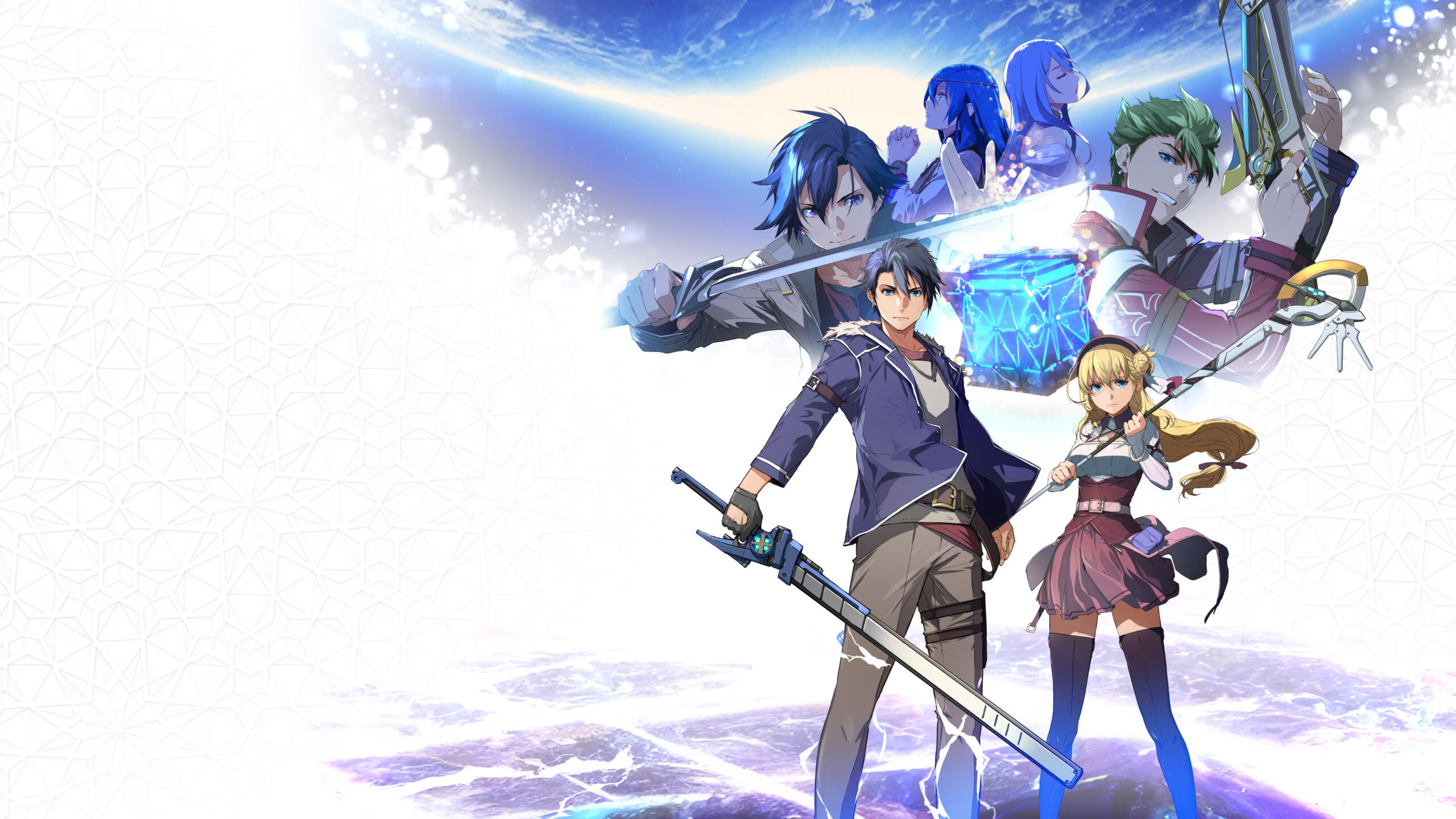
When exactly does a franchise, a long-running series, hit its critical mass for characters? This was a question I asked myself a few times as I made my way through the prologue of The Legend of Heroes: Trails Beyond The Horizon. It feels like the cap off to the Daybreak titles, or at least an in-between game, similar to that of Reverie, bringing multiple paths through the story into convergence to both end the current arc and hint at the next. Emotionally, it took me a while to catch up to that, as the title spends the first hour bombarding you with names.
I’ll admit, I am pretty far behind on the series, owning every game but having slowly made my way through the Cold Steel series (I was on IV when making this jump), so I’m not fully caught up. Immediately, I was confronted with the reason I would rather not jump forward until I caught up. Within the opening, three protagonists show up, all playing a significant role and, thankfully, all of whom I was at least semi-familiar with.
Van Arkride has been the current protagonist of the last two titles released in the series. Rean Schwarzer was the protagonist of Cold Steel, and given that, the run of titles that brought in many players in the West makes sense that he keeps popping up. The weirdest choice by far, though, is Kevin Graham, who was the protagonist of Sky the 3rd but most recently had a minor role in Azure in 2011. The reason all this matters is that the game features all three of these characters as protagonists, offering alternate perspectives on the scenario.
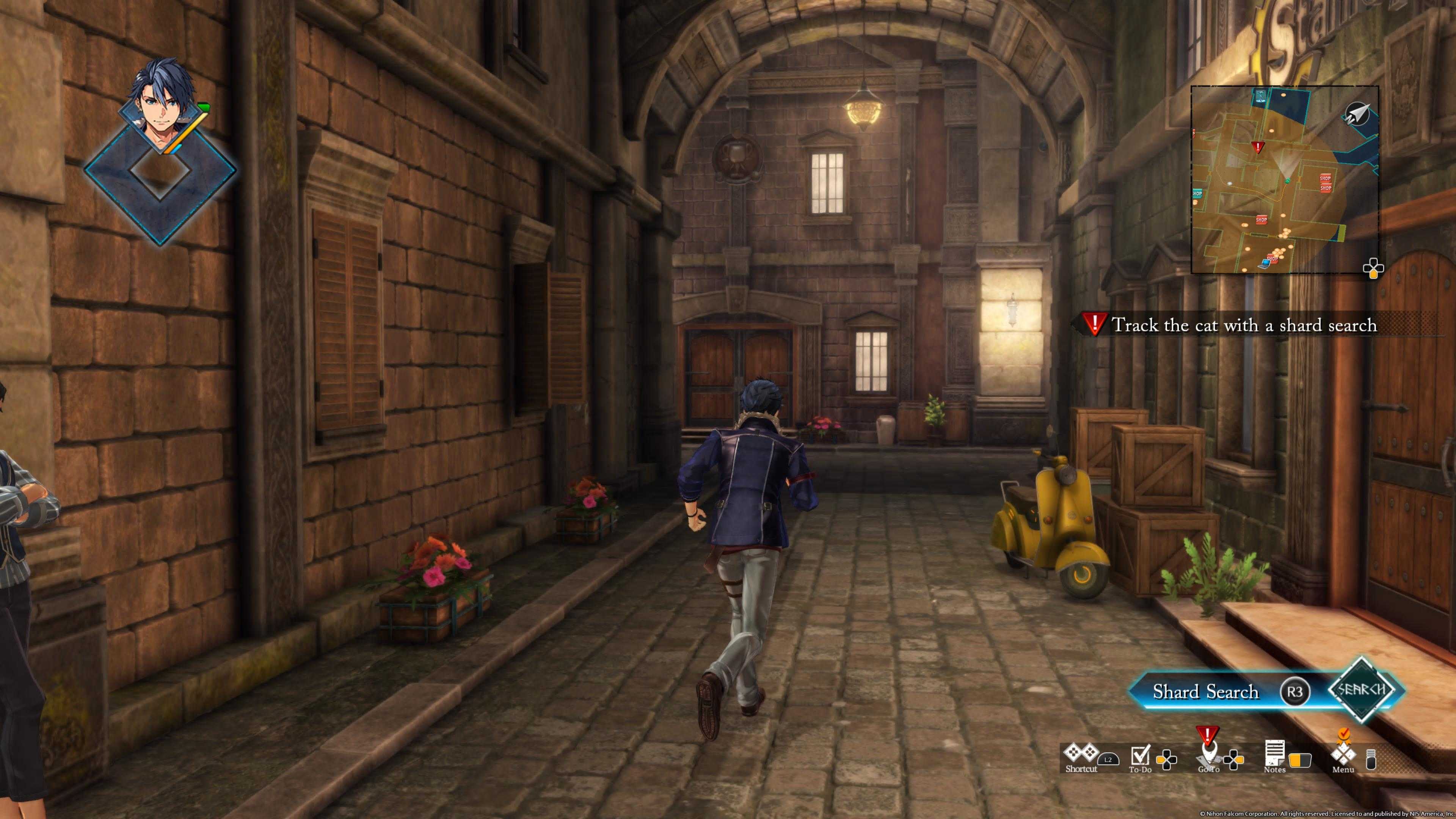
Within the intro, the narrative sets up an interesting new departure point in that a supporting narrative follows the attempts to put a person in space. The game practically hijacks you to a banquet where this is announced. Of course, this doesn’t really matter, or at least, takes a hard secondary role to minor scenarios building up into larger ones. Right after all of this is established, you will probably spend the next 20 hours running around the city of Calvard solving minor problems with almost none of this resurfacing.
This has always been the issue with The Legends of Heroes series; if we are being fair, they are extremely slow. The first Cold Steel basically stretched what would be the tutorial of any other game into a 100-hour RPG. The series has often been called The Game of Thrones of JRPs, and it’s easy to see why. Even when the game begins recapping things that I have played through, I still need an atlas to try to remember just what is being talked about, and these recaps typically come for one minor moment in a side quest. I have some context, but I have yet to master them all, so I don’t have the entirety of the context.
Through this, it could be seen how you might argue that even with the story reminders of the previous two games, the series has accessibility issues if you haven’t played the titles leading up to it. Weirder still, despite the game having three protagonists from all over the franchise, it only deems to include the refreshers Daybreak games, meaning that had you skipped others, you could get very lost, rapidly. The bigger thing is that, unlike Game of Thrones, the franchise doesn’t kill off characters at anywhere near the same rate, so there are a lot to keep straight.
This isn’t even fully a knock against the narrative, either, as the story is well told for what it is. The game also has a massive amount of voice acting that makes certain scenes, especially those of major importance, pop. Even while the animations might not feel on par with what some leading developers in the space are doing, they are a clear and vast improvement to what they were. Falcom does a massive amount with what little they have to work with, and it shows in every aspect of that game. It’s because, when the game fully picks up and centralizes its themes, you become invested, which is the reason you make it through the slow start to get there.
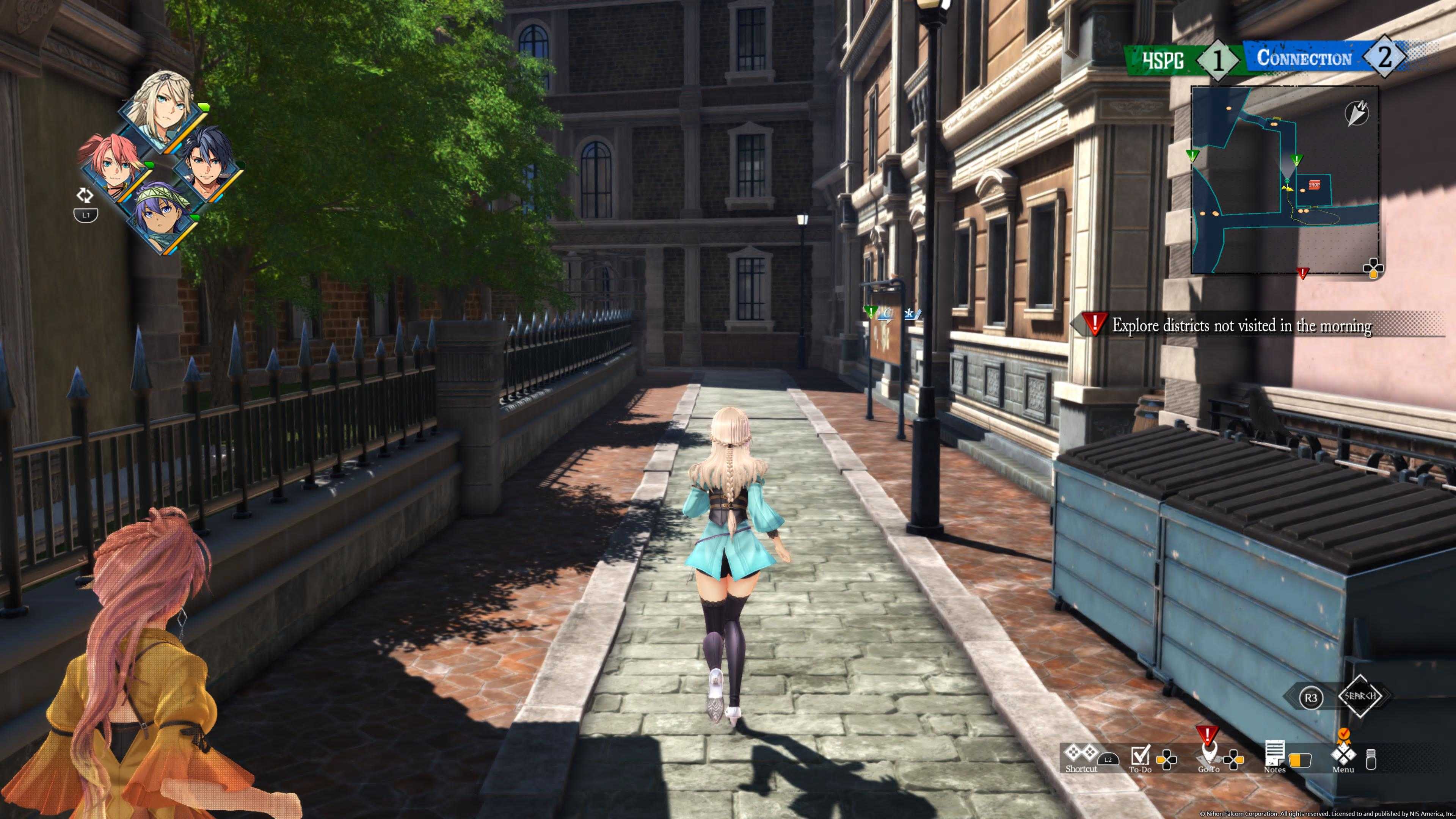
This goes doubly for the level design, which has more scope to it than the last few I am familiar with. This is especially noticeable with cars that drive along the streets and people wandering along. Several of the set pieces, like the racetrack, also have a sense of liveliness from commentary in the background that lets you know the world is functioning. Lore building has always been a strong point of the series, with a radio station you can tune into for current events and a movie theater to watch the biggest films of the summer. Some even star a party member of yours. It’s fun to just wander through some locations and just get sucked into all the background elements that do nothing but add a lot.
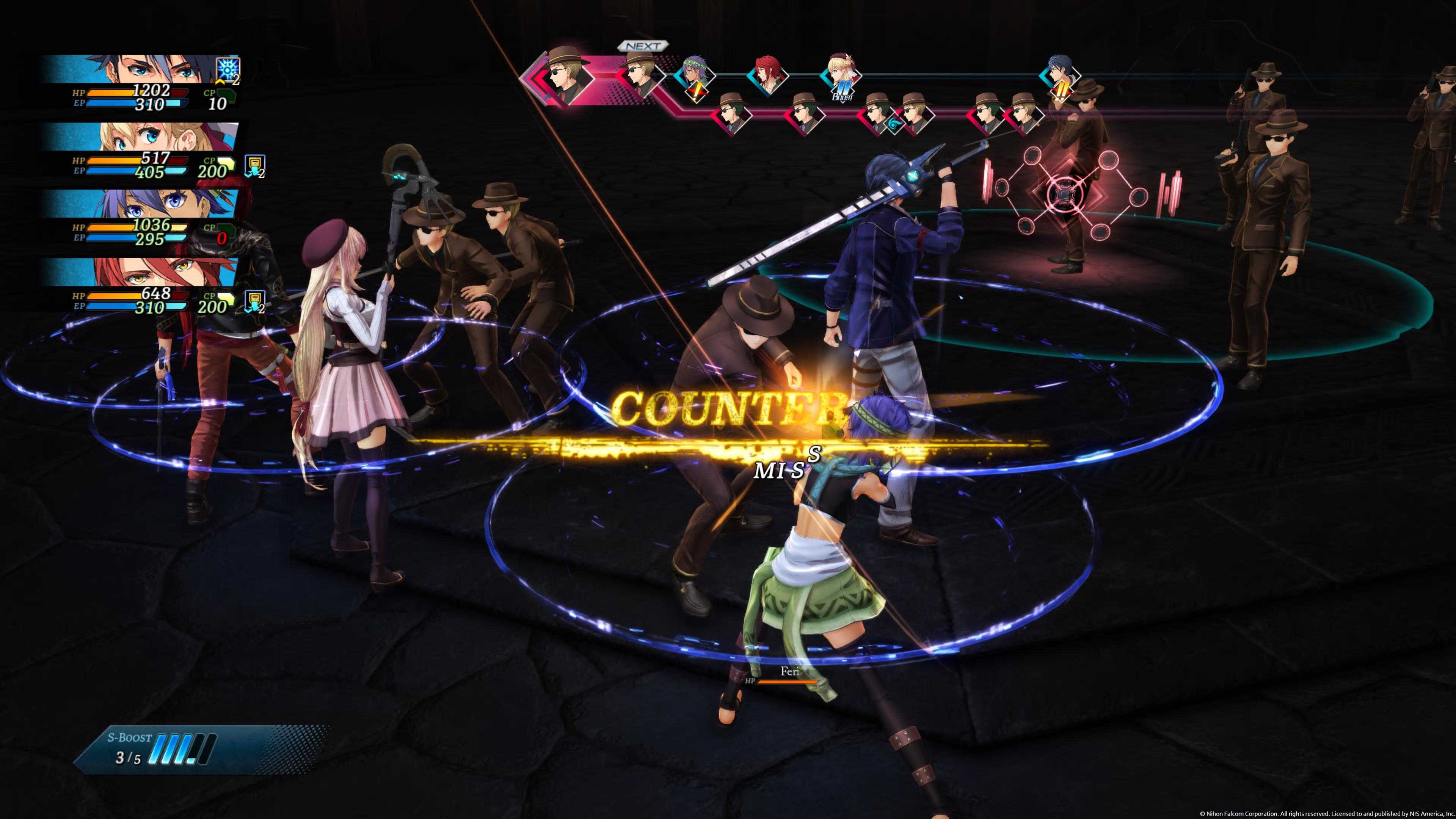
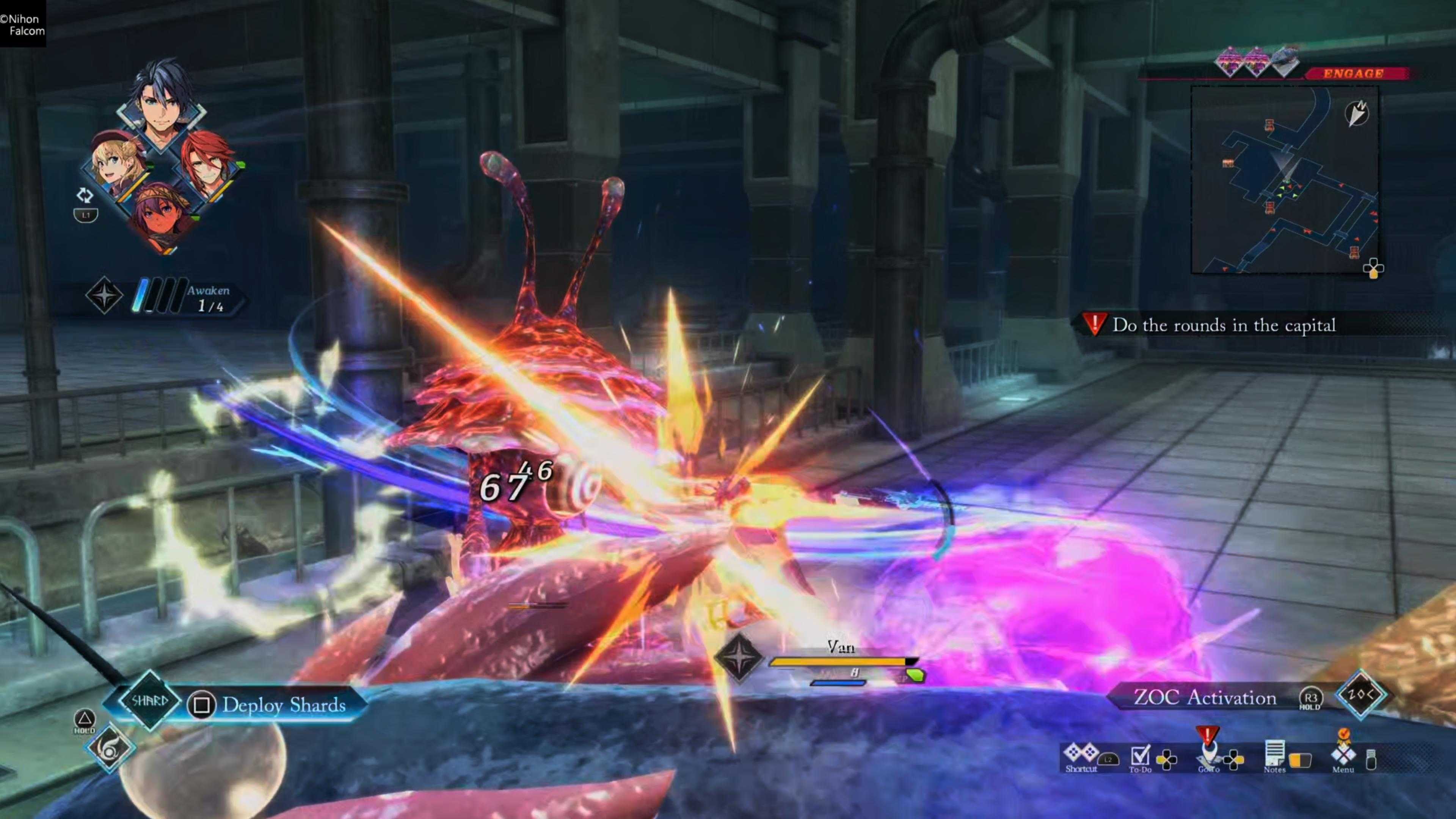
In contrast to this, the series has a massive overhaul to its combat system, seeming to borrow from another Falcom series, Ys, to create a hybrid system, which has become a common trend among turn-based games, such as Metaphor: ReFantazio. Unlike Metaphor, though, this system doesn’t force you into turn-based combat at all outside of scripted moments. Each character can participate in combat on the field, so you have a lot of different combat styles you can use. Timing your dodge correctly also allows for a powerful counterattack, similarly to flash dodging from the Ys system.
You can still do turn-based battling with an open area where you freely get to move your characters about. This feels much better than the static movement of the games I am familiar with, given that it is much easier to avoid enemies who can almost always smack up your entire party in any given attack. The drawback to the free-flowing action combat is that you’re limited in what you can do. Mainly attack and dodge. In the turn-based combat, you have access to character crafts, the spells you set for them, and combo attacks, as well as extra experience points. In trade-off for this, on the field, characters can unlock a power state that has the power to demolish even hard enemies and heal them, so there is a balance between the modes that can be struck.
This being said, you don’t ever need to leave the action portion on the field if you don’t want to, something I, personally, love. The way it is structured allows you to jump into an attack, then transition modes seamlessly in order to get an advantage. On the other side of this, getting hurt enough or knocked back forces you into a transition with an enemy advantage. This keeps the breaks in flow, either punishing or advantageous, depending on the risks the player takes.
Boss fights, unfortunately, are among those scripted events that require players to fight a certain way. This is to be expected and not a bad thing, all in all, but the more I play these hybrid systems, the more it starts to annoy me. Especially here, where you don’t really need to fight one way or the other, you can do yourself a disservice by not making sure that you are constantly jumping between the two to make sure you are familiar with the best strategies and setups in both. Despite this, the game has made significant strides to be easier than the often just straight-punishing bosses of previous titles. Trails Beyond The Horizon still features the retry on an easier setting option, and yet I never had to use it, which is not common for me.
There also remains a system in the background of all this that requires at least some vested interest to learn, since it can be complicated. Spell crafting allows for exploiting weaknesses in enemies, while crafts draw from the same pool of more powerful attacks, making exploiting your enemies and party location all the more important. Factor in a system to boost the power and speed of spell usage and the ability to combo attacks and buffs through proximity, with enemies being able to punish that, which means there is a time investment to use all these mechanics just right. If you have played a Trails game before, you are basically dealing with something you are familiar with, but unlike countless games in the space, there is a learning curve that enemies begin exploiting very early on.
There is also a new sub-mode called Grim Garten that can take some getting used to. Mainly because they introduce it as a side story, then lock main story progress behind it multiple times. It is actually a mode meant for farming that is checkpointed in the main story farm exp and items beyond where you are in the narrative, despite the explanation of this being confusing in its own right. At first, I felt a little resentful towards the mode since it was the only way to really get out and spread your wings, getting your fight on. It was introduced in juxtaposition to a very slow point in the story. However, as I made progress, it really started to grow on me.
Verdict
The Legend of Heroes: Trails Beyond the Horizon is a fun game once it starts going. This has been an issue with the series since the start, though. A slow beginning that bombards you with names you should know, events you probably should have seen, and important narratives that will require twenty or so hours to become relevant can become fatiguing. Thankfully, great lore building and enjoyable performances make even the slower points manageable, especially when you know what’s eventually coming.
The worst thing about these slow points is how they tend to block you out from the excellent combat that has shifted to a hybrid system to both streamline these portions, making both versions incredibly fun. Of course, it’s a balancing act that you are going to strike, but the results are well worth the effort. In the grand scheme of things, I can’t really say if Trails Beyond the Horizon is one of the best games in the series, but it is certainly a testament to Falcom’s commitment to pushing the series forward and a great indicator of its longevity.
Remember to follow us on Twitter, Facebook, and Bluesky to keep up to date on everything we have going on!
Reviewed for PlayStation 5, also available on PlayStation 4, Nintendo Switch, Nintendo Switch 2, and PC
A review key for this game was provided NIS America for the purposes of this review.
Developer: Nihon Falcom Corporation
Publisher: NIS America
Release Date: January 15, 2026
Pros:
+Engaging story with lots of moving parts
+Deep lore for the world
+Fun hybrid combat system
+Lots to do
Cons:
-Very slow introduction
-Some understanding of the world would be beneficial.
-
The Legend of Heroes: Trails Beyond The Horizon
