


Stupid Never Dies is the kind of game you can go into, despite having seen every trailer for it, and yet still not know what to fully expect. That was the case with me booting up the demo on PlayStation 5. The game reminded me from the outset of something SUDA51 might cook up in a fever dream, so I was already on board, at least to a degree. That said, the experience could have gone either way, so I was a little nervous all the same. That feeling when you want to like something but are fully aware that isn’t the only outcome.
I’m not really sure where the demo fits into everything. That question feels loaded anyway, having just come off Final Fantasy Resonance, with Square Enix making clear where you stand. I am pretty sure Stupid Never Dies gives you the beginning as well since progress can also be carried over to the full game, or does it? The narrative is not unfolded linearly, or possibly because of how crazy it is presented, it is hard to tell that it is?
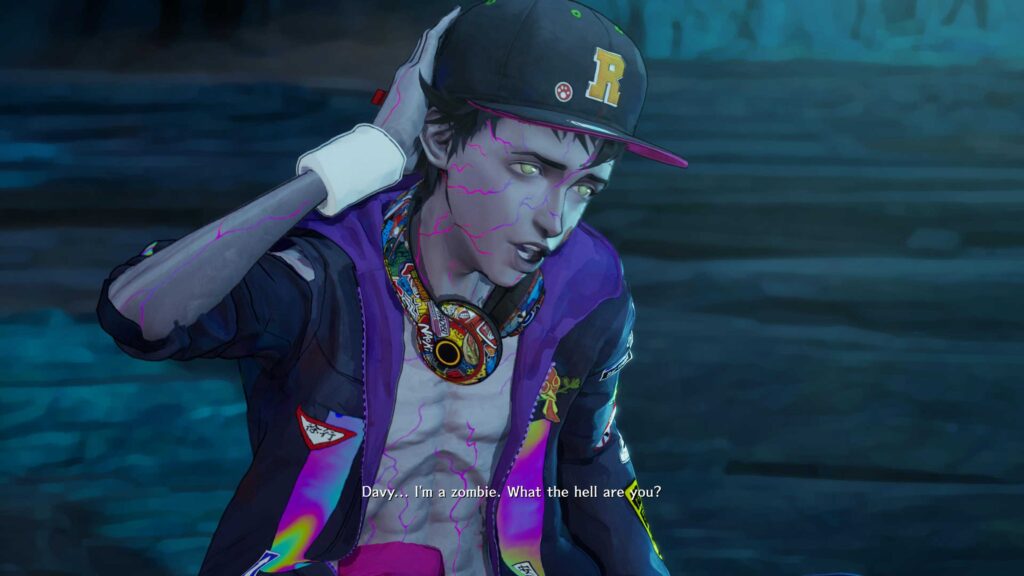
This is the craziest love story you will play, though. Players take on the role of the very dead zombie Davey, who falls in love with Julia, a girl who got locked and frozen in a walk-in freezer. To save her—and this is real—Davey must flush himself down a warp toilet to these underground layers. There, he needs to fight everything he encounters to try to get to the lower levels and defeat this thing named KOM for reasons that I am 100 percent told to me, but I swear I do not remember at all. And that’s the setup.
If there is one complaint that I have with the demo, it’s that the runs constantly end themselves early. This is a roguelike action game at its core, and the fun is getting deeper and deeper into the underground. Since this portion of the game is constantly throwing a new restaurant or shop opening up at the shopping mall your character is trapped in, or a new thing to understand, you constantly get hit with, “Good, you won two floors; now come back.” In many cases, it’s “come back, talk to two people, then ok, dive back in with the minimally improved feature we gave you,” and this can be draining.
The benefit to stomaching this in the demo, I imagine, is that when it leaves you off, it is right around the time the dungeons are always functioning as intended. This is the biggest reason I would recommend playing this, because you get to see if you actually enjoy the game and wade through all the preamble stuff so you are ready to go come the game’s full release. The second reason I might give is that the game is really fun.
Returning to something I said above, this is a roguelike, which people who know me know is my addiction. Even with roguelike elements constantly in your face, you might still forget it. That is because the main brunt of the game is an action beat ’em up. Each floor you travel between, besides looking different, will have a wave of enemies to beat down, and you have probably done all that before. It’s the twist of constant, contained progress that both elevates this above what you have likely played before and keeps it engaging.
Each run, Davey starts at level one. Beat up enemies, and you will see his levels go up. Not only do you improve pretty fast, but the damage and speed increases will be noticeable from the second he improves. This is only the base of upgrades, too, as certain fights bring with them certain rewards that add improvement to Davey as well. Self-contained buffs that add to combat, with the parts you pick up through a run being used to unlock more.
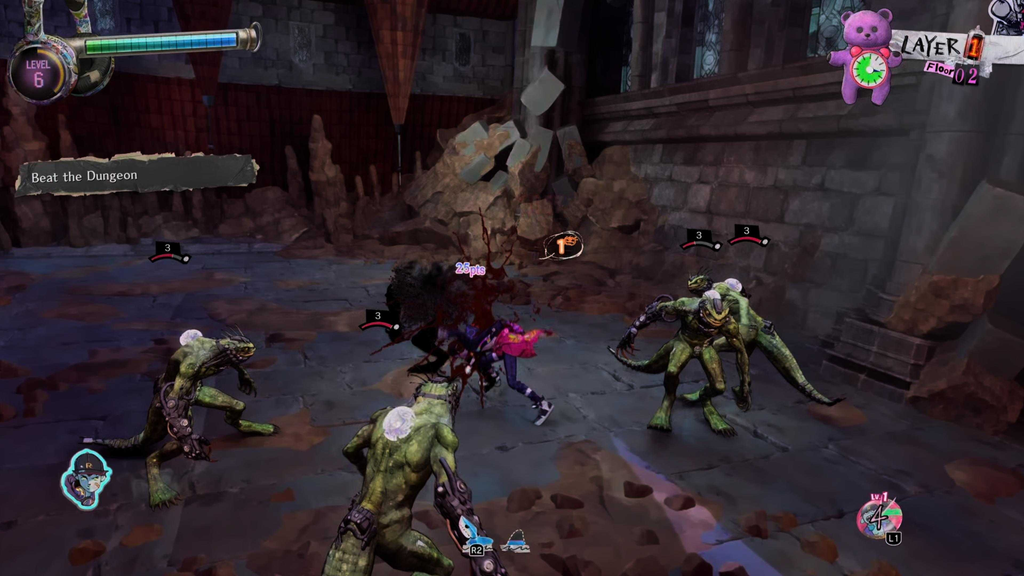
This ties back to my first complaint, though, because improving felt like it made Davey overpowered at times. This is both annoying because, narratively, Davey is depicted as weak, so I felt like the story was undercut, and also because tutorial runs kept ending before they got past good. I have little doubt the main game has more ways to actually challenge you, but for the most part they are not on display here. The only time I was in a bad spot was when Harpies were introduced, and I had no idea how to fight them, but once I learned their pattern, they posed no threat on later runs.
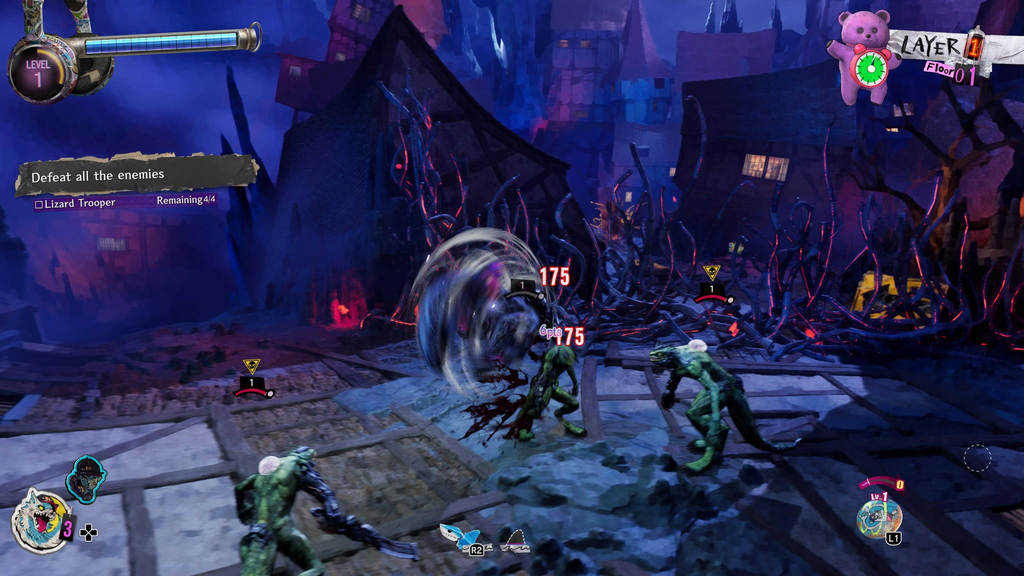
Part of this was the fact that Stupid Never Dies let you take on the powers of certain enemies and transform into them. These factors went into the equation by having limiters on how many stages you keep them for, but I was fairly well stocked at all times. You get a few in the demo, but take, for instance, that harpy. These enemies fight you at long range, shooting feathers at you. This makes fighting them a tad annoying, as Davey’s air combat is nowhere near as fluid as his ground game. So, transform into a Harpy and punish them with their own stupid fighting style.
Another transformation you get in the demo is a wolf form that is all speed… And damage… And style. It is overpowered in the best of ways because it is incredibly fun to use, spinning around and destroying enemies, but this factors into what I have been saying. It destroys everything, and I genuinely would save it for a rainy day when I’m almost dead, then pop it out to survive and progress because it almost guarantees it. Stupid Never Dies at this point only covers tutorial elements, so I have no reason to think the rest of the game will be this level of easy, or at least I hope not, but you might get that impression. That you have this vast belt of tools and the enemies can’t keep up.
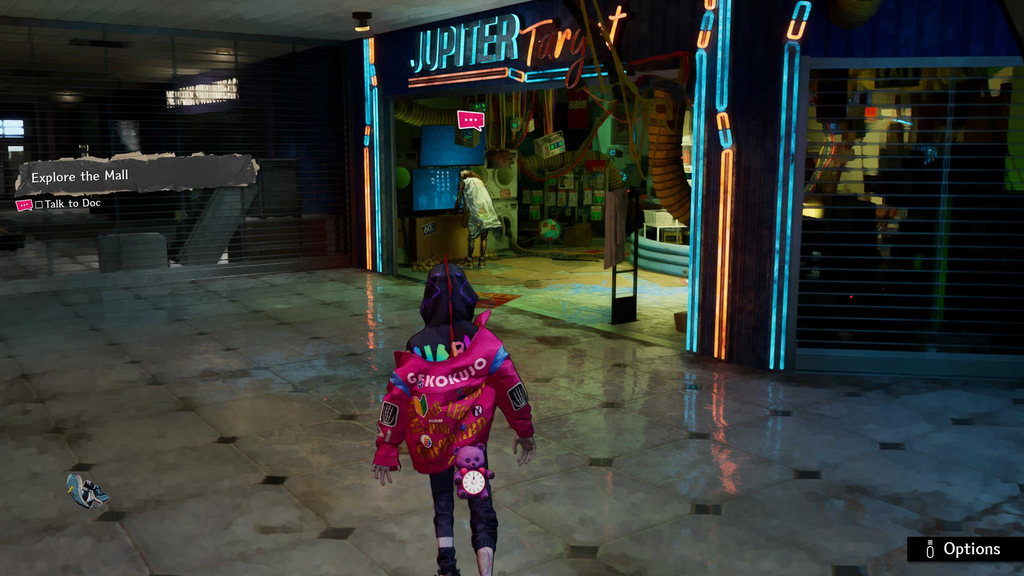
Combat is the most predictable, since, as you might expect, you get some good combos in there, then it repeats. You don’t get a traditional lock-on, which is the most frustrating component, as there were excessively many times I started throwing hands at the air. This can happen even when punching somebody, so get ready to constantly angle yourself to the left so you can keep tracking your enemy. Davey is also slow. This is established when walking through the mall at zombie shamble speeds, but inside the dungeon he gets reverted to being on par with before he died. You might think this undoes all of that, but there is still sluggishness to his attacks. It’s not bad, mind you; you get used to it, but you need to be ready to get used to it, which is the thing.
Even with this, the game manages to subvert some expectations. Combat is a balancing act of health. There is no dodge, and you only get a parry, but that parry does not work like a traditional one and can be used to dodge if needed. The thing is, it eats at your health, leaving recoverable health in its wake. Hitting a well-timed parry throws your enemy off balance but also eats into less health overall. This means reacting is almost always a risk that requires some thought on the player’s part, despite requiring more precise timing.
This is then countered by Davey’s bite ability that lets him siphon health off an enemy for the entirety of the recoverable health, as well as some extra. So in fighting, you sacrifice health to counter, probably take damage in a big fight, then charge your bite gauge to recover what you lost so you can keep going. Biting is the only way to grab additional forms, though, so the game does actively try to place these minor but clever choices on you as you proceed. If nothing else, I can say I was very impressed with how much I enjoyed the combat. Since that IS the game, more or less, that is a strong victory to score.
Stupid Never Dies has a vibe about it that is hard not to love. From the quirky and absurd cutscenes to the pop-punk and rock soundtrack, if you don’t like what the game is putting out there, that is solely a you problem. Stupid Never Dies doesn’t feel like a retread but still taps into the peak feeling of classic absurdism. What helps is that the combat is fun and versatile, and you, the player, have countless ways to make sure the stupid Davey never dies, with a roguelike loop that is very enjoyable to boot. That was the part I was worried about when biting into this slice of the game, and I came away more energized for the full thing. The game lives up to its name; it is stupid, but that’s a good thing.
Remember to follow us on Twitter, Facebook, and Bluesky to keep up to date on everything we have going on!
