

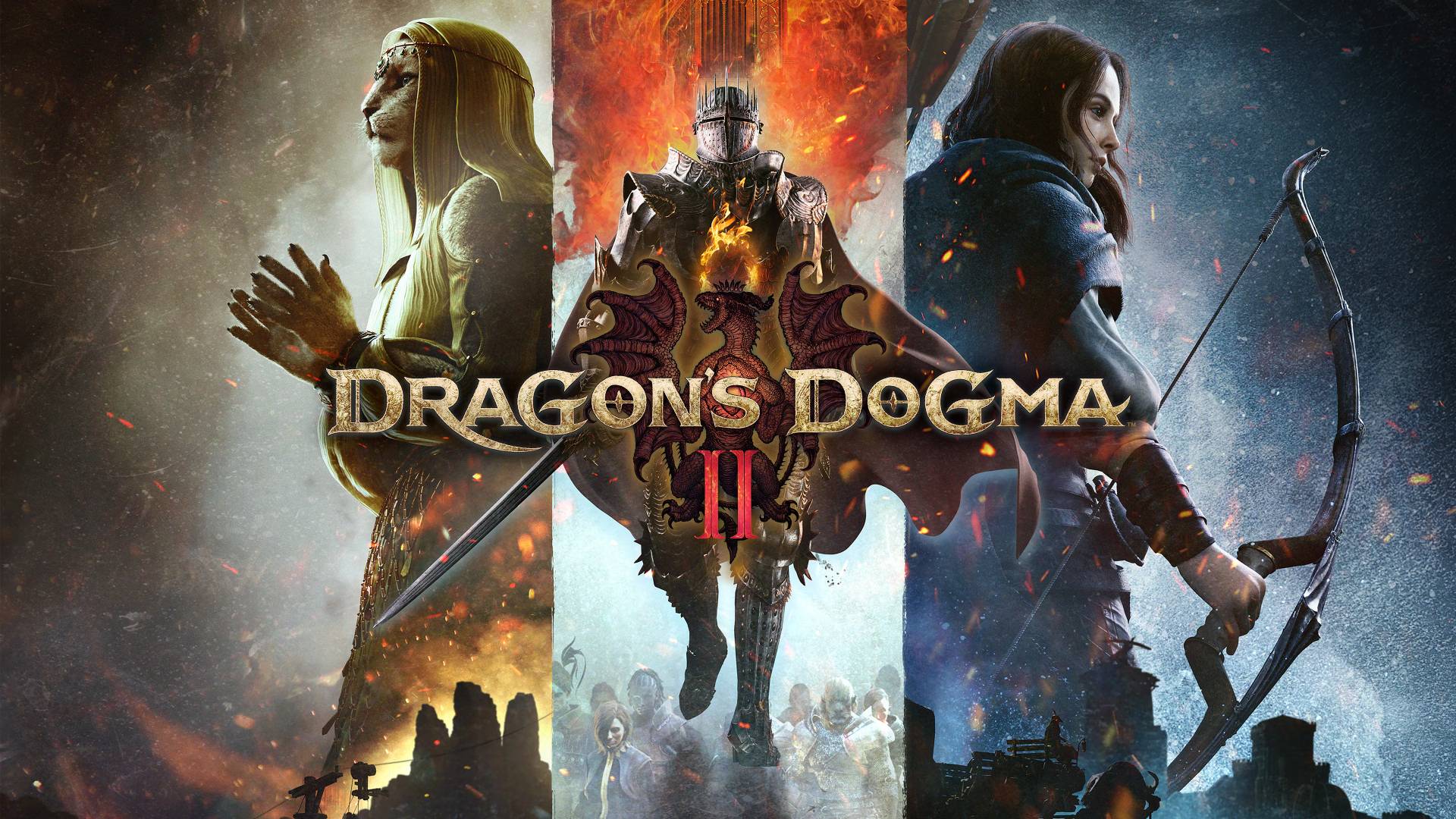
Dragon’s Dogma II reminds me a lot of that meme. You know the one. The one that says you wake up in the world of the last video game you played. How screwed are you? The thing is, in a classic Dark Souls game where it’s sadness all the time, you kinda obviously know you are going to die; it’s just a matter of whether you’re special or not. In Dragon’s Dogma II, though, there is a functioning, in fact, high-functioning society that can convince you you might be able to build yourself a life here. Then a dragon or troll literally spawns by the front gate of the city, and you realize this might be the most depressing of all the fantasy worlds.
It starts on that note, typically, as the whole point of you, the player, is that you take the role of the Arisen, a character that can command pawns, which I am still, all these years later, not fully clear on what exactly they ARE. They look human-esque, but they spend their time waiting for the Arisen to show up and, oh yeah, they are literally called pawns, which pretty heavily suggests things that aren’t fun to think about if you dwell on the thought for more than two minutes. Oh, also, the Arisen had their heart ripped out and eaten by a dragon. So, ya know, fun.
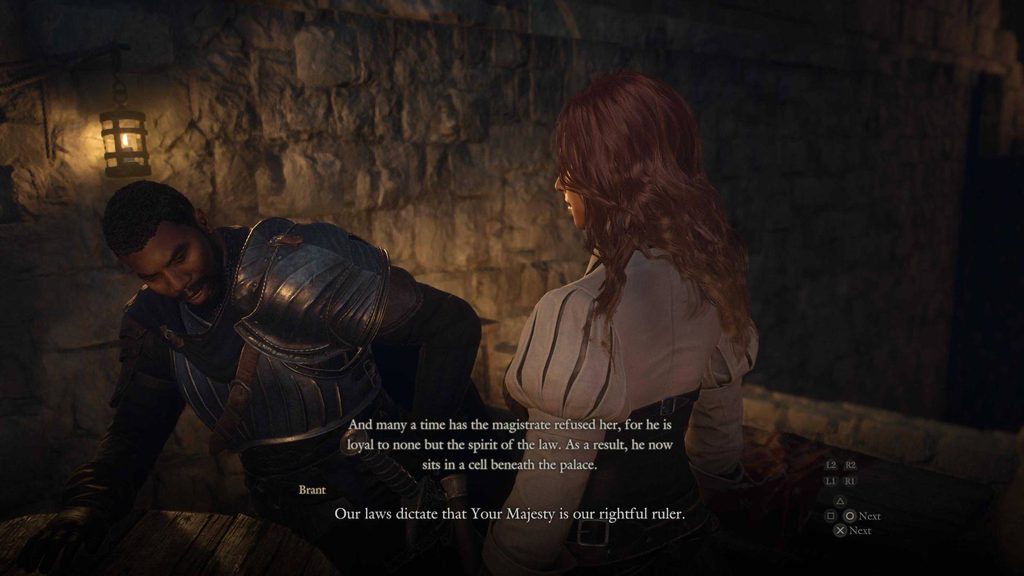
After creating your character with the pretty robust character customizer, you, the Arisen, find yourself moving rocks in the hot sun in a prison labor camp. That is when a dragon attacks and you get your first taste of the fact that everything in this world wants to kill you always, all the time. It is like the golden rule of Dragon’s Dogma II. Well, that, and you don’t deserve health. The player escapes, starting the main quest line of getting to the capital and becoming the Sovran, or leader of the country, which is apparently tradition. Not to be that person, but it feels weird to hand off the rule to somebody who just got merced by a dragon, but who am I to judge?
Traveling to the capital proves to be a whole thing in its own right because, say it with me, everything wants to kill you all the time. Obviously, nothing pans out that way as a whole; a plan to usurp your ascension is at play, and you spend much of the rest of the game attempting to resolve this and become the king or queen you probably shouldn’t be. It’s an interesting setup and does offer fun, but it features an extremely loose narrative that at times doesn’t connect with me.
For starters, the characters you meet have very little importance in the main game, which can be frustrating. Only one character, the person who establishes most of the quests you have to take on, is the only person who remains relevant deeper into the narrative. Most of the characters appear for maybe a quest, sometimes not even, and then lose any significant relevance. In fairness, a lot of them don’t really hit the high notes you want for a supporting character, treated with all the verve of a character doomed to only matter for five minutes anyway. A few break this note and manage to be very engaging, then nowhere.
In fairness, a few get additional quests you can tackle, which at least gives them some more relevance and yourself more time with them, but these are the kind where you show up, get a task, then head off. That said, side quests are where Dragon’s Dogma II excels, as weird as that is. It can be hard to get started because the game doesn’t point you in the right direction, instead allowing you to organically find them. You are just walking down the street, and somebody asks you for some help. Some of these are also timed with often punishing limits, but at least these make sense. Timmy fell down a well; you don’t get three weeks to get around to it.
Most of these quests are tied to just how harsh the world is. One of the first quests you get is to head to this small fishing village, and when you arrive there, you get a quest to save it because monsters have overrun the village. You can choose to be the worst version of yourself and not help, but there might be a reward if you do. Then you save the village, and you can return at a later date to check on everything, and the village gets attacked again, all the while tensions start brewing between the beast folk and humans, giving you an early taste of such a grounded element that barely crops up in the main game.
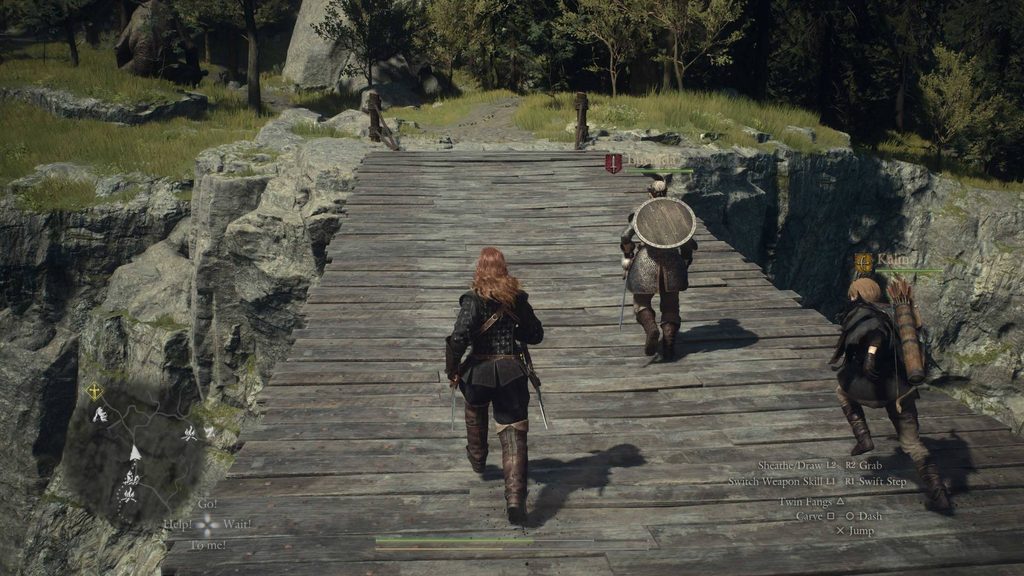
All of these concepts tie into a legitimate death system that can affect every character, even the important ones. Thankfully, the game does give you a way to reverse this, though that is a whole process that is best avoided if you can. It still captures that Morrowind vibe, though, a level of classic RPG you just don’t see anymore, without punishing you to the point of unplayability if that happens. It can happen… For like no reason, too. My powns killed like six people because I forgot to put away my weapons in the city. I sort of just watched them do it
What might be worse, though, depending on where you stand, is that much of the narrative is… Walking. I mean, you can run, but the stamina system is particularly painful, as running out has your character dragging their feet until a pawn gives them a bump on the back, and even then, depending on your inventory, recovery can be slow. But that’s the thing: you get quests that ask you to travel across much of the map, and then your options are to leg it out or take an ox cart, with both having their issues that pile on.
On the road, enemies are almost goofily waiting off to the side every two to three feet, leading to constant confrontations. I actually love how easy leveling is, so getting into fights is just an excuse to see those stat increases pop up, but this can compile fast. The length of some of the fights, as enemies manage to withstand a lot of your hits, only becomes an issue when the group waiting off to the side finally decides to join the fight. There were points where a fight between four enemies devolved into a fight with twenty as you bounced around as fast as you could to thin the herd. Then a griffin swoops in because the universe really wants you dead.
The Ox cart can be a faster way to get there, or not, depending on what happens after you choose to doze off. The carts are slower than walking normally, and you need to get into these fights regardless because the cart will stop for each enemy, forcing you to deal with it. So you doze off as a fast travel method, but, similar to camping, you aren’t guaranteed that nothing will try to murder you. This one time in Dragon’s Dogma II, I dozed off in the back of an ox cart and awoke to two trolls and six goblins murdering everybody… Then the cart got smashed up. I was nowhere near my destination. I think I was more upset that the dude took my flipping money and left me to defend his cart, then didn’t REFUND ME!
The good news is that fighting everything and anything is really, really fun. It’s always fast-paced, and your character can move and jump between a multitude of enemies at varying speeds for the class you play in, with a few being less so, but not by much. I personally decided to play a thief throughout most of my run, with my Pawn being a fighter. I mean, what’s great about the class vacation system is that you can change this at any point, with minimal effort. The more annoying thing will be buying the gear to make switching at any location in the game equate to the same stats as your previous one. Earning the money required for the expensive items can be very time-consuming.
The pawn system also remains one of the more interesting social experiments in gaming, in a good way. You basically fill two slots in your party with party members that other players created, trying to round out your team, with a fairly large amount of options to choose from, and an easy system in place to allow you to find the party type that you want. I do lament, again, that these created characters take space from narrative characters I would like to have more time with, but then you send away your lower-level pawns with gifts and praise, back to their masters, and you forget all about that. You get this sense of interconnectivity in your solo game that feels good.
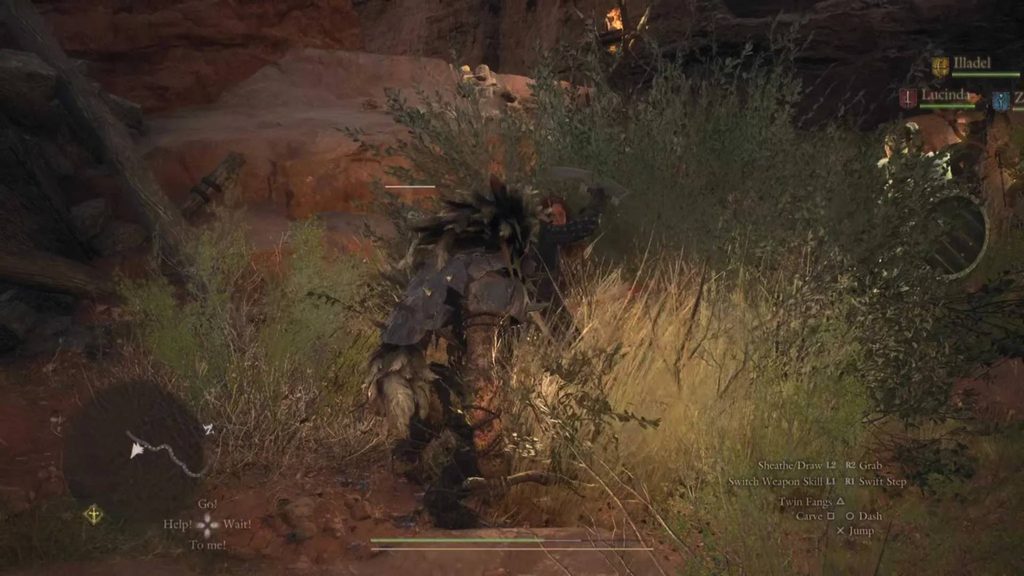
There is a downside to the pawns, and it is that they are more chatty than the boy band that you play as in Final Fantasy XV. They literally never shut up. Walk along a road and hear them comment about every little plant you can pick up, every enemy lying in wait, even stupider things like there being a bridge you can cross. Even in combat, they will run their mouths about every time you are poisoned or knocked down. Sometimes, they even talk about all of this while not doing anything to actually solve the problem.
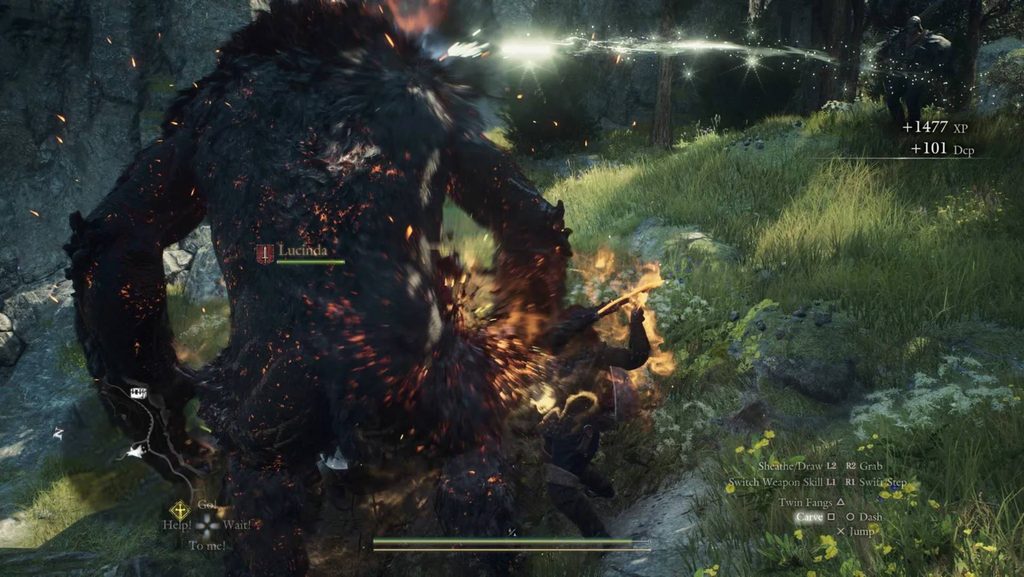
Overall, the AI controlling the pawns can be overwhelmingly stupid. It’s the tale of two haves because when the function gels, it is quite engaging. I typically have a mage on hand to herald me. This they do very well. Later on, these characters get elemental spells to place on your weapons, and one of the weirdest things is that they will alternate placing these on you. Hairy enemies can be lit on fire, for instance, so you would think that against these I would get a lot of fire buffs, but they still alternate. At other points, they just straight up buffed me with electric against an enemy that is electric while commenting that electricity wouldn’t work on this enemy, which is just straight up painful. This is before talking about the numerous times they picked up a downed ally a second before I arrived to heal them, costing me more time to do so.
The worst points to combat are when enemies just stay slightly out of your range. Take the harpies in this regard; they aren’t very hard (though they have an instant down move from the onset of the game), but they fly out of range a lot. Even if you have an archer or mage, unless YOU are the archer and mage, they will just float around, swiping at you from time to time until somebody hits them in their sweet spot and they go down so the player can actually swipe at them. This is one of many examples, but at these points running became my favorite option, not because I couldn’t win, but it never felt worth the effort.
Where combat really hits its apex, though, is when fighting the bigger of the beasts you cross paths with. This is partly because the grab and climb mechanic of the first game returns and feels so much better than it did prior because you get stuck far less. You jump on a troll, climb up to its head, and just start stabbing and stabbing until it topples, and you can start draining those multiple health bars they have. You will get into combat with these enemies a lot, with some being able to just slam down on you out of nowhere. This can be annoying at the start because most of these situations will scale higher, but once you get to that point, engaging in these big battles is such a joy.
The weird thing is, the main story does not have a lot of these bigger battles present along its lines. You will eventually slay dragons; that’s kinda the whole point of the thing, but even that is situated as this other element that is just required to pass a certain point. There are a few times when you get these sort of grandiose moments that stand out emotionally, before returning to the loop of walk the roads and try not to die, then fail at that, then respawn over and over again until you finally beat your way through. I was always able to eventually, but the thing is a process.
The worst aspect of all this is the constant punishment to your health gauge, which gets chipped away at with every hit. It’s a wear-and-tear system, but some of the roads are so long you can reach the halfway point to where you need to go, only to be left with a red health bar. Camping kits remain heavy as hell, so they are useful, but you can’t recover stamina as fast. Even if you use one, though, again, you are just as likely to get woken up by a club to the face, and the whole thing doesn’t do much. Thankfully, the developers have patched in an eternal ferrystone since launch to whisk you away to a house or inn, though unless you have another item, you have a long road to jump back into.
On the opposite end of this, though, Dragon’s Dogma II has this living, breathing world that is honestly second to none. The characters have their own schedules, and the day and night feel genuinely unique. Nights are pitch black, making exploration much harder, so you do feel like your choice in what you do and when genuinely matters. You can get lost in the vast and beautiful world around you and not even care. Even the tinier touches, like bridges being able to get destroyed and requiring time to rebuild, all keep the world feeling active.
Verdict
Dragon’s Dogma II takes after the Arisen and grabs onto you early and keeps you moving forward even without much direction. Getting into scrapes and climbing a dragon for the head stabs remain fun long after you dive deeper and deeper into the world around you. Giant creatures make for great pin cushions, and every second the citizens around you face death and destruction, putting purpose on your quest, even if at times it feels like the narrative is disjointed. I would have liked the pawns to act a little bit smarter; that might be my biggest complaint, but the social aspects associated with them, however light, make the world feel a little smaller in the process. There is no shame in sinking the hours you undoubtedly will into this.
Remember to follow us on Twitter, Facebook, and Bluesky to keep up to date on everything we have going on!
Reviewed on PlayStation 5, also available on Xbox Series X/S, Nintendo Switch 2, and PC
*A Code was provided by Capcom for the purposes of this review
Developer/Publisher: Capcom
Release Date: March 22, 2024, October 9, 2026 (Switch 2)
Pros
+Side Quests, which pop up organically, are well implimented
+An inviting fantasy world that feels living in nature
+Fighting and climbing bigger enemies is always a joy.
+The death system makes you take nothing for granted.
+Combat flows well and feels good across the vacations, though it could use a lock on system.
Cons
-A weak narrative that feels disjointed at times.
-Some fights are more frustrating than they are challenging.
-I should have named my pawn 7/11 because its mouth never shuts.
-
Dragon's Dogma II
