

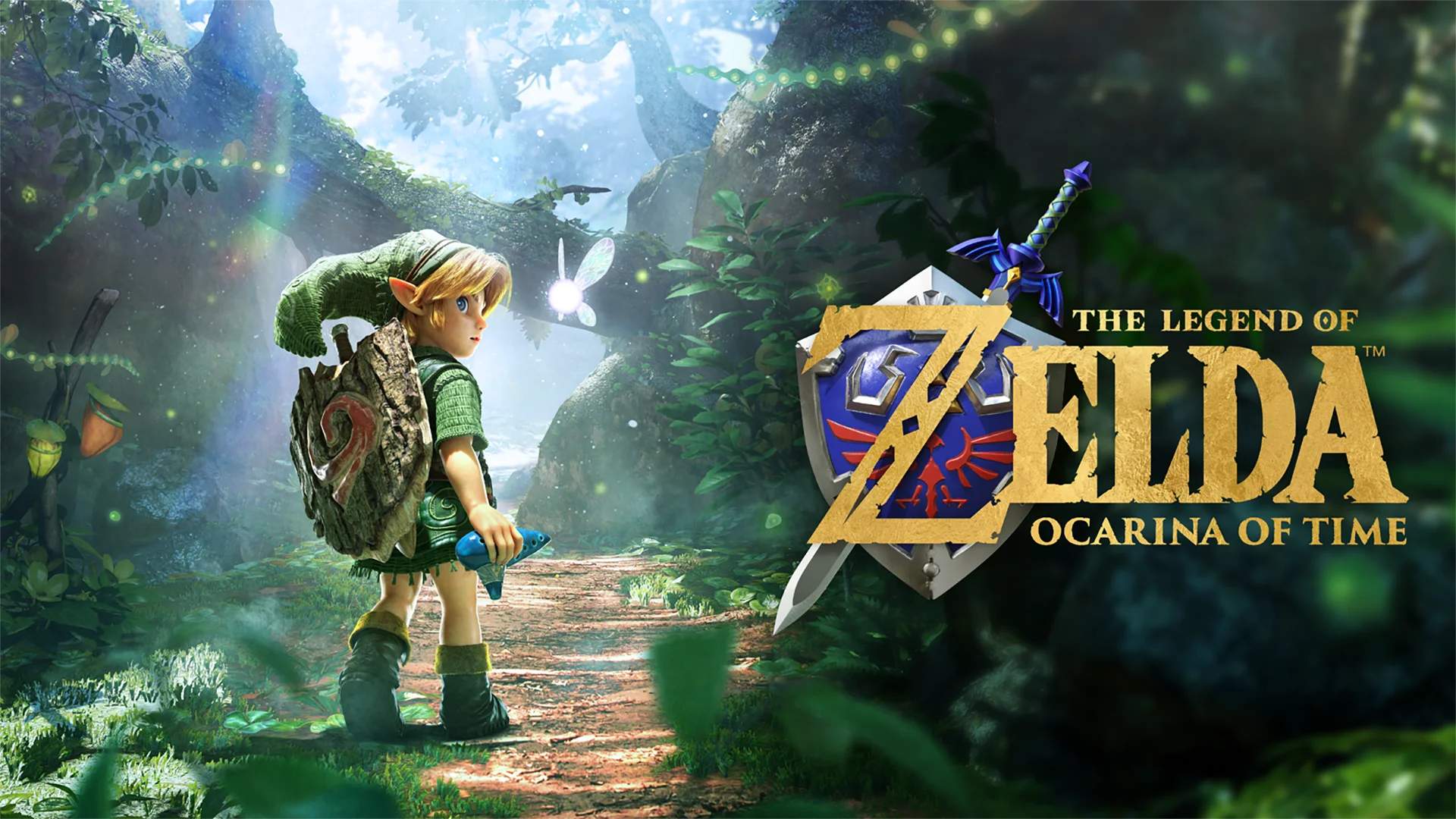
The Legend Of Zelda: Ocarina Of Time returns in the form of one of the most pitch-perfect remakes of all time, honoring the legacy of a giant.
There are pivotal moments in our lives that we use to anchor ourselves. Your first relationship, a college graduation, the Christmas where they gifted you a Nintendo 64. My infatuation with video games started then, but it was in 1998 when my love for fantasy would be consolidated. Maybe it was the slick golden box art with the Hylian Shield and the Master Sword. Or perhaps the idea of becoming a warrior to save the world. Anywho, The Legend Of Zelda: Ocarina Of Time marked me forever, alongside a generation of geeky millennials who never really grew up. Now in the form of a modern remake, it comes back to remind players everywhere why it is legendary.
Purposeful Changes
Nintendo is no stranger to remakes, dabbling with Ocarina of Time several times over the decades. You have the GameCube version with the harder Master Quest edition, the 3DS remake that refreshed its visual identity, and finally, this one. Arguably the epitome of what they first envisioned all those years ago, this remake certainly constitutes the end all be all of this timeless adventure.
Originally selling 7.6 million copies, it felt like its influence was felt more in the collective unconscious rather than by actual players who made it its identity. Taking purposeful design choices to appeal to the broadest audience possible, there is no excuse for those curious as to why some consider it the best game of all time.
Ocarina Of Time is a tragedy. A beautiful one, no doubt, but a tragedy nonetheless. How else could you describe the epochal plot of a child who’s innocence is basically robbed because he is the chosen one? Link, the only kid in Kokiri Forest who does not have a fairy, suddenly is granted one with a catch. He must stop an evil man from the desert known as Ganondorf, who will stop at nothing to obtain endless power to rule the land. Some might despair at the thought of having a youngster carrying the world on his shoulders. Alas, this is a legend, after all.
An Unlikely Hero
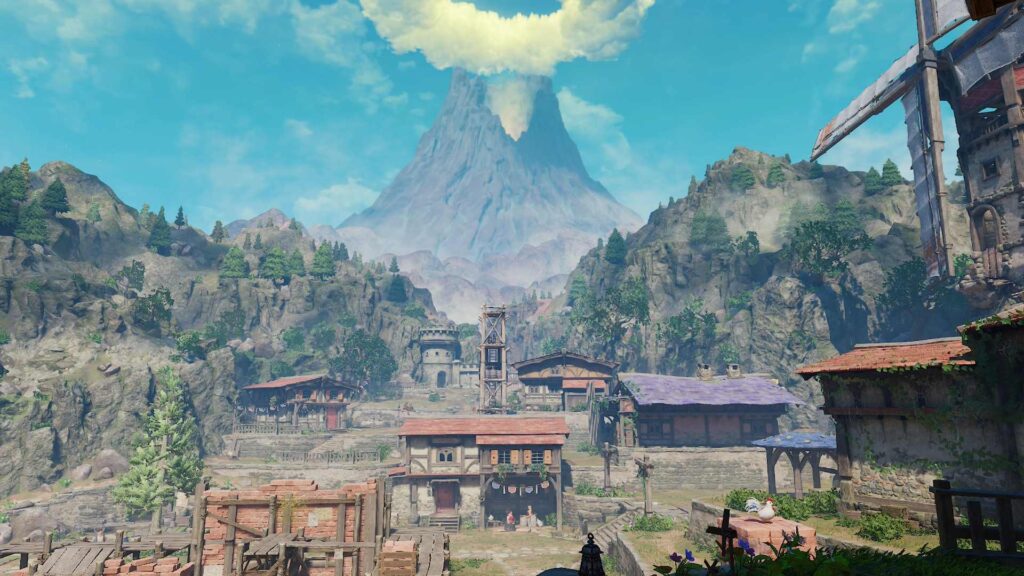
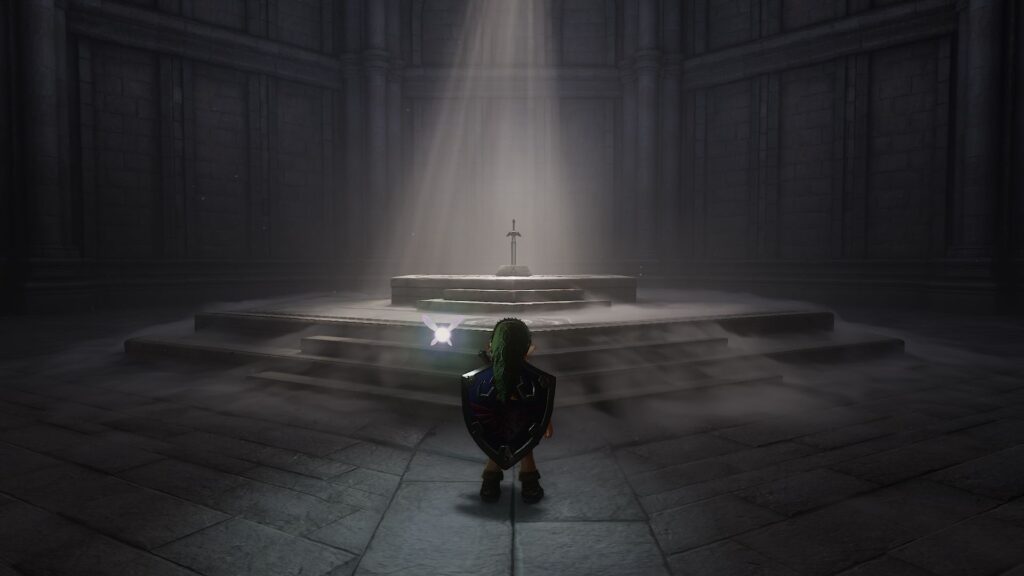
Over the course of Link’s journey, he travels through different realms, meets new species, and eventually faces the land’s princess, Zelda. Eventually granted the Ocarina of Time to open the Temple of Time and gain access to the Master Sword, this fast-forwards him seven years in the future to gain the power necessary to defeat Ganondorf. Witnessing Hyrule and its people’s downfall during that time, now in high definition, is both devastating and jaw-dropping, considering how beautiful everything is rendered.
Eventually thwarting his nefarious plans, the journey is what makes Ocarina Of Time such an unforgettable experience. From the tragic fate several characters meet to Link’s unwavering resolve, solving each dungeon becomes a clever tale of its own. See, each dungeon has its own iconic design that would influence most games that came after it. From The Knightling to Nier: Automata, paying attention to how this adventure plays out feels almost like a history lesson.
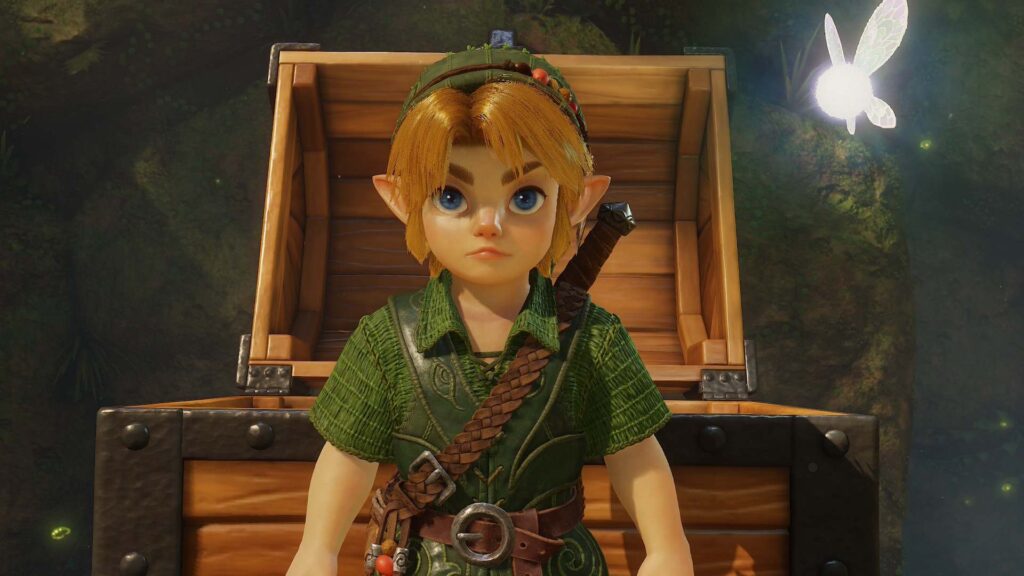
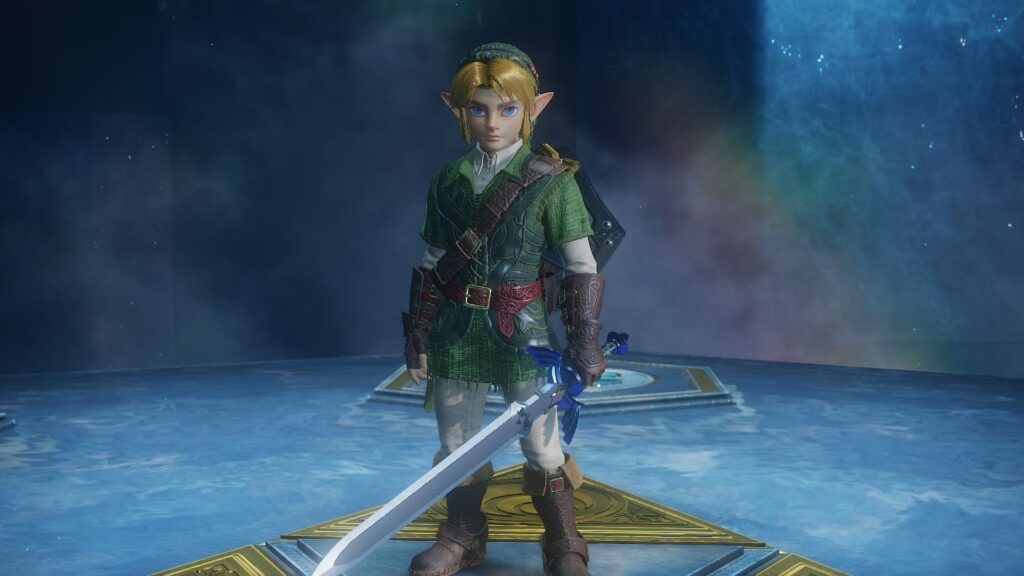
I know this brief overview of the story like the palm of my hand, with it being one of the few games that I have replayed over the years. What does this new remake bring to the table that you could not see in that first foray into Hyrule? For starters, the obvious one. The graphical upgrade is mindblowing. Looking at the character models based on Japanese puppets feels awkward at first but is the right choice in the long run. By Adult Link’s point, the cast grows into themselves quite nicely.
The More Things Change
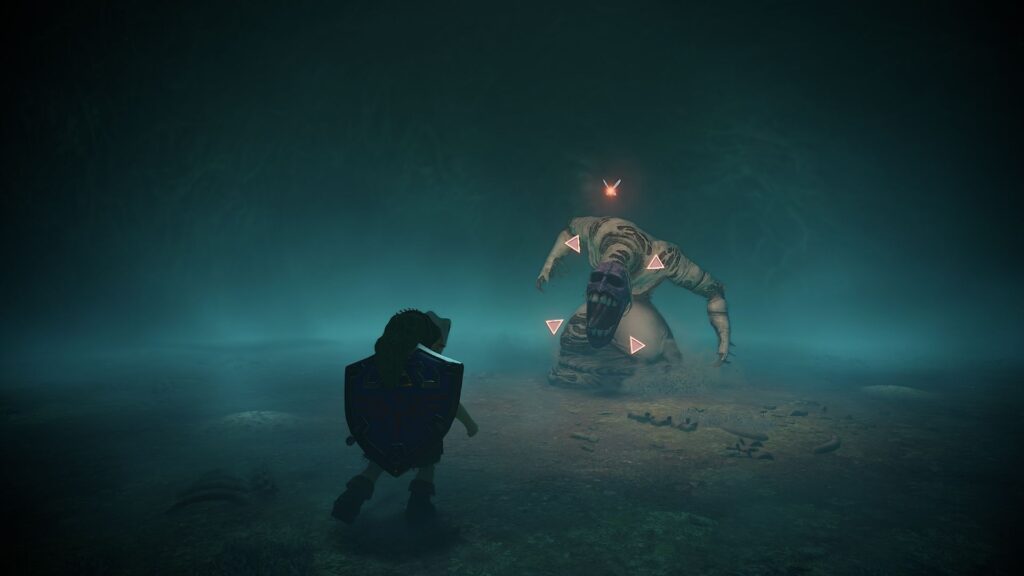
Then, what a generation would now think inconceivable for a game to exist without: a jump button. Paired with a run button and the actual control of the camera, Ocarina Of Time feels like a new game at times. As Link fights his way (with the untouched Z-targeting controls) through each dungeon and primordial boss fight, so do these new controls make for a smoother journey.
When at a time you had to roll over to an edge to jump, the simple press of a button makes it a literal gamechanger. I know some veterans will take some getting used to (I know I did), but by the time you have fallen a dozen times, it will be second nature.
As you progress through Ocarina of Time’s various dungeons, collecting new tools like the hookshot to traverse to new areas is easy to click with. With the help of a map, a compass, and even the brand-new Zelda Notes app, not even the once-infamous Water Temple feels difficult to explore through. If there is anything that defines this remake as a whole, it is its commitment to quality-of-life features.
Neither the enemies nor the bosses feel overly difficult, usually dying within three to nine hits each. But thinking of players with no previous knowledge, their surprise by discovering the rich secrets of each area will make them understand why so many think this highly of it.
The Devil Is In The Details
Video games were forever changed by Ocarina Of Time when it first launched. Looking at the map of Hyrule itself, many other games based their size on it. The puzzle design, on the other hand, also deeply changed what was thought possible in 3D spaces, which back then were still nascent. And one not too complex but notable example is the side quests as well. Making full use of the day/night cycle and characters’ schedules, Young Link’s mask quest, for example, served as the blueprint of countless games for years to come.
Finally, the music. Oh, the music. When the Ocarina Of Time remake was initially revealed, Nintendo smartly used several tones from Koji Kondo’s Kokiri Forest song. Many who grew up with it knew right then and there what was about to happen. I could say the same of every melody presented. The somber notes of Nocturne of Shadow, the stoicness of the Bolero of Fire, and hope’s final bid in Prelude of Light. If for whatever reason you are reading this review and do not know any of these songs, well, you are in for the treat of a lifetime.
Verdict – The Legend Of Zelda: Ocarina Of Time
Overall, Ocarina Of Time is one of those games in which every single interaction becomes ingrained in your mind. Although this could be the nostalgia talking on my part, there is just no better way to describe it. Learning the Song of Storms with the insane man in Kakariko Village. Crossing through the desert with the Lens of Truth. Meeting Sheik to learn a new melody on the ocarina. It is both the instantly recognizable sound effects and songs themselves that help create the myth that this is one legend worth discovering.
It is strange to think that a game with such a lasting legacy finally has a remake worthy of its stature. After decades of rumors, it even feels a bit surreal. But the truth is that The Legend of Zelda: Ocarina Of Time is as real as it gets. Masterfully implementing quality-of-life features, adding sensible voice acting and cutscenes, and reimagining with stunning new graphics make it a must-play masterpiece for a new generation.
You can follow us on Twitter, Facebook, and Bluesky to keep up to date with all our coverage and be part of the conversation.
Reviewed on Nintendo Switch 2.
Developer/Publisher: Nintendo
Release Date: Out now
Pros
- New artstyle is fitting
- A true remake of one of the best games of all time
- Cutscenes and voice acting are a welcome change
- High-fidelity graphics take a sensible approach to honor source material
- Modern QoL additions like the jump button or Zelda Notes are meaningful
Cons
- It may be a bit too easy
-
Amazing
