
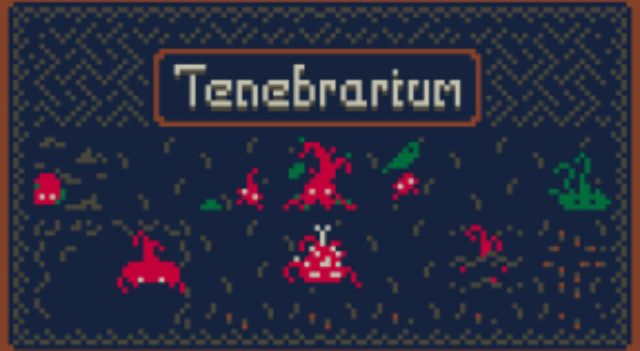
Tenebrarium is a colony simulator that sparks a special interest in nature by influencing and observing a species’ behaviors.
Not too long ago, I read a psychologist say that it is never too late to follow your dreams. I thought about this while playing Tenebrarium. See, there are plenty of things I have done in my life, but many I have not. Skydiving, for instance. Or being a marine biologist! Although I was never good at math to analyze all that data. Regardless, for this particular game’s sake, I thought about—as the game clearly suggests—a terrarium. Never one of those kids, I was mostly content with a dog. But the concept of manipulating an entire colony of ants now haunts me.
Tenebrarium is a game where you start a run to do one thing exactly: create an environment for a species to thrive, and observe. Sure, it sounds simple. In action it even feels a bit like an incremental game. The truth is that playing god by using the dozen resources available to see how these unfortunate test subjects behave ended up being entirely more intriguing than I initially thought.
More Than A Simulator
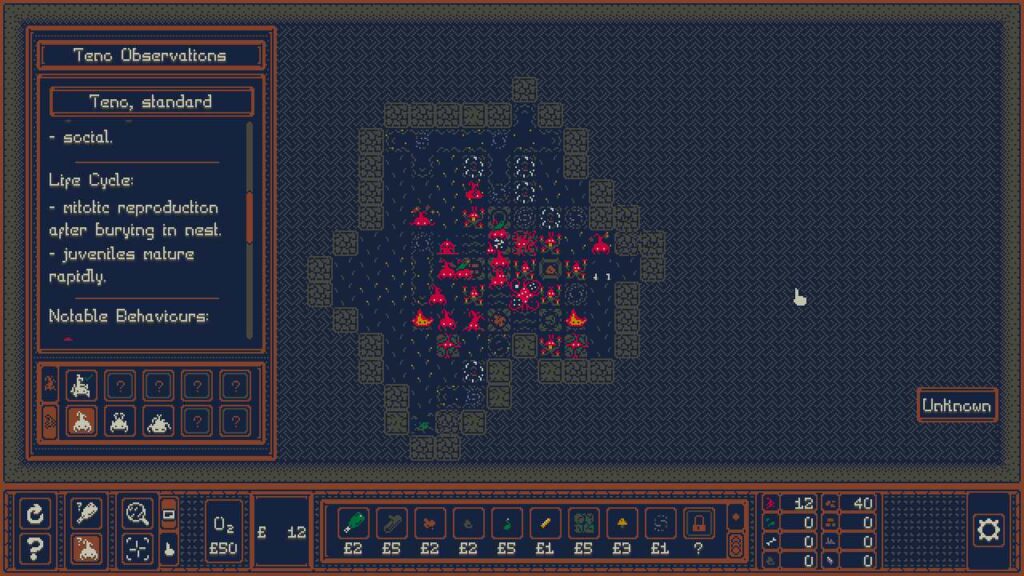
Managing a race of small Pikmin-like red critters called the Teno (not to be confused with Warframe), the goal in Tenebrarium is to record their every behavior. How interesting can this be? Well, like any curious mind, it is by altering the atmosphere in which the species operates. You start simple: one Teno. The game clearly states that they are HUNGRY. So, the first item to interact with the terrarium is a piece of meat, appropriately. With the little critter completely unable to understand their situation, they eat and stumble across this narrow bit of soil. And then they multiply.
At the 2, 5, 8, 10, and so on mark of acquiring more Tenos, more items are available. Consequentially, more variants of Tenos are to mutate as you toy around with them. For example, Tenebrarium offers dirt, coal, seeds, and a golden rod for some reason. Predictably, the Teno who interacts with the seed might just suddenly become a Teno-tree. Touching the golden rod, on the other hand, will turn a Teno into a gold-colored variant after striking it with lightning. Under specific circumstances, a Teno might even become a hivemind of the colony.
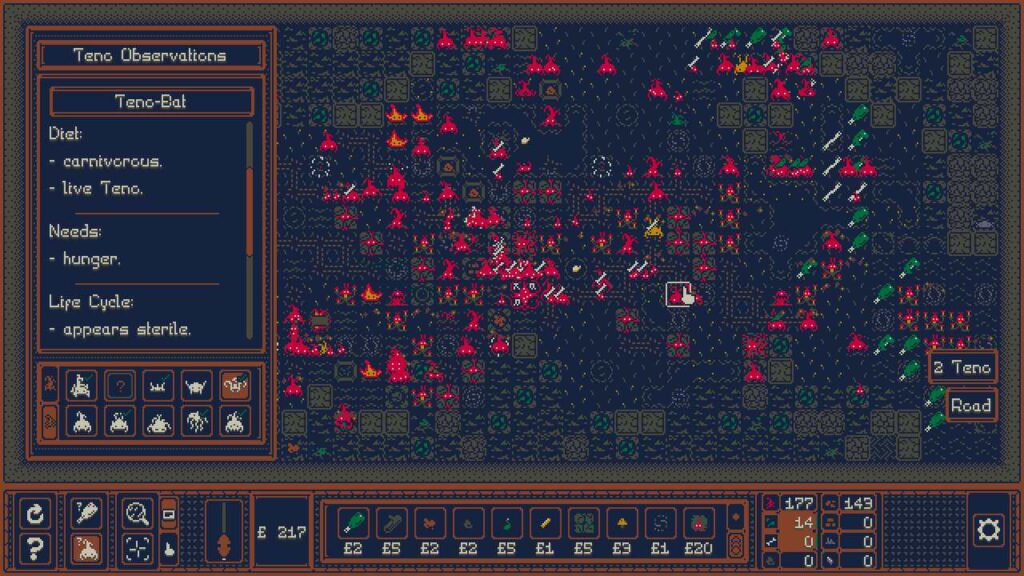
For curiosity’s sake, I let Tenebrarium run on its own after messing with it for a half hour. Speeding up the time after unlocking the ability to do so, registering every one of the beings’ unique behaviors is fascinating. A late-game item to deploy on the colony simulator is oil. Dropping a different item on top of it will make it create a different reaction to whichever Teno decides to interact with it. The endgame, then, is to discover every disposable item’s effects on the Teno, and every mutation and behavior possible of the Teno themselves.
Conclusion
Look at me, rambling on about simulated animal behavior. Perhaps I have a bit more interest in being a bit of a marine biologist than I first realized. Tenebrarium is a unique kind of game. One that gives players the ability to open their minds to question what is out there. This could be a beginning, but then they could try to look at more nature documentaries or even read any advancements in the study of nature thanks to it. In my case, I am already browsing at an affordable terrarium.
