
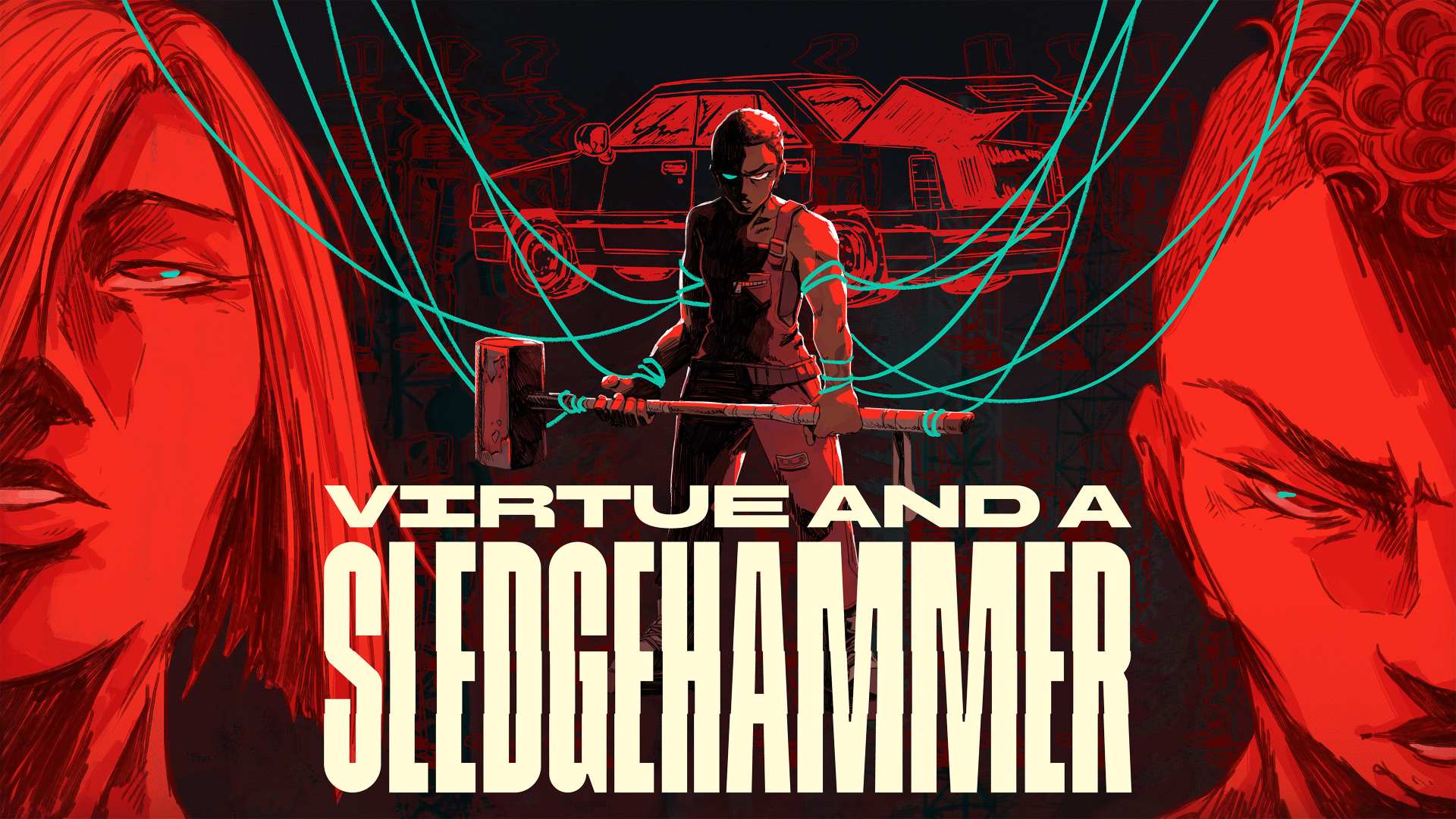
Virtue and a Sledgehammer pits you against the system with 20 pounds of steel to deliver a most important message: fight back.
There are days when I wake up and I do not recognize this world anymore. How much have we lost in the name of automatization? Apparently now generative AI CEOs ask LLMs how to best describe their children instead of spending time with them. Writing an email—a deeply personal gesture if done well—is being offloaded by ChatGPT to simply move on to the next mundane task. These small losses amount to a death by a thousand cuts. A unique way of expressing yourself via a pun or intimate note is lost in the process. Forever. And it is infuriating. Virtue and a Sledgehammer feels the exact same way, and its protagonist is ready to dismantle the system in this revolutionary manifesto.
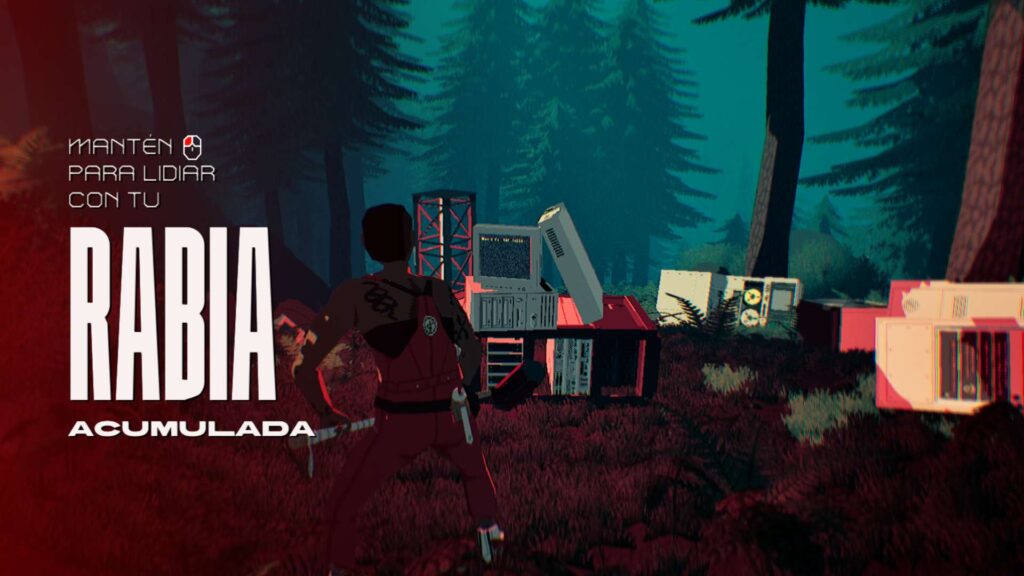
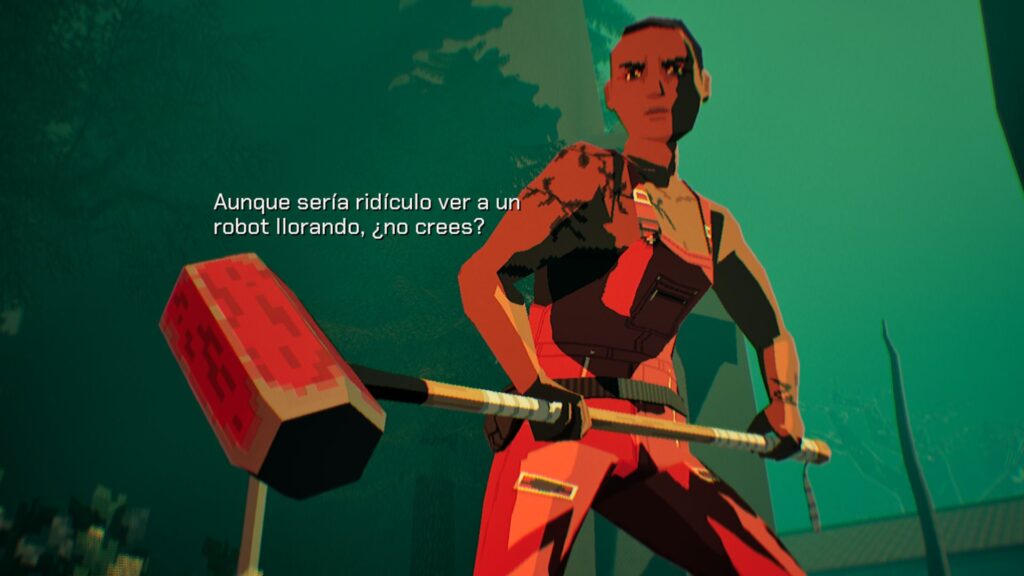
Thunderous to its core, Virtue and a Sledgehammer is exceptionally great at what it does: channel your pent-up rage through its protagonist Pratelle. Her sister Nina found a way to digitize a human mind, proceeding to turn a whole Spanish village into robots. Going against your wishes, confronting her looks like the last resort. This seemingly idyllic town is about to become your entire rage room, whether they want to or not. Some will beg for their lives; others will accept the end stoically. Only one thing is certain: nothing will be left.
Every Swing Matters
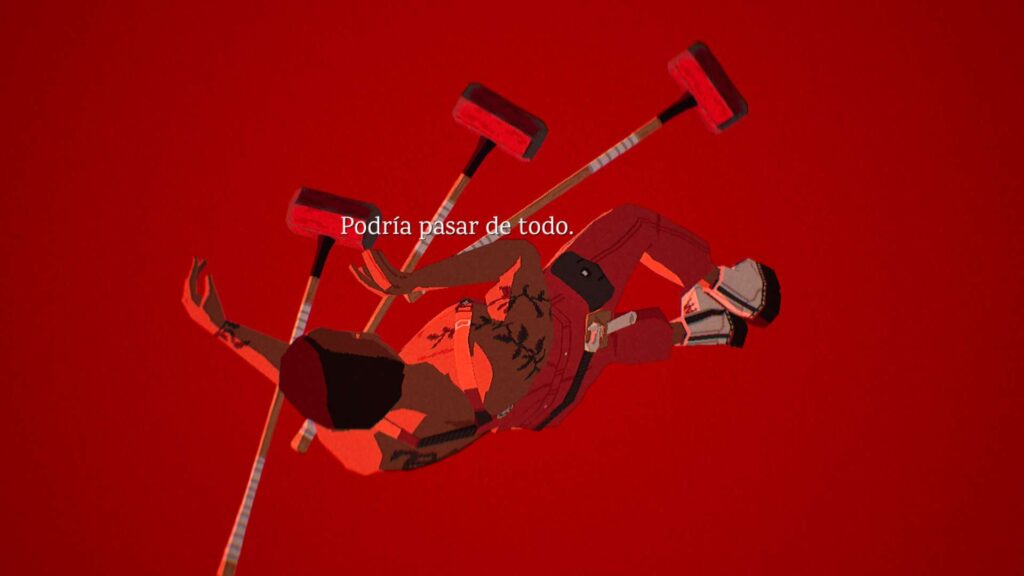
Once armed with her sledgehammer, Pratelle calmly walks from beginning to end. This makes the 3- to 4-hour journey strictly focused on the anger dissipating one brick wall at a time. Boasting immensely satisfying destruction physics, the fact that she exclusively does two moves with the tool—a solid swing and a powerful slam—is more than enough to carry you to the end. Learning about the sisters troubled childhood, her mother’s abuse, the subsequent grief, and Nina’s eventual betrayal all come to a clash. Set to the tune of an electrifying soundtrack, releasing your wrath has never felt so right.
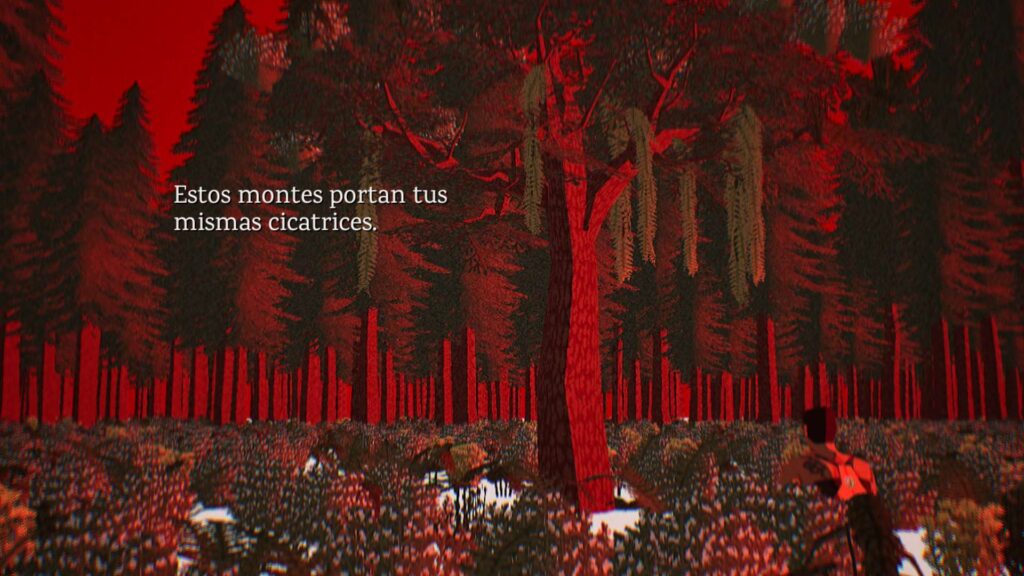
Sure, Virtue and a Sledgehammer is a video game in the sense that you are interacting with a controller. Although reducing it to just that feels wrong. Striking red hues infect the entire screen, as if Pratelle’s fury could blind her to only see the world through this color. The more you play, the more emotionally draining it becomes. After all, destroying an entire town who does not deserve it takes a toll. Smartly enough, there is an interlude to breathe in between sequences. Everything is so hard-hitting that it will naturally affect anyone who plays it. A large part of it is the confrontational dialogue on-screen.
A Machine Can’t Feel
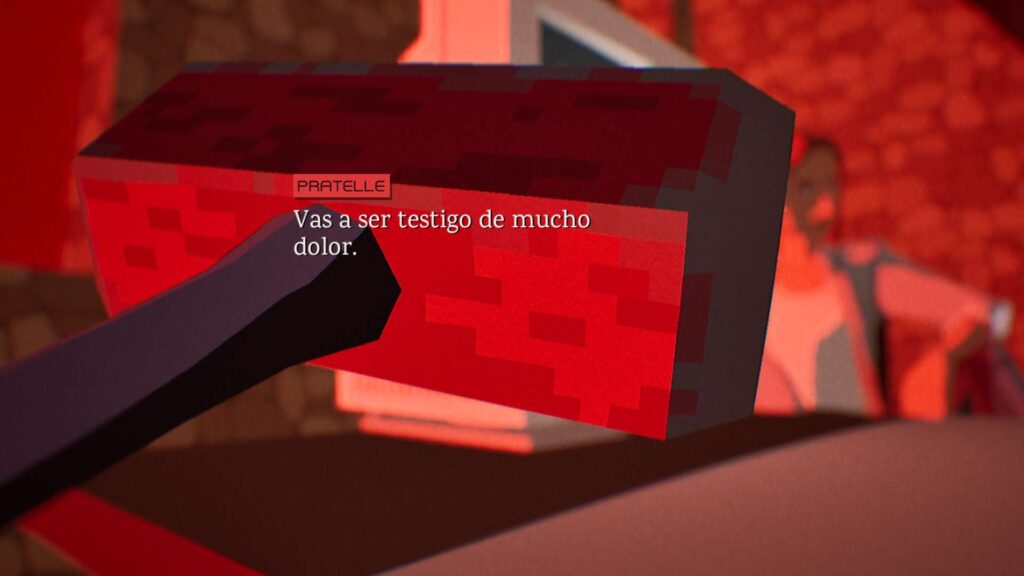
Because the town knew who Pratelle was before they turned into ones and zeros, some will recognize her and reply with some deeply troubling lines. “You are our biggest failure,” blurts one clanker as he turns to scraps. Another, a kinder one, says, “You have grown so much since I last saw you, my dear.” It is up to you to decide whether these robots are alive, or not. A particular instance gives nuance to the otherwise relentless violence. An android mentions that after using a wheelchair her whole life she simply wants to walk the hills but for a few moments, asking for clemency.
The sisters’ relationship works as a fascinating philosophical debate: do living beings have a soul? An eternal conversation, witnessing both sides of the spectrum parallel to Pratelle’s destruction, works as a profoundly moving discussion that goes beyond the medium of games. Why do we do what we do, and how does that define who we are? In this era of automatization, do we want to give the few good things that make us authentic in lieu of conformity? Virtue and a Sledgehammer know its answer, but it does not hesitate in giving a balanced argument for both sides in this situation.
Writing On The Wall
In a 2014 interview, the game’s creative director, Jordi de Paco, explains how he pivoted into video games. After working for 5 years as a web programmer, he found himself tired of the office-couch-office cycle that he was so accustomed to. “Will this be how I spend the rest of my days? That is when I said I wanted to make video games.” It is in that defiant resolve that you can see de Paco’s DNA all over Virtue and a Sledgehammer.
Pratelle wants you to be just as angry as her. If you receive too much damage, instead of a game-over screen, the game will ask you if you want to give up or not. If you do, the software will close right then and there, no questions asked. But if you still have unresolved trauma to work out, she will receive a second wind, pulverizing every robot in her vicinity. There are no difficulty settings because there doesn’t need to be. This is a statement vehemently raging against the machine.
The Bigger Picture
Taking a step back, the main reason Virtue and a Sledgehammer will transcend is not only due to its subject matter, but at the moment it is releasing. Byung-Chul Han, the South Korean philosopher, rationalizes, “Before capturing the world in concepts, thinking is emotionally gripped, even affected by the world… The first thought image is goosebumps. Artificial intelligence is incapable of thinking, for the very reason it cannot get goosebumps. It lacks the affective-analogue dimension, the capacity to be emotionally affected, which lies beyond the reach of data and information.”
So, losing this capability of wonder is what the people in power are counting on. Finding no more joy in little victories like an uncomfortable work of art will render us inert. Much like Virtue and a Sledgehammer state, “a computer will never hate itself enough to become better.” A person, then, struggles with themselves every day, questioning if it’s worth it to engage with a society that becomes increasingly apathetic. Should you ever lose faith in the world, or, worst-case scenario—in yourself—look up to what Virtue stands for.
Verdict: Virtue and a Sledgehammer
It is fair to say that the future has never looked more uncertain. Rage is a valid response against the everyday abuse that we are subjected to. LLMs stole every artwork known to man wholesale. This review itself will be fed to the chipper as well. This is why Virtue and a Sledgehammer is the most important game of the year. It is not merely a fervent statement against automatization, but an unwavering championing of the human spirit. This is a revolutionary manifesto that will reverberate for years to come.
You can follow us on Twitter, Facebook, and Bluesky to keep up to date with all our coverage and be part of the conversation.
Reviewed on Steam.
Developer: Deconstructeam, Selkie Harbour
Publisher: Devolver Digital
Release date: Out now
Pros:
- Striking color palette
- No-nonsense level design
- Cathartic destruction physics
- Anger can be felt in every line of dialogue
- Collectibles are tied to poignant memories
- Deeply emotional portrayal of grief, rage, and trauma
- A most timely release capturing a currently universal feeling
Cons
- None
-
Masterpiece
