
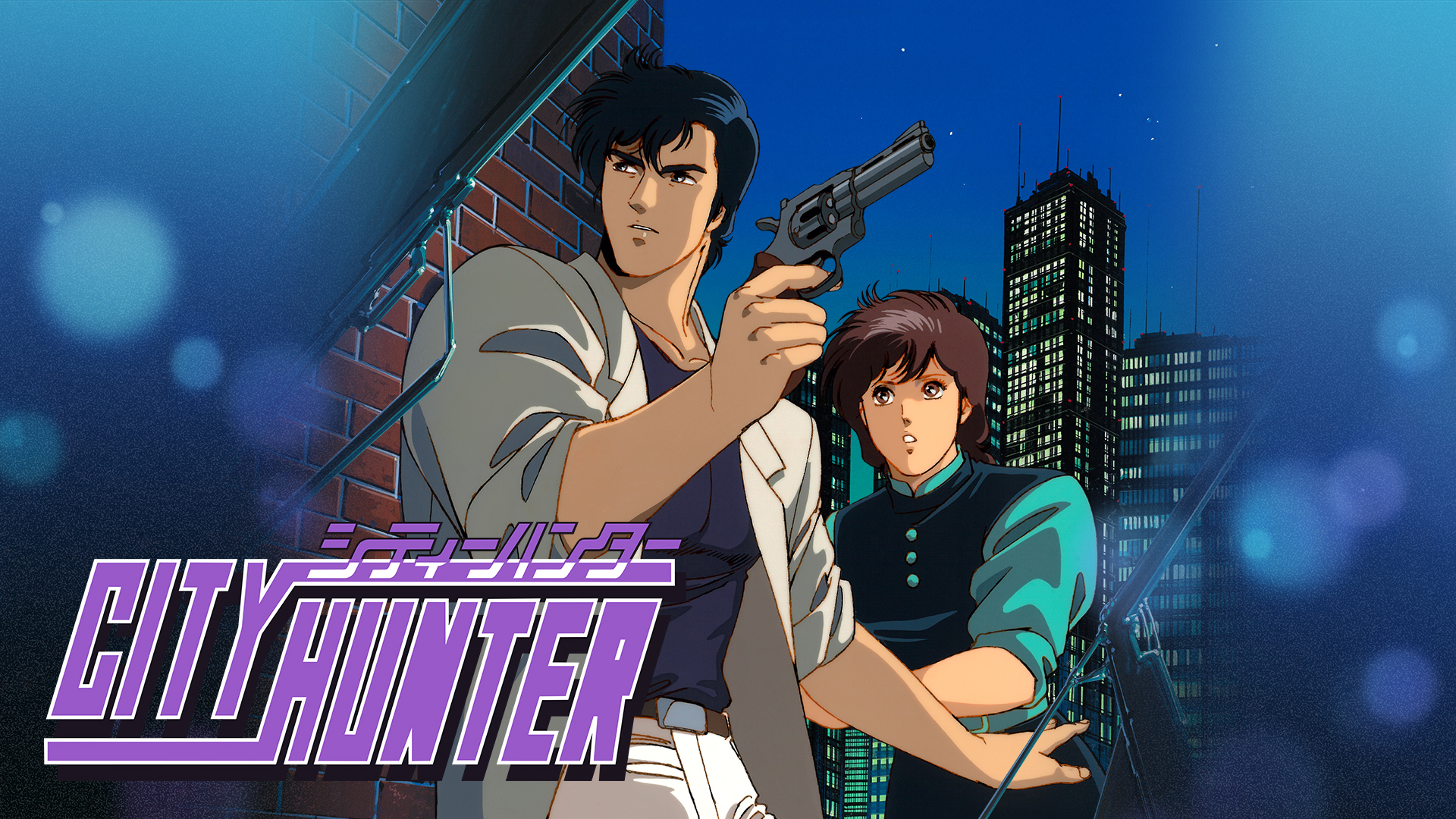
Last year, when I was scrolling through Netflix, I stumbled upon the most recent City Hunter film. It looked stupid as hell, but Masanobu Ando was up in there, and lord knows I haven’t seen him since he was doing Takashi Miike westerns with Quentin Tarantino and his classic crazy hair, so I figured, why not? He was killed off about 10 minutes in, which I would have remembered. If I had any recollection of the source material, Ryohei Suzuki did such a good job as Ryo Saeba that the film was actually a pleasant watch.
I’m not really sure WHO or WHY City Hunter is having a moment, but it is. Not only did it get a new movie, but the 1990 Sunsoft game is also back. Getting a remaster in conjunction with Red Art Games so that you, yes you, no longer need to hunt through second-hand shops in Akihabara to get your hands on one and experience that 90s Sukebe action. The kind that your life has been missing.
Oh, you weren’t looking for that? That’s the thing. I’m not really sure WHO this was brought back to please. And it’s a weird thing because I’m going to defend the developers of this because there is nothing inherently bad about this port. Unless, of course, you’re talking about the game being ported.
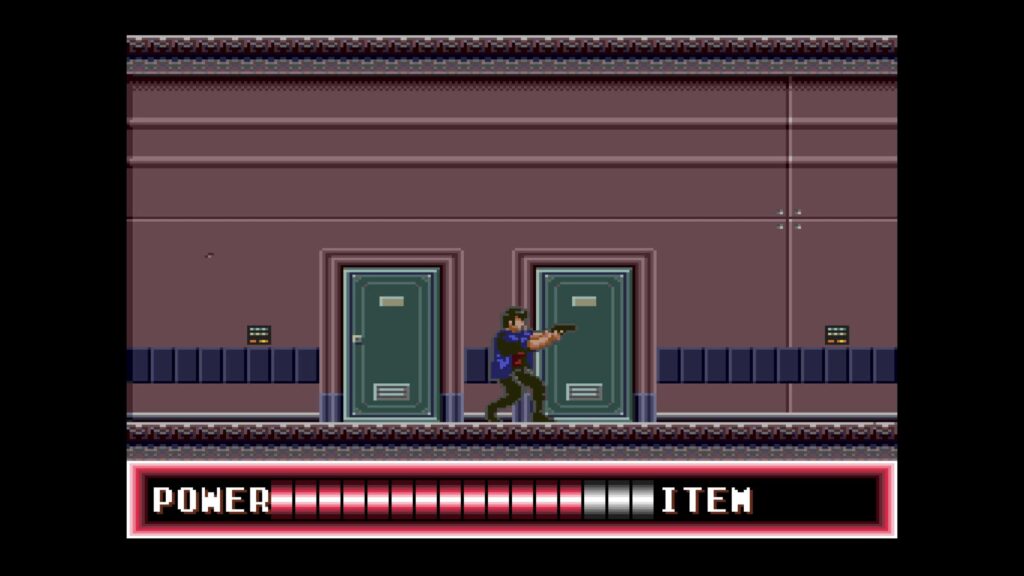
City Hunter is as retro as you can get without slipping back into arcade machines. Atari’s pixel art sprite leads Ryo as he takes on three missions that can be taken in any order, all building up to one final mission that ties the arcs together. Before each mission, the player is given a summary, and yes, there is a modern 80s mixed with sci-fi aesthetic to everything, matching the manga in that regard. If there is one thing to be said, the game does nail the feel of a classic City Hunter romp.
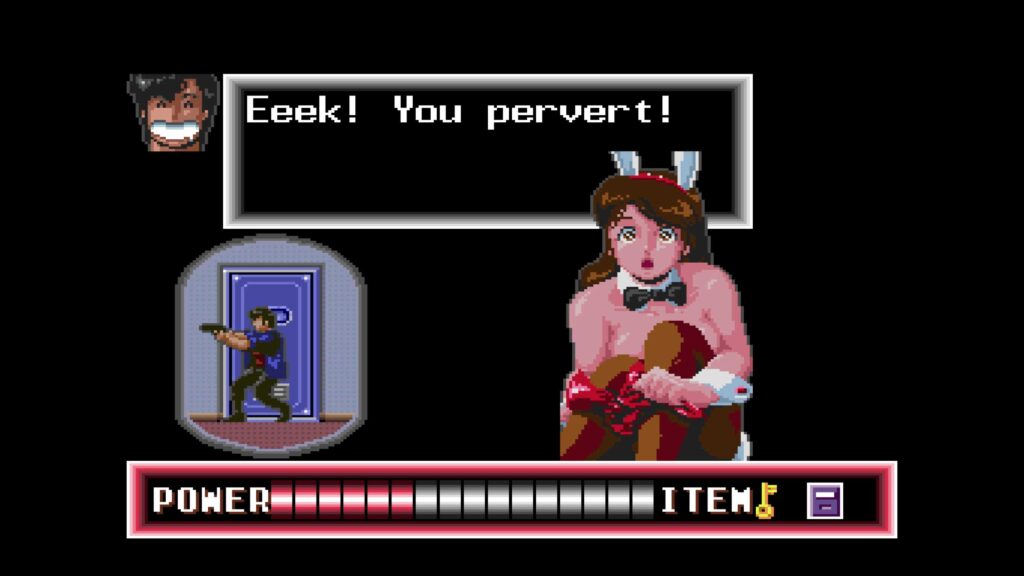
This being said, much of the character’s personality is missing, with this being a basic action title from the 90s. Ryo being Ryo is half of what made the anime something special, but you do lose something with that. His most important feature lives on. Through scenes in which he accidentally walks in on women in various states of undress, with what very well could have been the greatest pixel art ever presented in a video game of the era. Possibly, I’m not sure, but it SOUNDS like something that could be true, which is the whole thing. This heals you, by the way, as the anime gods intended.
At its core, though, City Hunter involves Ryo traversing hallways with doors scattered throughout, with staircases between floors. For the most part, you are trying to find people within this with items that can help you traverse further. This is accomplished by backtracking to somewhere or someone else and interacting with them to get something valuable to use somewhere else or get at least some direction. Stages aren’t massive, but there is a lot of backtracking through areas that blend beyond what’s necessary, making it perplexing to find the right door you want amid a sea of doors that look identical.
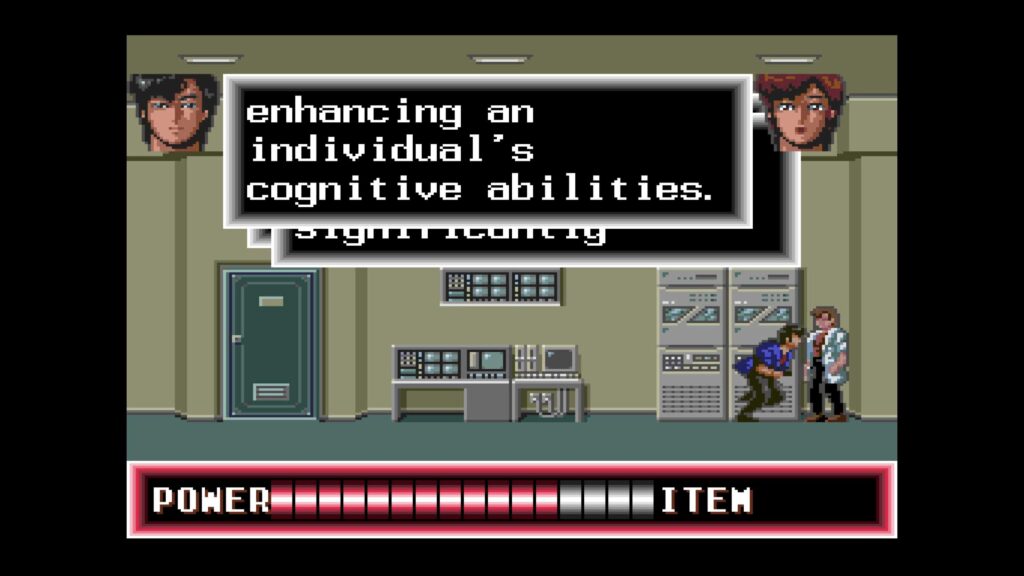
Worse than that, most rooms are one screen that either has something going on in them or doesn’t. I say don’t because some have additional traversable hallways. Every so often these can be obvious, such as a change in background or obvious enemies jumping at you from off-screen. Other times, it looks identical, and you actually have to take the time to test the bounds, which multiple other rooms will condition you to not waste your time on.
Stages aren’t long; you can probably clear each much faster than my 20-30 minutes, but getting lost is a real thing, so these stages can become padded out long past the point of any fun to be had. Since enemies spawn in the same locations all the time, you should become painfully aware of where you are going to get shot at, even if you can’t find the door you are looking for.
Combat plays out with Ryo having a gun he can fire at enemies along the path, with most dying in one hit, but not all. The game mixes in a few different enemy types, but weirdly, the more interesting ones are very limited in where or how they engage you. Again, moving between areas respawns all enemies, so if you go through a hallway before you have the item you need, you will fight them more than you want until you decide to just run, as I did.
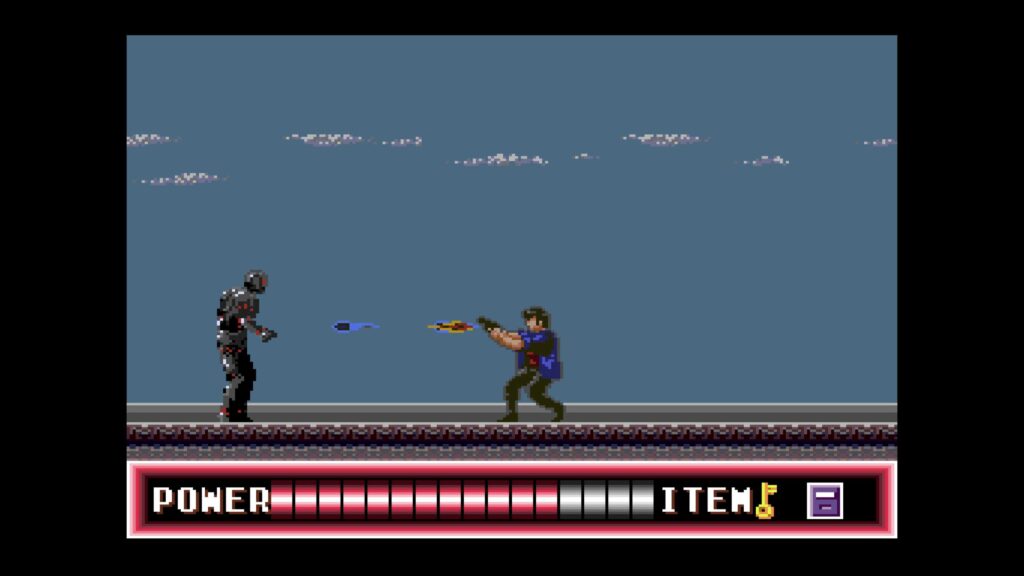
The game comes equipped with a rewind, but the feature feels so pointless at times that I stopped using it. The player gets a decent amount of health to begin with, and those half-nude pixel sprites heal you every time you enter them, as long as you can refind them. Enemies can spawn right on doors or blast at them, so there are literal points you transfer areas directly into getting hit, once or even twice. Bosses, as well, are fairly easy, made up of one singular attack and a movement.
One of which, a terminator, just keeps walking at you, causing damage. You need to take a hit to transfer to the side of the screen with more room, and even in doing so, there was no major concern for Ryo’s life. Even if you do die, everything is saved in a play, even items you grabbed, making replay far less punishing than countless retro games. Trust me, replaying Sonic—and I love the rewind—feels unneeded.
City Hunter does boast three versions you can play, though the game itself doesn’t lend well to the idea. The modern version and the original look very similar, maybe with some more polish to the remaster. Of course, you want this, but there isn’t such a drastic shift that you feel like the experience is different. The slightly more noticeable shift comes in the inclusion of a hard mode that feels more like a retro game should, as it hates you, and it wants your coins. Again, though, same game, just faster and tougher, and I feel like the unchanged bits are the most draining.
Verdict
City Hunter, as a port, is a competent remaster. It runs well and plays well. That’s not the issue here. That was never the issue here. City Hunter is just a bland game that, in 1990, was attempting to capitalize on a manga and anime that had already ended, while MAYBE trying to bridge the timeline until the 1993 Jackie Chan film came out. There is actually an odd abundance of better ways to experience the world of City Hunter; to that point, you could give the 2024 film a watch.
Remember to follow us on Twitter, Facebook, and Bluesky to keep up to date on everything we have going on!
Reviewed for PlayStation 5, Also available on Xbox Series, Nintendo Switch, Nintendo Switch 2
A review key for this title was provided by Red Art Games for the purposes of this review.
Developer: SUNSOFT and Red Art Games
Publisher: Clouded Leopard Entertainment and SUNSOFT
Release Date: February 26, 2026
Pros:
+Competent remaster
+Some interesting narrative elements
+A few different play options
Cons:
-Confusing and repetitive level design
-Poor enemy layout and combat
-bland design
-boring boss encounters
-
City Hunter
