

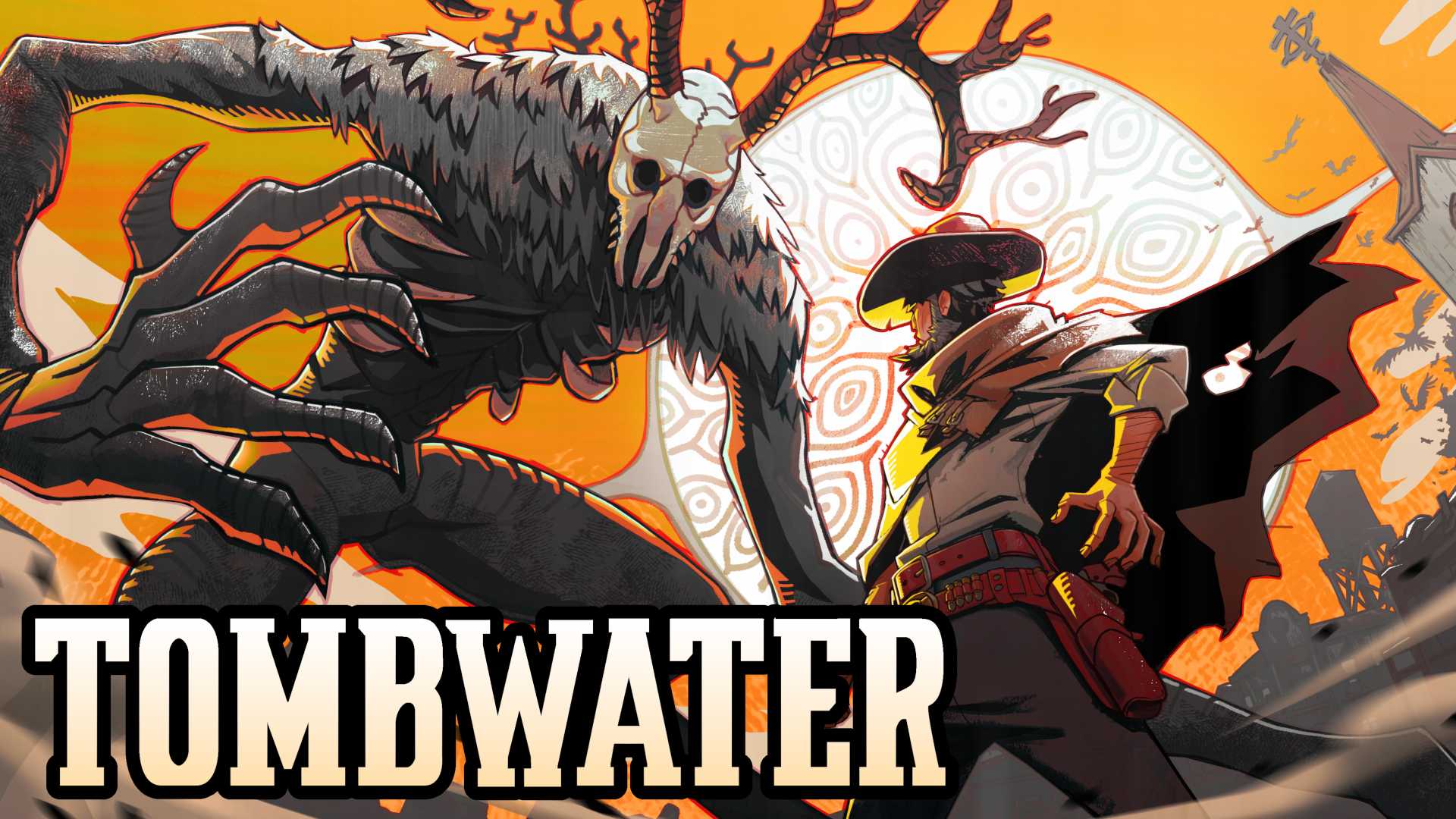
Tombwater is a top-down Soulslike dripping with atmosphere, successfully blending the Western genre with eldritch horror.
Since Demon’s Souls release in 2009, developers everywhere have tried to replicate that inimitable FromSoftware formula. Eventually becoming its own genre—the challenging Soulslike—there are several recognizable staples any seasoned gamer will identify: a bonfire to rest (which also resets enemies), a distinct tinge of eldritch horror, and uproarious boss fights. Give or take a few of these elements, such as punishing enemy placement or traps, and you have the perfect formula. Easier said than done, Tombwater elegantly delivers a haunting blend of Bloodborne and Spaghetti Western.
It would not be appropriate on my part to simply praise a video game for successfully applying the basic aspects of a pervasive genre. At this point in the gaming landscape, there are plenty that come to mind that have done it well. The reason Tombwater shines is because of its overall presentation. It knows that you cannot just throw one boss after another without a bit of foreplay. The pacing knows exactly when and what to throw at the player before unleashing them into the madness that is the cursed town of Tombwater.
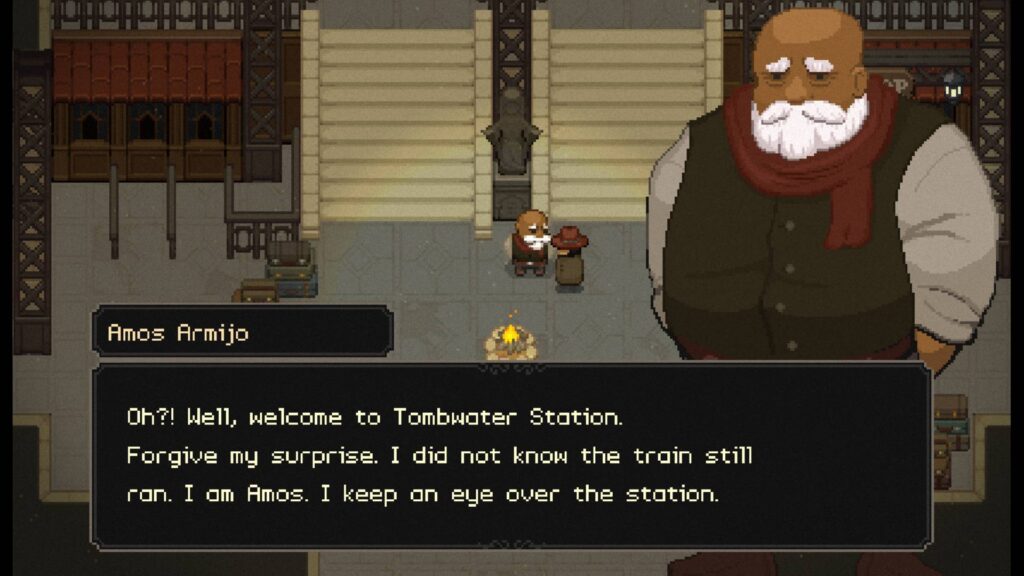
The story begins with an unnamed gunslinger fighting his way through a train heist going horribly wrong. Barely escaping by the skin of his teeth, our protagonist is told by his mentor, Elliot Flintwood, that he will reach out when he is able to rebuild. Nine years later, our Clint Eastwood stand-in arrives at the station of Tombwater. Being summoned by the now sheriff Flintwood by letter, things do not seem as encouraging as described. Abandoned with the exception of one old man, you are told that this is a ghost town.
Ravaged by an unknown disease, most of its residents are infected. Now reduced to walking corpses, or worse, corrupted desperados, the main goal is for the ponchoed protagonist to make his way through the godforsaken town to find the sheriff. While the narrative certainly lends itself to some surprising moments, especially in the latter half, it smartly gets out of the player’s way. Like any great Soulslike worth its salt, Tombwater excels in its combat and exploration.
Before the game even begins, it shows its hand by asking you to choose your starting class. Instantly recognizable by veterans, options like the all-rounder soldier, magic-inclined spellblade, or the horrid wretch are available. Seeing the Souls influence weigh so heavily will make seasoned players feel at home. Picking a certain class is not as restrictive as it sounds, with leveling up focusing on increasing life, stamina, or the Madness bar to use spells.
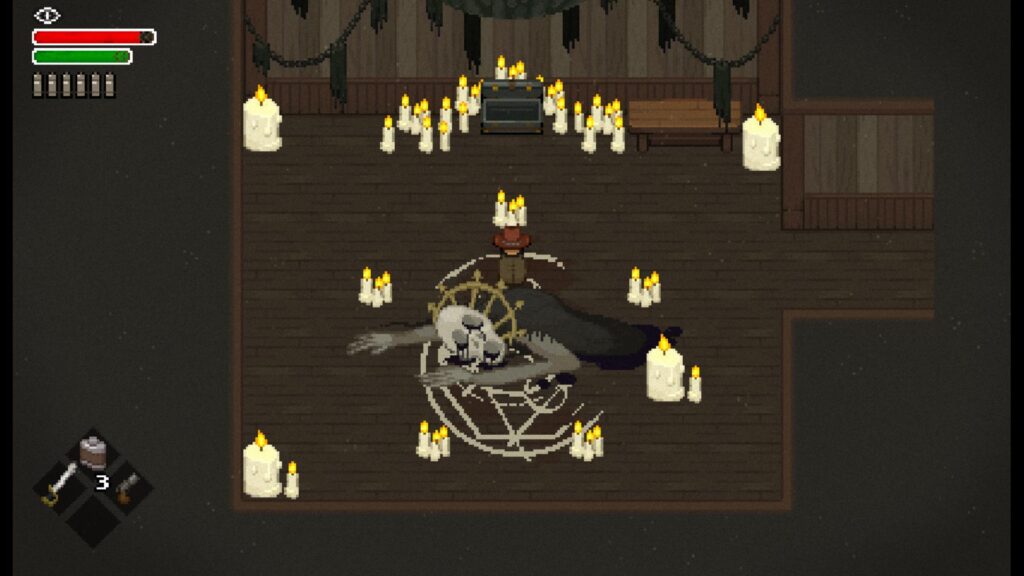
As a top-down, pixel art Metroidvania, the way our outlaw moves is imperative. Much like Enter the Gungeon before it, the directional dodge is even more precise, allowing for moves to equally avoid bullets, area-of-effect attacks, or pitfalls. Asking to be mindful of stamina (another Soulslike staple), attacking or dodging drains the self-regenerating bar. To not find yourself defenseless, two other resources are available: firearms and magic spells.
Armed with a paltry knife from the get-go, the many available weapons, including a heavy axe, a precise whip, or a literal streetlamp, are some options to engage with the enemies. Some inflict fire damage-over-time, while others bluntly reduce their HP when the impact connects. Each firearm, from single-fire guns to shotguns that fire on a spread to the delight of inaccurate shooters, can be obtained. More occult than the rest, using a slew of magic abilities like firing projectiles to follow enemies or summoning the undead from the ground may cause substantial damage. Last but not least, the ability to craft various items, from grenades to healing balms, opens up new possibilities in gameplay.
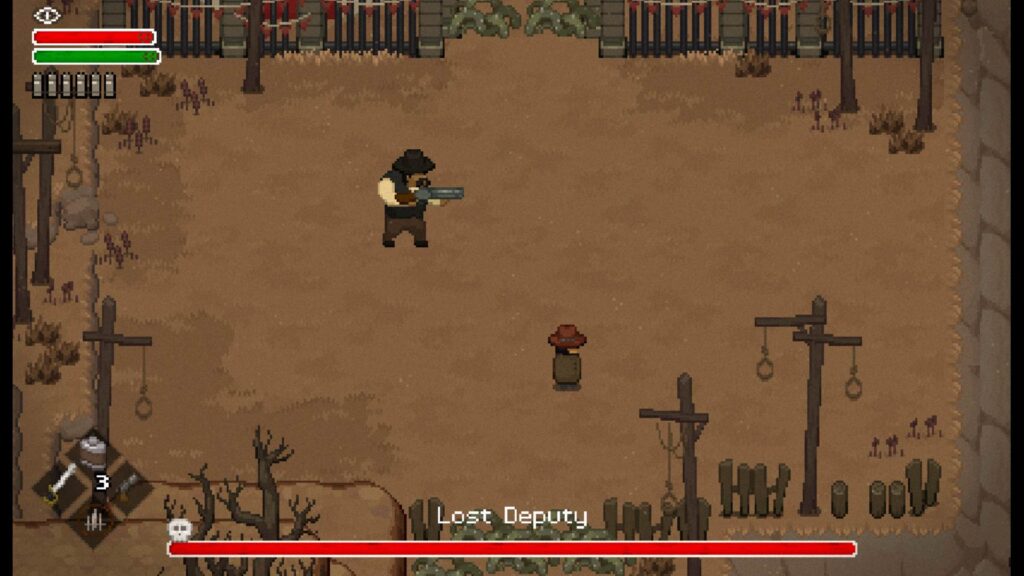
In contrast to its more inflexible inspirations, Tombwater is quite accessible in its approach, giving the option to reduce damage taken and increase damage given. The option to not lose money or experience upon death can be toggled. This allows for a more welcoming experience to recommend to fellow gamers, stress-free of the worry that they might not be good enough to progress through the game. Such options are especially useful because its increasingly deranged boss fights are to be seen to be believed.
Along its 15- to 20-hour playthrough, what makes Tombwater hard to put down is its level design. Smartly placing shortcuts that are unlocked once a difficult boss or area is advanced through, it is purposeful in its ravaged layout. Obtaining new abilities, such as rock climbing and a special shot from your gun to light torches, incentivizes you to explore every cursed nook and cranny. Because of the richness in weapons, spells, and scattered items to increase your health potions, going off the beaten path is always rewarding.
Genre conventions become fresh when looking at them from a new perspective. Tombwater proves this. Offering a quality Soulslike experience from a new perspective, it does not get lost in the weeds of what makes this type of game great. Intensely atmospheric, every eldritch corner explored to the tune of a haunted Ennio Morricone soundtrack achieves a sublime feeling that cannot be found elsewhere.
Reviewed for Steam.
A key was provided for the purposes of this review.
Developer: Moth Atlas
Publisher: Midwest Games
Release Date: Out now
Pros
- Eerie 15-20 horror narrative
- Approachable accessibility features
- Dripping with haunting atmosphere
- Various weapons and magic abilities
- Soulslike inspiration is well implemented
- Metroidvania-style exploration rewards curiosity
Cons
- Grindy and slow in the beginning
- Some enemies and boss fights are too difficult depending on mileage
-
Great
