
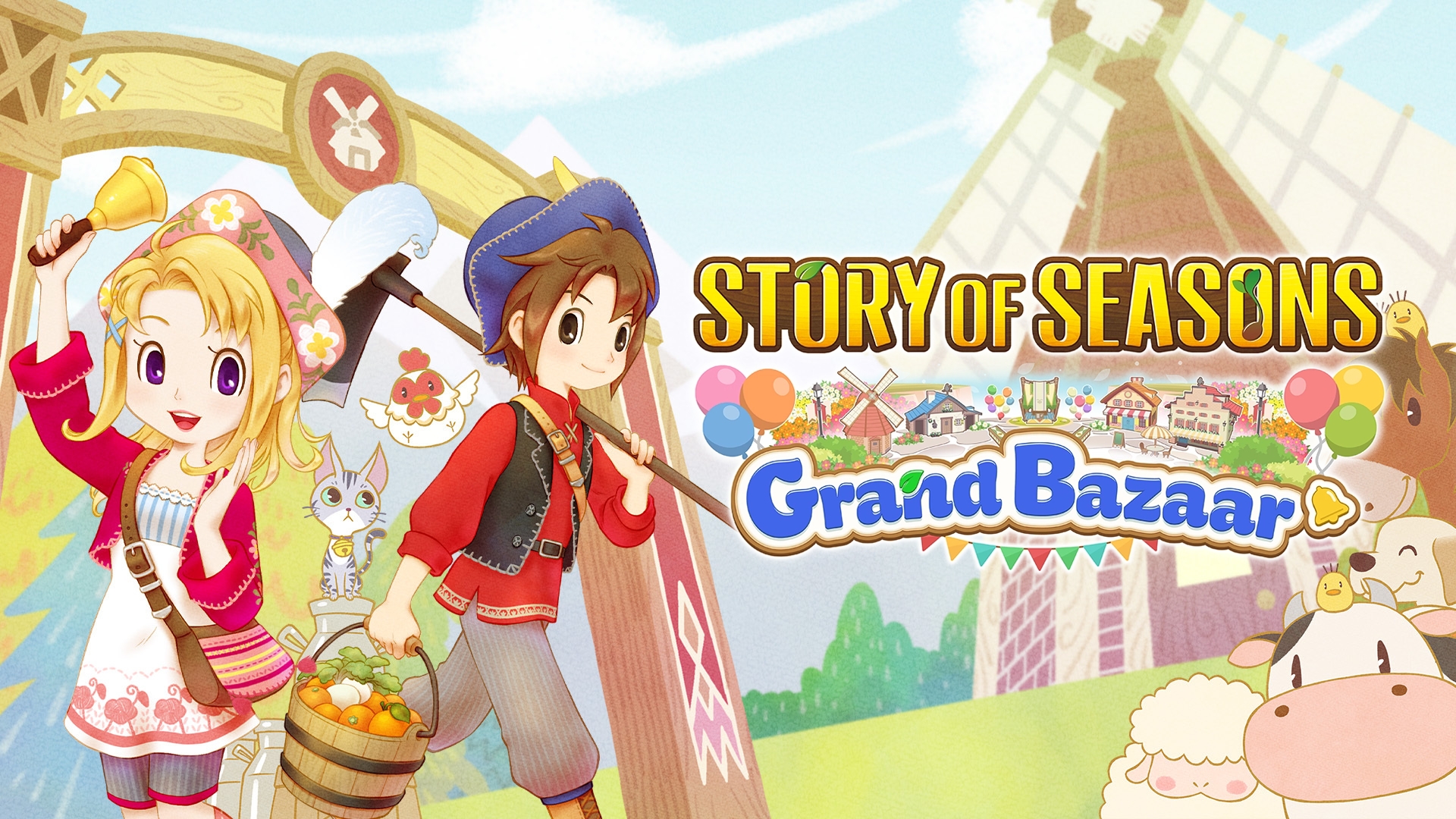
The first Harvest Moon I ever played was Back to Nature, back in ’99. It’s hard to measure the milestones you pass as you are speeding past them, and I was a bit crazy back then. A game where you don’t kill people, solve puzzles, or save the world? Crazy. There I was, on my happy little farm in the middle of nothing and nowhere, growing a batch of pineapples because a friend at school told me that was where the money was. It has been twenty-seven years since that fateful moment, and nothing has changed, except now I am in a small mountain town in Story of Seasons: Grand Bazaar… Growing Pineapples… Because they have the big bucks.
If anything, the thing that has become weirdest to me now that I am an adult is the premise of Story of Seasons in general. In Back to Nature, your grandfather died, which is why you would inherit the farm. Here, the swole-as-all-hell mayor traveled to your city and put up an ad for a farmer. They never really tell you how you become the chosen one; maybe you were the only applicant, or perhaps you just had the best resume. Either way, they clearly suggest you were given the farm, which seems economically questionable, until you become addicted to the business element of the game.
Zephyr Town once had a thriving market that is now on its last legs, and the point of finding a farmer was to have them open a stall and attract business. I go back to that first point, like, this could have gone so wrong so fast if they found a cozy game farming sim junkie like me to take up the mantle of the farm in question. I digress, though; these are my favorite Story of Seasons titles, as A New Beginning 3D has a similar setup, and I was addicted to that. The great part for me was when this game was released on the Switch 2; Grand Bazaar was one of the games in the series I had missed, owing to my siding with the PSP over the DS. The tragedy of this is I missed Story of Seasons games I ended up loving and got…. Hero of Leaf Valley… Yuck.
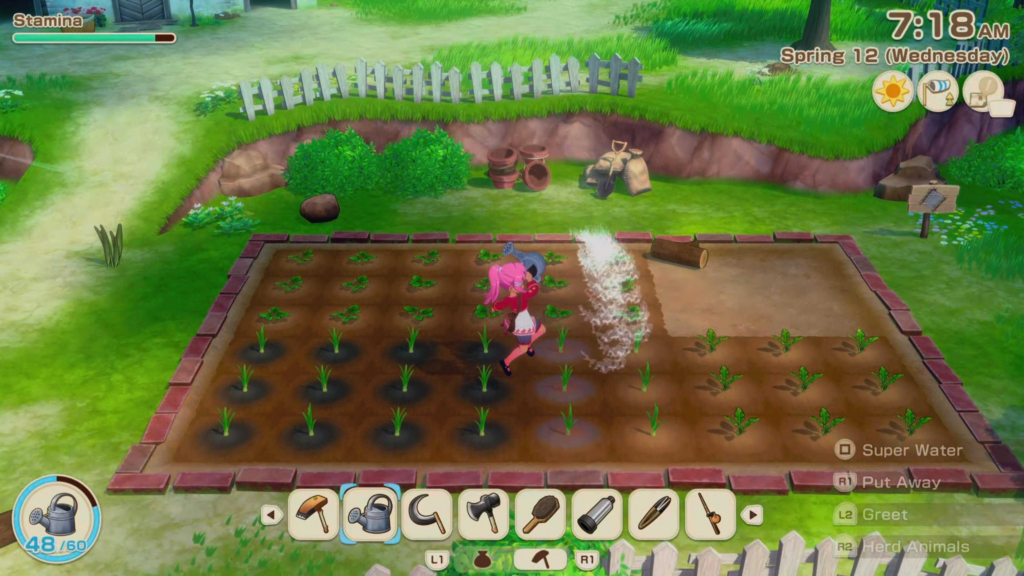
So to repair this Bazaar, you need to become the best farmer you can, and here enters the predictable format of the series. You grow crops in your tiny field, earning money to buy improvements for your farm, and then grow more. This is on top of raising livestock, which the game forces you to take on within the tutorial, something that I typically do not bother myself with until completing the first year. The game has a quick and easy tutorial to complete, something the series has desperately needed, with the hammer and axe being combined into one tool.
This is the first of many ways the game just makes the experience streamlined. Which is something the series has greatly needed. The last few entries show how much the latter half can become slow as you try, even with fully upgraded tools, which requires grinding the farming portion to maintain profits to keep doing it. Obviously, even buying every upgrade doesn’t really stop the cost of farming, as you always require more seeds. The shame here is Story of Seasons: Grand Bazaar uses a 1/1 seed-to-crop ratio, which doesn’t ruin the experience but has never been the model I loved. Thankfully, this isn’t as traditional as A Wonderful Life, as multiple crops that look like they grow multiple products actually do, which makes it more palatable.
When raising animals, your pets actually have more value than just petting the dog (not that that’s not enough), as they help you tend to your animals. Raising them allows them to herd your animals to the field, which has a free-flowing type of grass you can plant in it. This removes a typically time-consuming task from the player and allows you to maximize how much the animals like you much faster. Plus, there is a massive variety of animals and pets in the game, leading to a significant amount of choice as to what to fill your home with. If Shiba Inus aren’t your thing, maybe a Pomeranian or a Border Collie will kindle joy. If you want them all, space becomes a factor, but that’s just a testament to just how much the roster of animals has grown from just cows and chickens when I was a kid.
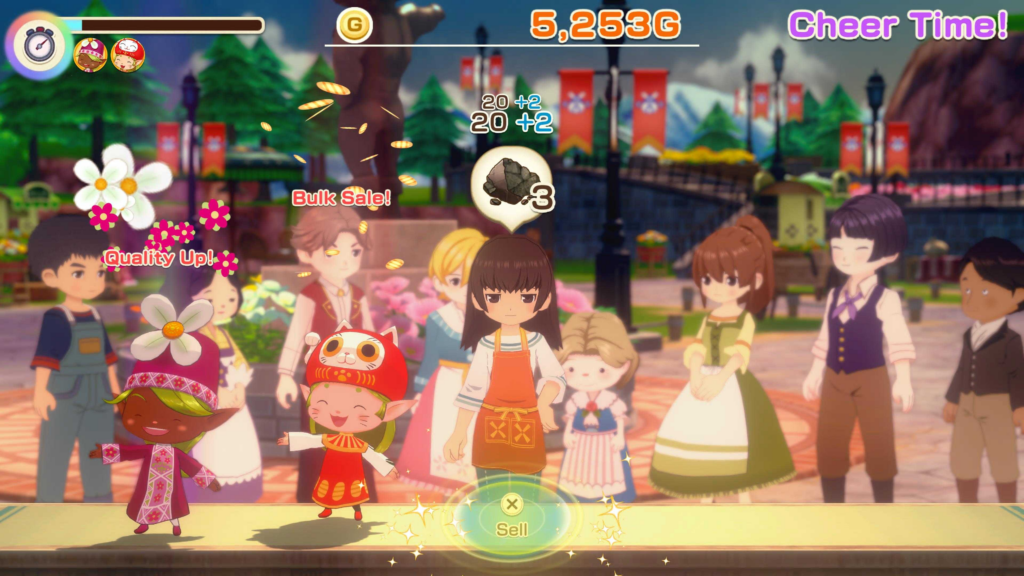
The Bazaar (the goal being to make it a Grand Bazaar again) is one of the most enjoyable elements in a Story of Seasons game, and, please, for the love of Ifrit, something that needs to influence future games. Hoard your items, all your items, and sell them in a mini game that involves attracting customers to your booth, then quickly selling items that they walk up to. Nothing crazy, except when you summon the cheer squad of spirits for bonus time, but a fun way to translate sales.
This is a bit of a balancing act, though, as your booth is only open for an overlapping period with everyone else’s booth as well. There is a window of an hour in between if you really are going to have a tight time selling stacks of items. There is a general store in town and a restaurant, but even the seed store has a better stock of stuff during the one day a week the bazaar is open. You buy upgrades here, making it a slight annoyance to have a small window to further your farm, especially since many of these people live in the village. I SEE THEM EVERY DAY, AND THEY WILL NOT BUILD ME A BEEHIVE EXCEPT ON SATURDAY!? Blasphemy, I say.
Building the Bazaar back to its former glory also makes for a satisfying loop. All characters have quests you can complete for them, tied in part to their heart gauge. This hurts a little, as some tasks can require some time. This is to say somebody requires you to bake them a cookie of a certain quality. You can only buy ingredients of that quality, so you need to grow them, but there are upgrades to the soil that are required to grow crops of a higher quality. Fertilizer works too, but it requires a lot of crafting if you are into it. The point is that either way is a process that can take several days at best, but several in-game weeks at worst, of actually paying attention. Then winter hits, and you can’t grow what you need for a month.
The fun part about characters, though, which makes for a more rewarding relationship with them as you complete tasks, is that they are all fully voice-acted. Well, mostly fully. It doesn’t matter; it is still one of the most impressive additions to the game overall. All cutscenes are easily illustrated on your map when they are available. There is a mix of characters interacting with each other, as well as ones furthering your relationship with them, and all of which bring meaningful personality through the voice cast that feels… Honestly… Better than you would have expected.
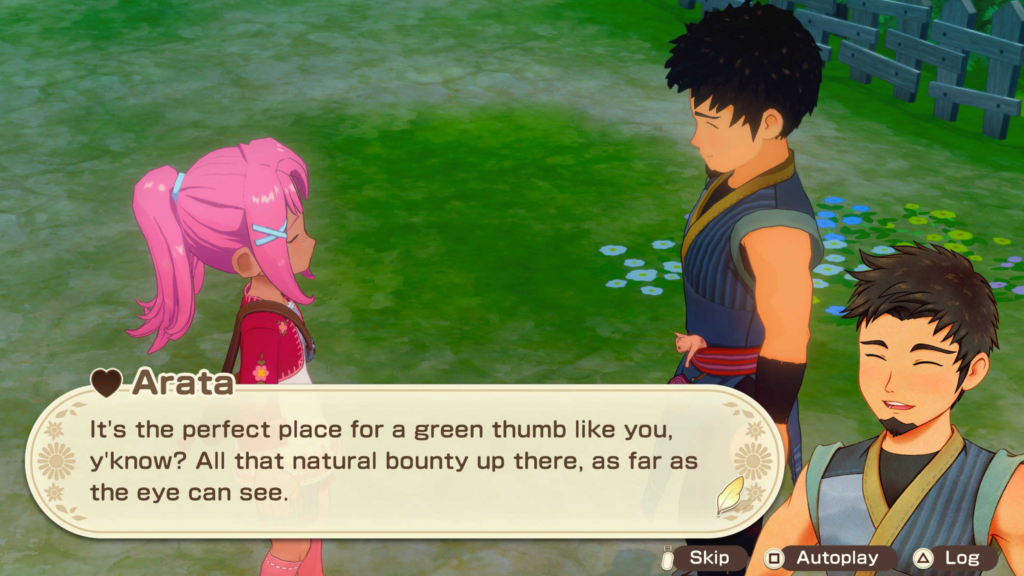
The point is, while these can be consuming, and if you are romancing the person, you can’t make progress with them until you have a cow for warm milk (that’s how all my relationships ended), it’s not like these aren’t things you aren’t already doing. In the case of the Bazaar, people will give you tasks to help you open stalls that offer a wide range of new goods. It’s worth the trouble, and since the main story is tied to this, the grind at least feels valuable. These tasks are also tied to a valuable way in which you improve the town. Namely, the windmills.
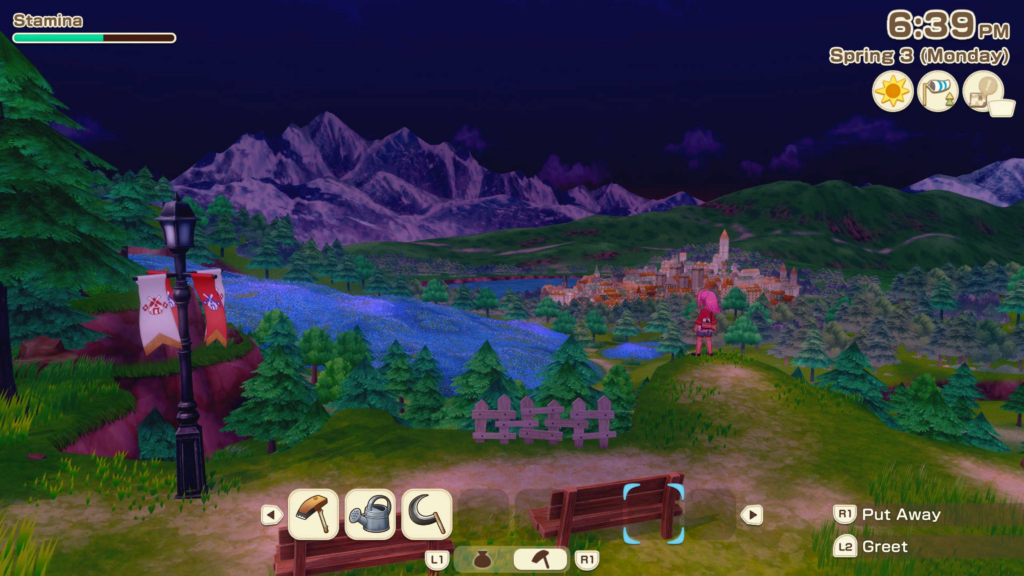
All the crafting in the game is done in windmills, with three that you aim to unlock as you progress. These are where you improve your tools, so again, every headache the game has at least offers a worthwhile reward in the end, something that is not true of every game. This mechanic ties straight into the game’s main gimmick, the wind follow. As stated somewhere above, you are off in the mountains of what I assume is an Eastern European-inspired village. Because of this, each day, along with a weather report, there is a wind report for how fast it will blow. The stronger it is, the faster you can craft items.
The other way the wind impacts gameplay is in exploration. Early on, you get a sort of glider that rides the wind from left to right, the only direction it flows. This can be slightly annoying, as pulling out your glider is one of the greatest guilty pleasures in all of gaming, and if you’re traveling left, you will be completely stopped if the wind is strong enough, but c’est la vie. The big thing about this, though, is that Story of Seasons finally tore down the walls that block you from everything. You can glide everywhere. Not only can you climb across rooftops, but the game friggin also encourages you to do so, and it’s such a freeing sensation that needs to be carried forward to whatever comes next. That experience, like the game, can be summed up as Pure Bliss.
The only problem with this is foraging, which at several points requires the glider to reach certain platforms. There are four grades of wind, with the highest just being the hurricane indicator. The bottom two speeds can prevent crossing these gaps to the higher areas that cut you off from minerals that could prove valuable to sell or upgrade with. There honestly should be some way to circumvent this limitation in some way, which feels like an oversight in some way.
Returning to everything, and accompanying the low-stakes foraging, is a beautiful soundtrack that reminded me why I fell in love with the franchise in the first place. One track in particular, a breathtaking piano number that plays during days when it rains, made me physically stop what I was doing and savor each note. My biggest shame is playing a lot on my PlayStation Portal while watching TV, so the volume was down, which it should honestly never be. On the bright side, if you have a Portal, Story of Seasons remains one of the best franchises to enjoy on it.
Verdict
Story of Seasons: Grand Bazaar is the best part of my childhood that never went away. A remake, yes, but one that takes so many rewarding chances that help propel this franchise forward meaningfully. From streamlining certain aspects to freeing the player from the overwhelming amount of invisible walls, this feels like the most self-aware version of the farming sim that spawned a genre. For years, it has felt like it was stuck on the sidelines waiting for new life to be breathed into it, and this is that moment. Story of Seasons: Grand Bazaar is the best Story of Seasons has ever been, and I just can’t get enough.
Remember to follow us on Twitter, Facebook, and Bluesky to keep up to date on everything we have going on!
Reviewed on PlayStation 5, also available Xbox Series, Nintendo Switch, Nintendo Switch 2, and PC
*A code was provided by Marvelous for the purposes of this review.
Developer/ Publisher: Marvelous Inc
Release Date: May 28, 2026
Pros:
+Simplified elements for less burden.
+Tons of quests to complete with voice action.
+Enjoyable farming and exploration.
+Building the Bazaar is very enjoyable.
+Wonderful music.
Cons:
-Wind can limit exploration occasion
-Some quests can hit soft locks based on time or season.
-
Story of Seasons: Grand Bazaar
