
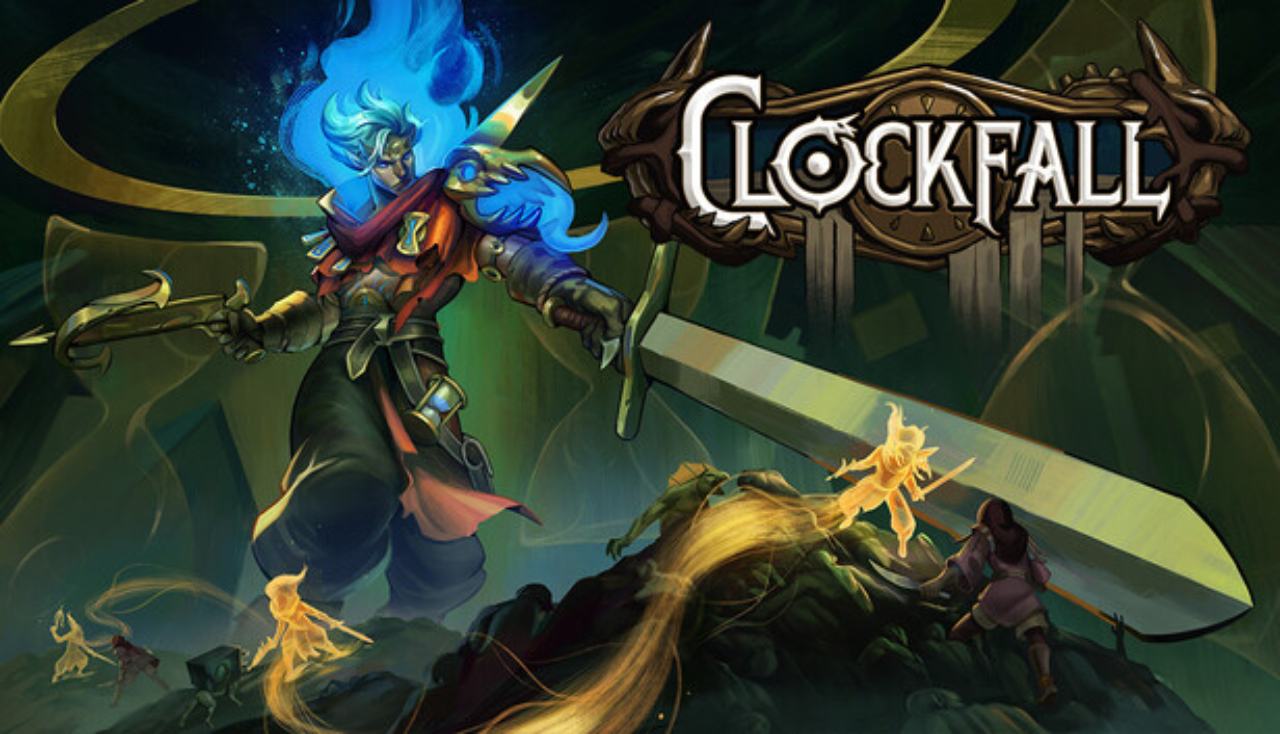
Clockfall is a time-based roguelite Action RPG that focuses on quick runs to improve on each one as fast as you can go another round. Its Early Access release shows much promise.
It is an immutable law of this universe that time will always move forward. In fantasy, it is the aspiration to manipulate, bend, and control it that commonly the antagonists try to possess. How to combat the fatigue of the roguelite? By taking this concept and putting it at the core of it. Clockfall is the latest roguelite, out now in Early Access, challenging the idea that we have not explored what the genre has to offer to the fullest. While still a diamond in the rough, it has bouts of brilliance that kept me going even when I wanted to put the controller down.
Clockfall’s narrative kicks off with a tragedy. A gorgeously animated cutscene shows a boy, the sole survivor of a raid, traumatized after witnessing such vile acts. A friendly hand extends itself, and he can grow into a man adopted into a new society. Before long, he is again in the throes of violence, powerless to avoid another catastrophe as a man. Wilbur, as we come to know him, is destined to suffer a cruel fate. Thus, as his guilt quite literally consumes him, he is able to travel back in time, just before said danger.
What is Clockfall?
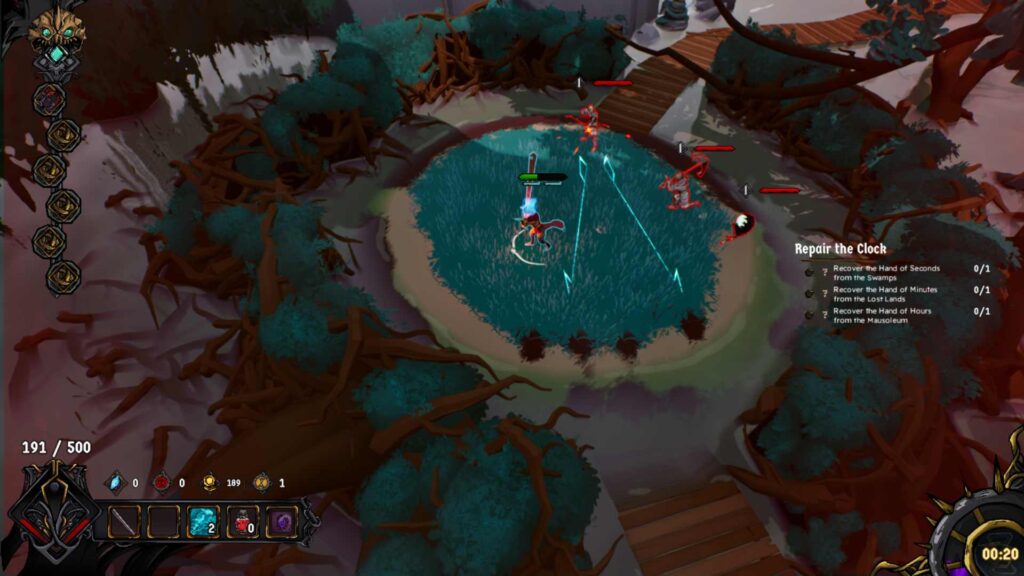
As all roguelites, repetition is the name of the game. The underlying fear of any game of the genre is that players get bored by so much of the same. How to make players go through seemingly identical levels again with minimal changes? Clockfall can slightly break away from this monotony thanks to its time-based gimmick. At this time, you can only choose two levels in the current Early Access state of the game. The catch? Wilbur has just three minutes to save the world.
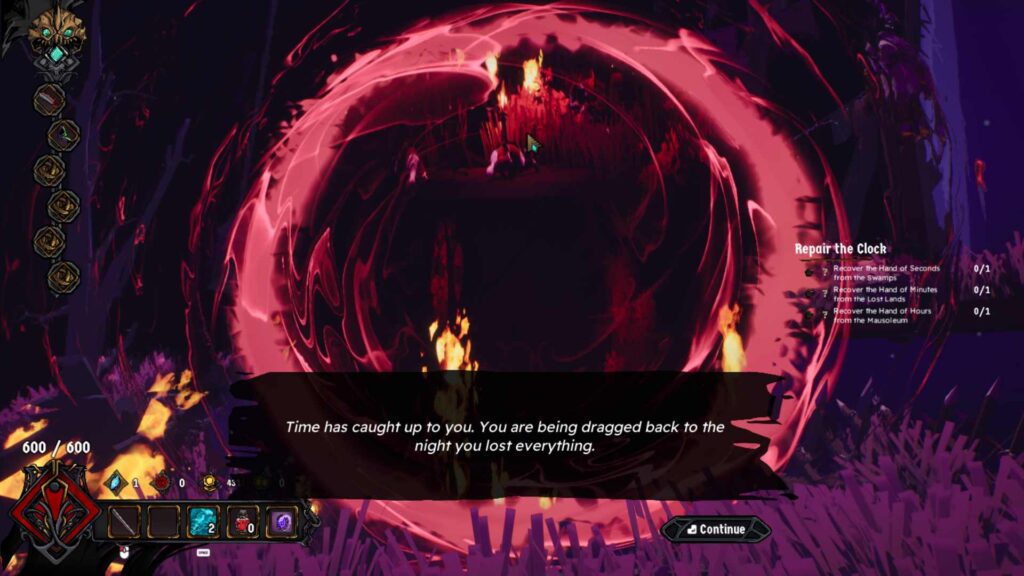
You soon realize that this is, of course, impossible. Clockfall’s trick here is that as time runs out, Wilbur is not instantly killed or worse. You can fight in a strange nightmare scenario against enemies to defend a base. The longer you last, the more magic crystals will appear to reward you. These are a special currency that extend the periods to stay on a run before the clock marks zero. Moreover, they can be used to buy two available spells or buy a bow or greatsword instead of the basic sword given. This is where the bite-sized runs begin to make sense and hook the player.
Dungeon crawling through the Swamps or the Lost Lands, each area has chests with various improvements that will define the run. At least if you are strategic. I found that if I wanted to collect gold coins, then the best way was to consider that an exploratory run. For instance, secrets, chests, and unique enemies reward the curious warrior. With coins in hand, you can spend it on Wilbur’s skill tree and improve his stats and increase his health potion count. Similarly, on more combat-focused runs, ephemeral benefits like more damage to enemies or faster dashes are the winning strategy.
Conclusion
An interesting premise, Clockfall in its current state is a quick adventure to finish. The key to its success relies on how nimble each run feels. Starting with three minutes and expanding one more at a time, the progression systems are tight. Every incursion feels like you are making tangible progress, and in turn, the temptation to go one more run increases. With the promise of more refined exploration, combat, and rich content, it is only a matter of time to see whether it reaches its true potential.
Clockfall is out now in Early Access on Steam.
