

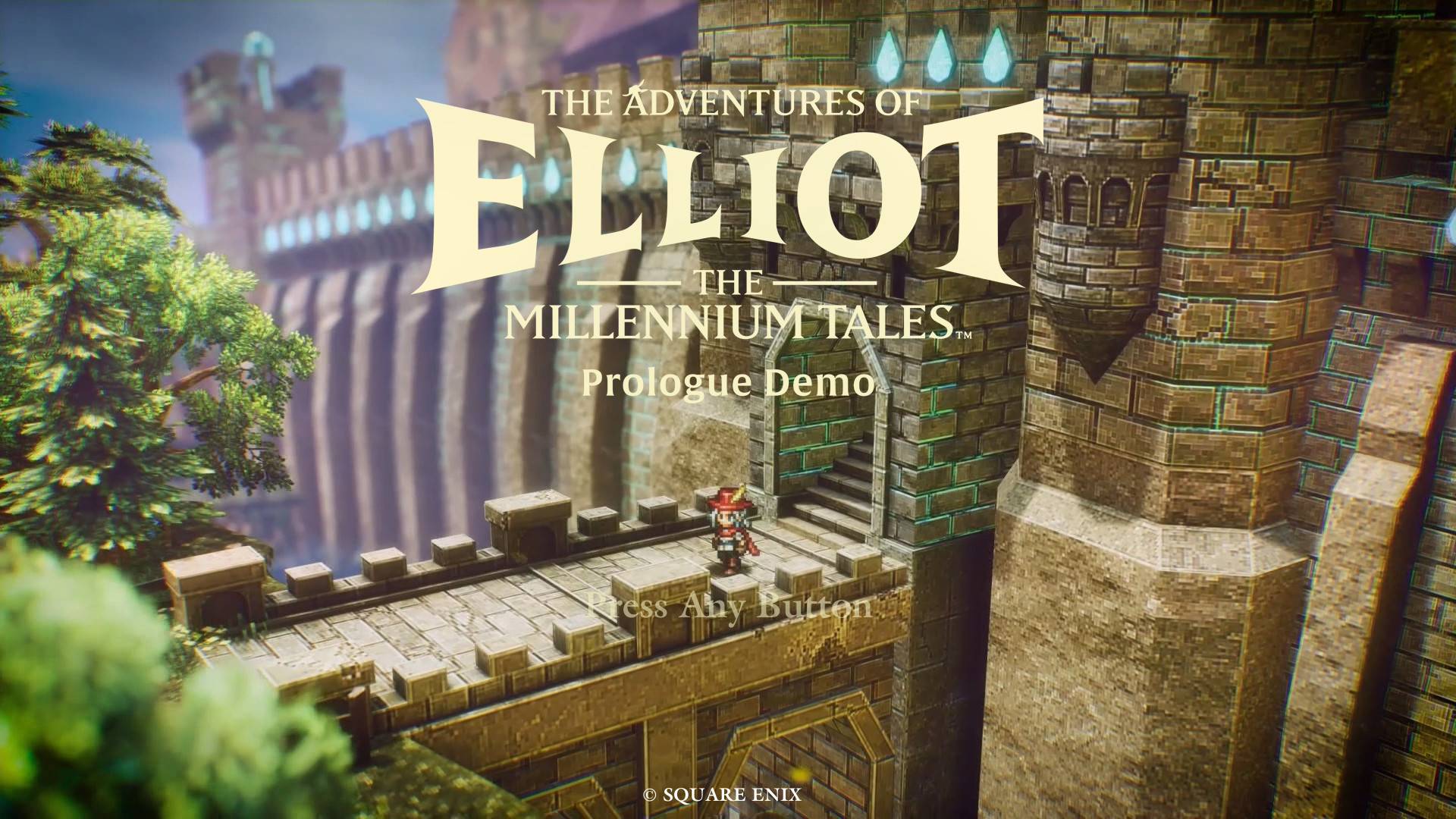
The Adventures of Elliot: The Millennium Tales feels like classic Square Enix in all the best ways, even with the flaws along the way.
One of the best things Square Enix has done is their demo strategy. Almost every game they are set to release gets a demo a month early. This lets players literally start the game, wading through the exposition-heavy opening of the title, with progress that carries over, putting you ahead when the game comes out. There is a benefit here, from a traditional sense, to letting players go hands-on with a game they might be on the fence about, helping convince them that yours is a journey they want to take. Even for somebody like me, though, already confidently on board with the promise of adventure, clearing the demo IS progress in the bank. The Adventures of Elliot: The Millennium Tales achieves fantastic results, making its case on first impression.
Obviously, you play as Elliot in The Adventures of Elliot. He is an adventurer who, early on, is established to have been an orphan who, through a chance encounter as a baby, was rescued by another adventurer. He owes his life to this, which helps set up his core character traits. The fact that he feels the call of adventure himself, that he takes on tasks to make money to support orphans himself, and his sense of justice as he leaps to the aid of others. He is a likeable character, but sometimes in ways that feel classical to the genre, and not just because of the HD-2D aesthetic.
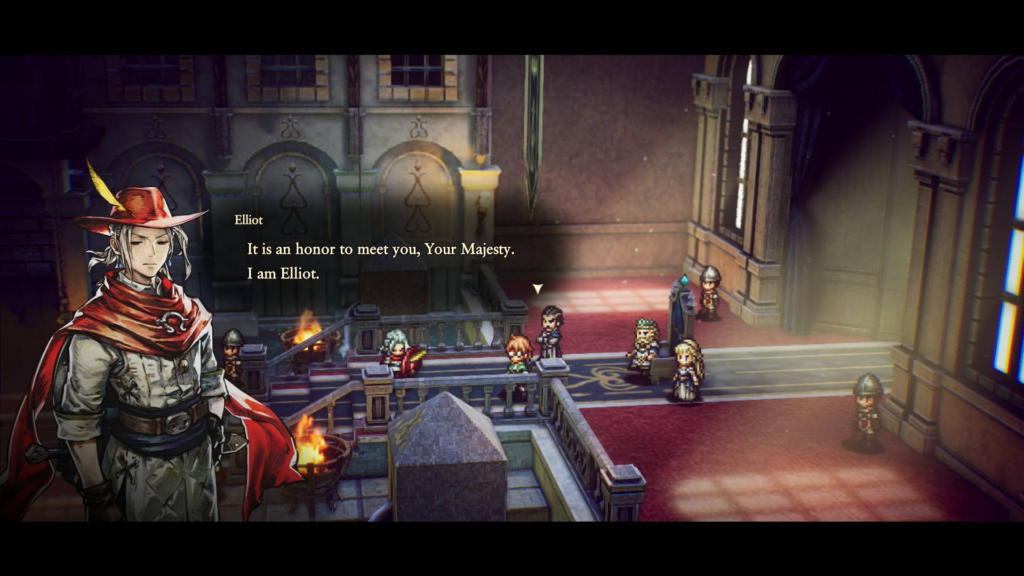
He is contracted by the king of this land to travel through the beast tribe territory to investigate ruins that have only recently appeared. Getting through this door makes up the brunt of the demo itself. The one thing I am kind of unclear about is what this beast tribe is. This might be something explored in more detail later, so I guess it’s a setup that might encourage a player’s return.
The game has drawn some comparisons to classic The Legend of Zelda titles, and I do think there is a lot of fairness to this. There is no experience to be had, only earning a literal rupee-like coin you can use to buy items. This is the primary source of progression, as you can purchase new weapons or tools that help you. One of the first items in the main shop is a cloak that lets you float after jumping, good for a few platforming sections. I bought the boomerang as well as my first secondary weapon, which gives you a lot of extended range on attack.
You then have the crystals in the corner of the screen that act identically to hearts. In that same vein, you collect four shards to make a new health piece, with a few shrine-like dungeons with puzzles that reward these upon completion as well. The driving force of the game is exploration. With several side dungeons along the path that have no intrinsic value to forward progression, a reward of currency or a shard is beneficial in the long haul, so worth the trouble.
Square Enix really leaves their mark with The Adventures of Elliot‘s combat, which is real-time and deeply satisfying. With your sword in hand again, you are likely to see some similarities with a certain green tunic-wearing hero, but as you gain progress and collect more weapons, this changes considerably. Even in the demo, the player is presented with multiple weapons to mix and match, with two weapons being equippable at any time, and both having a light and charged attack.
That boomerang I bought at the beginning has Elliot throw it out before it comes back to him. It’s a several-second process. What I wasn’t aware of is that after you throw the boomerang out, while you wait, you can start slashing with your sword. This allows for a throw attack, some slashes, and a return hit from the boomerang, all in a matter of seconds. Not all weapons appear to be compatible with this level. The spear is meant as a powerful slash with some range and therefore is slightly slow, but even that alone is fun enough to keep a combat that doesn’t further Elliot’s strength fully engaging.
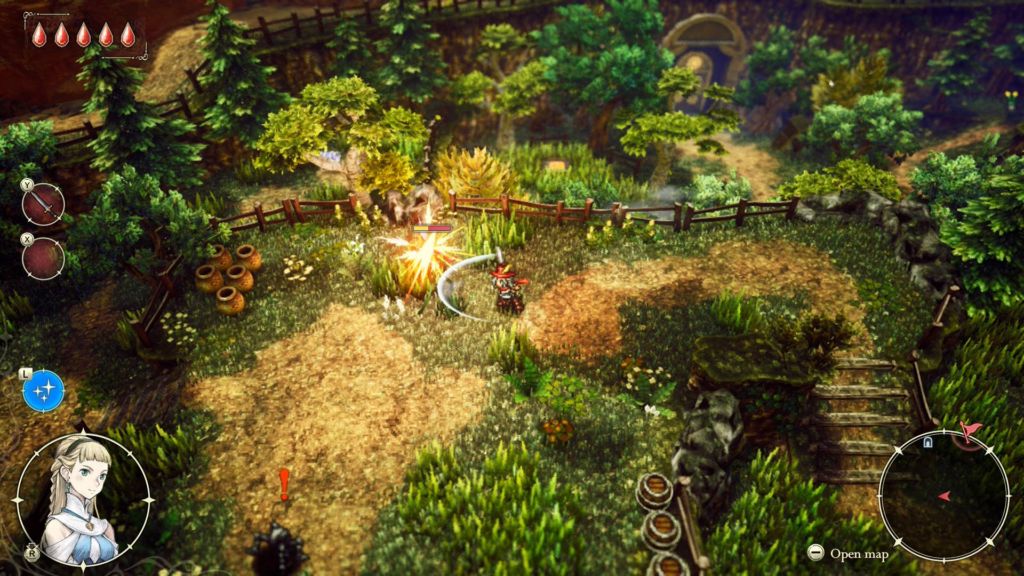
To defend himself, Elliot has a shield he can use to mitigate damage, but it can be frustrating at times. Blocking with it at several points caused me to bounce back in just such a way that the next hit connected despite being relatively angled to block. The shield also has a gauge, and there is no dodge, both of which are the bigger annoyances. A dodge just feels like it would be useful in a game like this, so the game flows more fluidly. Blocking brings action to a halt, and while this is not at odds with the game itself, it can be an unsatisfying feeling. When your blocking gauge breaks, you find yourself kind of unable to defend yourself, which is worse because you can’t clear distance from attacks fast either.
This is a shame, beyond the fact that combat is fun, but the few boss fights you take on are enjoyably strategic as well. Enemies throw attacks at you, such as several crossbow shots or quick sword flurries that you need to block to create your opening to attack. The issue is again, once your shield breaks, they outpace you, out-range you, and, while not so punishing, you can’t overcome it, which becomes an annoyance. There are some elements that feel enjoyable because of just how classic and retro they feel, but here, not really.
The first portion of the demo has Elliot traveling to the Doorway of Time, but after this it takes a hard right turn into filler territory for a long portion. You return to the castle and then complete side quests. The benefit is that you get more weapons to use, mixing them into your combat. That’s great, but nothing really happens during this portion, and there is A LITERAL doorway through time and space that you are being barred from entering, which exacerbates the feeling.
During this portion, though, they do introduce magicite, the other way in which Elliot improves his skills. You collect this secondary currency from enemies and bosses, who use it to randomly create upgrades. You can get really good ones or mediocre ones, so there is an element of luck in this. Doesn’t matter much, though, as the magicite boxes are individual for each with an amount of SP you can equip. Improving that means, regardless of pulls, you should be able to kit yourself out nicely.
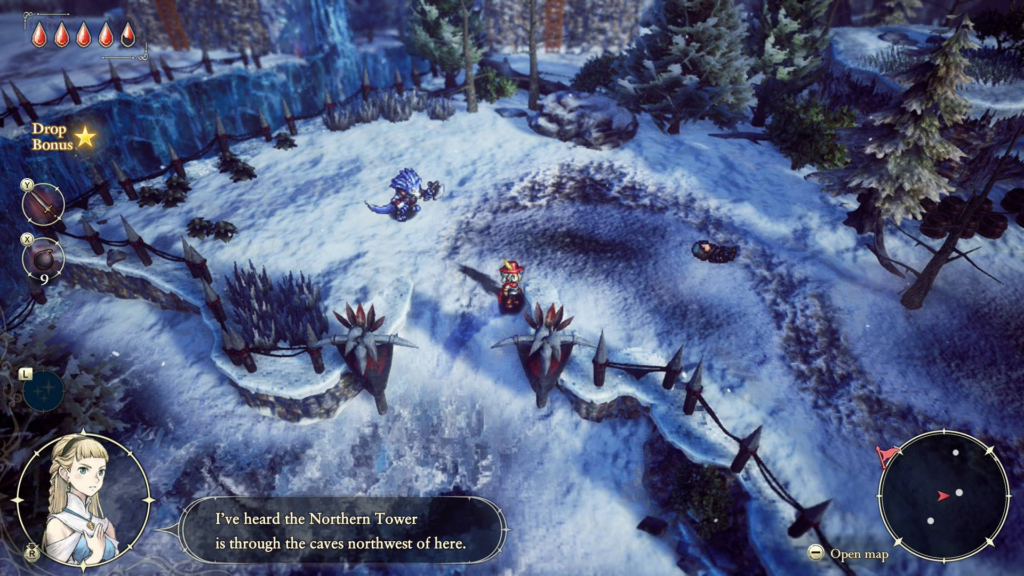
I was half expecting that the demo would end at the door, with it opening up with a white light enveloping the screen. Not so; you actually do get to explore the first moment in the past with a new city. The past does overlap in some small part with the present map, but the distinct biome and traversal made it feel wholly new. The point of bringing the player here in the demo was specifically to explain that the past is much more punishing than the present. Take Princess Heuria, who joins Elliot as a support character by speaking to him through his earring; she can’t do things like heal him. I abused this feature up until now, so this was a wake-up call.
As for the Princess, I need her desperately to stop talking. I was already informed of her tendency to narrate nonstop. I could live with this. Her contribution is often pointlessly droll. You find a red glowing key right next to a red glowing locked door, obviously. Still requires “Elliot, you found a key; I wonder what you need to do with it,” or my favorite, getting hit only for her to comment, “Elliot, try to avoid getting hit.” Wow, what a remarkable contribution to my day. You can turn her down in setting, but nowhere near enough.
The Adventures of Elliot ends on a bit of a cliffhanger, so to speak; it wouldn’t if you were playing the game at launch. That said, it is a great motivating moment that will absolutely encourage players to want to know what is coming. I absolutely enjoyed my time with this demo, the few hours that it took me. You could probably breeze through it, but the game rewards exploration at every turn, so of course getting lost is the right thing to do. There is something traditional about this game that feels like something Square Enix produced in their PlayStation days, and it is warm and enveloping.
I absolutely can’t wait to experience the full adventure when The Adventures of Elliot: The Millennium Tales releases on June 18 for PlayStation 5, Xbox Series, Nintendo Switch 2, and PC.
Remember to follow us on Twitter and Facebook to keep up to date on everything we have going on!
