
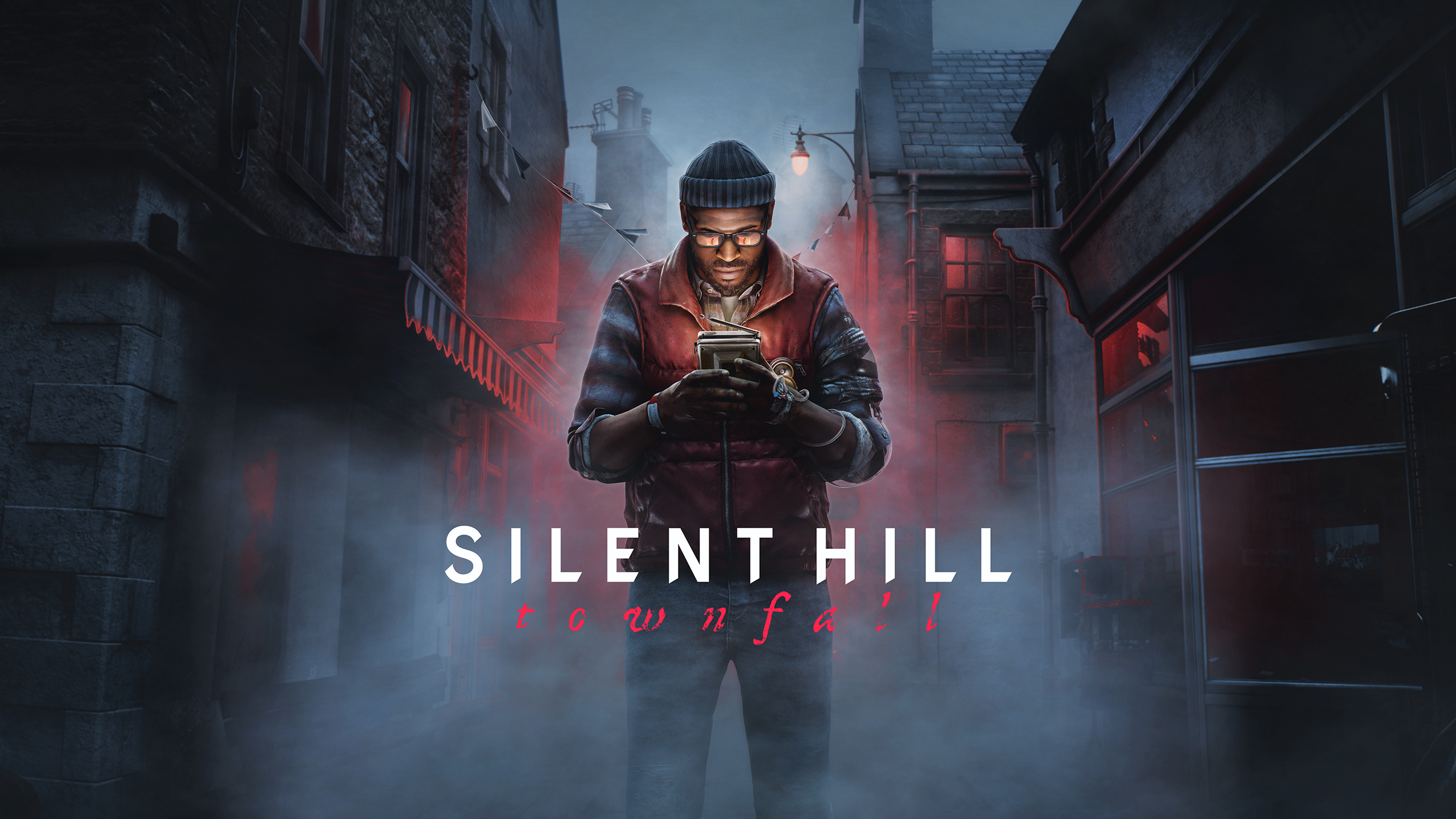
Silent Hill: Townfall could be one of the best atmospheric horror games that I have played. That’s a genuine statement. When you start, the protagonist, Simon Ordell awakens on the docks of St. Amelia, which are draped in fog. It offers the kind of calming dread that only a Silent Hill game can, with the player slowly making their way into the heart of a storm. The game takes place on an island off the coast of Scotland; this existential threat works better, given that a foggy day on the docks is how I imagine plenty of fishermen start their day.
Nothing is right here, though. Boats sit unattended as the water calmly laps, and the sign welcoming people to the island sits covered by a tarp. The city proper is empty, ushering you forward with a crimson light and the hope of revelation. This first portion of the game reminded me of the best version of what somebody might refer to as a walking sim. It reminded me most of Everybody’s Gone to Rapture. You know a tragedy happened here, even before you are told, but you keep trudging forward towards the inevitable cliff.
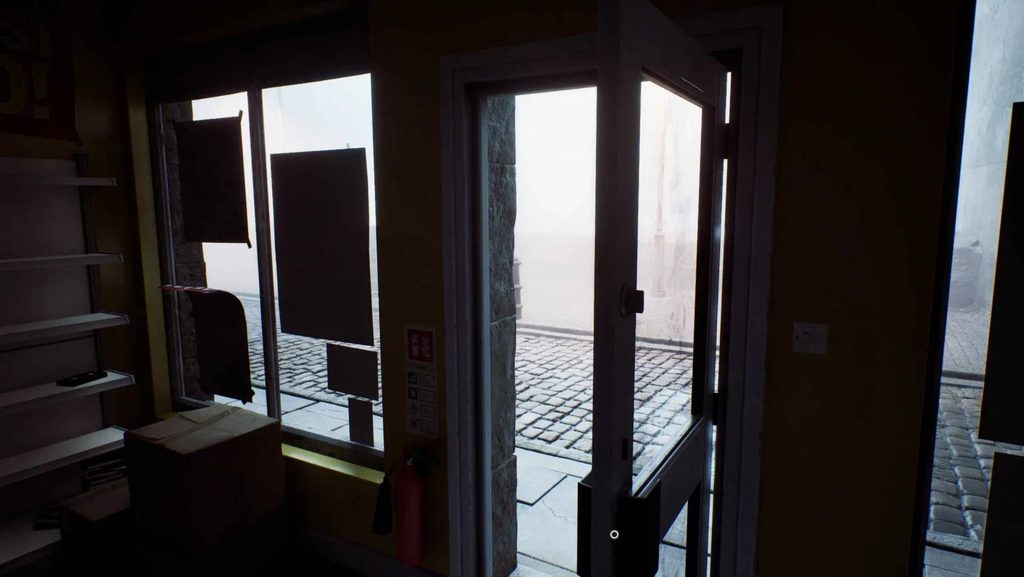
The way this truth is offered to the player is also methodical, with a sign here talking about an evacuation or a boarded-up door. The big rug pull comes when entering the square, which looks normal and functioning until the otherworldly horror ushers you away. When you return after a brief puzzle and you walk back into this square, it is filled with cardboard posters honoring the dead. There is no debate anymore; Silent Hill has another victim. You would think I am tired of becoming its victim, but after Silent Hill f, I was ready to love all over again.
It’s this portion where Silent Hill: Townfall really engulfs you and excites you. The first time you see the creatures lurking, it fortifies this feeling. Simon gets melee weapons by this point, but the game makes it clear you can solve any situation with either fight or flight. Even though the flight felt so much better. There is a brilliant sense of tension as you watch the creatures stumble around in the distance while you take cover behind a car. You lean to the left to get a better angle, peeking your eyes over the top as the thing thrashes about before running off, giving you the opening to move.
This slows down the pacing, but I was actually enjoying the trade-off. The tension is built so effortlessly in these. The game has plenty of open areas in which you are outstretching these monsters, trying to get distance, moving around through marketplaces, or using fences for cover. Walking along a street to map out the movement and make your best effort to slip between them, running like hell when your plan inevitably goes wrong. Well, my plans typically went wrong. Up to this point in the game, about 3 hours in, I only ever dealt with one enemy type, though.
Where Silent Hill: Townfall truly excels, though, is in how it uses tight pacing to create fear. You explore a lot of houses, and many open maps have you track down specific homes through multi-step processes to unlock a key and progress further on the island. There are no real jump scares; the game doesn’t need them. It’s easy to walk right into a location as an enemy turns the corner into you, causing you to flee. Later locations, like a hospital ward, present new ways for one or two enemies to wander a location and create that sort of tension as you peer out, just waiting to move from cover to cover.
All of this is presented from the first-person perspective as well, which really, really works. This was the closest thing I imagined to how P.T. might have felt, and there are moments, genuine moments, that get close to evoking it. The way you can control the camera, from the lean to the zoom, helps create this sense of being trapped in the game, and several of the encounters, while not making you jump, slowly build in such an organic way.
Then you factor the CTR TV on top of this, which brings the game’s atmosphere closer to the original games that even the Silent Hill 2 Remake was able to. And an interesting feature of fleeing or hiding, and one that really helps, is the ability to lock a lot of the doors. Sometimes this is just the main door to the video store you spent the last 20 minutes opening, but maybe this is the bathroom to a clinic or the children’s room upstairs. You don’t get a window through the door; just dread as the creatures bang on it and try to twist the knob.
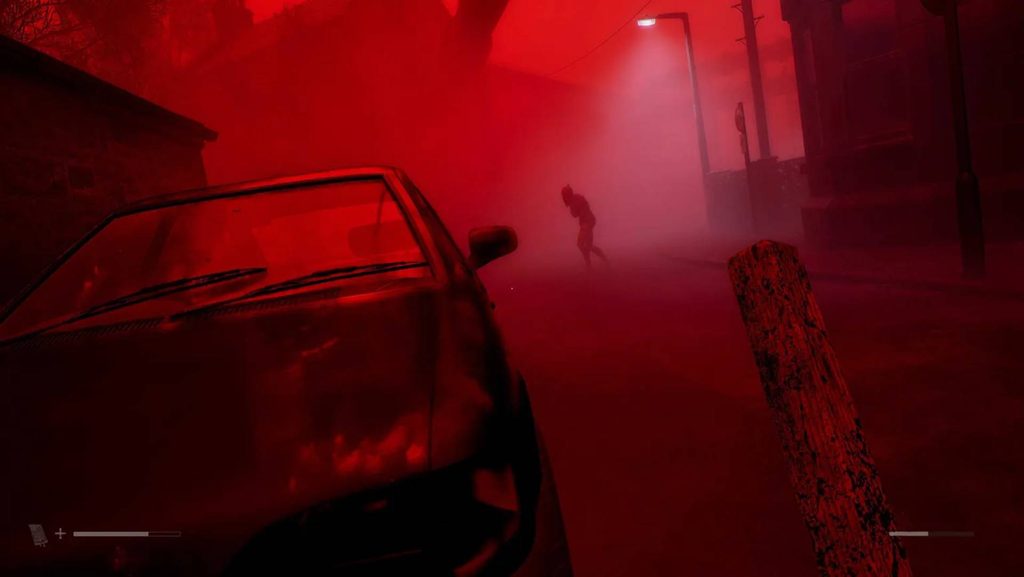
This is where the TV really comes in, as your only window to see if you are safe, checking to see if it is safe to open the door and venture out again. On the streets covered in fog, you pull it to see what is awaiting you, and in tight complexes, though it may not completely, you use it so you never just walk into something that will kill you. This isn’t all it’s good for either; largely it serves as the only instruction for progression as well, flashing grainy images on the screen you may or may not recognize, with a narrative of lament, pointing you in the right direction. The fact that you need to follow arrows to find the enemy silhouettes can also lead to some shocking revelations. You are safe, you tell yourself; the enemy is right he… OH MY GOD, IT’S ON THE OTHER SIDE OF THIS FENCE!
Much of the audio is tied to this as well, working wonders to ratchet up moments. There is a painful industrial score that plays as you explore, one ready to envelop you and become all-encompassing the second you get spotted and need to act. Before that, though, there is a loud confirmation noise, so even if you don’t see the enemy, even if you don’t know where, you know you need to act. Enemies can get on top of you fairly quickly, so the second you hear the track shift, you are already booking it. To a better location to defend yourself, or to the nearest room with a lock. I never really spent time in a game examining areas, so I knew my exits, my locked rooms, and my ground to control, all like I did in this game.
Silent Hill: Townfall is not massively open, but most areas have a decent amount of ground to explore. You will have a few city streets, a square, and several buildings that form the crux of progression as you slowly find the keys you need. It never reached the high of that first area; there is such a feeling that the first portion of the town evokes, but the twistedness of later portions can be something to behold. In one area, you attempt to open four lockers. Each loop around the area, each house looted, and each new path opened leads to the night slowly encroaching on the area. It was a meaningful and terrifying shift that ripped away the minimal sense of comfort I had. Various points led to some tight sequences traveling from each point as well.
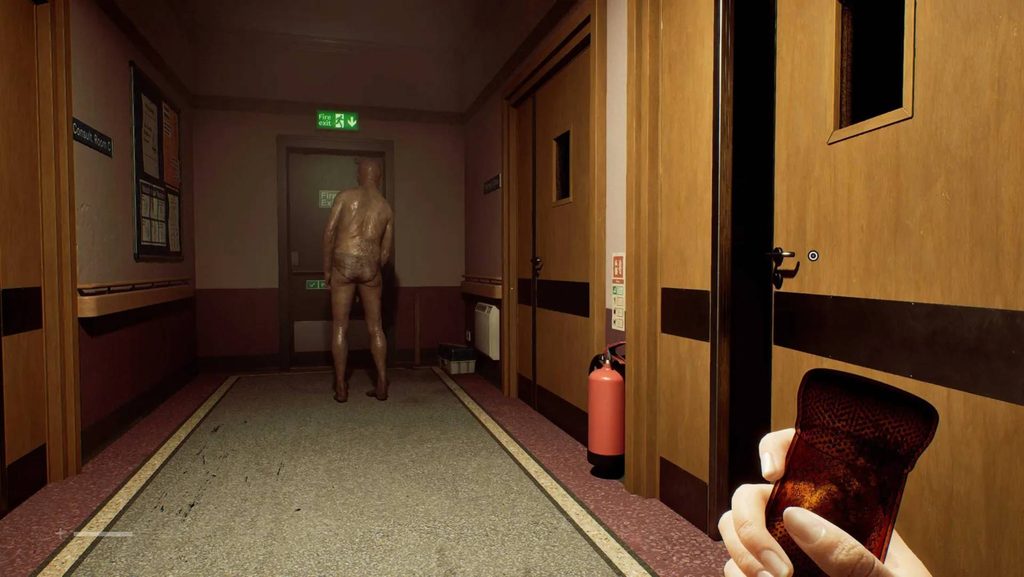
What happens is that there is this shift in the game, and I can pinpoint exactly where it happened. Before this, I was loving every minute, and then there was this slow decline in enjoyment. You go to a house to check on a person who should be there. Instead, the game greets you with the game’s primary stalker. It actually made me laugh that it’s basically an older, out-of-shape man in his tighty-whities, with a scrunchy face for that horror effect. You need to survive by finding a pair of keys, then escape out of the back room where he started.
This is easier said than done. Unfortunately, this segment doesn’t allow you to fight and robs you of your CRT TV, meaning that to make it to the bathroom where the key is located, you will probably need to lock the door and wait. You easily lose track of Mr. Tighty Whitey in the process. Timing can be weird with the movement of enemies, so a few times I opened the door right into him. Closing a door with an enemy right there can cause the enemy to glitch straight through the door, and I have locked myself in with something about to murder me. Doors also require you to look at the knob to close it, which costs valuable seconds you just don’t have while fleeing. A quick trigger would have been useful. And then you need to look at the lock to lock it.
There are two facts about this enemy that become annoying almost instantaneously and utterly draining as the game drags on. The first is that their big attack is to grab you. About three of these will kill you, but it is unblockable. Enemies attack so fast; in a melee battle, you might literally hit an enemy only to need to hammer the block immediately because their attack comes right after. In the case of this enemy, a hit can lead to half your health being gone because the tradeoff for one of the 10 hits you might need to land is met with a grab you cannot get away from. Here in the story, it’s worse because you can’t even choose to fight.
The second is that this particular enemy has a cut-open chest with IVs in it, and it can attach at a range. That first portion is basically two slender hallways, and you don’t have a dodge. You do the math. If you get seen, the short run to the bathroom can land one or even two hits on you that are nearly impossible to dodge. Then, once you escape the house, you need to repeat this across several city blocks with horrible autosave locations that can cause one mistake halfway through to reset you all the way back to that initial encounter. And while set pieces are great, this can be a one-step, and you’re screwed, mistake.
What gets crazier is that in these long stealth areas, if you do get seen, it is difficult to recover. For starters, if you need to run, this can alert all the enemies, so you are really in danger. More than that, though, enemies can chase you across an entire map. I have had many an enemy follow me from a distance. They are shockingly farsighted for monsters that have no eyes, which leads to the dreaded turn of the head where they look straight at you. You genuinely can’t tell if you have been seen or if your hiding place is good enough.
Fighting is such a last-ditch effort in the first half of the game. When you find ammo for your eventual gun, you will find it as single rounds sitting on a desk. I didn’t go around shooting enemies, and I still didn’t even have a full clip by the end of chapter 2. Guns have the trade-off of being fairly powerful but alerting everything to where you are, so… Not really balanced. To my understanding, killing enemies plays into the multiple endings of Silent Hill: Townfall, so there is a judgment call to all of this. Like everything, there is a double-edged sword to this: if you aren’t killing enemies, more spawn around you, meaning you need to avoid 20 enemies, not just 10.
There is one chapter in which you have to walk along a road loaded with dead bodies. In some of the most blink-and-you-will-miss-it cues, some of these enemies twitch to indicate they are alive. If you don’t notice them, you get grabbed (seeing the pattern yet) and take damage. About 3 grabs on normal can kill you, and on my first try, where I couldn’t see the ticks, I must have been grabbed about 12 times. Later on, they evolve this by having some crawl at you, which is also challenging to see, even if the audio lets you know it is coming.
Fighting by the end of Silent Hill: Townfall is more of a nightmare than the game itself. The second half of the game pushes you in that direction heavily, with one chapter almost exclusively skeet-shooting an enemy that remains hidden right up until you get hit in the back of the head without ever seeing it coming. In around 15 hours, I can name at least 4 or 5 points that were on a loop for at least an hour apiece; surviving the encounters was a frustrating slogfest that hurt my head. Several of these moments made me fully want to quit just because the fun had stopped completely. But I didn’t, a choice I do not regret.
This is mainly because, as far as a Silent Hill story goes, Townfall offered a good one. It takes a while to really connect, but the darkness at the center concerns elements that are relatable to a modern, eco-conscious audience, and it doesn’t truly shy away from these connections later on. If anything, I feel more aware of the point here than in any other Silent Hill game prior. For instance, I understand that Silent Hill f was about the treatment of young women in Japan in the 60s; it’s obvious. They still allowed the themes and set pieces to speak for themselves, but here there are entire conversations about just what is happening by the end, in case you had any doubts.
Cutscenes are also stiff, with a lot of moments having characters walk in slowly, staring blankly forward toward the camera. This isn’t something uncommon for a horror game, but it took me about half the game to piece together that Simon Ordell just isn’t as interesting a character as Himiko. Kudos to Konami for managing the most complete version of their universe, but there are moments with Himiko you get. Cracks in her facade, full mask-off moments that reveal her struggle and pain in visceral detail. You never get that here, and there are a few characters that could have benefited from it. There is such a juxtaposition in how freaking the true nature of the horror is explored, something you feel one person would have had a bigger reaction to.
Verdict
When Silent Hill: Townfall was being showcased, my biggest fear was that it might be a passive horror game where the player has no autonomy to defend themselves. After playing it, I have done almost a 180 on that. I loved the atmospheric horror moments, sneaking and avoiding, attempting to distract them, and moving around them. The combat could have bolstered this and made you feel that stagnation in an unchanging experience, but it was almost entirely underwhelming. Any moment where it became clear I would need to was met with a long, exasperated sigh. Why that hurt is that the game built such an inviting world of horror that I was ready to embrace wholeheartedly.
Remember to follow us on Twitter, Facebook, and Bluesky to keep up to date on everything we have going on!
Reviewed on PlayStation 5, also available on Xbox Series, and PC
Developer: Screen Burn
Publisher: Konami, Annapurna Interactive
Release Date: September 24, 2026
Pros
+Brilliant Atmospheric horror, especially when sneaking through tight and claustrophobic spaces.
+Use of audio cues is really good
+CRT TV feels like a fresh take on classic Silent Hill.
+Some great area designs.
Cons
-Combat isn't fun and quickly becomes anger inducing.
-Cutscenes are stiff and while the narrative is interesting, the characters feel bland.
-Some segments prove to be extremely frustrating.
-
Silent Hill: Townfall
