
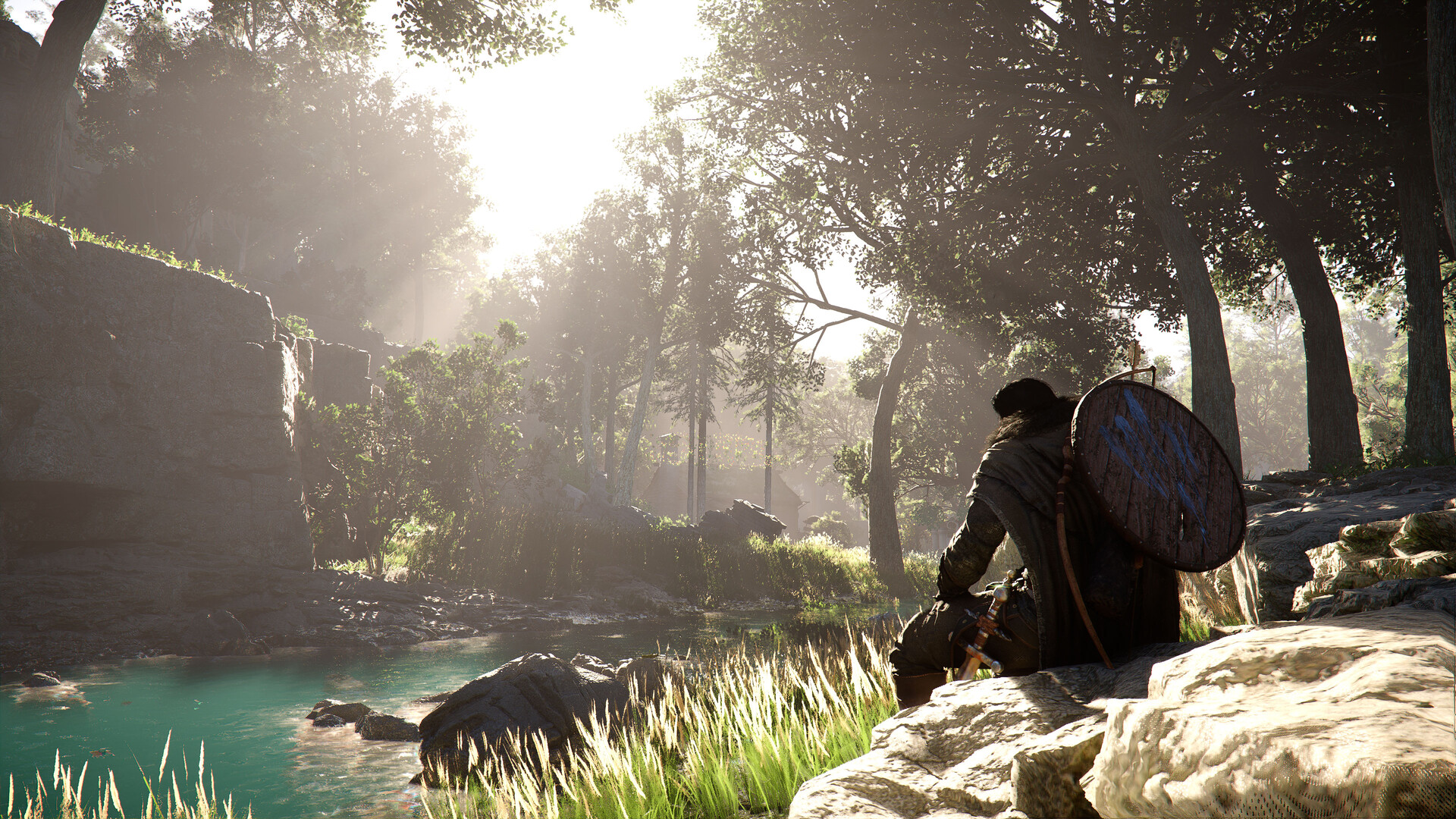
In its latest earnings letter to shareholders, Crimson Desert developer Pearl Abyss detailed Q3 2026 financial results. As part of this, the company reaffirmed plans to release DokeV in late 2028, the open-world monster-rancher game they announced seven years ago. They then proceeded to explain that the tech being used for Crimson Desert Enhanced Edition and DLC is now being used to help speed up the process of DokeV, and that AI is being used to accelerate that further.
Following the launch of the Enhanced Edition and DLC for Crimson Desert, we are continuously expanding the development team dedicated to DokeV.
In particular, we are seeing a tangible acceleration in development speed, leveraged by our finalized game engine and the accumulated R&D capabilities built during the development of Crimson Desert’s Enhanced Edition and DLC.
Furthermore, while we previously validated game systems only after implementing them manually, we now utilize AI to rapidly validate diverse design concepts prior to actual implementation. This enables a more efficient allocation of development resources and enhances overall production speed.
However, AI serves strictly as a tool to support concept validation and pipeline productivity, while the core gameplay experience and actual content creation remain fully driven by our development team.
Pearl Abyss went into more detail concerning their usage of AI elsewhere in the letter. It was stated that AI is being used across multiple stages of development, though the company views it as a tool for development rather than a way to reduce their staff. They stated:
We are integrating AI technologies to enhance development productivity and overall quality. AI is being utilized across various stages of development – including the automation of repetitive tasks, content creation support, and test optimization – and we are expanding its implementation throughout our entire development pipeline.
We view AI not as a substitute for human developers, but as a tool to elevate development efficiency and quality. We will continue to expand our application of AI to deliver higher-fidelity games to the market more expeditiously
During this, the studio did not take any meaningful stance on the usage of generative AI when it comes to art assets. Earlier this year, the studio was forced to apologise when players discovered several in-game paintings and portraits featured AI-generated art. The studio stated that these were “Unintentionally Included,” claiming, “During development, some 2D visual props were created as part of early-stage iteration using experimental AI generative tools.”
This was stated via a social media post back in March, with the studio claiming, “Our intention has always been for any such assets to be replaced,” once the final check was done. It should be noted that this has become a popular response to this, with both the devs behind Clair Obscure: Expedition 33, The Alters, and 1666: Amsterdam all having similar responses.
You can follow us on Twitter, Facebook, and Bluesky to keep up to date with all our coverage and be part of the conversation.
