
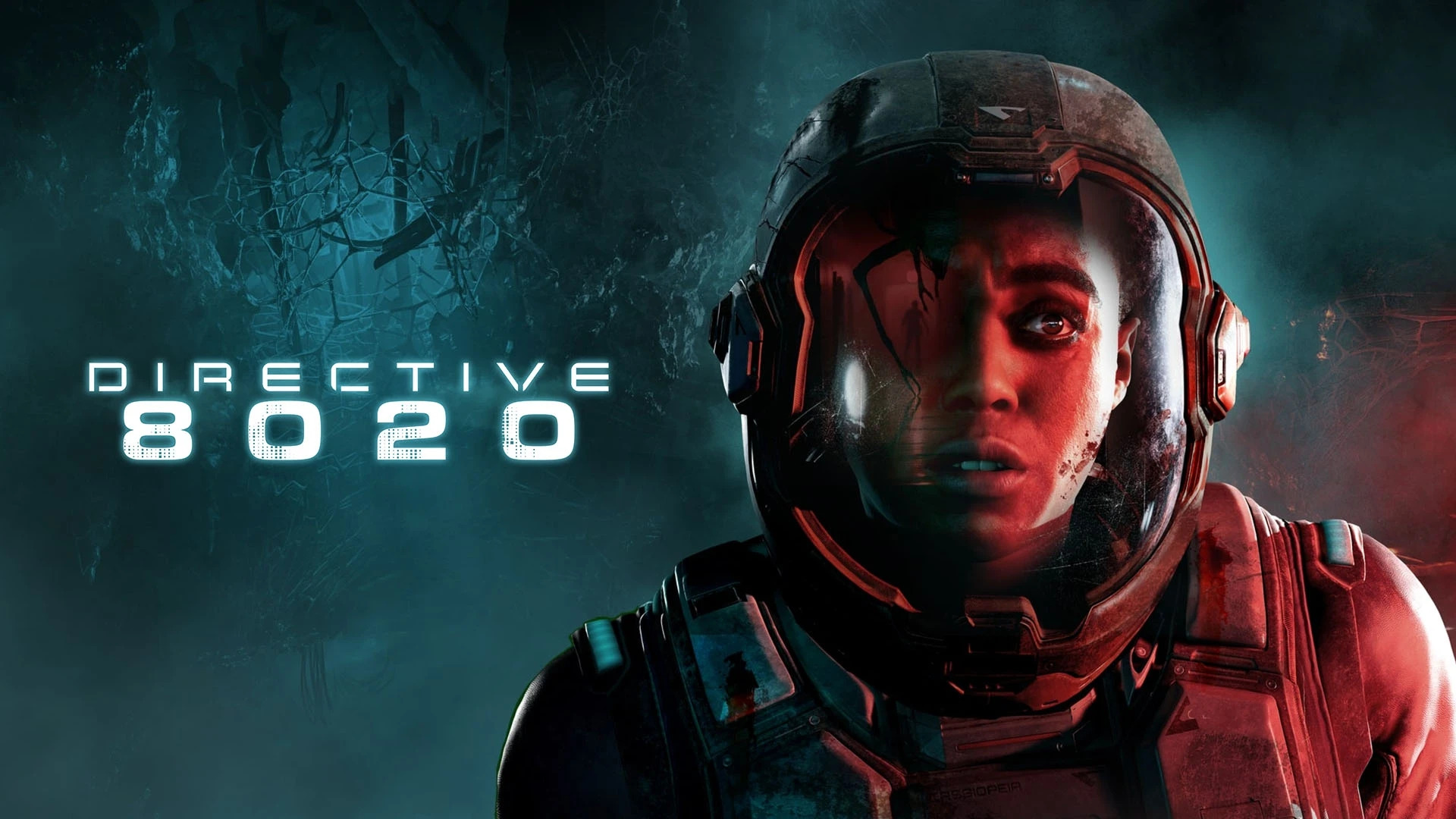
Murphy’s Law is a commonly known philosophy that is often misrepresented in the common lexicon. Everything that can go wrong will go wrong is typically taken in a context that implies the pessimistic approach that you can just expect the worst to happen. In actuality, Edward A. Murphy was an aerospace engineer who applied this belief to design philosophy. Assume anything can go wrong; that way, you correct for it in design. Directive 8020, in many ways, adheres to both versions of the law in its premise.
Earth is apparently falling to ruin, though we are never really given a reason why, and many humans now live on Mars. Given that this is a Dark Pictures game, the player doesn’t actually get to see most of this, though. We follow the crew of the Cassiopeia on what we can only assume will be a luxury space cruise to the planet of Tau Ceti f, which hopefully humans can colonize. Naturally, bingo is canceled before the crew even awakens from hypersleep, when an asteroid hits the wing of the ship, creating a big hole that the Sleep crew, meant to watch the ship for its entire 4-year journey, has to investigate.
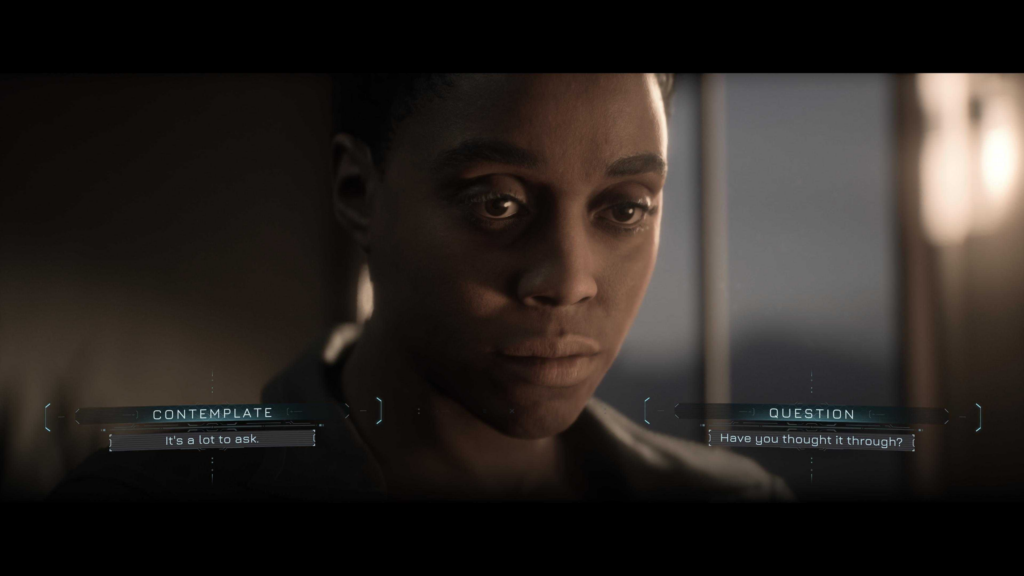
Directive 8020 is at its heart and soul a narrative choose-your-own-adventure, and at this point, you have probably already been presented with a few ways to die. Depending on whether that happened, you might start to get scared immediately, to paraphrase Stuntman Mike. That’s the thing about these games: events can hit differently depending on the prior link in the chain, sometimes to great effect and sometimes not so much.
You control a cast of characters, just like in the previous titles in the series, most of whom have familiar celebrity faces. You jump between these characters multiple times per chapter as each takes on a particular task as they try to discover just what went wrong while they were asleep. One might argue the game shifts too frequently, at least compared to the pacing of their previous game, The Devil In Me, where one character frequently served as the anchor for specific portions. Here, it can feel like a single character has a short task solely so they can fit in multiple perspectives over the same span.
Where the game excels, though, is in its pacing, which is possibly why I had an issue with the character swapping. Early on, you are given a, maybe sort of, villain with countless questions to unravel. This plays out largely in the background, though you feel the looming threat. There is a bigger, growing threat, though, that characters are forced to contend with, despite not even knowing it is there. The player is made aware of most of this, so your actions can work to guide them towards those truths through exploration and lore, but there is a slow, methodical buildup to revelations. The use of tight quarters, which appear and reappear throughout, changing as the situation grows more dire, is also a nice touch in a game set primarily on one spaceship.
My biggest issue with storytelling was the choice of flash forwards used at the start of certain chapters, which felt at odds with the slow burn. For starters, they are based on some decisions you make but reflect a character still alive hours in the future. I could live with that, honestly, but these moments show the characters in great danger as they take place during the threat being built up to. This genuinely feels unnecessary. I wanted this threat all at once, not broken up at some point in a way that feels intended to offer action while the game builds to it.
Characters continue to face branching choices that might send the narrative in two directions while also helping build their personalities. Having played a few Dark Pictures games but not really remembering them since it’s been a while, the character personalities had strong payouts later on in the narrative. More so than I had previously seen. This gives a mechanic that is constantly working behind the scenes to accumulate choices made by players.
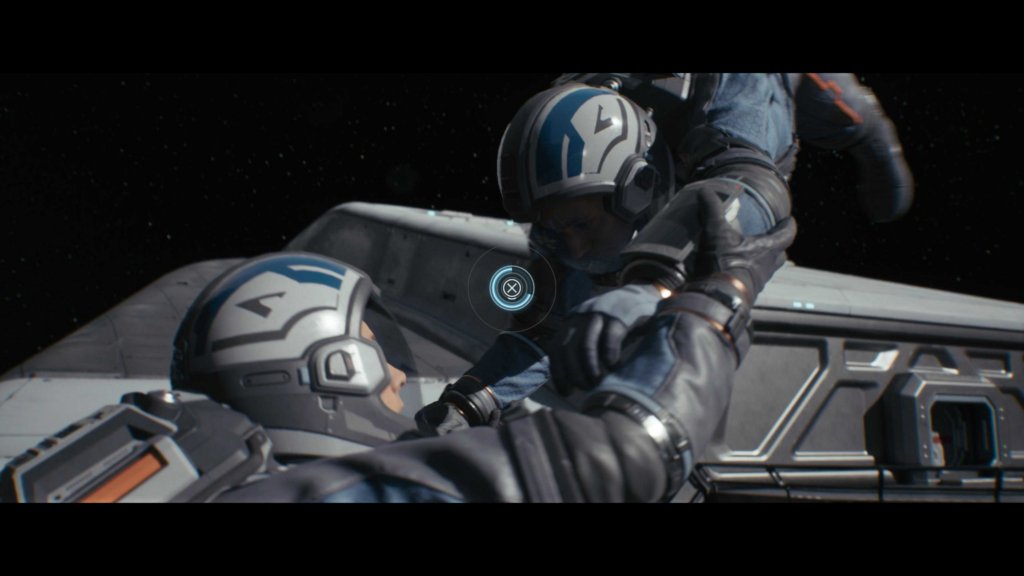
Don’t worry, though; characters can die for no reason all the time. Directive 8020 ditches any traditional concepts of plot armor in favor of the high tension of knowing that even if it feels like nothing is coming, if it does, you’d better be ready. Better yet, even if a deadly moment feels like a place your character might have died, it also might not be. Missing certain prompts doesn’t kill but disfigures, with again the story playing on with characters bearing the injuries of your failure.
When in danger, there are a few ways the game might play out, the most prevalent typically being the QTE events that give you a decent amount of time to successfully hit them but can often be a one-and-done failure. There are second chances throughout, so in these cases, you have recourse to at least survive. It is difficult to gauge where you are safe to mess up, and you are completely screwed, but honestly, as a Shenmue stan, I wouldn’t have it any other way.
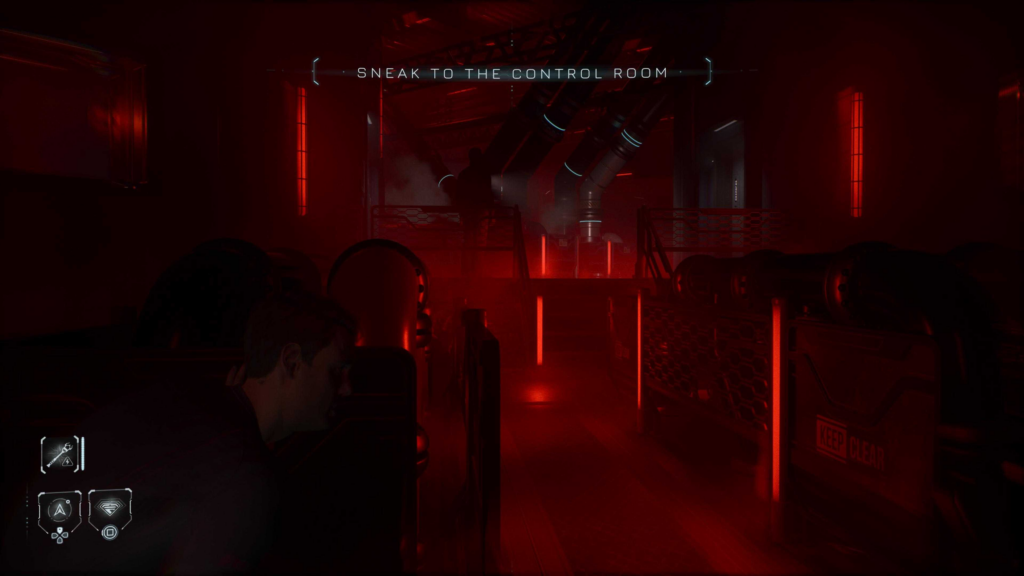
There are running potions as well that are pretty basic and served as my favorite break from the typical. The more common moment in the game is when you have to stealth your way against a stalking enemy. These proved to be the most frustrating, given how regularly these moments came up. If you are not a fan of forced stealth, add on top of that a permadeath system that means if you get caught, there is a low chance this character will be in Rush Hour 3.
The bigger annoyance with these segments is the fact that they aren’t really that hard. I have liked how the Dark Pictures games seem to put accessibility front and center, making a minor mistake something that doesn’t ruin a player’s experience. In stealth, though, this hits differently. Some of these segments require moving around to control power flow to open doors, then slipping past and escaping. You have a wristband that allows you to see the stalker at all times, and unless you run straight into them, they have poor sight.
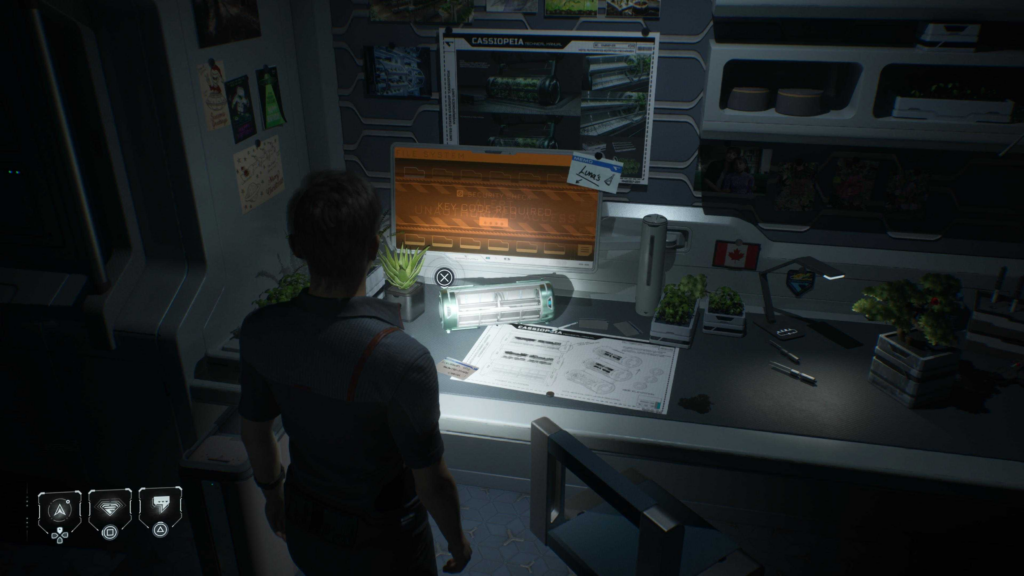
No, what typically happens is these enemies stand in front of the goal for time on end as you stay hidden, just waiting for them to turn around. They also occasionally teleport to block the exit, forcing you to backpedal to cover until they walk past, which feels like an artificial increase to the run time. An additional confrontation type would have been beneficial. At one point in my playthrough, two characters get attacked, and one, whom you were playing as prior, has a gun. I then proceeded to switch characters to the one who had a stealth section, while the other had an unseen shootout.
This is a shame because Directive 8020 has, quite possibly, my favorite story in the series. It draws from two of my favorite depressing sci-fi classics for starters. The concepts there aren’t robbed from either; they serve as a basis for the team at Supermassive to expound upon, leading to some genuinely great twists in the second half that I really did not see coming. This being said, there were plenty of moments of horror logic present in the first half. I get it; somebody has to do something stupid to get things started, but again, Murphy’s law. Maybe not questioning weird things because weird things are just weird is not a smart decision.
The best part about Directive 8020, though, is the easy timeline map that the player can jump through. Did I get a few of my characters killed? Maybe (wink), but they’ll never know. It maps out and ties to every major choice and moment in the game, and at any point, you can open it up, go to a choice, and then change fate entirely. This will change the flow of the decisions to lead to different paths, and yes, the game changes drastically based on who lives, who dies, and who turns on a random computer system in chapter 2. There is also a mode that removes this if you want the traditional experience; every mistake is your last, but that ain’t me.
Verdict
Directive 8020 isn’t the scariest game I have ever played, but it has an astonishing handle on atmospheric tension. You don’t really know what’s coming next or what will hurt you. As an evolution of what Supermassive has done up to this point, it might be the most complete version of a choose-your-own-adventure. When you are eager to explore different routes and find the option at the tip of your fingers, it matters. When exploring the ship and making life-and-death choices, everything comes together to propel players forward. I just wish there weren’t as many stealth moments.
Remember to follow us on Twitter, Facebook, and Bluesky to keep up to date on everything we have going on!
Reviewed on PlayStation 5, also available on Xbox Series, and PC
*A code was provided by Supermassive for the purposes of this review.
Developer/ Publisher: Supermassive Games
Release Date: May 12, 2026
Pros:
+Enjoyable slow burn story with genuine twists.
+Fantastic timeline so you can change choices whenever.
+Good setting, with set pieces being used often with interesting shifts.
+Plenty of good deaths to be had.
+Character trait choices have meaning later on.
Cons:
-Over reliance on Stealth sections.
-Flash Forward moments
-Character switchs come too frequently
-
Directive 8020
