

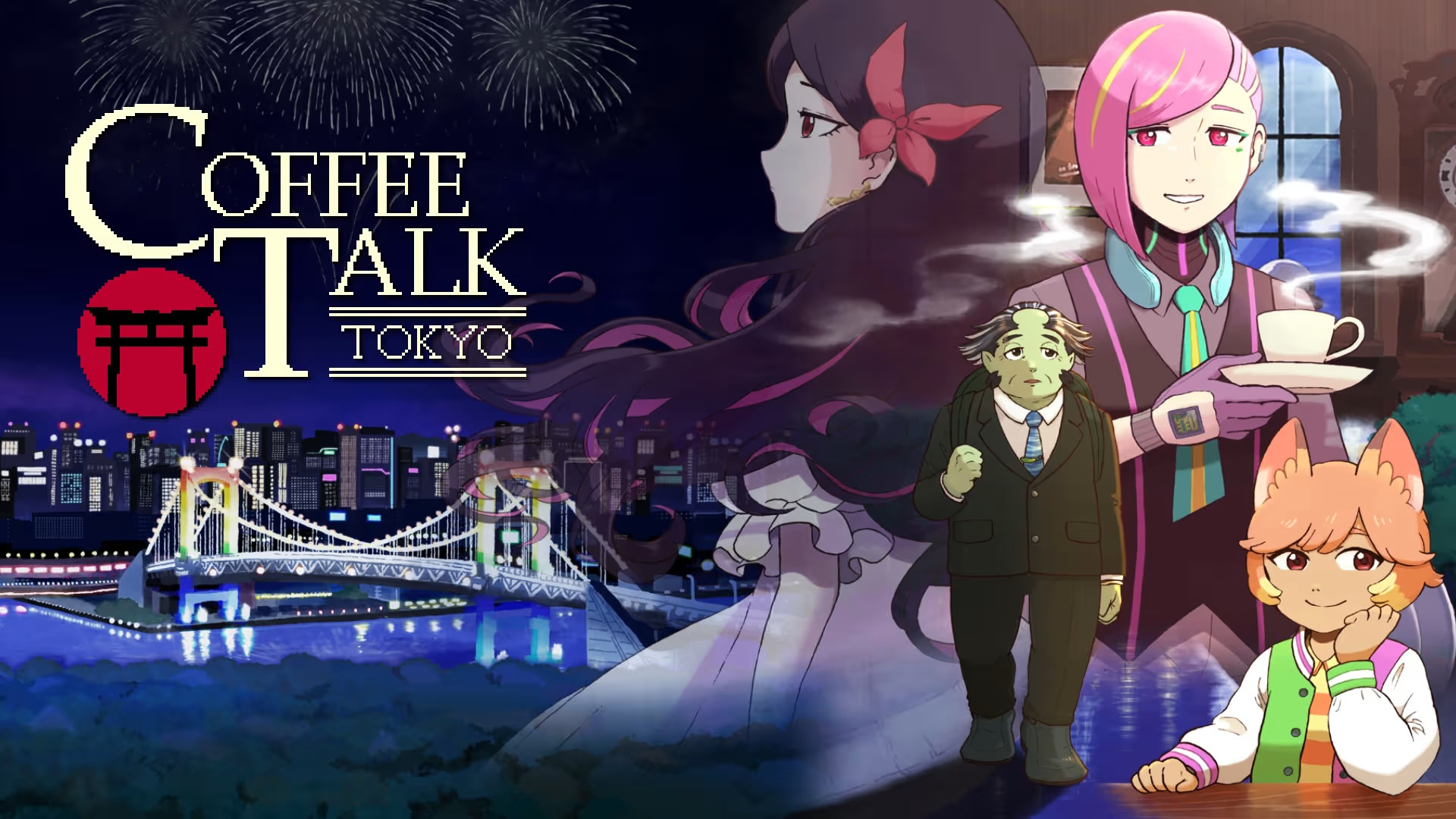
The latest entry in the series, Coffee Talk Tokyo, takes us to a place where it was always meant to be.
Coffee is a way of life in Tokyo. Not only is it massively popular, but Japan consistently ranks among the top consumers globally of coffee. As such, it feels only natural that Coffee Talk Tokyo would eventually come to pass. It’s a natural fit, the story of a barista in the capital city of Japan, brewing roasts and teas for a selection of denizens. They draw in some part from the mysticism of a country that builds its cities around its traditionalism, preserving its past in the present, so both can build their future. I stole that from a documentary on NHK, but I feel like the sentiment fits here.
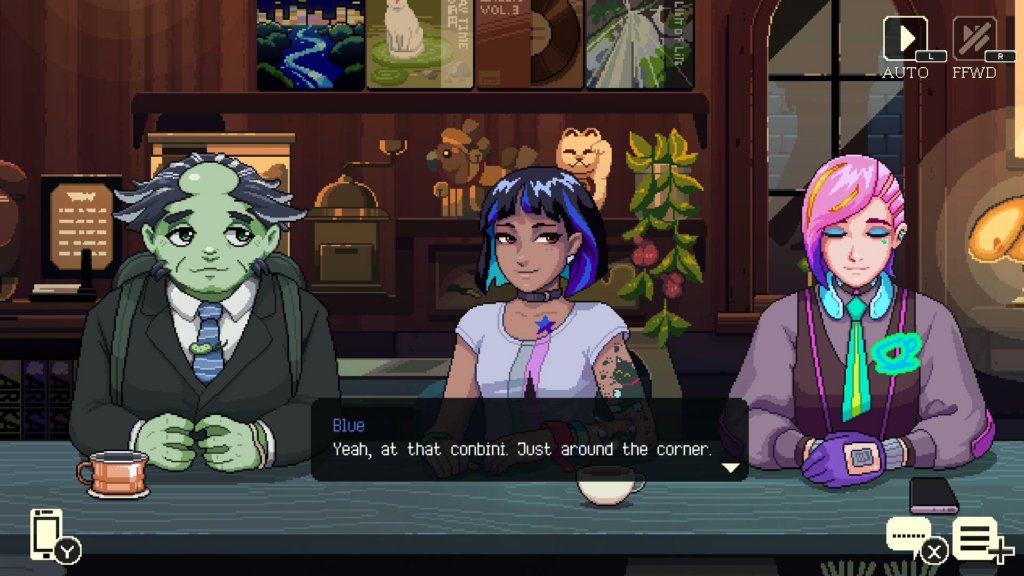
You play as the Coffee Talk Tokyo owner and the person who is behind the counter out of view. It’s not so much that this is a first-person perspective, but the action is kept entirely on the counter, and the people sat on the other side of it. A select roster of characters comes in, typically three to four a night, sits, talks with other patrons and yourself, and escapes the daily humdrum of their lives. Then, occasionally, this is broken up by the customers ordering a drink that the player then has to mix for them so they can nurse it slowly while participating in discussions.
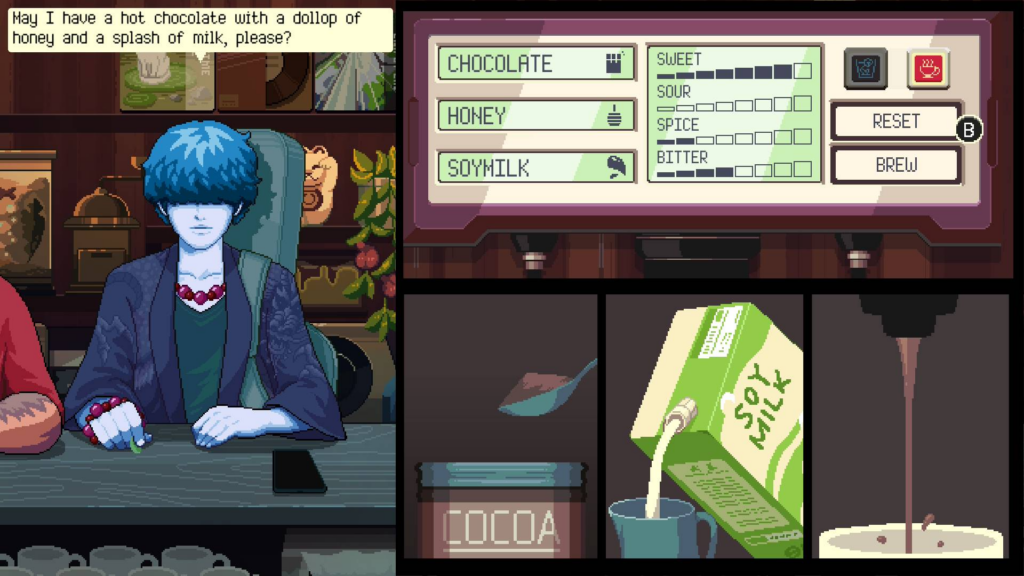
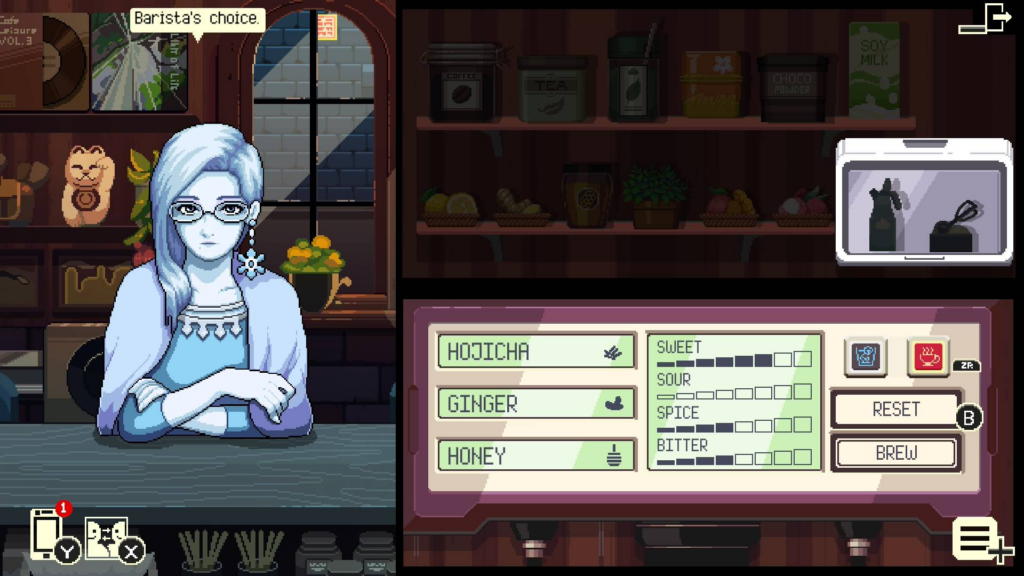
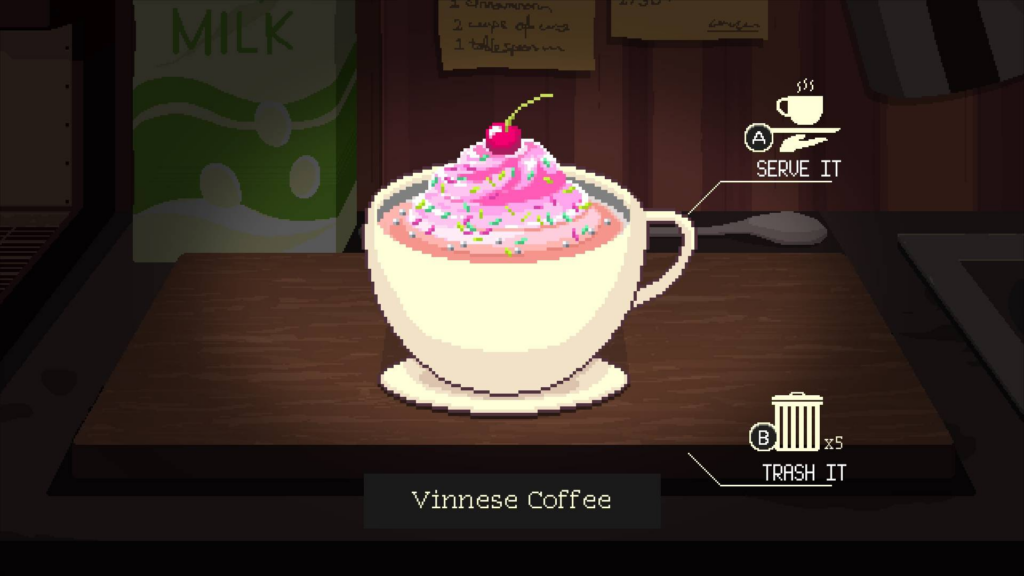
Drinks are all non-alcoholic, but they range beyond coffee, as there is also a mix of tea, matcha, and Hojicha, to name a few of the other options. Drink combinations start with a base, then allow for a primary and secondary add-on. Much of the gameplay revolves around hearing what customers want and mixing it up with three ingredients. This can be as easy as somebody asking for a clear-cut drink, while other times, there are more abstract requests, such as asking for something sweet or bitter.
Where it can get slightly confusing is when they ask for a specific drink. Occasionally, the player character might even suggest the drink in question. While there is a menu list of all the drinks you can craft in the game, only a few are available. Even if you get some information on ingredients, there can be some slight deviation from a Yuzu Honey Cooler vs. a tea with honey and yuzu if you just switch around which slot the additional ingredients are placed in. In other cases, you are given a drink, again, as your character proposes, only to not know the recipe and find yourself in a guessing game.
There is no buffer for a wrong drink to a customer. Since the cast you will meet are kind, and even from day one, most are familiar with you and your shop, so they don’t bite your head off, but it still feels bad to mess that up. Thankfully, the game has a secondary endless free mode in which you can experiment with crafting drinks. This saves any you discover for your recipe book in the main game, offering a fun alternative that also benefits you in the long run.
This isn’t the only endless mode, either, as a challenge mode is also featured that allows you to compete against a time limit as you brew coffee as fast as you can. It’s a minor mode in the grand scheme of this, simple yet old school, but something more games should be willing to include. I made a complaint earlier this year with Inkonbini that the game’s loop was so enjoyable that it felt like a shame to limit it to the narrative checkpoints that are offered to you. Brewing coffee, in the face of the narrative-driven visual novel, is minor, as you will spend most of the days talking. Having the option to just prep drinks, which is a fun mechanic, is a great alternative.
All this said, the narrative is great and worth experiencing. The characters all bring unique energy to the bar, as their personal drama both intersects and disconnects from the other patrons. It’s always hard for me to discuss elements like this, as I never want to give away the ghost, so to speak. Starting at the basics, though, the pixel art for everything is a high-quality presentation with tons of enjoyable animations and facial expressions to give a tremendous amount of life to characters that don’t have any voice acting. In addition to that, brewing drinks also has plenty of unique panels to cycle through depending on what you add, making that task all the more rewarding.
When it comes to the actual characters here, you have people like Blue, who starts coming in hoping to meet Jun, a regular who is also a dragon and a pop star. She wants to meet him because his music has had an impact on her life (learning just how is part of the enjoyment), but her schedule involves her continuously missing him. Other characters, like a Kappa businessman named Kenji, who is retiring, you later learn has animosity towards Jun. Blue and Kenji actually meet first, adding this intersectionality to a relationship before furthering her task at hand. The fact that the character’s dialogue feels natural and relatable helps further the impact of these conversations.
This isn’t to say characters don’t have their own dramas too, as even seeing a character two days in a row might not reveal their issues as you expect. People move on, and so do the characters. Coffee Talk Tokyo runs about 9 hours long, but there are multiple endings for characters and a few deviations on a second or third playthrough, once again adding to the replayability as you explore these characters from every angle.
There were a few issues I had with the presentation, though, starting with the fact I wanted more Tokyo. Obviously, characters bring some part of this in. Blue, whom I mentioned before, is a Konbini employee, and Kenji is a retired salaryman. These are typical Japanese concepts that bring that in. The setting, though, remains in the one cafe setting with very limited exposure to the city, based on the customers. This is Coffee Talk Tokyo, rather than just a third game set in Tokyo. In between days, you get some goofy newspaper reports that outline the goings-on in the city. I just wish a little more of that slipped into the conversations around the counter.
My second issue, which is minor by comparison, is the mysticism in the game. Despite being set in 2026, the game features an array of spirits and creatures that have human form, which are specific to Japan. I have no issue with that inherently, but a few take a form that isn’t inherently obvious. Yuki, an ice lady character, I believe, is based on Yuki-onna, a type of Yokai, a conclusion I came to after some minor research. There is a social media app in the game. Obviously, these characters are a normal part of this world, so nobody illustrates how they are blended from elements in our world, so some compendium of information would have been awesome. It doesn’t hurt the experience, but it would be appreciated in-game.
In the main story, there is no time limit on anything. If somebody asks you for a drink, take your time to figure it out. In fact, take longer than that. The cafe is always filled with the most enjoyable lo-fi music that you can easily swap tracks on with the main character’s phone. There really isn’t a bad song in the bunch, and they fully help keep the vibe chill and refreshing, like those drinks you keep serving. Making the soundtrack the perfect companion.
Verdict
If we are being fair, Coffee Talk Tokyo doesn’t really try anything new. It’s the classic experiences of listening to conversations and fixing the occasional drink, basking in the praise you get when you get those drinks right. Do… Do you want them to try something new, though? The characters, the narrative, the coffee crafting, and the endgame all do what they are supposed to. It feels like a better, more complete version of everything I loved in the two games that came before. Like mixology, the elements blend in perfect harmony to create a taste that will remain with me long after. One that might not be replicable but is soothing and lingering on the tongue. I want more, no two ways about it.
Remember to follow us on Twitter, Facebook, and Bluesky to keep up to date on everything we have going on!
Reviewed on Nintendo Switch 2, available for PlayStation 5, Xbox Series, and PC
*A code was provided by Chorus Worldwide for the purposes of this review.
Developer/ Publisher: Chorus Worldwide
Release Date: May 21, 2026
Pros:
+Well told narrative on interconnecting stories
+Coffee Brewing Action
+Pixel art style with a lot of personality
+Lo-fi soundtrack in backdrop
+Endless modes!
Cons:
-Some confusing to create orders.
-Could use more Tokyo.
-
Coffee Talk Tokyo
