
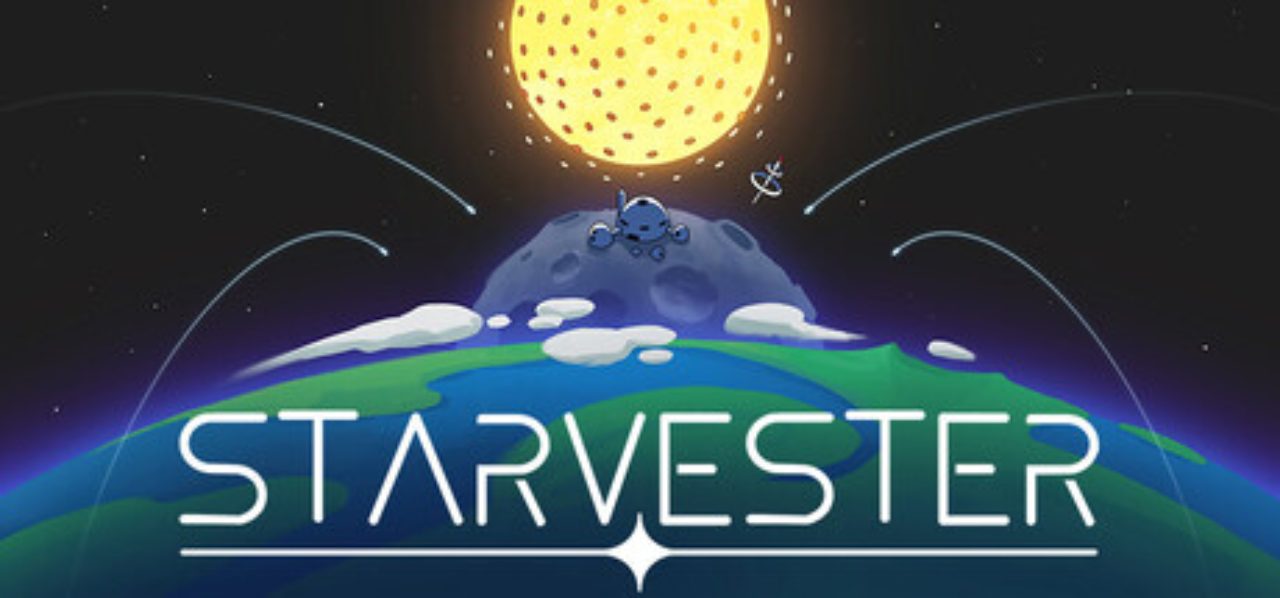
Starvester is an incremental game that has you harvesting a solar system for its resources, and it feels impossible to put down.
Did you know that Amazon CEO Jeff Bezos makes 911 dollars every second? You probably do, considering the widening wealth gap. It is mind-boggling to think, then, of the figures of billions or trillions that most of us will never see. And yet, it is utterly fascinating to see numbers go up. Incremental games bank on this primal feeling that we want to see in a virtually controlled environment the harvesting of endless resources. Why is that? Regardless of what the answer may be, Starvester excels in recreating that all-encompassing feeling of progress.
My relationship with idler games is recent, but the allure is instantaneous. Having recently bought a solid mouse for my first-ever gaming laptop, the satisfying click is one of the first details I recognized. There’s a whole genre of it on social media as well. A video called “Clickity Mouses ASMR Background Ambient Sounds” currently stands at almost 300 thousand views. Now imagine pairing that with a game that rewards you instantly. The more you click, the more resources you gain. It’s a no-brainer when you think about it.
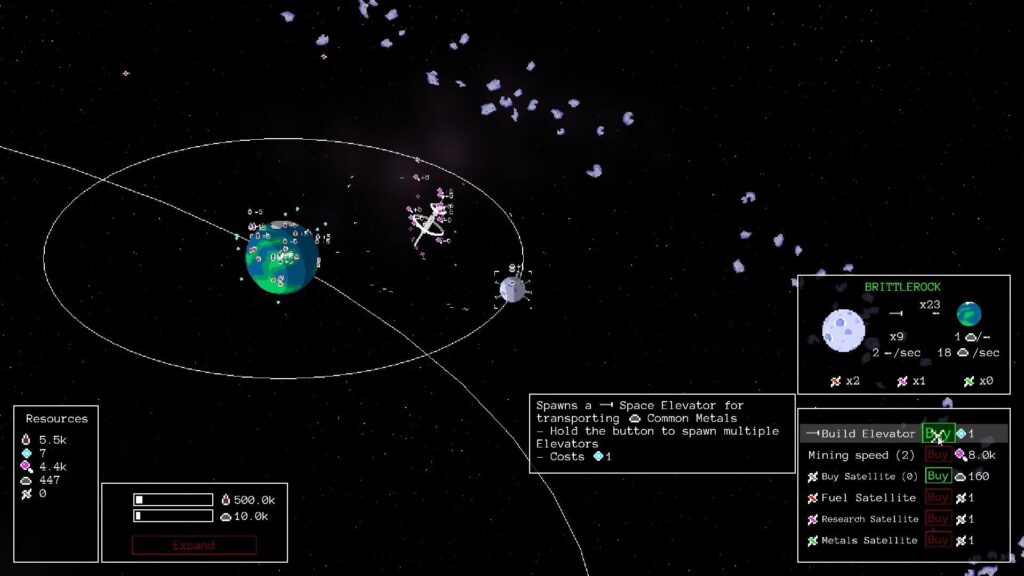
Starvester begins small, as games of the genre usually do. First, harvesting fuel from a planet called Vesta, you mine manually by clicking on the celestial body. From there, you spawn mining drones. An option to increase the mining speed and amount pops up. Then, in the lower left corner next to the growing stats of your resources, a glowing green button called Expand catches your eye.
Space Harvesting Has Never Been So Chill
Things start moving fast after that. Soon, you will have even forgotten that you ever had to click to mine. Before you realize it, you have a full-on arsenal of drones harvesting an entire solar system. Every planet, asteroid belt, and star will be drained of its resources. After all, that is what you are here for.
What helps sell the engineered dopamine loop is its music and sound effects. Appropriately ethereal as you are looking from a solar system-type view, Brian Eno’s ambient compositions come to mind. Even the repetition from the incredibly fast clicking is compulsive. The mining drone comes to a point when the sound of its harvesting is permanent, but it never bothers. Simply put, reaching a zenlike state while patiently waiting for the drones to do their work is effortless.
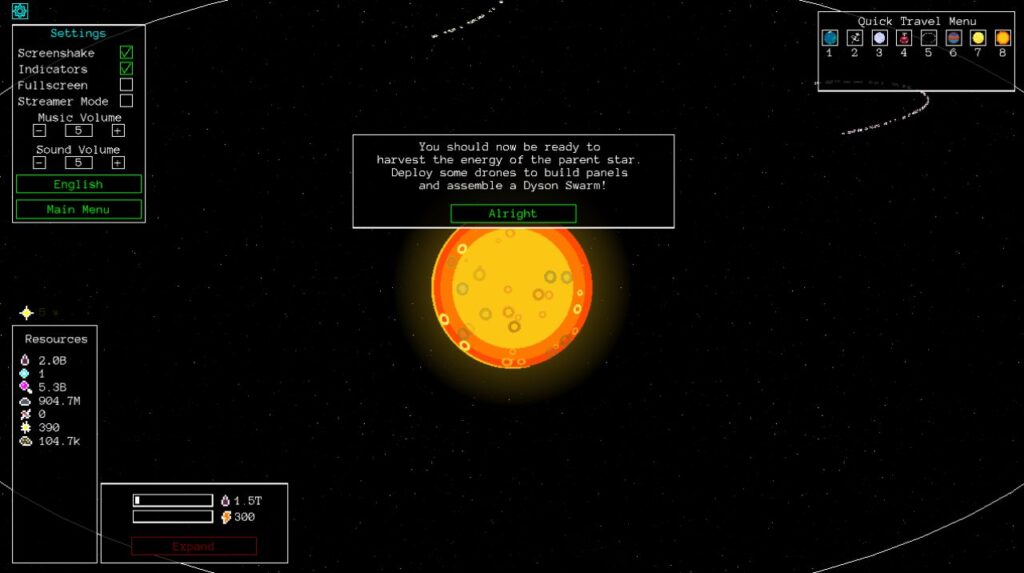
In the span of about 30 minutes, Starvester’s well-oiled space factory shows how you earn trillions—that’s right, with 12 zeros—in a matter of seconds. And then, nothing. The game’s catch is that at some point things slow down. With the ability to reset a run for the chance to earn prestige points, these can be spent on permanent upgrades. Increasing the resources you gain, reducing the cost for certain materials, or starting every run at an advanced stage, this mechanic keeps things interesting to reach the final goal of being a space baron.
Conclusion
Of course, simply working towards that goal is missing the point. The point is to reach unfathomable figures. When you collect enough resources, you can simply keep the mouse pressed to see the upgrades being spent in seconds. Imagine buying a thousand drones in the snap of a finger. I would find myself letting the game run in the background and coming back to it every ten minutes or so to cash in. Did I really accomplish anything of value during that time? I don’t know, but it certainly felt like I did.
Starvester is out now on Steam.
