

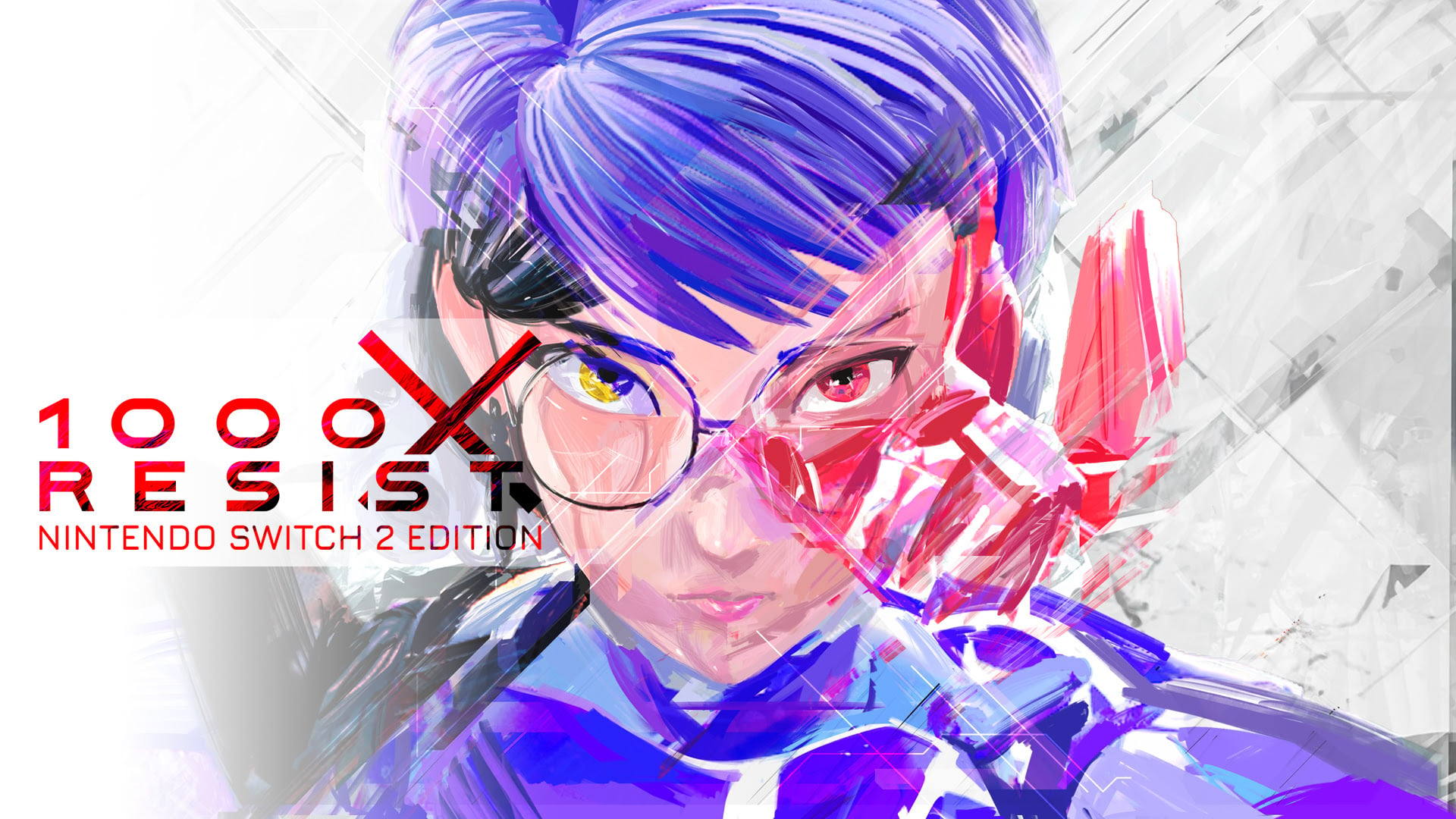
There are some games that are just a horrible experience to review. This isn’t because they are bad, mind you, but because they are impossible to find the words for. It would be simpler if you hated the game because then, even as you struggle, the pen goes to paper, and you end up with something at the very least. If you actually enjoyed the game, as was the case with 1000xResist, struggling to put your feelings into perspective feels like limbo. Like wandering through a long hallway with no doors or obvious exits, a comparable feeling to the game itself.
In 1000xResist, you play a character called the Watcher, far in the future in a society that is possibly supposed to compare to a utopia. That might not be fair since the world is plagued with poison that forces all the characters to wear masks, as well as evil entities. There is a uniformity you might associate with sci-fi in the 70s or 80s, with cracks showing from the first moment. The Watcher is among multiple roles of administrators in this utopia that functionally keep this society running, though her role is much less obvious and much weirder than any of those other jobs. The names directly correlate with their role, but while Fixer fixes things and Healer heals things, The Watcher does just that.
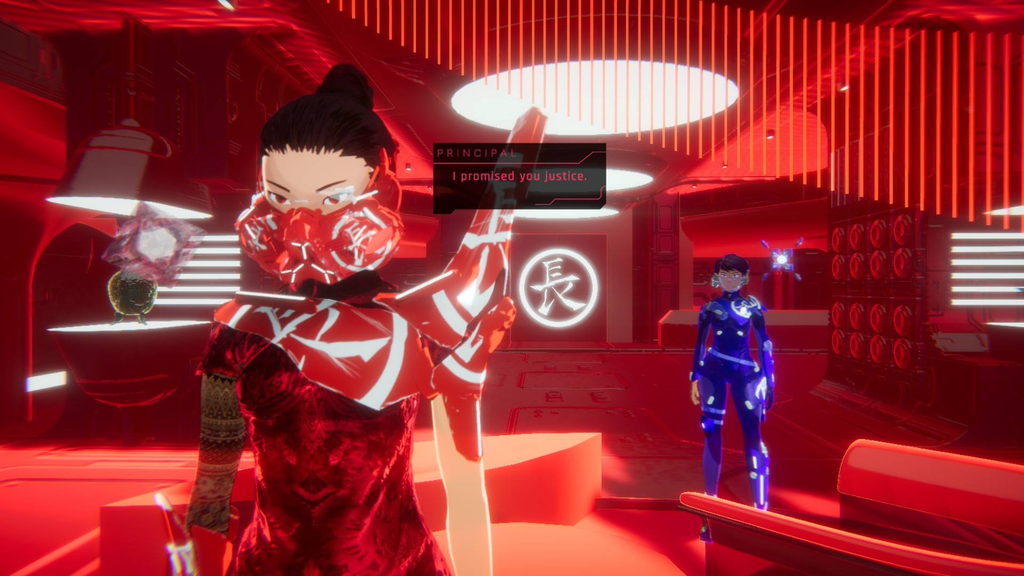
There is this powerful woman known as the Allmother who has some very obvious, and other overt, biblical allegories going on. As the Watcher, the game plays out through a series of flashbacks in which your character lives up to her namesake. You watch over the history of this god-like figure and, ultimately, a series of horrifically bad choices that beg the leader and those around her to submit to the will of a vengeful figure and her twisted sense of love.
While the game has exploration, there is a lot that would make this game seem like a visual novel, which is always something difficult to judge. Much of the experience is minor segments of exploration, hopping from dialogue to dialogue, tracing characters like Iris, the allmother, as she watches the world become sick with infection. Or later, as she grows in her divinity and punishes her children for subverting her will. Terrifying moments are presented with an abstract art style that somehow heightens the growing tension.
You can’t be aware when you start the game where all of this will go; how could you? It all starts so simply and grows with desperation and panic. Within the first few minutes, our hero does wrong. We may not know that yet; her consequences are still yet to come, but that wound is a constant source of anguish that the developers at Sunset Visitor understand how to effectively weaponize against you. It is something that builds to an unforgettable final act with one chapter that is so perfectly composed that it is still haunting me.
Part of why the narrative is so effective is the characters you meet along the way. I was afraid when I first met The Water; quiet and aloof, she would amount to another robotic woman in the future. Part of this, I assume, has to do with the fact that I had just come off reviewing Beast of Reincarnation at the time of playing this. It reminded me of my issues with Eve in Stellar Blade. Both being allegorical, you can probably see why this comparison might be made.
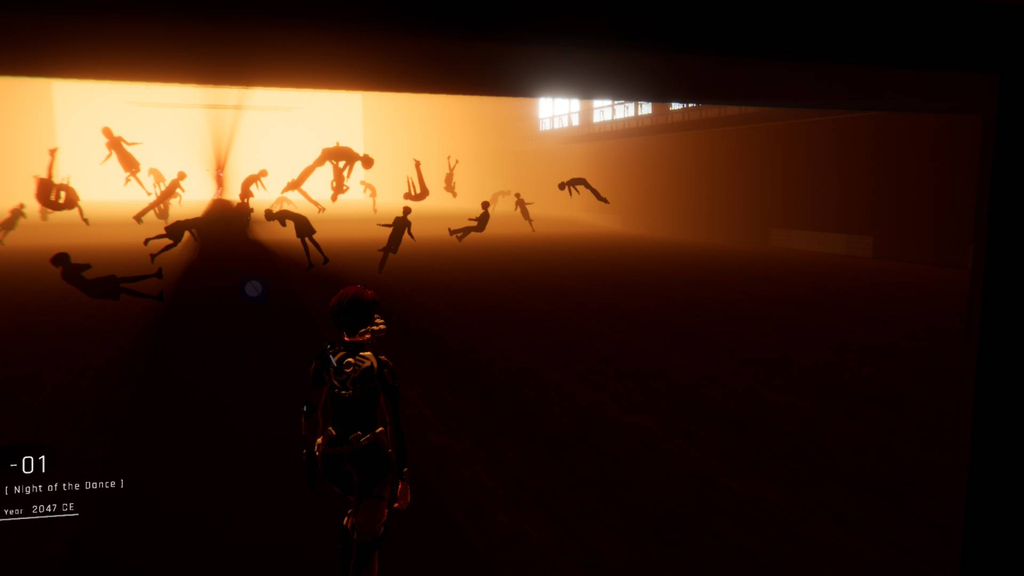
I was so wrong, so utterly wrong. The character has a quiet sadness about her, so perfectly encapsulated by the voice acting. This is a story about growth beyond your limited worldview. The Allmother tasks her with seeing the truth, and at times it is ugly. How do you reconcile that? How do you live with the life that you have embraced being built on lies? And all the while it is clear these memories must be documented. The Allmother commands it. She wants you to know; does that make her cruelty hurt more? Even after the credits roll, these answers allude to me. Good media asks questions; great media haunts you.
In between the narratives are closed segments that the player can explore and enjoy. These include the narrative chapters, but you also have the option to explore the hideout. I wanted to love this as much as I did the main story, but sadly that just wasn’t the case. Make no mistake, the base is really cool, with plenty of people to talk to, but there is a repetition that just isn’t fun. More so, it’s a distraction with no real reward.
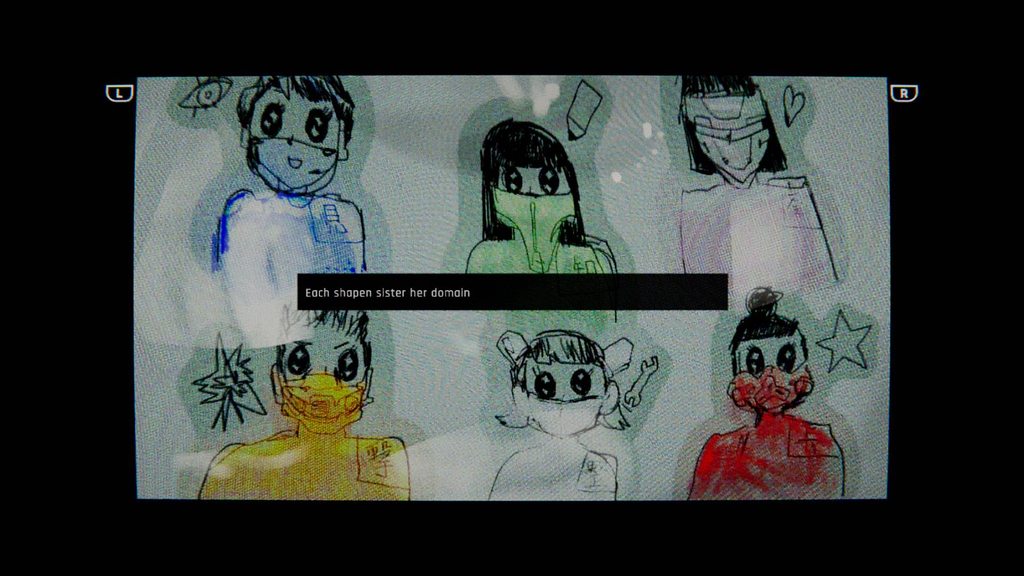
Basically, the next mission is set up, and you are given the option to check in on the sisters, the other people who live here. There are dialogue choices, which can be interesting, though they do not amount to much. The thing, though, is when they say check in on all the sisters, they mean all of them, which can actually be a lengthy process as you track them all down. Outside of this, there’s nothing more to do here than run around, making the next story task the most enticing thing anyway.
This brings us to the missions, which can be fairly lengthy as you segue through a multitude of narrative-driven, abstract set pieces. One of the more intriguing features is the time-shifting mechanic, which is instantaneous, so you might be in a dark and forbidding school, only to shift to the past and it is normal and functioning. That first stage in the school is the best example of this, with the shifting used to get past barricades and solve a brief puzzle-like stage.
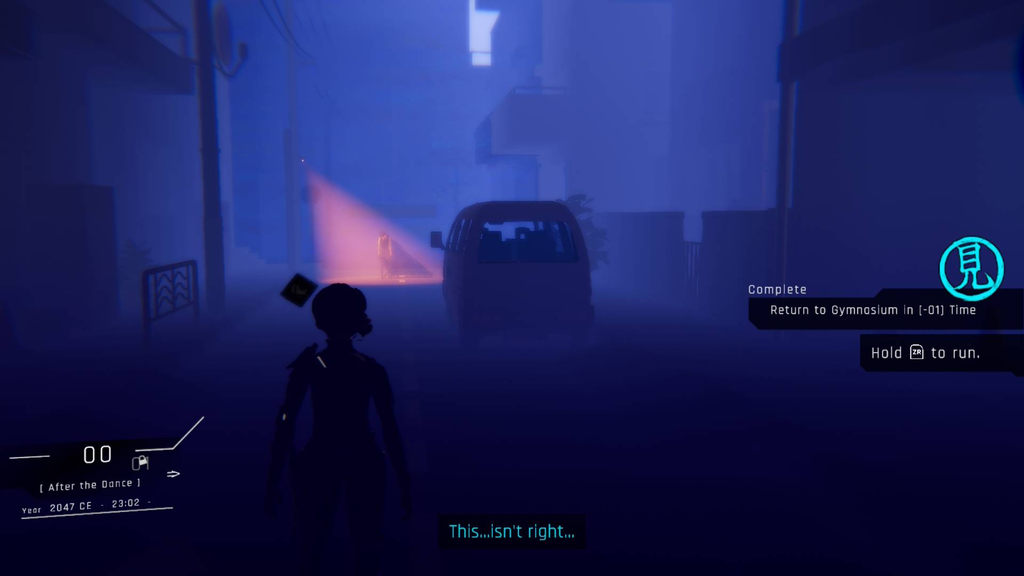
It remains beyond this but often falls slightly short of this introduction. Some segments later on will throw 4 or 5 time periods at you at one time, piling them on until you are 40 deep. In one early segment you chase a character named Jiao. Each time shift reflects only a few minutes, and you need to constantly shift time to move the character from lamppost to lamppost. It is a visually striking scene to be sure, but the process feels cumbersome. And that’s the thing: a lot of the shifting becomes moving the scene, not accomplishing something that the game makes apparent they know how to let you do.
In the grand scheme of things, though, these segments felt more enjoyable than another that punctuates the narrative. Most segments have a rule of three, so throughout you will eventually get three moments in another space where you need to traverse between these floating glyphs to reach the characters and learn some deeper truth. It’s just a clunky feeling to move between them, though not hard. The worst part is when there is no obvious next space to move towards, and you spin in place looking for it desperately. These moments come up more than anything else, which is probably why they stand out.
The main segments, though, do have a diversity to their gameplay, so there is no stagnation. All of this is also set to a quiet, piano-driven soundtrack that punctuates the slow but meaningful pace of the game. There is a chapter that plays out in first person, wandering a small room while Iris’s mother travels the five stages of grief on the other side of the door. This one stuck with me more than most, but the next chapter also had some moments of presentation that are visually striking.
Verdict
1000xResist is a narrative game first and foremost. It can be challenging to look at a visual novel game and review it; I mean, storytelling is subjective, but this isn’t strictly that. From that perspective, the story is meaningful, beautiful, and painful. The story isn’t straightforward, but once it all fits together, it has something important to say. Playing the game has moments of levity as well, offering a clever task to solve or letting you be the maestro of the misery unfolding around you. These segments have their issues, but they clearly aren’t the focal point, and, in that regard, 1000xResist nails it. I’ll sit with it, take the time to feel, and never forget the journey of discovery it took me on.
Remember to follow us on Twitter, Facebook, and Bluesky to keep up to date on everything we have going on!
Reviewed for Nintendo Switch 2, Also Available For Nintendo Switch, PlayStation 5,, Xbox Series, and PC
*A Review Key was provided for this title by Fellow Traveller for purposes of this review.
Developer: Sunset Visitor (斜陽過客)
Publisher: Fellow Traveller
Release Date: September 3, 2026
Pros
+Fantastic narrative with deep metaphors and characters
+Time swap mechanic is fluid and unique
+Several set pieces are engaging in their exploration
+Gameplay keeps adding unique twists
Cons
-Some areas have a lot of time jumps for minimal progression
-Certain gameplay points hit less than others
-
1000xResist
