

Ayasa: Shadows of Silence emulates Little Nightmares without understanding what made it such a special horror experience, to its detriment.
There are games so influential that they inadvertently create a new genre in and of themselves. We all know of the soulslike, single-handedly made by FromSoftware’s punishing fantasy series. But what about the others? The ones that are well-known but did not take the world by storm but instead slowly gained ground over time. In this case, I’m talking about the “Little Nightmares-like.” It’s strange that it spawned a subgenre of its own, as it is directly a 2.5D sidescroller where you cross through increasingly horrifying dioramas. That probably does not roll out the tongue as easy, in hindsight. Nevertheless, Ayasa: Shadows of Silence is one such derivative experience.
Its Many Faults
Why derivative? Did you ever hear the story that Super Mario Bros had an invisible ledge to make players believe they just made the jump in the nick of time? In combat scenarios, they usually make players gravitate towards their enemies to not miss an important hit. Videogames, in truth, are every bit of smoke and mirrors. Apparently online shooters also add easy bots the first few matches to make you believe you’re actually killing someone.
Why do developers do this? Well, to not make you ragequit, for starters. Studies say most people play a game for about 5 minutes and then quit it. Forever. So savvy devs need to pull all the stops to make the onboarding as amicable as it can be. Ayasa: Shadows of Silence does none of these things.
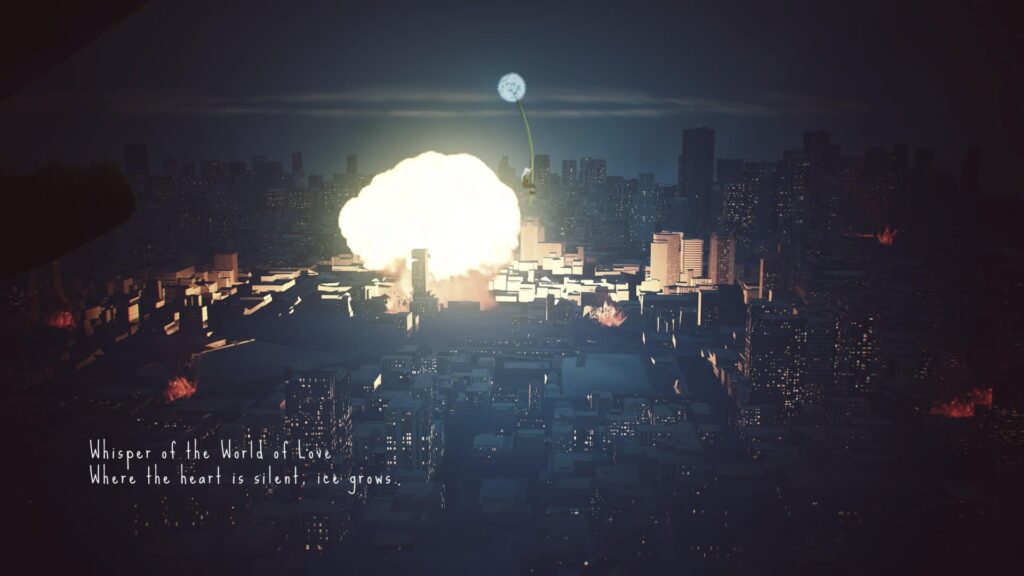
Free from dialogue—just like the series it emulates—Ayasa establishes a jaw-dropping first scene: a modern city is being heavily bombarded. Hellish humanoid monsters with unsettling smiles march towards the metropolis. It is not difficult to pick up what is going on. Far from the end of the world, a young, small girl with purple hair wakes up seemingly unaware. A purple fog with gangly arms starts chasing her. Things only go downhill from here.
Have I Played This Before?
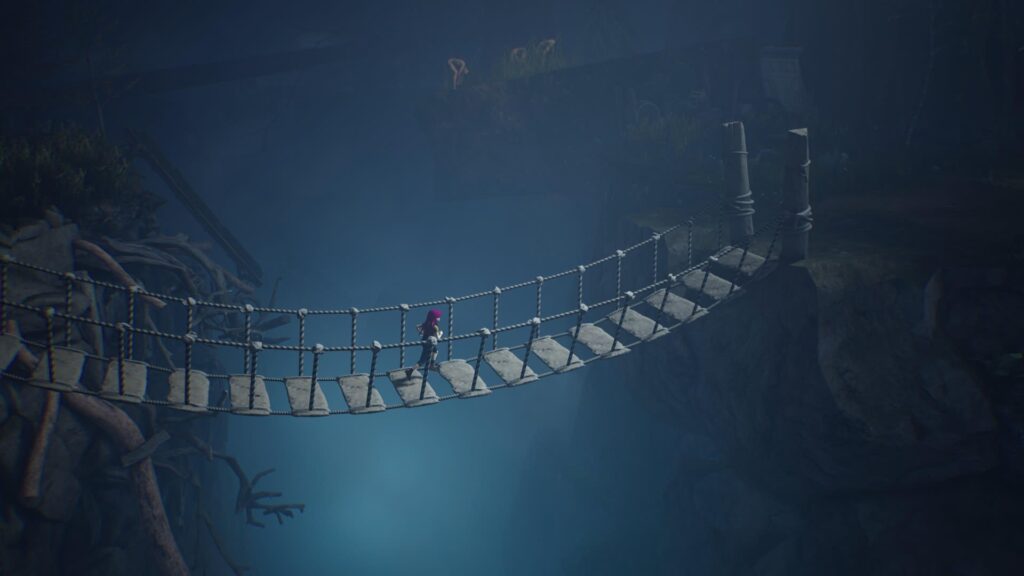
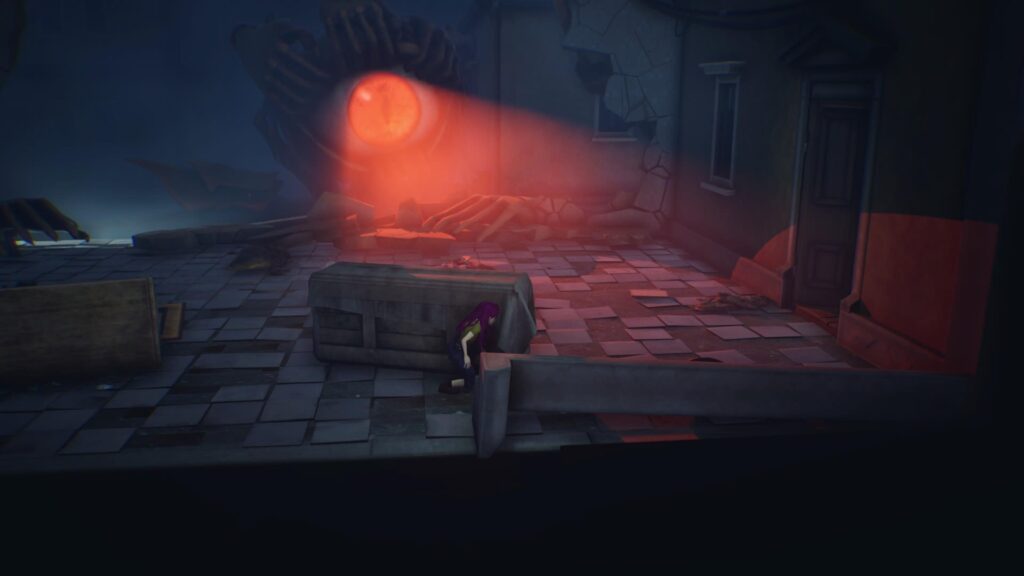
Ayasa controls just like Little Nightmares, on paper. A fixed camera angle follows you around. You platform across chasms and grab from ledges. Horrid monsters will kill you on-site while you escape from the grit of your teeth. Every one of these actions is accounted for, with a twist. Like a doppelganger who just ever so slightly lets out, it is a double; Ayasa falls in the same category. A crooked smile, a limp in their walk, a missing tooth. Without beating around the bush more than I already have, an unpolished veneer permeates the whole game.
It is not just the glitchy walls or imprecise controls, but everything around it. When you move Ayasa herself, the movement is stilted and unresponsive. Jumping is infuriating, as trying to get a sense of the angle in 2.5D perspective is challenging. Where escaping from the monstrosities in Little Nightmares would be a thrilling sequence, there is nothing more I could dread here.
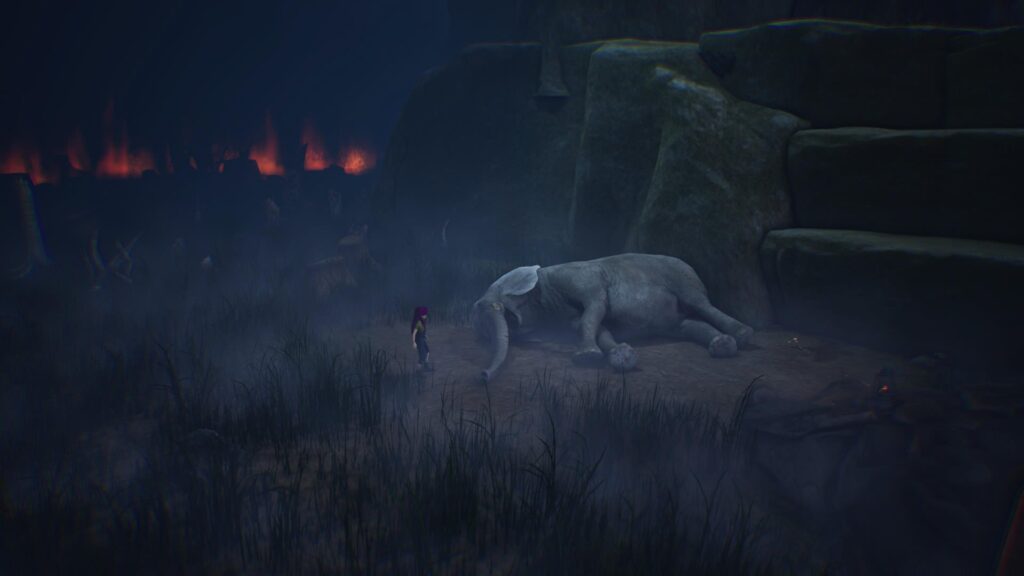
There is a fine line between frustrating and tense gameplay. Sadly, it is clear where this experience falls. The monsters, may they be the weird-looking humanoids, rats, or puppets of sorts, end up being more infuriating than scary, as their wildly erratic movement is unpredictable. In their defense, you could say, “Oh, unpredictable, fun!” but the truth is that dying once after another because of the unfairly reaching swing of the attack will prove otherwise. And repetition is a gigantic part of it.
What Works Best
In my recent review of Little Nightmares 3, I stated, “The built-up tension of trying to run for the first time away from a horrid melting humanoid is special. But by subsequent times, all the thrill has been deflated, and there is only the focus on knowing how to exactly progress on to the next set piece. In the end, we are left with brute forcing our way through flimsy platforming.”
If any glaring issues come to mind for players of that series, know that they are exacerbated here. The lack of an uncomfortable death animation, which would be a big deal out in LN, is absent here. I still remember dreading to see that nightmarish woman suffocate my little character with her neck alone. That goes a long way to desperately clinging on to dear life.
Gameplay Gripes
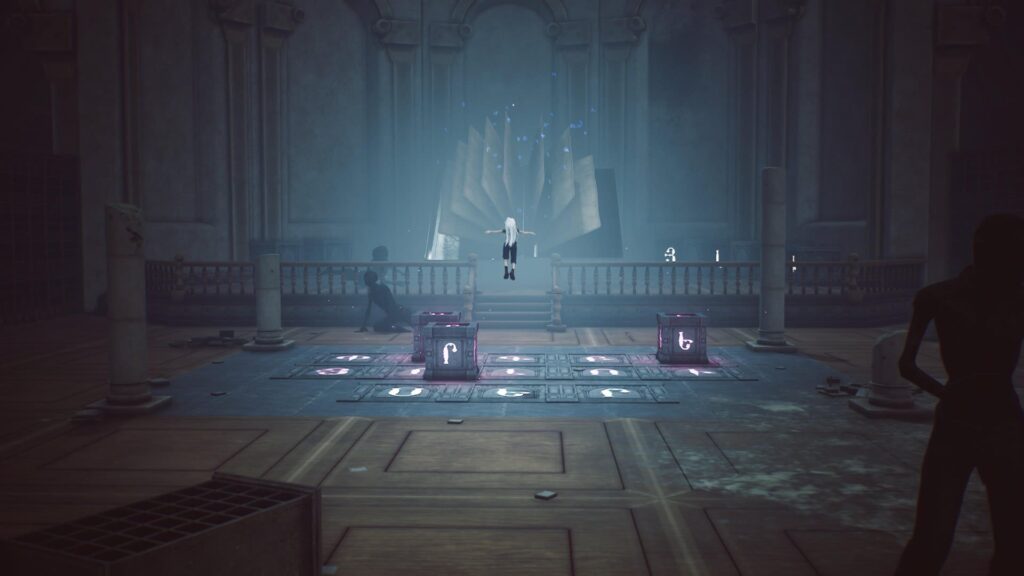
Over time, abilities like invisibility and time manipulation are introduced, to forgettable results. In invisibility’s case, it makes needing to run from enemies superfluous, as they will not see you for a couple of seconds. This is rendered inert a few moments later when another type of enemy can see you regardless of your corporeal state. And time manipulation is only ever used to reconstruct debris to move it out of the way.
As with everything else in Ayasa, the few seconds to cross over will most likely ensure a death trying to get to safety. On the narrative side, it is trying to be poetic in its portrayal of light and darkness, but the detractors may amount to more than an average player is willing to put up with.
Conclusion – Ayasa: Shadows of Silence
Yet, somehow, I couldn’t stop playing. I would not consider Ayasa to be a good game. It is functional, at best. As a lifelong gamer, that means that I had to see it through to the end, even if it frustrated me to no end. That is as far as I can complement it. There are cases that I wish I could be speaking wonders about a game, like how a spry developer punched above its weight to great success, but that is just not the case here. May their next affair be a better nightmare.
