

There was a GameStop in my hometown that I had been going to since I was a child. Eventually, I started working there and did so for ten years, watching Black Fridays go from nightmare events, wading through a sea of customers in a tight space, to being maybe 50 in an entire day. We knew our store, 30 years on, was maybe on its last legs, the combination of everything as the world progresses around it, but I had moved about a year prior to get the news that it would be shutting the doors for good. I expected to be ready to move on, but when I got the news, it was like, whatever, right? But the day I couldn’t be there, I couldn’t see this inanimate object I built so many memories upon. So, instead, I just sat at my computer and cried at the loss of something I never truly processed I had until that moment.
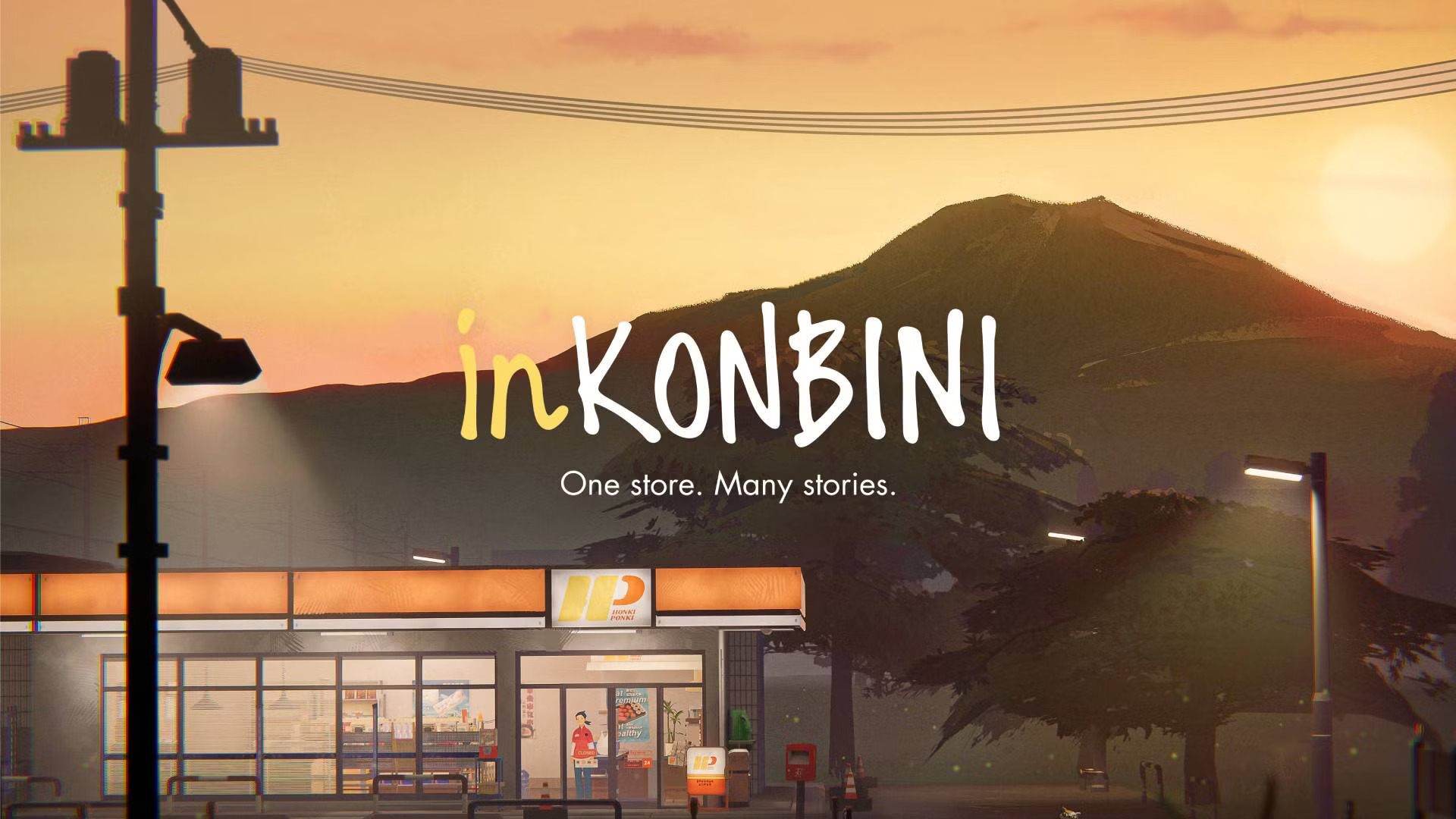
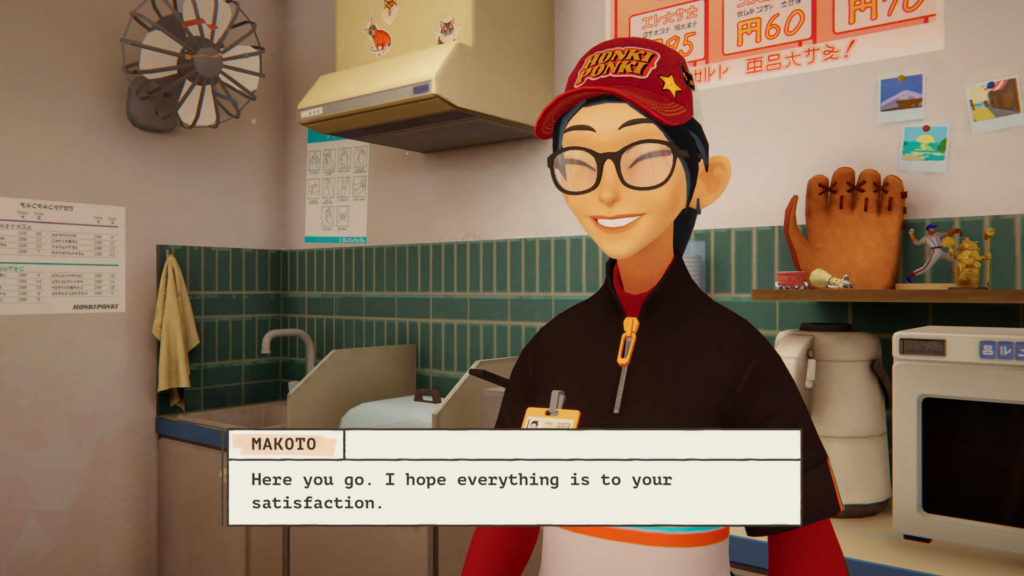
In inKONBINI: One Store. Many stories, the protagonist, Makoto, finds herself at a bit of a crossroads. She travels to the small konbini that her aunt owns and operates, known as Honky Ponky, in a rural Japanese town to work for a week before returning to college. Even with an idea of her plans for the future, it’s not like the next stage is absolute. This week, in which she covers the quiet night shift, promises to be anything but forgetful. Along the way, the intersections with the people coming and going could offer some much-needed perspective and clarity as she looks down the ever-present passage of time and her future. Even more so, it can remind you of how the things we take for granted, like a tiny convenience store, can impactfully weave our lives together.
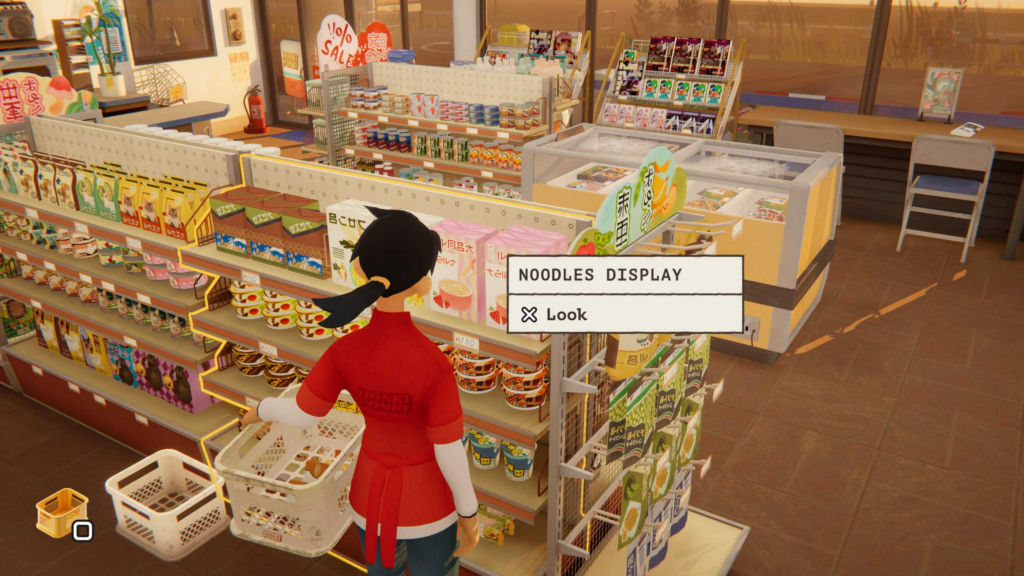
Since Makoto is working the night shift, you can expect the passage of time to move from dark outside to light as the sun rises in the tail end of your watch. These segments on each day also flow through a few kinds of periods. When a customer enters the store, these are the narrative points in the game. Progression happens only when you choose to talk to them and help them with their issue. This is good because the game gives plenty of putter tasks to complete, or just tasks you decide to take on yourself. Sometimes you fix a section because the day shift made a mess of everything, which can be completed in these moments with no real threat.
In between these customers’ time will not progress, then noticeably progress all in one moment, but again, any task you’re trying to complete just needs to be done on your shift. This is important to keep repeating because far too often the game relies on finding the lost product for a customer, and this… It can be hard. Customers ask you to find a product a lot, and occasionally it’s not annoying, such as on your first shift, you are asked to pick out a ramen product for Chief, which just involves looking through the ramen shelf. It adds a bit of store and is easy enough.
THE NEXT DAY, you need to find several cans of ready-to-drink coffee. Easy, right? Wrong! See, whoever works the day shift is the freaking worst. To find these cans, you need to scour the entire store as they are hidden among the most random sections. Seriously, the game doesn’t give you a tutorial, but even I figured out that looking at the sections tells you what goes there! Maybe I am getting so heated because I know for a fact that I worked with this man. Granted, maybe the timeframe is off on that.
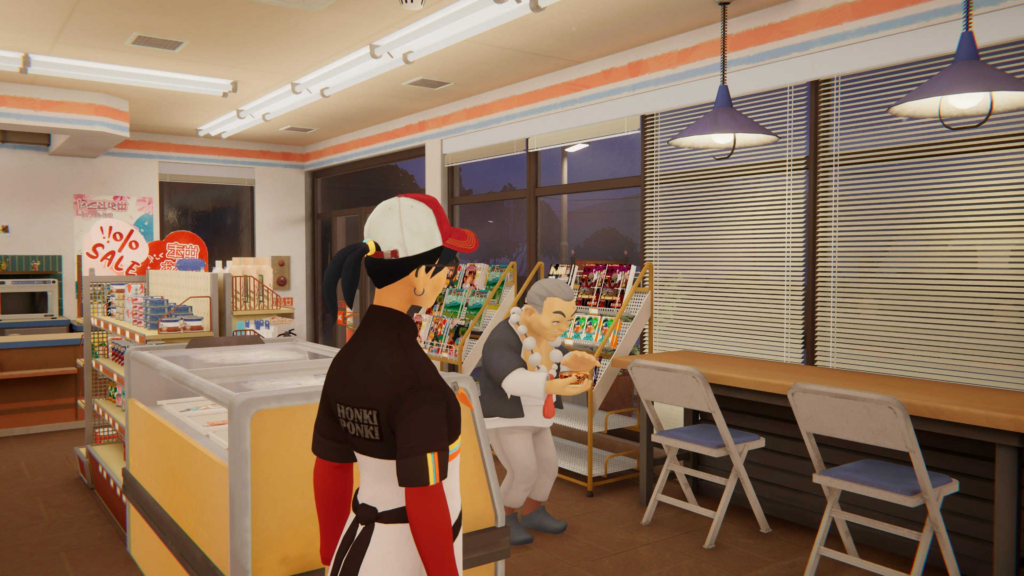
Narrative moments don’t always rely on this sort of task either; sometimes, you just talk a character through something, offering Makoto her unique perspective on the subject. The most fun ones are when you get info on a product but need more, like a translation. Those are cool and put all the tools Mokoto has to the test, like the phone in the back room. They aren’t hard, like, at all. Often, Makoto even comments that she should call someone, but they are deep, and that’s what makes it great. The issue is that inKONBINI does way too often rely on that first task, which feels like it grinds the game to a screeching halt. There are so many other things you can be doing while you search, too, but they can start to feel frustrating if you can’t find that ONE NON-PERISHABLE ITEM FOR A SHIPMENT DAY SHIFT. PUT IT IN THE BEVERAGE REFRIGERATOR!
Ok, deep breath. I can’t stay this stressed. After all, wandering the store is accompanied by possibly one of my favorite soundtracks this year. Zen tones to accompany the 1990s atmosphere. A little jazzy, slightly lo-fi, all feels, and I am here for it. One might point out at this moment that the studio behind this game is called Nagai Industries (psst, that is a company in Shenmue). I don’t think it’s unfair to point out that the music reminds me a lot of the cassettes I once bought in Tomato Mart all those years ago, especially Antiquity Tree. Adding to this, though, I also got a little Blue Stinger Hello Market vibe, which is never a place you want to be. If you really need to take a break, head out front for some capsule toy action as well, maybe win a rare golden one, and forget you can’t find bug spray anywhere in your store.
What’s interesting about the narrative is just how it explores its themes of isolationism. For instance, you never meet another employee, and while you and Hina can converse over the phone, she never once appears in the store. This is deliberate, as both you and the team converse and work together through sticky notes, memos, and notepads. There is no real introduction to this, so I would say it took me a day or two in-game to finally realize all the things I could be accomplishing because I didn’t check the bulletin board. While the game treats Makoto at least in some part like that old expression about riding a bicycle, the player might not have that same experience. On some level, this makes a second playthrough more rewarding, though.
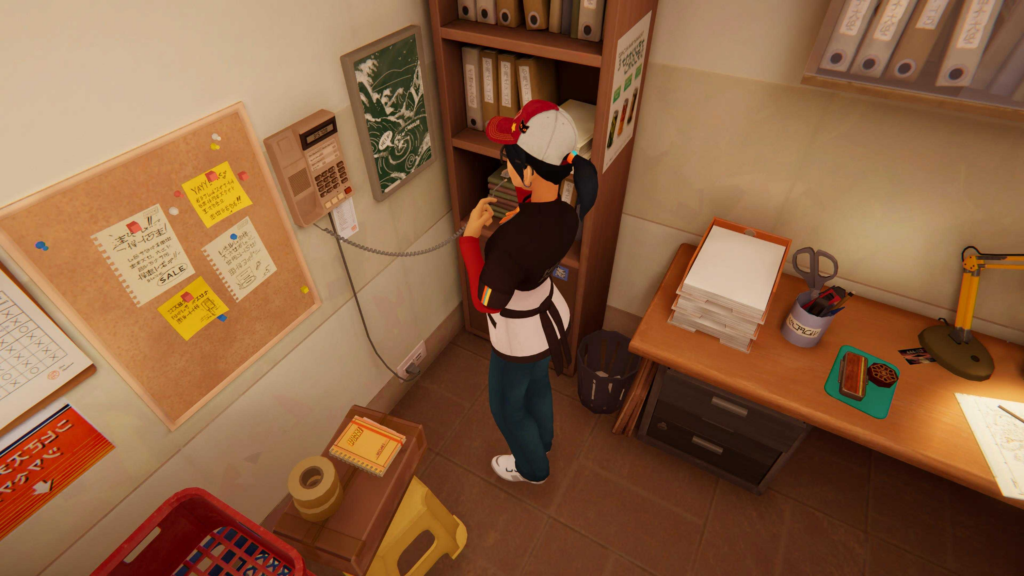
For the colorful cast of characters that come through your store, they rarely intersect. You are alone, at night, in an empty store, until somebody enters to free you from your solitude. In recent gaming, this premise is typically reserved for low-budget indie horror games, so something thoughtful and introspective is a welcome change of pace. One character might bring a bizarre vibe, though; you might mention that to another, and they might try to help. You see the threads between people that have never met, possibly never will, get tied together in real time. It reminded me of stories of my best friends and how one store connected us before we even knew each other.
As for running the store, while you have options on what to do and how, there isn’t much you need to do. Even handling tasks wrong doesn’t really punish you, which isn’t bad, just unfortunate. Apart from a few tasks left by the staff, the day-to-day operations of the konbini are largely secondary, even with the functioning option to move entire sections because you are crazy (what can I say, it was a long night and I got bored). Nothing really happened. I wish there were slightly more tasking in this department, as the game has a great sim running in the back end of what is a narrative game. It could be easy to forget these, as there are segments where you are left to your own devices with nothing but trouble to get up to. The game’s emphasis on ichigo ichie, that every encounter should be cherished, is front and center through everything, even when maybe it could take a back seat for a moment.
This brings me to my final complaint, and one that, if anybody knows me, is only something I complain about if I truly enjoy the game. It’s very short. The inKONBINI sets its story’s timeframe in the beginning. Makoto is only filling in for a week. And I get it; I understand why this brief moment is so important to the plot. Would a month have been too long? Skip a few days, filling some just with working? Hell, Persona feels like too fleeting a moment, and they give me an entire school year to hit on my not-altogether teacher. By the end of the first day, you can piece together how long the game will take, and there was a lot of aimless searching in there that padded out a limited runtime more. Endless mode would be cool, hint, hint. Don’t make me leave…
Verdict
inKONBINI: One Store. Many Stories. It’s about a moment in time, a snapshot at the end of summer. The story of a brief moment for a girl named Makoto, who returned to a quiet life and ended up becoming connected with the locals who frequent the small konbini, where she agreed to take the night shift. Like any job, at least any that I’ve ever taken, it’s not always all fun. It can be hard work. However, if you don’t cherish the moments as they happen, you’re likely to look back and regret it. That’s what this slice of life reminded me: that one day it’s all over…. But, if you’re lucky, you have a second save slot, bay-bee, so Honky Ponky, I’m coming home!
Remember to follow us on Twitter, Facebook, and Bluesky to keep up to date on everything we have going on!
Reviewed on PlayStation 5, Also Available on Xbox Series, Nintendo Switch, and PC
A review key for this title was provided by Nagai Industries for the purposes of this review.
Developer: Nagai Industries
Publisher: Beep Japan Inc
Release Date: April 30, 2026
Pros:
+Enjoyable narrative and characters.
+Fun management sim with freedom between narrative segments.
+Tasks to discover as you explore the store.
+Fantastic soundtrack to enjoy the tranquil nights with.
Cons:
-Needs less find the hidden product tasks
-Short (but sweet) story
-
inKONBINI: One Store. Many Stories.
