

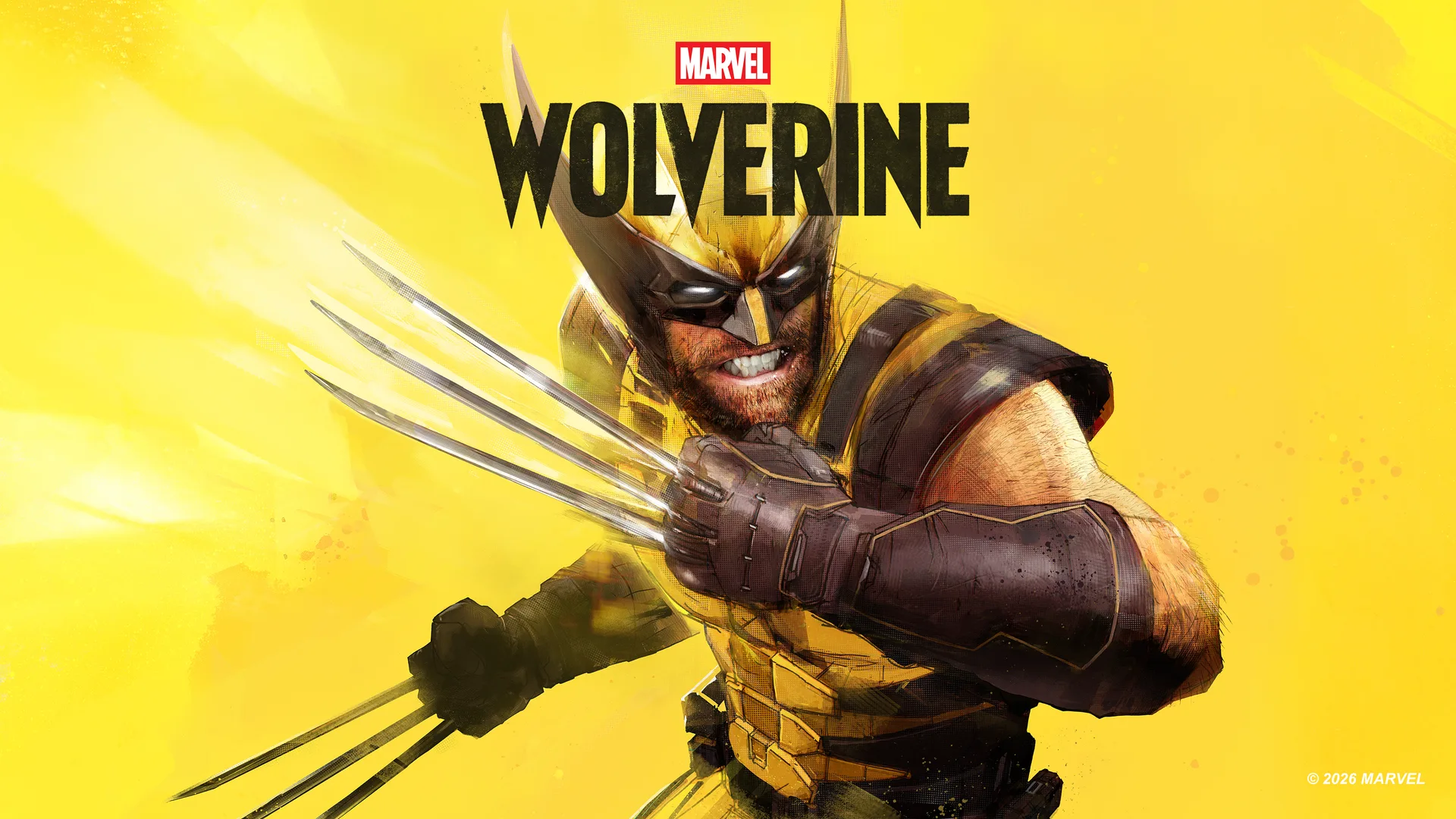
Maybe it’s unfair for me to take a look at the character of Wolverine from some form of a critical standpoint; I don’t really have an attachment to the character. In terms of Marvel, I have always been more of a She-Hulk fan, and Deadpool & Wolverine did nothing for me (sorry, friends). I do, however, like Insomniac as a developer, so I was on board with Marvel’s Wolverine game regardless of, well, everything I have had to listen to over the past year. Fun is subjective, and so are reviews.
Marvel’s Wolverine starts in the middle of its action, which isn’t a great first impression. This is a new take on the titular character, blending some new and old relationships and removing Scott Summers so Logan can actually get with Jean Grey, maybe. The point is, Team X was a real team Logan was part of, not to be confused with the X-Men. That said, Nathaniel Essex, who is better known as Mister Sinister, to the best of my knowledge, was never the leader of the group. Sorry, my knowledge of this stuff is cursory at best.
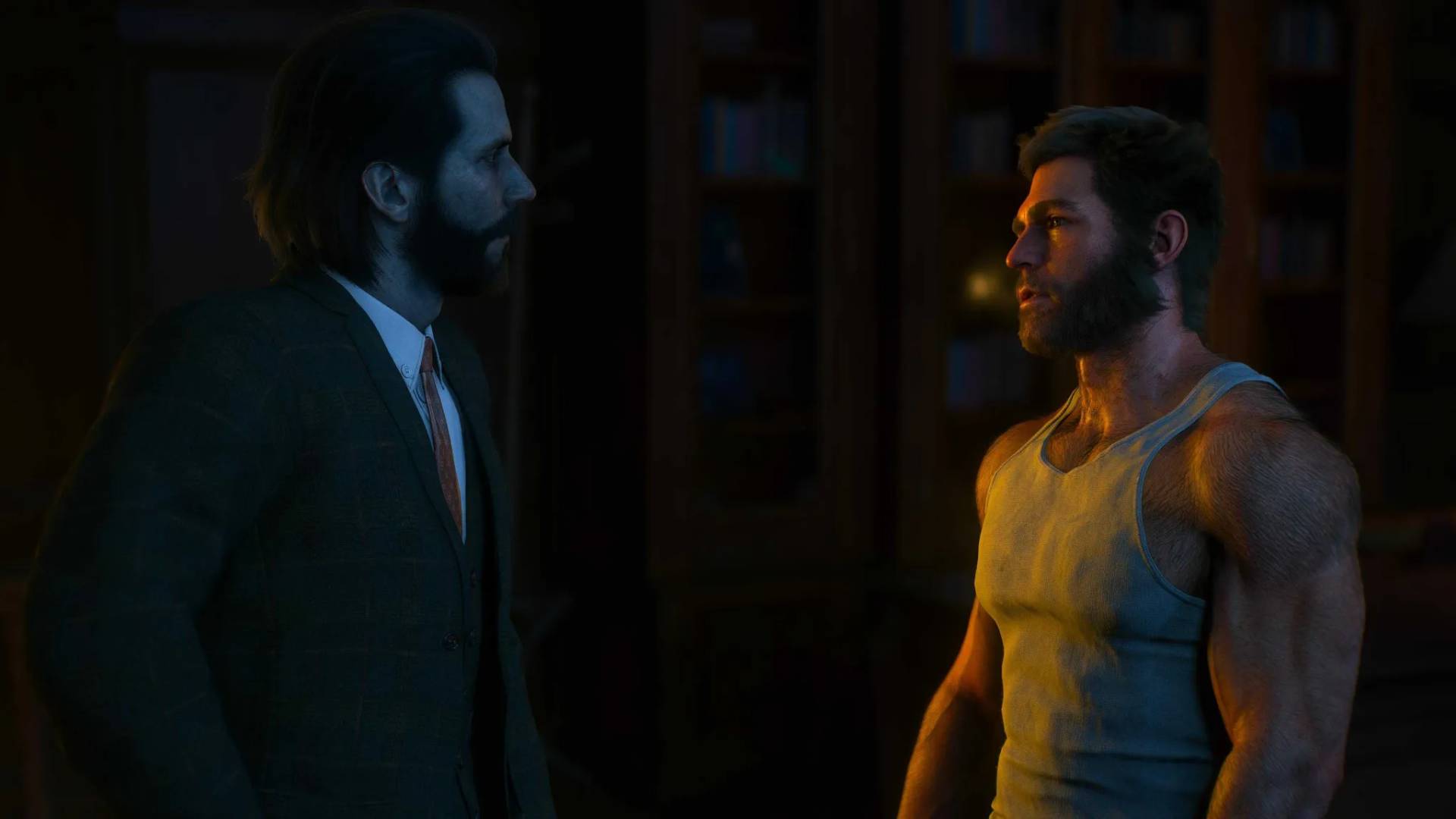
The point is, while we get a brief background moment, the brunt of the game starts with an assault on a Trask facility to save Essex. There is an annoying reason for these massive chunks in the narrative carved out to put you right into the mess, all tying into a late-game twist that genuinely didn’t sell me on itself. Especially since it came around the 10-hour mark and didn’t feel worth the payoff, which is a shame because beyond that I did engage with the narrative.
Wolverine is a more broken character than in most iterations; I think that’s the right word, and it is established organically in the narrative why he is that person. It’s not like this is the first iteration of Wolverine that gets to evoke emotion either. The film version died on his back, holding his own heart in his hands (this is the one reference I can make). He remains a man who solves every problem with a hammer, though for me this was the first time I ever saw him almost dissatisfied with that, which was more interesting than anything else, but I felt effective. Liam McIntyre brought an enjoyable amount of depth to the character.
Where I wasn’t on board was Facial Scanned Troy Baker as Nathaniel Essex, because that did nothing for me. Obviously, if you are familiar with the comics, you should recognize this character and know what’s coming, but they play him off poorly. Moreover, Insomniac did the rug pull much better with Doctor Octopus in the Spider-Man games, as we get to witness the character slowly being pushed to where it is going. Here, though, we only get a rug pull that was painfully predictable given how brilliantly the same studio subverted expectations in Spider-Man 2.
My biggest issue with the narrative in general is just how slow it is. This is a fairly linear action game, but it will throw combat at you fairly often. In between these, though, are long-winded dialogue scenes, some of which are complete with characters staring off, puffing their cheeks, thinking for a long time, then giving a one-word response before going quiet again. It hurts even more because Wolverine can also throw a great action sequence at you from time to time that gets you nice and hyped.
In the quieter moments, there are some bright spots. I actually really like Mystique’s arc because it kept me guessing and felt arguably the most unique. Wolverine’s relationship with a young mutant named Leech was also something that resonated with me. The entire run was uneven, with pacing a serious issue, especially once you hit Japan, but it’s not all bad. The love story between Jean Grey and Logan forms a major plot point, and that can be the sloppiest of the narrative points, definitely the least motivating.
Mixed in with all of these are QTEs, which feel weird. There were multiple moments that Wolverine invoked the best of a PlayStation 3-era first-party game, and I do feel the QTE moments helped evoke that connection. They just weren’t a good part of the comparison. The thing is, yes, some don’t require you to hit them, and yes, some do; that’s not really my issue. My issue is that they are absolutely pointless. I get the sense from the fact that some don’t do anything that the developers figured that out, too.
There are literal points in the game where you do an action, get a scene of Wolverine slashing up something, and then you return to play. Then two minutes later you have to smash up a panel, and it requires an L2 and an R2, over and over, to smash it up. Why? What is the point? Did Wolverine forget how to furiously slash an inanimate object until it explodes? There was never a point where I went, “Yes, this makes this cutscene awesome!” Resident Evil 4 was famously packed with QTEs when it was released; that was how games were at the time, but it still ditched every one for the remake. They should have taken that lesson.
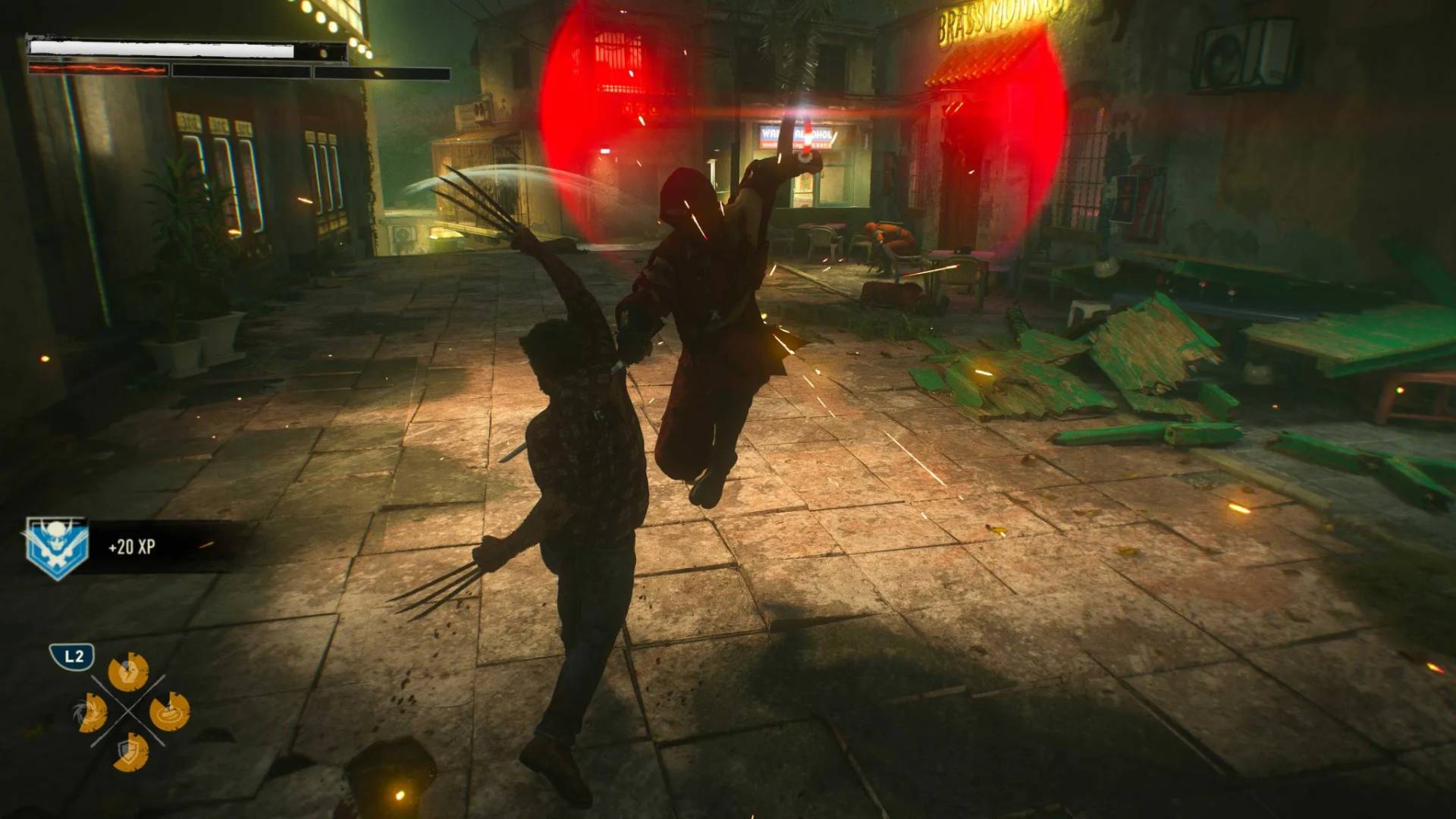
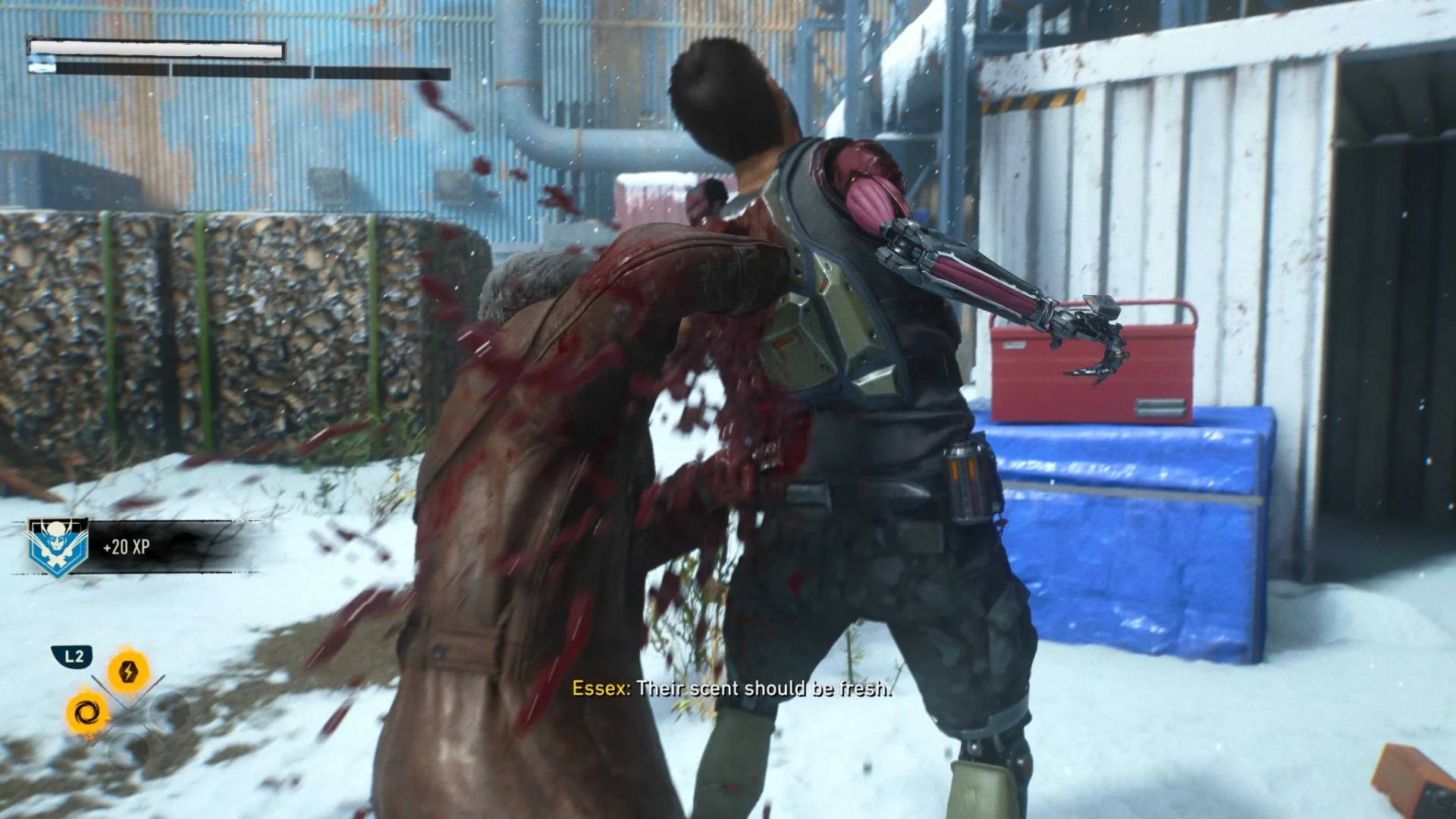
But this brings us to the combat, which helps to salvage a lot of this. Wolverine has claws, so he slashes things with his claws. It is a pretty simple premise, but there is some depth to it if you are willing to go along with the progression on offer. I don’t really like the Batman Arkham comparison, but it does feel like a natural progression. It is a faster version of attacking, with the key transition typically being blocking enemy attacks as they come at you from all sides. That’s at least the basics you are given from the start, though it does evolve. The bigger difference is that countering attacks is grounded in a parry system that either knocks enemies back or completely opens them up.
At the tail end of this are brutal finishers that tear people’s arms off or just full-on decapitate them. This didn’t move the needle for me, but in any given fight, a lot of people jump you, so fights can play out with some dynamics. You get fairly solid reactions to the environment as well, so slashing an enemy into a wall, blocking an attack from behind, and going back for the kill all feel engaging. This said, some enemies withstand A LOT of claw striking. Clothing dynamically rips apart, causing a great effect, even on Logan, until you have torn up a generic soldier and he keeps getting up. How does he keep getting up!?
The leveling system, while inevitably sluggish by the later hours of the game, also leads to a fairly good skill system. It feels like a Capcom leveling system, in particular that of Devil May Cry. While there are a few passive skills that you can unlock, most are additional abilities that expand the combat and make for fairly complex combos if you take the time to learn these moves and factor them into your onslaught. Not only is Wolverine fast in how he fights, but he is also able to react quickly, with slashing, to stun throw, to jump slash, able to play out in rapid succession. Blocking and parrying can also be pulled out mid-attack, which creates a very fun flow state.
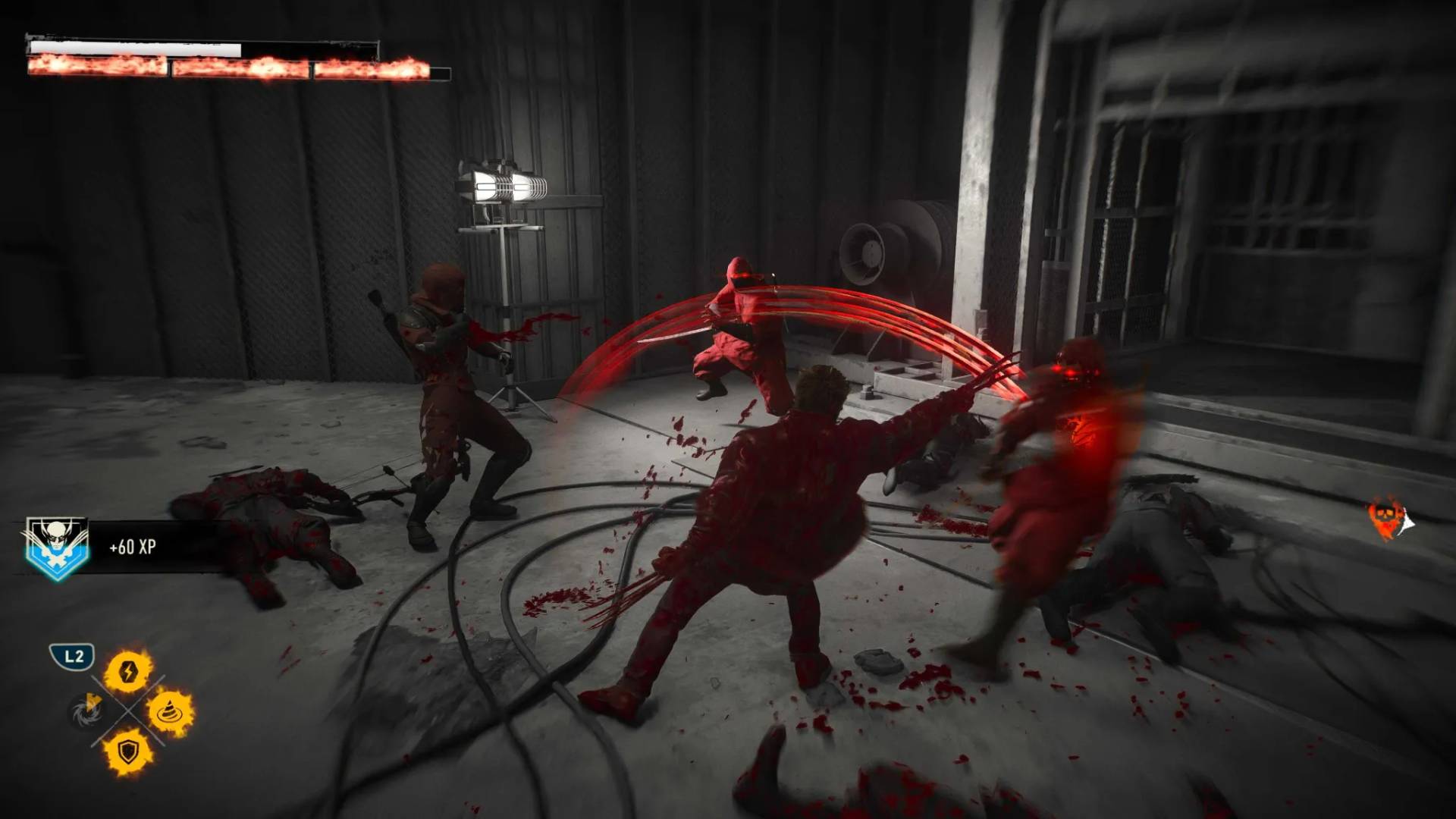
Enemy types aren’t crazy robust, but the game has a few different kinds that you will fight as you progress. If anything, this is an arena slasher with a mix of heavy and light enemies that feels on par with a lot of games, but again evokes that classic gaming experience, and this time in a good way. Around the halfway point, there is a complete switch to the characters you face, and this new type does require a change in strategy. Frustratingly enough, some enemies are not hard to kill, but they jump between trees or go invisible. These serve more to annoy than delight, and a few times I found myself burning an additional few minutes just trying to track and kill one or two stragglers.
The stage design, at least for the most part, is very high quality, and since Wolverine is doing some globe-hopping, I was happy to see a nice variety of areas. I was expecting the game to be completely linear from what I had heard, but I was actually happy to see it is not, or at least not entirely. There is a blend of straightforward slashing levels versus ones where you can actually move slightly off the beaten path. There are at least two areas near the second half of the game where you actually have exploration both in the world, as well as vertically to the rooftops.
What I found strange, though, is the pseudo-traversal, in particular the climbing. Wolverine can grab handholds to hop up walls, but like, why? In a few areas, you have enough wall to climb up manually, but what the game does is give you like two stabs before you slide down. I just don’t see the point of that in almost every instance that they offer that to you. There are other, more practical traversal skills that work better, and I didn’t hate the chase sequences where these get an actual chance to shine. Outside of the fact that if you bump into a wall, you basically fail the chase and need to restart.
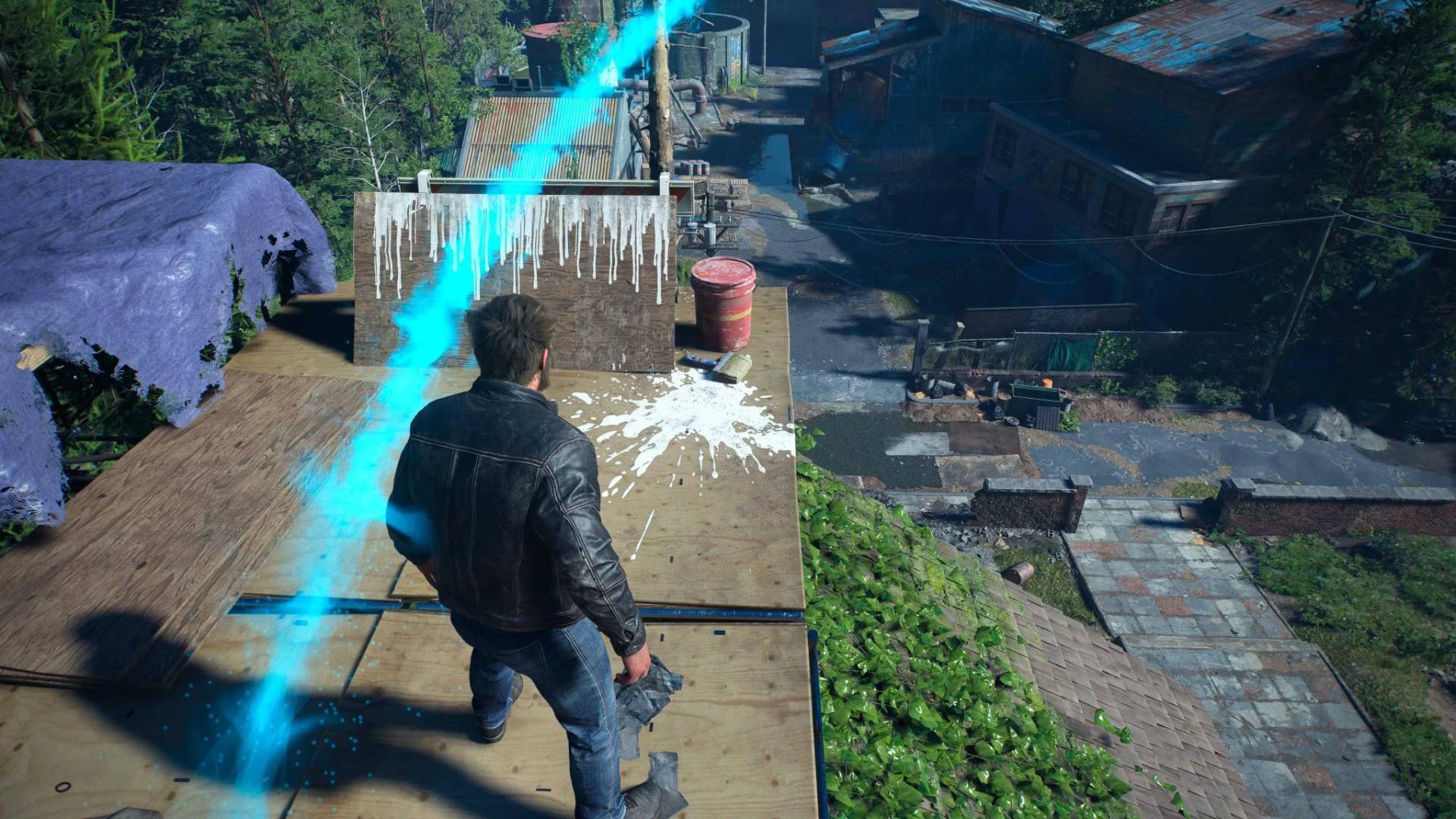
There is handholding, I know—the crime. But more often than not, I didn’t care. The scent trail could have used a button trigger rather than just being on screen all the time. That said, my bigger issue is that the trail is gigantic, and it could have been way smaller. There are points when it pops up; it is actually hard to really see past. It really isn’t there that often, which is actually what highlights the stupidest part about this. There is a button ping for a waypoint, so why are we doubling up on this? It’s weird choices like that where it becomes hard to defend.
Nightmare doors also have clear waypoints leading to them, and honestly, they are frustratingly the only way to break up the nature of the main story. These are little challenges to complete, and on the one hand, the arena fights found here can be insanely fun and the most challenging tasks in the whole game. There are specific upgrades found in here that can be unbalanced, though, like a buff that causes a successful parry to insta-kill your enemy. Get that, and you can almost guarantee victory.
On the other end are traversal challenges which, if they took me two tries, I knew the exact platforming moment I screwed myself and was able to fix it. They are easy, which makes them hard to replay, whereas the arenas are the only thing I could make a case for replayability. The traversal stages also can come across as hand-holdy with big flashing lights pointing the way, but I disagree that they are. I found that more playful than anything else, but when compounded, I can see how it looks.
Verdict
Marvel’s Wolverine had these moments that I absolutely loved, and these others that frustrated the hell out of me. There are design choices in here; I would point straight at the QTEs when saying this, which felt pointless. The game evokes a period in gaming that I at least fondly remember, but for a modern game, it just doesn’t completely work. Throughout my entire playthrough, I kept thinking of another Insomniac game, Sunset Overdrive. I love that game. Is it perfect? No. Is it even them at their best? No? What it is, though, is Insomniac’s unique brand of crazy. There is nothing genuinely special or memorable here. There are moments where the game justifies itself, but even then, it lacks that spark you expect, and it’s a shame.
Remember to follow us on Twitter, Facebook, and Bluesky to keep up to date on everything we have going on!
Exclusively on PlayStation 5
Developer: Insomniac Games
Publisher: Sony Interactive Entertainment
Release Date: September 15, 2026
Pros
+Beautiful World design
+A fun and fluid combat system that expands as you progress
+Some enjoyable narrative moments with good performances
Cons
-Too many things on screen at times
-QTE's Feel unneeded and pointless
-Story twist doesn't really work
-
Marvel's Wolverine
