

Cloudpunk remains one of my favorite Cyberpunk games out there. Certain other titles get all the attention, but what the team at IONLANDS really nailed was the living, breathing world of a future run on corporate greed and corruption. Never have I felt so connected to a world as I did to that of Nivalis as I drove my flying car from district to district. And the whole experience was bigger than it ever needed to be, causing me to get lost in the neon glow. Nivalis Nights feels like a pure extension of those themes, breathing more life and vibrancy into the process.
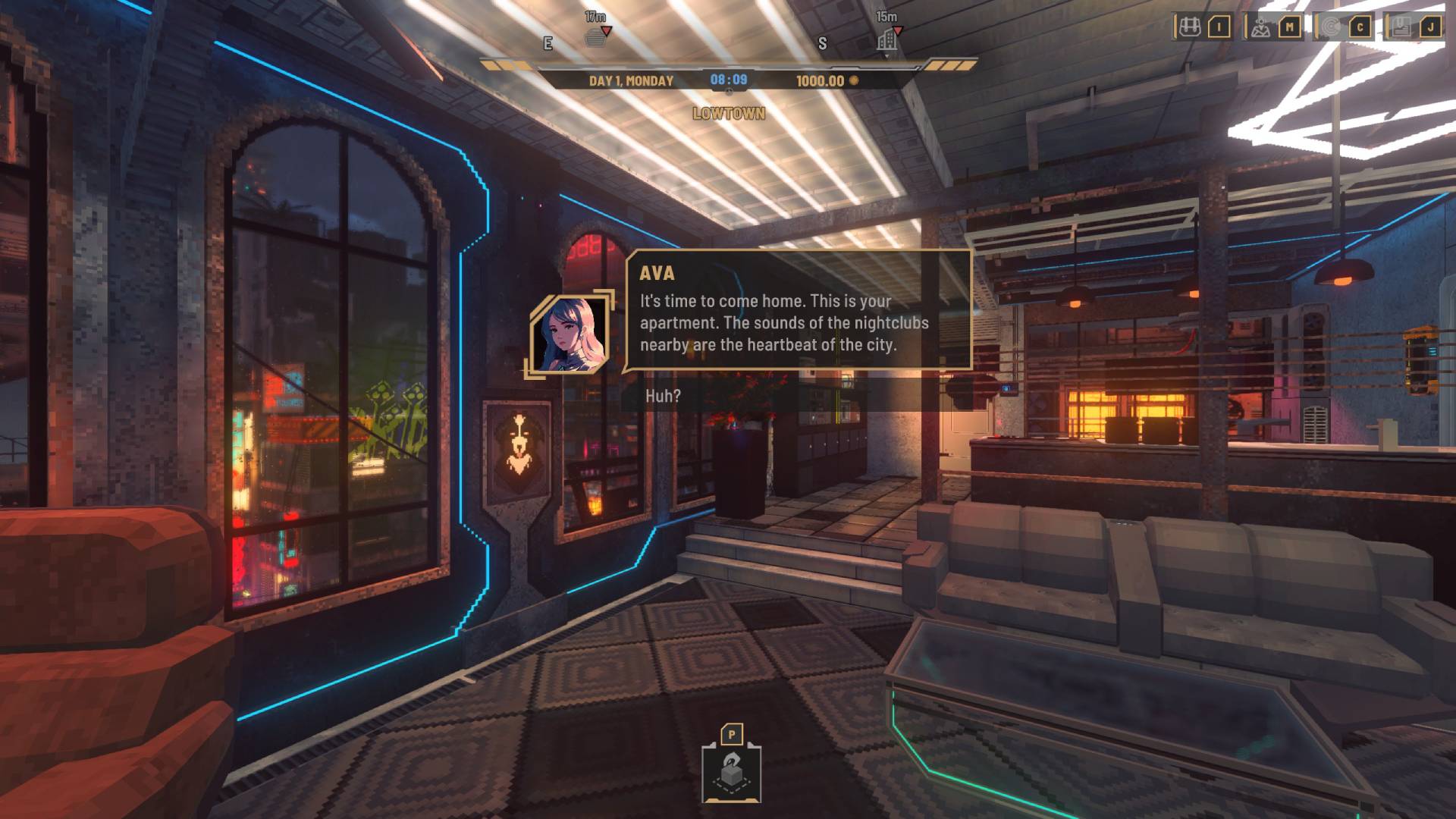
The game starts with you waking up one day and finding out you have been gifted a Ramen Bar as the owner prepares to go on a journey or flee debtors, if we are being honest. Interestingly, the game establishes that you both barely know this person, something that plays heavily into the narrative and helps set an odd tone to the world around you, though it’s not the first time strangers have offered me things; in fact, this one time an old man handed me a sword for like no reason.
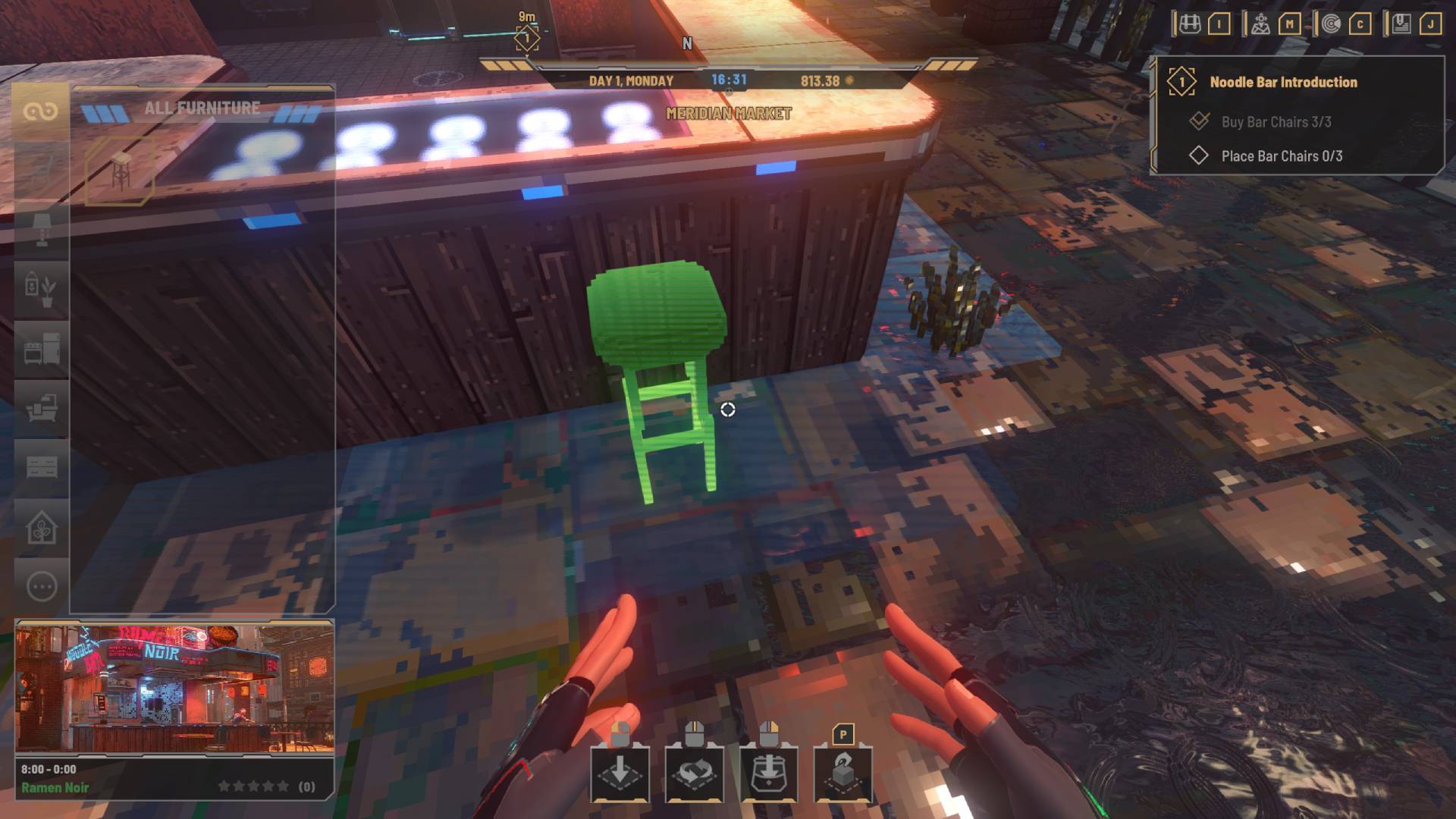
That’s the core of Nivalis Nights. You now own a ramen bar that you need to grow and build into something exceptional. The area is finite, right off the main strip in the market, but even from the get-go, you have a vast amount of freedom to customize it to your liking. You have an open area for placing chairs and tables, and that’s just the basics. You can place plants or lights, maybe even a TV, with the walls of the space being fully usable. The same goes for the counter. Within a few nights, I had the place feeling like my own.
Then you get to craft the menu completely from the many MANY recipes you will find while completing things in Nivalis, and there is a lot to do. The thing is, the game can at times feel like a shopping simulator. It is very difficult to grow when you overbuy, but the game sets the required number as the cap for what you need to buy. This effectively means that buying the right amount will return the indicator that you need ingredients after one sale. It’s a necessary feature, but it can feel tedious far too frequently.
What’s worse is that the required amount doesn’t really map to a day’s work. This means that, with the same parameters, two separate days, you might need to restock once or twice, or not at all. This becomes more noticeable as you expand your empire because there are A LOT of properties you will be able to buy, with most working identically. The best part of this is that you have complete creative freedom over every one of them. You also have added requirements that send you running around the city.
You do get to minimize this a tiny bit by hiring managers, but not to any degree that cuts down on the requirements. Managers can, occasionally, purchase exactly right, which is rare but achievable. This saves you the minor amount of time that is needed for that. Other times, managers might overbuy on one ingredient and ignore all the others. This can literally lead to you checking your fridge one day and learning that you have more spoiled food than you know what to do with. The inventory system in general could also use an overhaul, given that 90% of this core loop is managing inventory, and it can be hard to directly search or wade through the straight pile of items in any storage space.
This is more notable when you go shopping, which can be sensory overload. There is a separate menu for menu items you require, which is a good and direct way to handle that. Otherwise, there are numerous items that, at best, can be searched by typing because wading through will never let you find what you want. Sorting items is extremely limited, though. At one point, I was searching for a potted plant, and nobody had one. That’s fine, but I knew what I was looking for, and I knew it was classified as a decoration. I just had no idea where to buy those. You can’t sort by category, which makes doing tasks like that even harder (that was already an annoying quest).
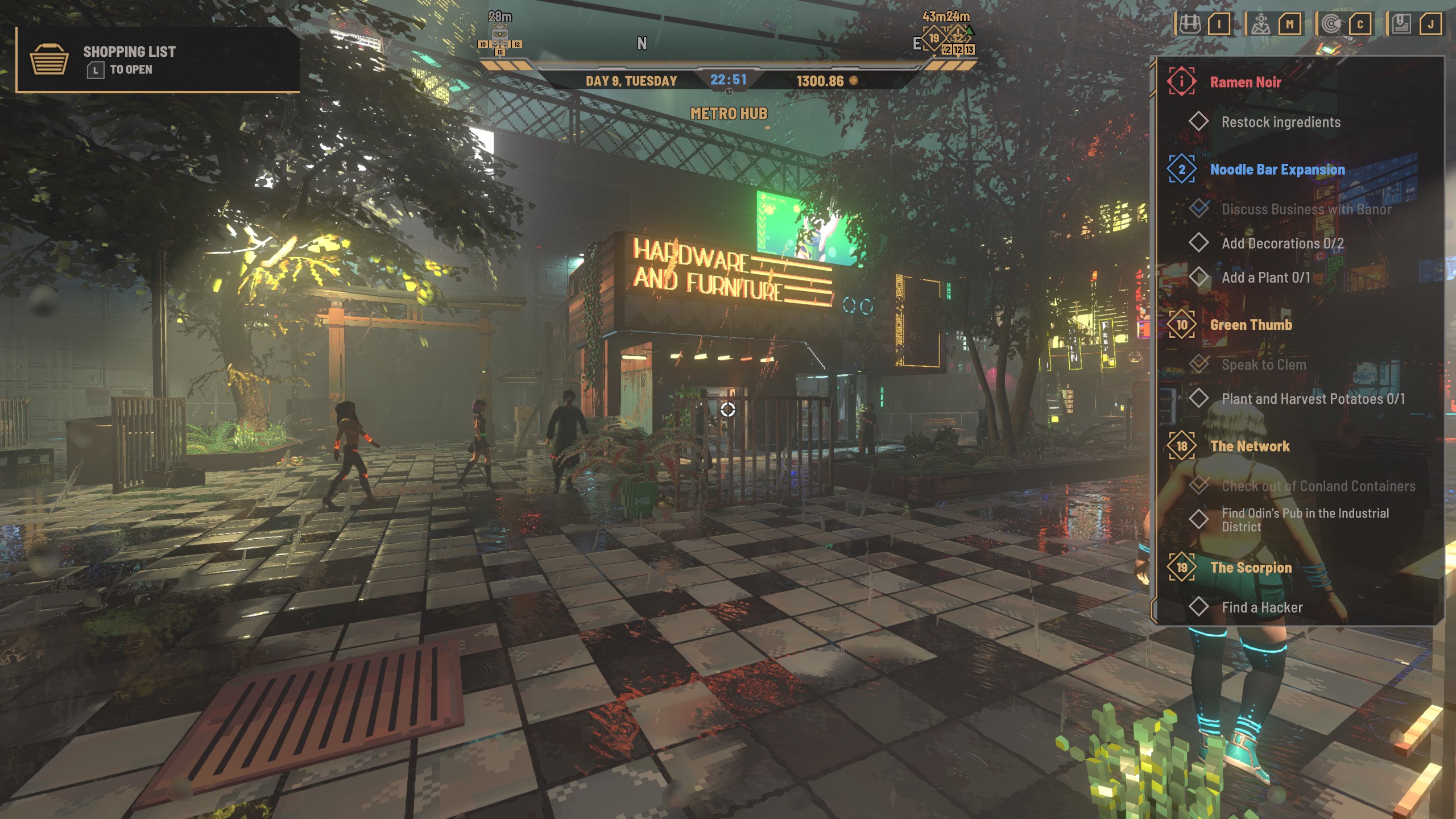
The reason you want to cut down on the management sim part is that the city is massive, with so much to get lost in. There is this secondary requirement you are constantly completing to unlock new areas, and you think, given the scope of a management sim aspect, there can’t be that many, right? Then you remember that Cloudpunk, a driving game, had a massive amount of areas you could park at and wander around. This is a team that goes completely overboard in some of the best possible ways, and this is no exception.
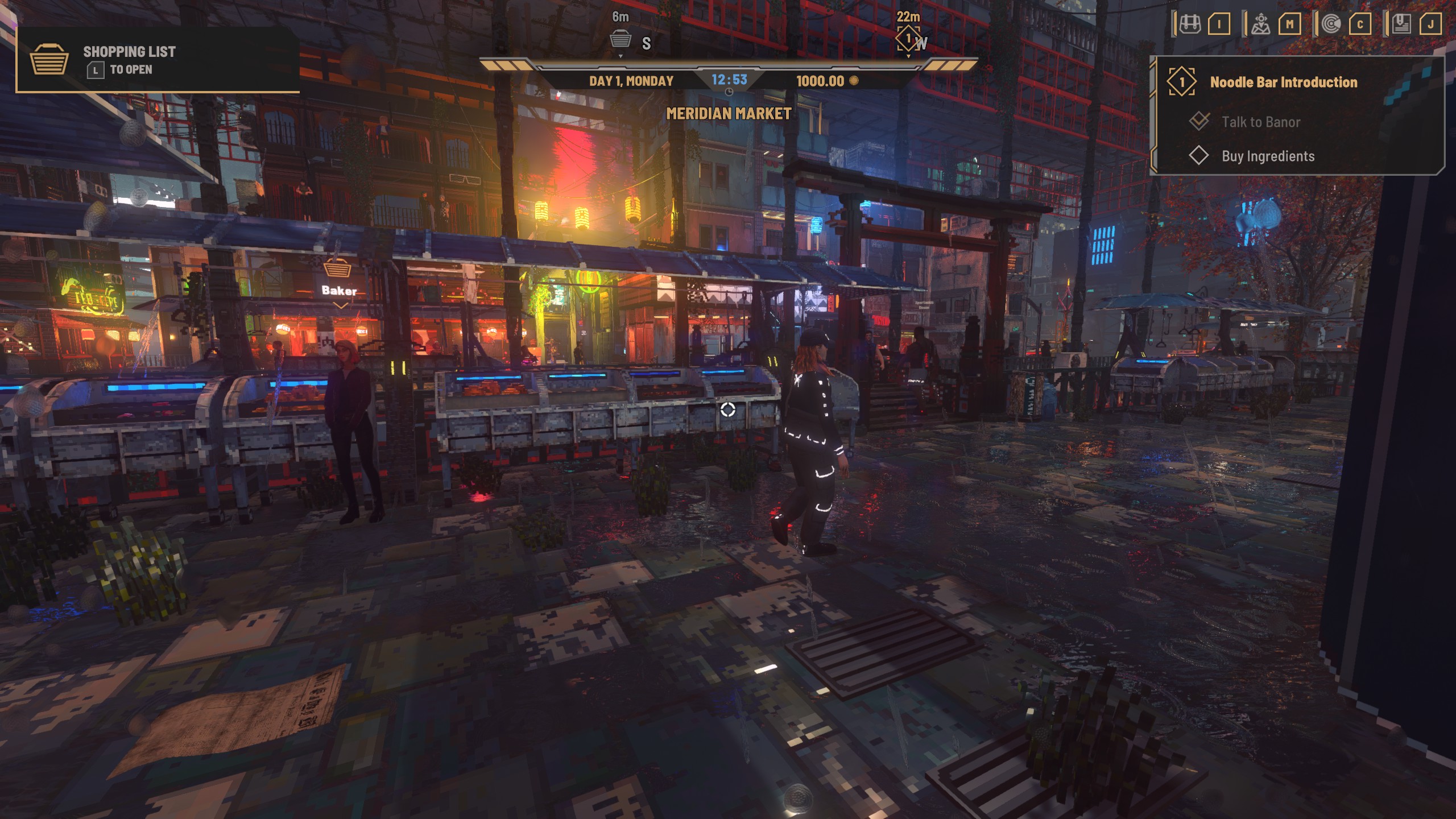
They removed driving from the game completely, which is ok given they already have a game where you drive the city, but you do get a boat with a vast waterway to explore. Then, by taxi and metro, you slowly unlock new areas, all beautifully rendered with their voxel pixel art texturing. Sadly, the citizens received a bit of an upgrade from their voxel sprites of the previous game, now looking more bland as 3D sprites. The design of each area, though, is almost immaculate in its design. This being that they feel congested and yet are brimming with people trying to make it work.
I say almost because they can be complex to explore and feature nothing in the way of a map to help. Central Canyon, for instance, has a metro station on a lower floor. The only walkway to reach it is buried in a small alley and is effortless, so I spent way longer than I should have running around the main loop trying to find my way down. The worst part is I didn’t really have an indicator telling me what I was looking for. Making contacts around the same time, such as vendors, can be hindered by this too, with some painfully buried in the concrete maze.
When exploration is at its best, though, presumably after you have learned the layout of certain areas, there is sadly a lack of ways to interact with the full scope of everything. The biggest thing is that you are constantly buying businesses, so imagine those running around, tasks constantly adding up. Outside of that, the biggest thing you constantly find yourself doing is talking to sellers, which is a part of that. It can tie into the shortage mechanic, which sees the city find itself low on one item but up on another. This keeps the management portion from being wholly passive, as, at at least one point, the city had no bread anywhere, and half my menu had to be switched out.
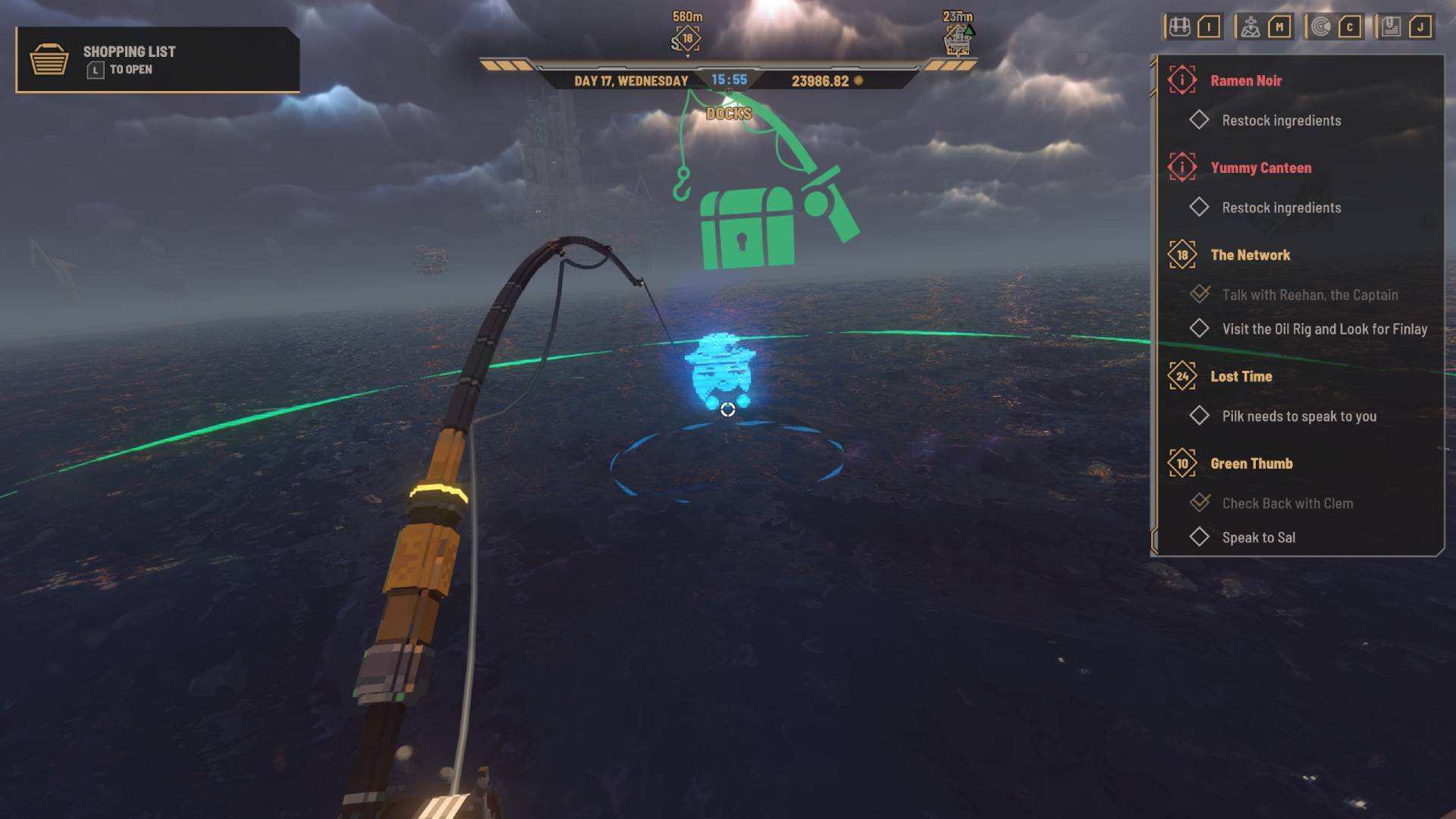
This isn’t to say there is NOTHING to do, just that running around for the bare minimum can be a major part of the whole package. Once you unlock the boat you can fish, which can eat into downtime. The minigame for it isn’t one of the strongest I have played. A few of the boat mechanics are weird, like having to look at the engine off to turn it off, rather than a one-button driving/not driving feature. That said, you would be surprised by just how much reach the boat actually has. Being able to travel to all the lower districts along a functioning waterway, again contributing to just how thoughout out and fully realized the city of Nivalis is. The need to manage restaurants can often get in the way of this relaxing experience.
Another thing you can do is also build a greenhouse to kill your dependence on growers, though the process of this becoming really useful is very lengthy. You start with one and one growing stand, and you need to buy more to make it function. You don’t really get one day’s worth of anything until you sink a chunk of time into it. While it can save you a lot of money, it’s not worth the effort until you are set up and can grow a multitude at a time.
Steam Deck:
I have heard on many PCs that Nivalis Nights has performance issues. I did see some minor stuttering, but for me personally there was not that much, hence me not harping on it in my review. On the Steam Deck, though, there is A LOT. There are moments of superb performance, while others can feel directly like watching a stop-motion animation film. Text and interactables can also be quite tiny, which is most annoying—trying to read the button prompts next to which action they do on the base menus.
Outside of management, you will spend most of your time getting involved in other people’s problems as the game has a huge amount of side quests to complete. These are wonderful glimpses into the lives of the futuristic city of Nivalis. These quests are also deep, some running multiple different tasks and steps with an ever-evolving story. They also require running across the entire city, even requiring you to progress further to complete them. It is frustrating as you often get barrier checked, with a few really not using the new setting you had to earn apart from the character just ‘being there.’
The thing about these tasks in Nivalis Nights, though, is that… There is an insane amount of them. That sounds like a good thing. When doing that, it is a good thing. In practice, though, it can be painful. This is to the point that before day five I had about 20 quests to complete, with only around 2 being main tasks. Half were locked behind progress as stated, and the other I was trying my best to work through. One way you get quests is the character AVA, an AI that helps, announces somebody is looking for you. They then wait by your ramen bar. I had about 6 people hanging out there at one point. Once I completed a person’s task, almost right after he showed up again with a new one.
Through these, though, you do get a taste for the voice acting in the game, which is good compared to both their previous game and what I was expecting. It verges into indie; it’s not perfect, but part of completing these tasks is dialogue trees with supporting characters, and they make you care about them. Eventually you even get to romance some of them, so the fact you are enjoying the engagement with them really matters, and I never had a moment I didn’t enjoy.
Verdict
With Cloudpunk, IONLANDS introduced us to a cyberpunk city just trying to get by. Unlike other cyberpunk titles, the emphasis was on the people stuck in this reality just trying to get by and build a better, brighter future. Nivalis Nights expands on that concept in some of the best ways. By shifting the focus to a business owner, you get to be part of the street-level economy in ways you don’t often get to participate. Building your own engaging and rewarding experience, though sometimes too engaging. The city is a character in its own right, bigger than you expect and with more life than you needed it to have. As a player, Nivalis can frequently have the issue of you getting lost in it; as a game, you probably don’t even care.
Remember to follow us on Twitter, Facebook, and Bluesky to keep up to date on everything we have going on!
Reviewed on PC
Developer: IONLANDS
Publisher: 505 Games
Release Date: September 29, 2026
Pros
+Nivalis remains a beautiful pixel 3d city that is massive and fun to explore
+Building Your Night Empire is enjoyable and well designed for the most part.
+Features like fishing help diversify the experience.
+Plenty of recipes to collect.
+Love that Lo-fi soundtrack
Cons
-The Management Sim portion is extremely needy, and there are some many things that need doing.
-City could use some more businesses and interactable rather than mostly ingredient sellers. It is also weirdly easy to get lost in.
-The experience over loads you with quests and, see first point, then makes it hard to focus them.
-The character models can look a little weird.
-
Nivalis Nights
