

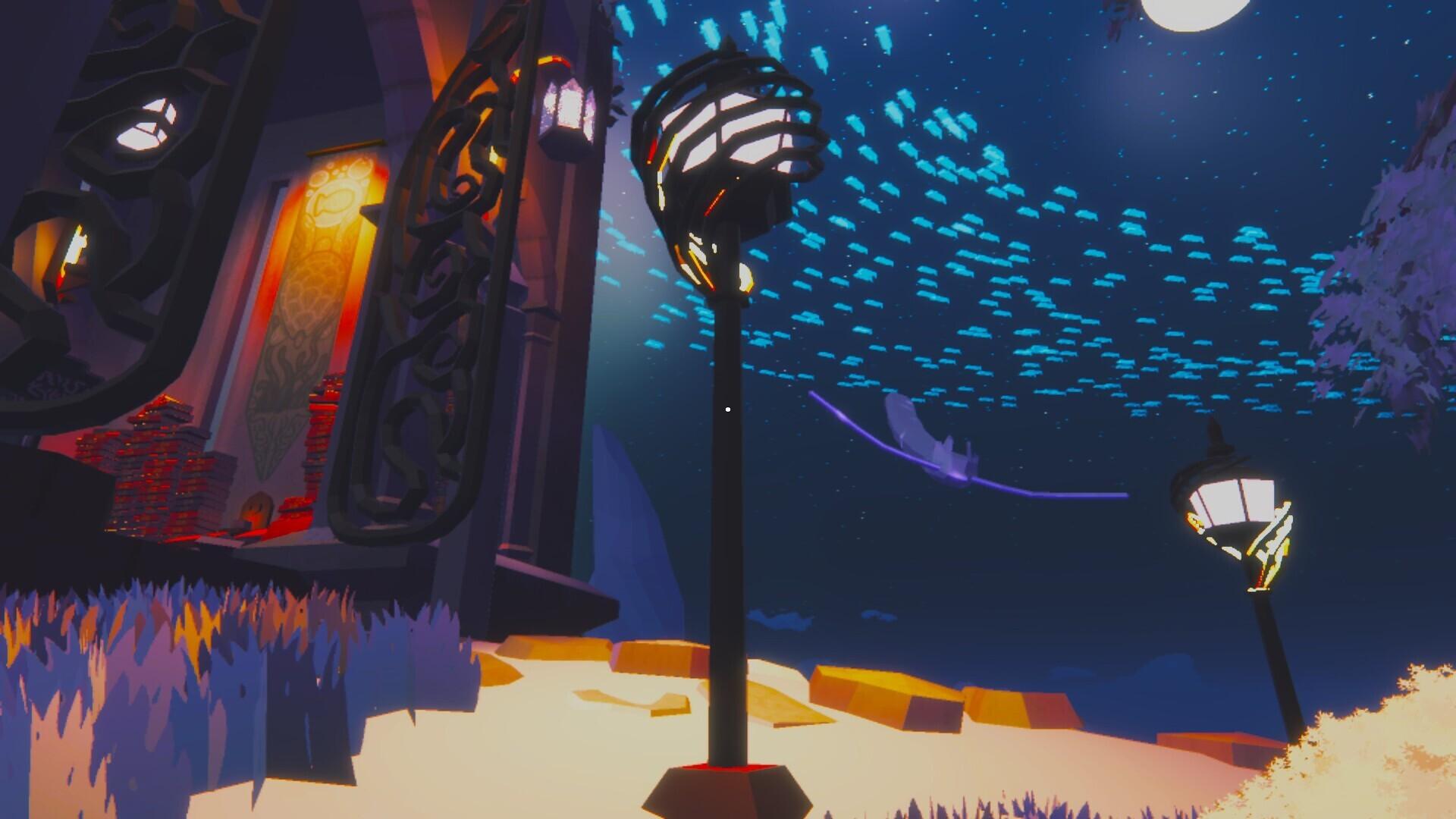
The Wide Open Sky is Running out of Catfish explores heavy themes that are handled well thanks to its surrealism.
Surrealism and video games practically go hand in hand. Before technology allowed us to chase the endless trend of increasingly photorealistic imagery, we used to let our creativity run wild. Among the most famous examples, Shigeru Miyamoto confirmed Super Mario Bros. 2 was all a dream in the plumber’s mind. More modern surreal video game portrayals include What Remains of Edith Finch, a narrative that goes through the unfortunate family tree of the Finches. Placing you in a first-person perspective, each member sees the world in their own skewed way. Effectively using this method to show harrowing tales of their demise, it is a gentle approach to touch heavy subjects.
Originated in the early 20th century by Andre Breton, surrealism was a direct response to the nonsensical, devastating direction the world was going. Emerged from the even more absurd Dadaism, these movements were created after witnessing the tragic loss of life from the Great World War. It is only natural, then, that painters, sculptors, and filmmakers like Leonora Carrington, Salvador Dalí, and Frida Kahlo gained prominence in the 50s after WWII.
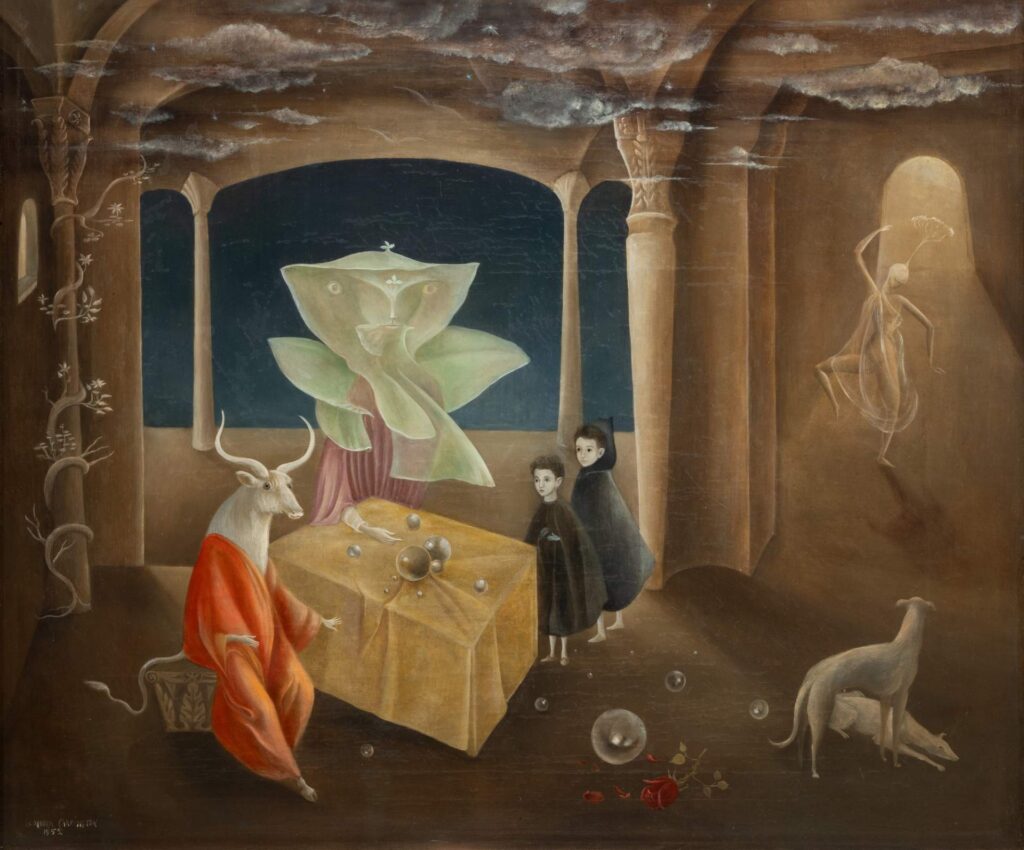
What these now revered luminaries showed was the realm of the subconscious. Strange depictions of melting clocks, creatures with human faces, or haunting recreations of high society are but a few examples. Mocking what is real and tangible, these artists opted to lose themselves in an imaginary landscape. Bored, or even disgusted, with what civilization had turned into, they turned to the world of dreams.
But what is, specifically, to enter the realm of the surreal? Does it really not make any sense from an outside perspective? Or is the author trying to tell us something in between the lines? In the case of, and please bear with me, “The Wide Open Sky is Running out of Catfish,” the answer is clear. Surrealism is used as a Trojan horse to tackle existentialist subjects that we all have to grapple with eventually.
The Wide Open Sky is Running out of Catfish is a rather difficult video game to describe. But at the same time, it isn’t. You are a young witch grappling with what to do with your life. Your mother is missing. The catfish in which you are floating and call home is dying. Talking about gameplay elements, it progresses in a straightforward manner. You transform into a flying axolotl yourself to collect clouds that then become aquatic creatures roaming in the sky. You take pictures of them. See? Easy.
What struck me as surreal, in the beginning, was its ethereal landscapes. Waking up in a small room to find post-it notes about your mom not wanting to wake you up is mostly relaxing. Going downstairs to read emails on the home computer and chat with friends in an aggressively Gen-Z vernacular is also somewhat recognizable. To find out you are floating in a mostly empty sky once you leave the house is unexpected, to say the least. Tasked with taking pictures to document every maritime life in your vicinity, the place slowly comes back to life.
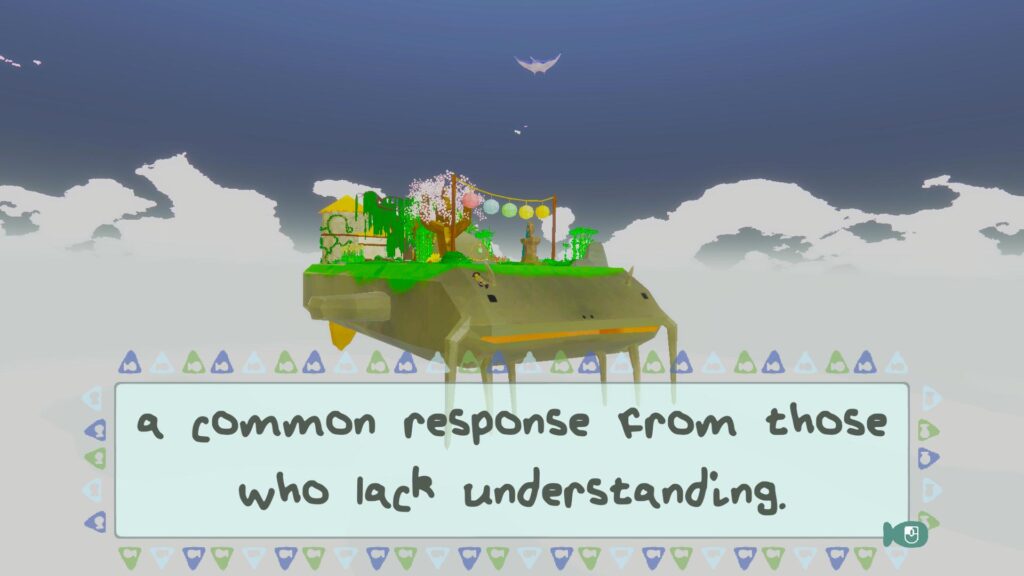
All I’ve mentioned is relative to what The Wide Open Sky is Running out of Catfish really is about: mortality. As I said, the catfish you inhabit is slowly dying. Most importantly, he is ready to die. He goes on to say that he lived a full life, was merry, and is ready to go to the Great Beyond. Our protagonist’s mom is trying to stop death. You can piece together where the story goes from there. What inspired me to write about this particular game is how everything works in service to this message. It discusses existentialism in such a wholesome way that if you ever feel overwhelmed, you can go fly with the fishes to unwind to the vibe of mellow tunes. And that is why we should give in to surrealism more often.
The Wide Open Sky is Running out of Catfish is out now on Steam.
