

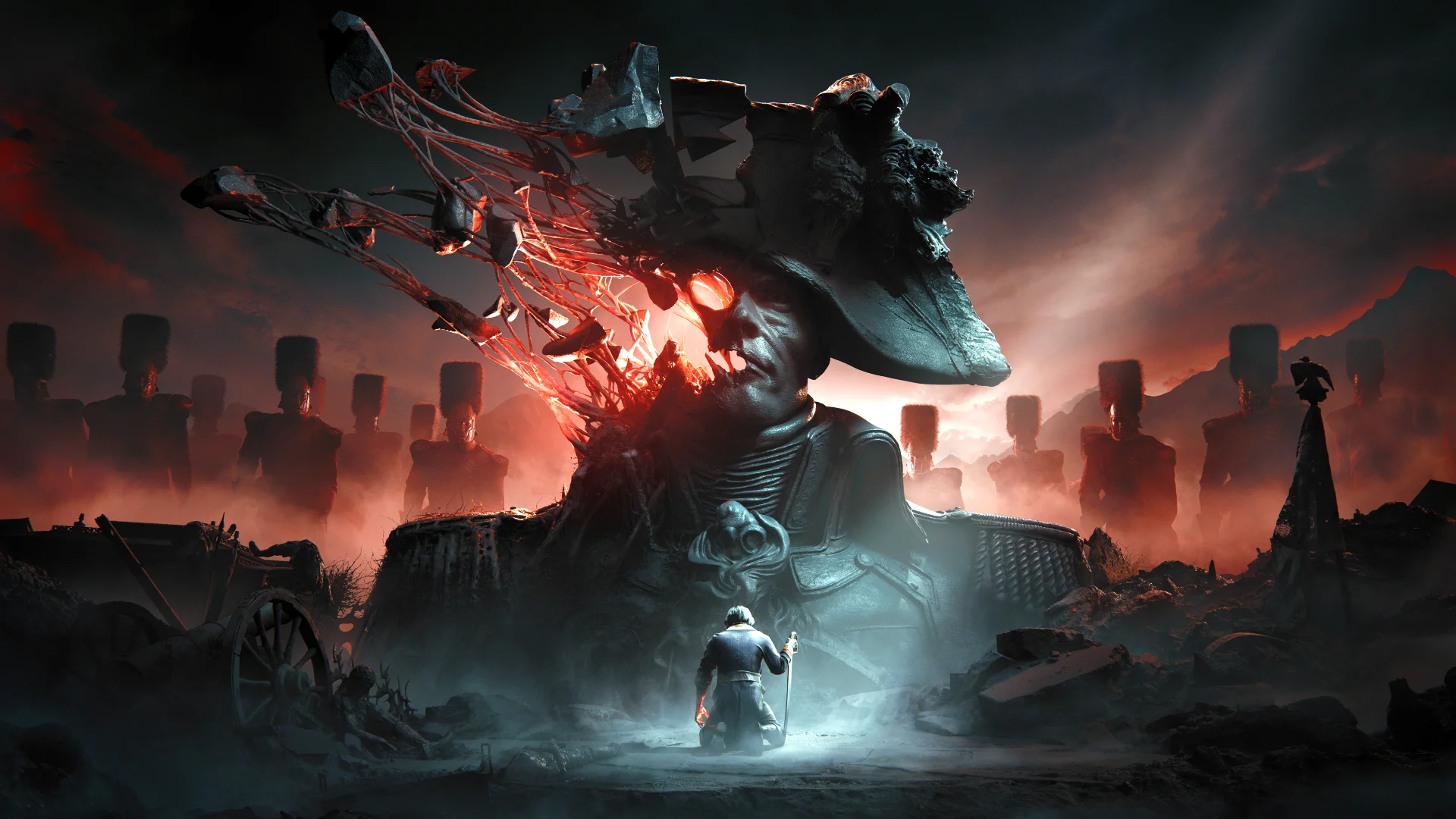
Through no fault of my part, just the ability to finally sit down with a game I have been wanting to play, my time with Valor Mortis was juxtaposed with modern unrest in the country of France. Even going on the internet, so much of this conflict is being waged in misinformation and propaganda, which feels uniquely French, given Napoleon’s height and Marie Antoinette’s famed “Let them eat cake,” which were both untruths meant to destabilize the ruling class. In many ways, Valor Mortis hits on the concept of perception and how it can be weaponized.
You play as William, a fairly generic character with a few meaningful moments of narrative, left to die on the battlefield. The game uses the concept of amnesia, though only for the character’s immediate situation, which is good because amnesia is overused. It’s more deployed to make William ask the question, “Why are there undead soldiers on my battlefield?” In plenty of ways, Valor Mortis feels most analogous to Nioh. While it uses more generic war set pieces compared to the latter’s historical battles, they both have semi-superhuman battling through a historical conflict against monsters.
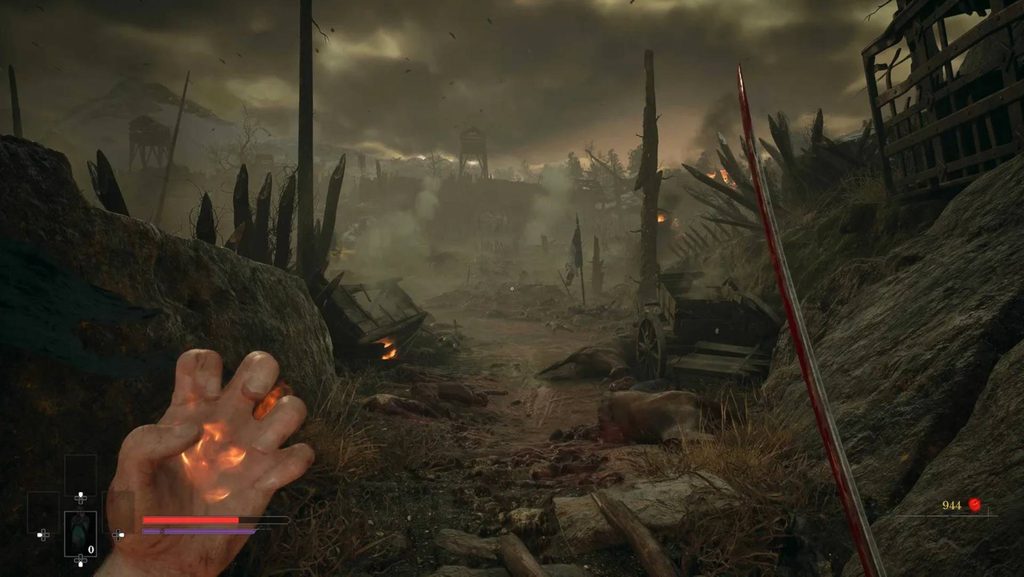
The key difference here is that the player controls William in first person, something that One More Level is familiar with given their previous Ghostrunner titles. Valor Mortis has a much slower pace than those prior games, which did feel like something the developer struggled to translate to some degree. There are many a point when everything feels like it wants you to speed up the pacing, only for Williams’ sluggish movements to get in the way. Like having two left feet.
When it comes to the actual story, though, the experience is, I would rather not say bland, but maybe uninspired. There is a forward momentum, with tasks driving you forward, but at times the motivation is severely lacking. Moreover, the connections to the Napoleonic Wars, outside the art direction, feel thin. Like you could set this during the Revolutionary War, or the Spanish War, and lose very little overall, which felt like a big miss.
Part of this is the fact that Napoleon himself plays so very little into the actual narrative. In the context of the story, and I am trying to avoid spoilers as best I can, he only appears on screen a single time. For most of Valor Mortis, he exists as the voice in Williams’ head. What he is saying, and this is not a joke, can be entirely ignored and adds very little to the game. Hell, the scene he is in, given the context of the more lackluster back half, also contributes nothing. He was the big bad in the world during these wars; he IS the evil. It is painful how little he comes into play.
The game also has this strange linearity to it as well. You can go off the main path; there are things to find and secrets to discover. There is also this illusion of depth that keeps cropping up. The main path is the main path; you can walk that in a fairly straight line and reach the next location. Even when the game sends you off an alternate path because the main road is blocked, there is the inescapable feeling of a guiding hand.
Part of this probably has to do with the traversal itself, which is a highlight of the game. Unlocking the abilities that let you grapple across gaps or run on these bizarre walls is freeing. The levels, and the game, do employ a traditional level structure, and they use these abilities a lot. There was this portion of jumping from a broken ship to another as musketeers stood at the ready across the way to blast me. If you can slow time as you aim, mid-air moments like these give you unique and creative fights that stick with you. You also get to see the scope of the set piece design and that you only ever have one place to land.
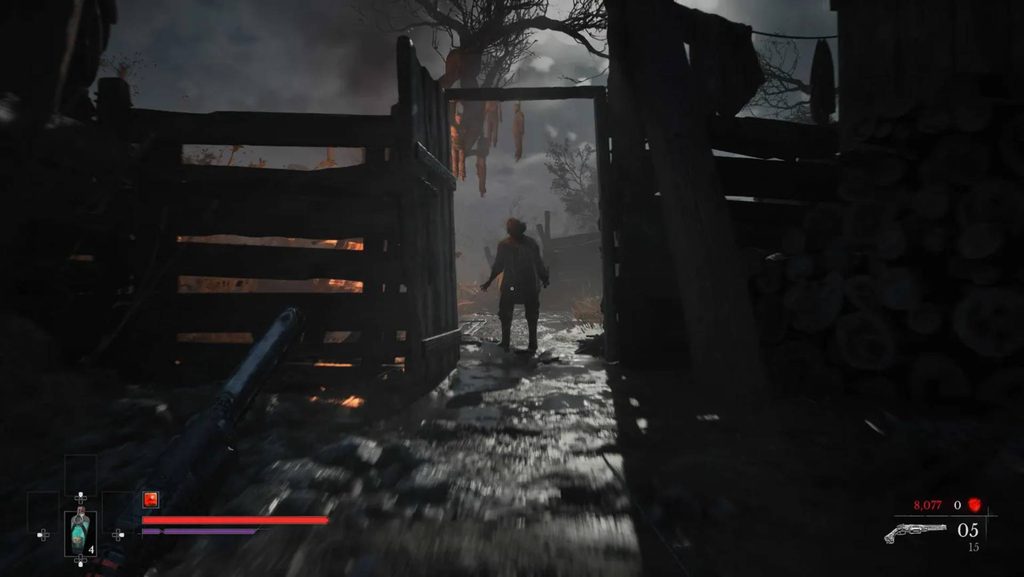
Maybe even more indicative of this is that the game gives you zero waypoints as to where to go. It is very difficult to get lost, as the game funnels you from a road into a camp, and then up a ladder and across several platforms. Again, the world design is beautiful and is part of the way they make these areas feel big; you get that scope on the mountain. It becomes lackluster when the game then amounts to the continuous brute-forcing your way through these gangly-looking Le Slendermen-type enemies.
Then you have the side quests, and Valor Mortis has more than just a few. These are the way you force yourself off the main path, and in fairness to everything I said prior, few hidden areas add to the places you find them. One of which I thought would just help me unlock the basement to this house, but instead I found a secret laboratory and passage. You get some added narrative by doing these, though at times it is more vague than anything else.
What is more annoying is that these tasks are often incredibly obtuse. You can typically start, or even complete them, close to the place you started them. The one slightly hidden off-ramp to follow them can be easy to miss at best, impossibly hard to find given the lack of any direction from others. While cleaning up these tasks later on in my play, I went back to chapter II to complete one I had started for a trophy. The task was literally to kill one enemy in a cave and return to the quest giver. The catch? The hidden cave involved taking the elevator up, then noticing it on the side of the mountain as you were riding up. The consolation is that the fight was easy when I was overpowered.
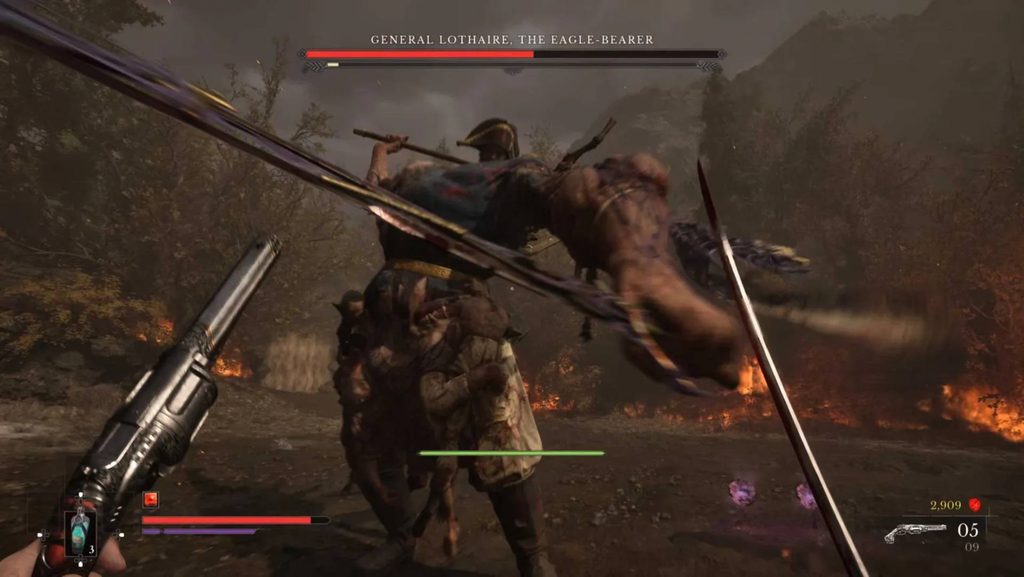
At its core, Valor Mortis has an engaging combat system. More importantly, I loved the weapons available, even though the selection was limited. Half my game was spent dual-wielding my sabre with my BioShock flamethrower hand. I could level up that weapon first, which is why I relied on that the most. When you start getting the other tools on offer, though, the combat actually opens up. The pistol is introduced to shoot weak points, which the sabre can’t, but then you get the rapier that can pinpoint these areas but has a precise attack and a more limited parry window.
The claymore changes this even further, removing your option to parry altogether and forcing the player to block and counterattack, but with stagger damage on every hit and even more than usual when they block you. Not to mention the blade’s secondary ability that became my go-to against bosses. As you switch between these weapons as you pick up the fundamentals, you will find that you react to situations differently, or switch around on the fly to better adjust to the surrounding enemies.
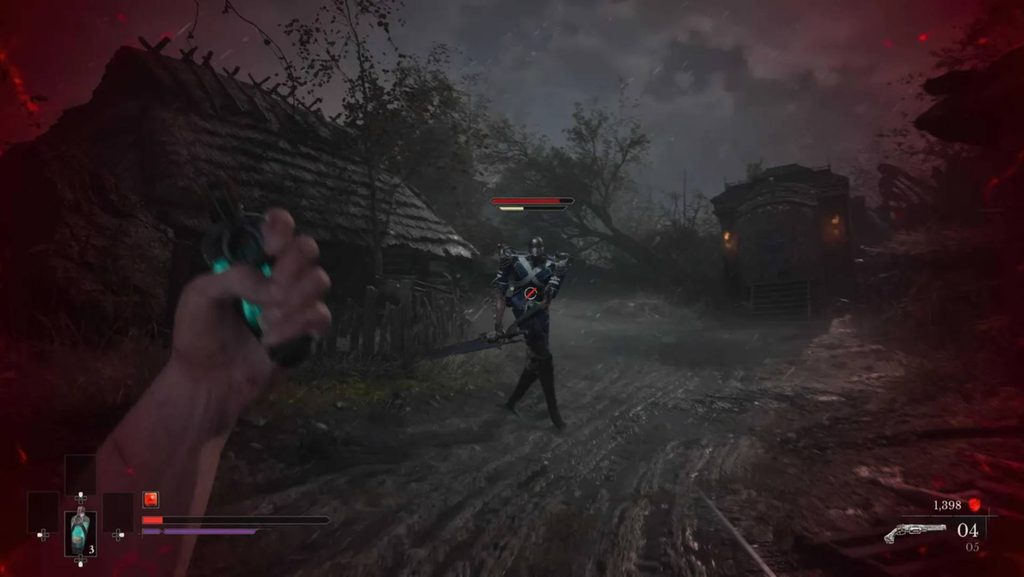
Where this hits a bit of a roadblock is just how much everything flows directly through parrying. In this way, the Valor Mortis has a lot in common with Sekiro: Shadows Die Twice. A lot of the combat has this absurd flow to trying to block attacks, making secondary attacks more challenging to follow up on, and most attacks have this strange timing for proper parrying. A few bosses, the human ones, are almost nonstop combo machines, just swinging, and swinging, and swinging. The easiest way to win is to counter all of these attacks, an annoying process on a good day.
Then, most of these enemies outrange you by a lot. Healing with your vials can take a multitude of seconds to do so… And anybody more powerful than a grunt can swing their sword and hit you from almost a mile away. Nearly every boss enemy has a pounce attack too, making healing just an easy way to die. What makes matters so much worse, at least on PlayStation 5, is that there are also performance issues. The most noticeable was that, after a while, my game would freeze for a frame. That period of dead frames would VERY OFTEN correlate with the killing blow I was delivering not registering. The game would come back to me getting batted around the ten-hit combo by some random dude with a sword.
This wasn’t the only performance problem or glitch, but most were just funny. Batting somebody around and they start spazzing out—I can live with that. A few enemies did grab me, ultimately letting go with me stuck in a wall. The technical issues are persistent, though. At times it became a wonder I even made it through the full game because one boss got so bad I couldn’t even get the timing correct, off by that damn pesky second.
I liked that the leveling system is based on abilities rather than just raw stats. I was expecting this to keep the game harder and skill-based. It did to a degree, with enemies later on hitting just as hard because the improvements come down to improving your block to penalize you less, even if you can improve your health bar or stamina as well. This said, the entire second half of the game felt straightforward.
Your abilities, even if you never figure them out in a meaningful strategic way, can get very overpowered. Save for one situation, as far as the big bads were concerned, I lost once, then won on my rematch, or never lost at all. Making forward progression never felt hindered either, with no location giving me trouble in the sense that I needed to work out how to break through.
Verdict
Going into Valor Mortis, I had already written a preview about how excited I was to play it. One More Level clearly can branch out beyond their previous games. Traveling through the stages has a certain fun to it, feeling both new and refreshingly within their wheelhouse. All of this said, there are also clearly places where the studio doesn’t get it right, and the combat, though offering strategic play, can become grating as the parry mechanic that the whole affair relies on starts to wear. I was hoping I would love Valor Mortis, but I ended up only liking it. It Happens. There is a lot to recommend here, and plenty of fun to be had, but those technical issues make it a much harder experience to recommend. For now, at least.
You can follow us on Twitter, Facebook, and Bluesky to keep up to date with all our coverage and be part of the conversation.
Reviewed for PlayStation 5, also available on Xbox Series X|S and PC
Developer: One More Level
Publisher: Lyrical Games, One More Level
Release Date: October 13, 2026
Pros:
+Limited weapon supply but they genuinely all feel unique.
+Fun parry based combat system, even if timing can get obtuse.
+Leveling system offers an interesting twist on the traditional.
+Beautiful levels, with plenty of outdoor set pieces to enjoy.
Cons:
-Lackluster story in which Napoleon barely factors into it.
-Secondary objects have vague explanations and no waypoints making them frustrating
-Massive performance issues, such as constant dead frames.
-
Valor Mortis
