

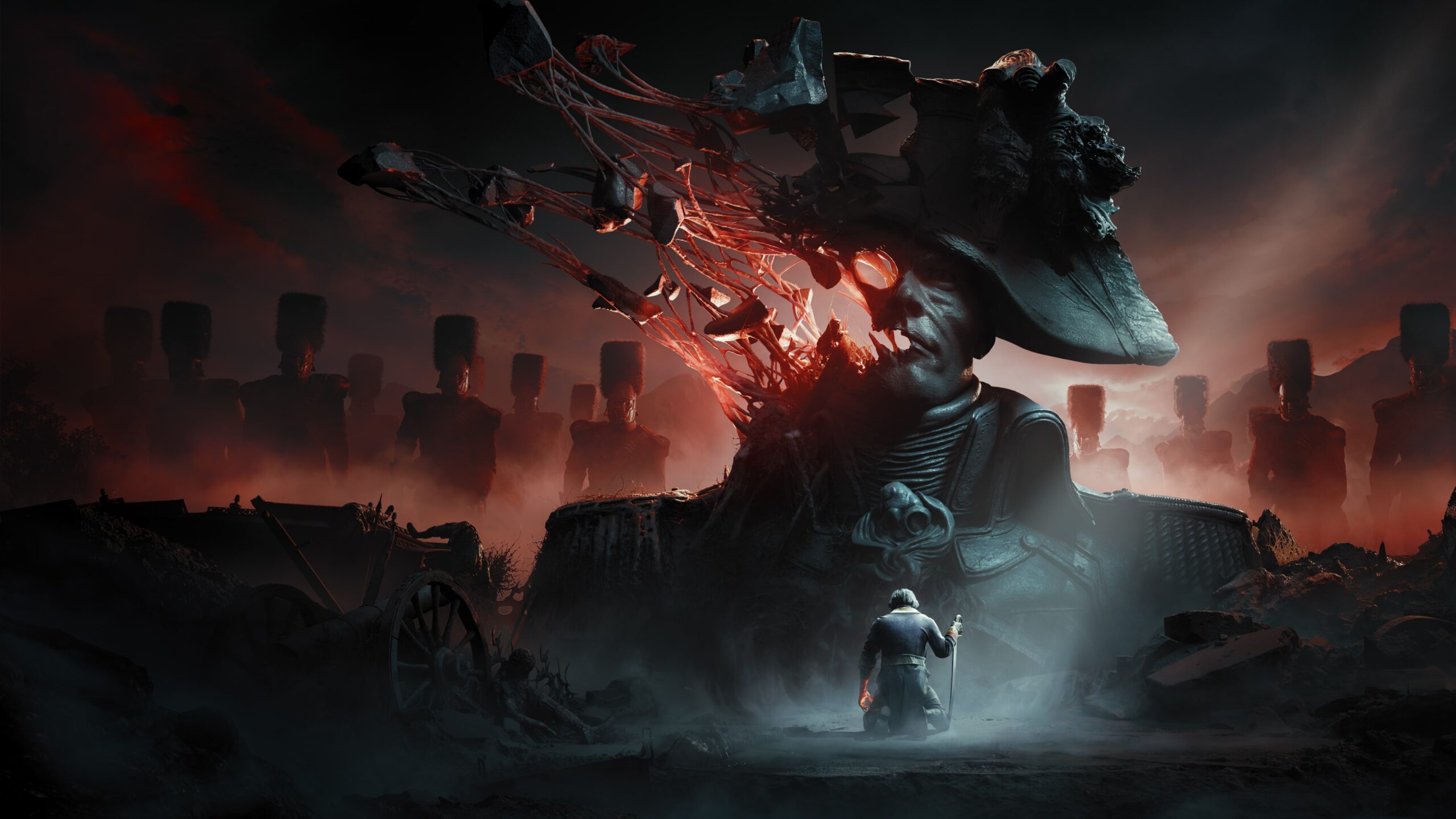
One More Level is a studio that has always interested me. I love the Ghostrunner series, which can be punishingly hard on a good day. What the series really was, though, was a counterpoint to the popularity around the soulslike genre as the industry moved towards normalizing a constant influx of hard games that honestly started to blend. Ghostrunner was blisteringly fast and punished any and every mistake. You die, you come back, but the run demanded perfection, and anything less was another time mapping out the perfect path of carnage. This is why One More Level’s veer right into soulslike territory with Valor Mortis feels… right?
The two things you should know about the studio from their previous games are, first and foremost, that they know how to make a melee-based first-person game. This has been their bread and butter for the longest time, though Valor Mortis slows down the tempo dramatically yet still manages to ratchet the tension. The second is that the studio understands tight swordplay with a little skill-based control mixed into it. No matter what differences Ghostrunner and Valor Mortis have, they share these bones and place them front and center.
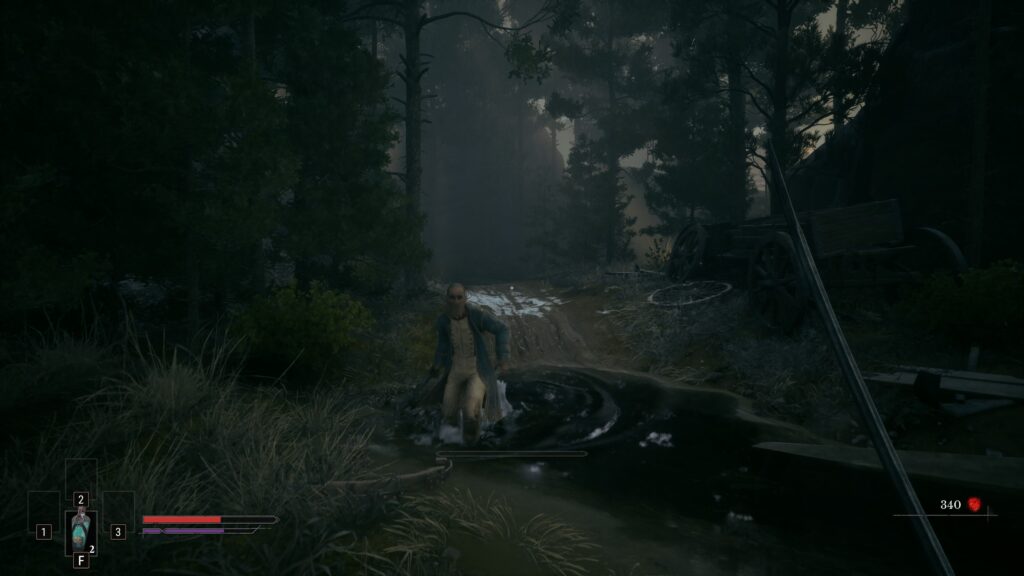
Valor Mortis brings players back to the Napoleonic Wars, placing them in the shoes of a British soldier by the name of William, who does have dialogue throughout. What’s weird and left unexplained by the game’s demo, which is available to play on Steam, is that this soldier has the voice of Napoleon himself barking out orders through the ether. The demo features two stages: Chapter I and Chapter VII, with this just sort of being a thing. There could be a prologue in the main game that offers context, and I would be interested to see it, but for the most part, you are dealing with that alongside abominations.
That’s the thing: in this alternate grimdark, cosmic horror retelling of the period, a plague has spread and is turning your soldiers and others against you. The animation work in the game is phenomenal, which makes several of these elements work even better, such as a soldier who contorts into a dog-like enemy that chases you around. Every little touch on Williams’ hands when in frame also has that tight focus that helps blend the first-person elements with the action at large.
The first-person gameplay is much slower than their previous games because this is a soulslike, though it never feels like the kind you are familiar with. Valor Mortis often feels like it is Bioshock meets Sekiro as over-the-top power clashes with precise combat. These are two games I would never put together, but it works really well, making for a satisfying feeling. Combat by blade is heavily parry-focused, and while you can get away without that, a well-placed parry staggers an enemy or builds up their gauge, allowing for a finishing move to clear them.
On the other side, William dual-wields a gun, or something akin to a flamethrower, for ranged attack. These aren’t light attacks either and really can help clear a field of enemies to make the more prevalent melee much more manageable. Several enemies can become hard to track, making parry timing harder with just swiping the blade, requiring technical aiming that can become overwhelming at first. Weapons are easily swapped between as well, so changing up the tactic on the fly is viable.
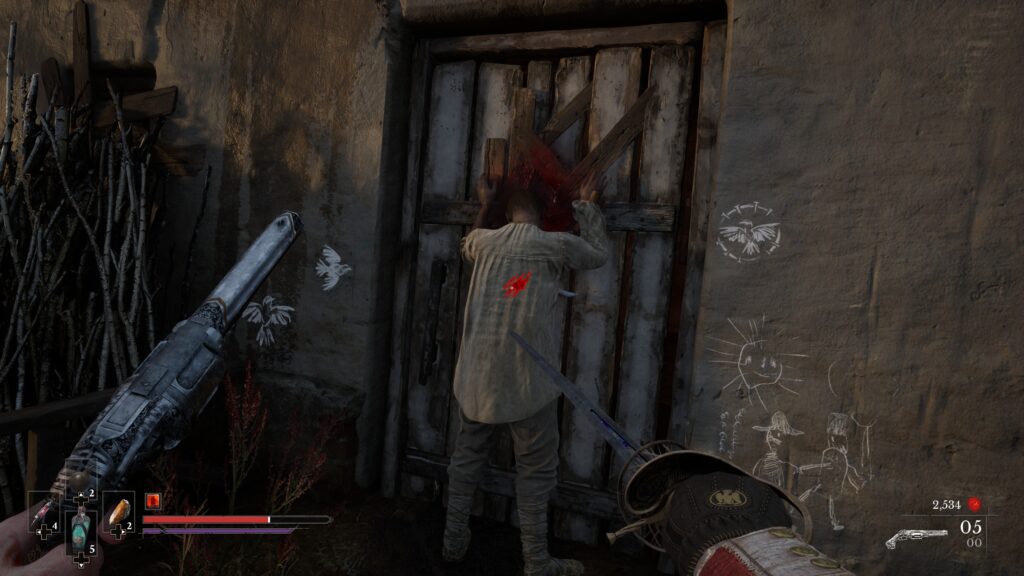
Level design similarly felt good, though with one caveat. When you die, like any game of this nature, you drop the EXP-like item you have collected with each kill where you fell. Fine enough, but the first part I had serious trouble with was a large battlefield in Chapter I. Atmospheric as hell with the smoke bellowing, and you, the player, only first seeing your enemies through that smoke as you approach. Finding your death location in this area, though, is not very fun, so an indicator would go a long way.
That first chapter offers some tight corridors, but it does open up quite a bit and often. Chapter VII, which they warn has spoilers, but genuinely, none that make any sense without context, offers a much different approach. It has plenty of tight areas, but honestly, the village later on offers some more interesting exploration off the beaten path. Not to mention it feels more traditional. Obviously, these areas are contained for the sake of the demo, but it feels like we will have an old-school level design that harkens back to classic Dark Souls. We also only traverse to one boss battle, so it is unclear if stages end on that note or keep going. In the case of Chapter VII, though, it felt that a few plot points had more to say, which I would hope implies continuation.
The more notable twist in this second stage is that it really shows off that One More Level keeps the parkour of Ghostrunner, albeit removing it as a focus. William can wall run and interact with grapple points to move. Using your gun while in the air also slows down time for precision aim. They also give you a point where, while doing that, you can aim an explosive barrel for an action moment, blowing up two enemies. William can also jump standard, with several platforming sections that lead immediately to combat in a tight space. The thing I loved most, though, was a tiny touch, as falling off the map doesn’t kill you but just hurts you. This is common in platforming games, but typically a severe punishment in a soulslike. This actually had a massive effect on my enjoyment, more so than even I was expecting.
Timing is everything and also sometimes challenging to get a grasp on. Basic enemies tend to project attacks more clearly, but this can quickly get replaced by other enemies that look standard but have much more complex timing. Then you have the bigger enemies that can’t really be stunned back, so you need to pay attention to their movement with a few attacks, actually giving very little in the way of projection and playing out fast. You can also get stuck in a combo as you get nailed in the head with an axe over and over again, which was something I let happen to me far too often. You also have a dodge that activates a bullet time counter moment, which you should use with the same timing as the parry so combat constantly opens up and shifts depending on the risk you are willing to take.
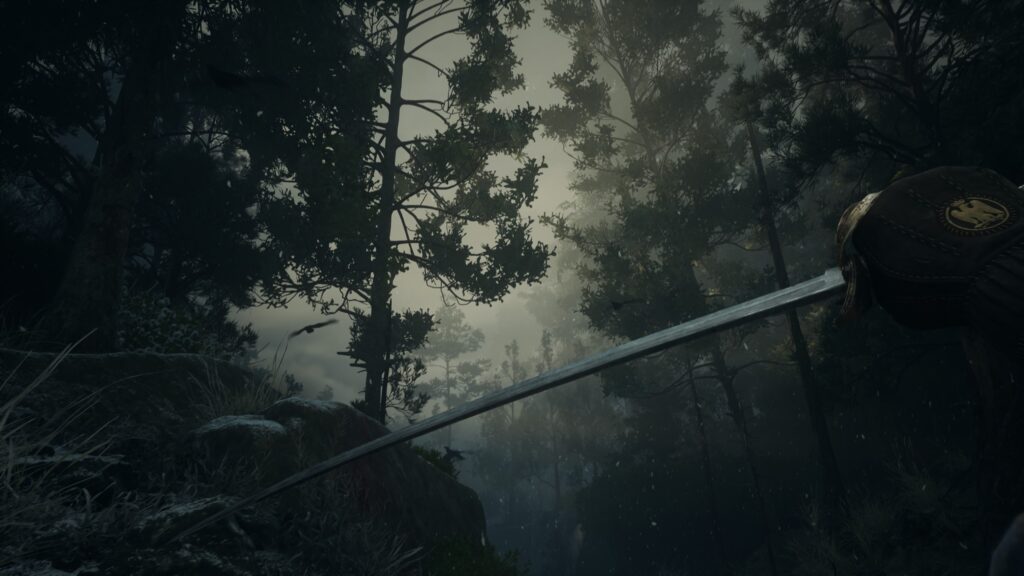
Enemy weak points shift around, though, which adds a layer to the cycle. There are points you can respawn or just rest at, which brings all standard enemies back. Par for the course. These enemies have these parasitic blobs, though, that act as a devastation point to target for additional damage. One run, though, might have these on the head, another the stomach. It’s a minor tweak, but it keeps the combat fresh in between refreshes.
In both levels of the game, you get a French saber that you swing in a short arc on screen. Because there is no reticle for where you hit, you need to make sure you line the swing up. The second stage added a rapier to the mix, which used a thrust maneuver, requiring your aim to be more on point. In terms of powers, you also have a shield ability alongside the flamethrower, both having a similar effect to Bioshock, in which Williams’ arm showcases the power, and he uses it through that.
Leveling is done through a tree that seems to only affect the base power of Williams’ attacks, with the typical options being to improve things like parry effect on enemy posture or increased health. During the first boss, I kept gaining more currency, and my death spot spawned outside the arena. I mostly leveled up my health and stamina, but it was noticeable that I dealt more damage each time.
This brings us to the bosses themselves, which, again, harkening back to Sekiro, are mostly fought by exploiting attacks. The first was a giant hulking enemy with three revolvers over his shoulder, a flag in one hand, and a sword in the other. It was difficult to get the timing, and these enemies mostly perform combos of four to five hits. Nailing a good strand as he swung that flag around put him in a down state for my finisher that dealt a large amount of damage. Dodging also opened up counter windows. Pulling your gun is effective here as well. Don’t get complacent, though; both bosses I fought have two forms, so you need to win twice.
The second boss looked like a standard soldier, but this made it harder because the timing was hard to pin down. The fight could develop fast or slow down as you size each other up. Thankfully, I had hoarded items up to this point, so I had bombs to throw at him and a whetstone that added a fire effect to my blade. It proved very effective as I ran in with my rapier, stab, stab, stab, then ran away as he burned. Actually, the whole affair felt like a more fun version of Steel Rising.
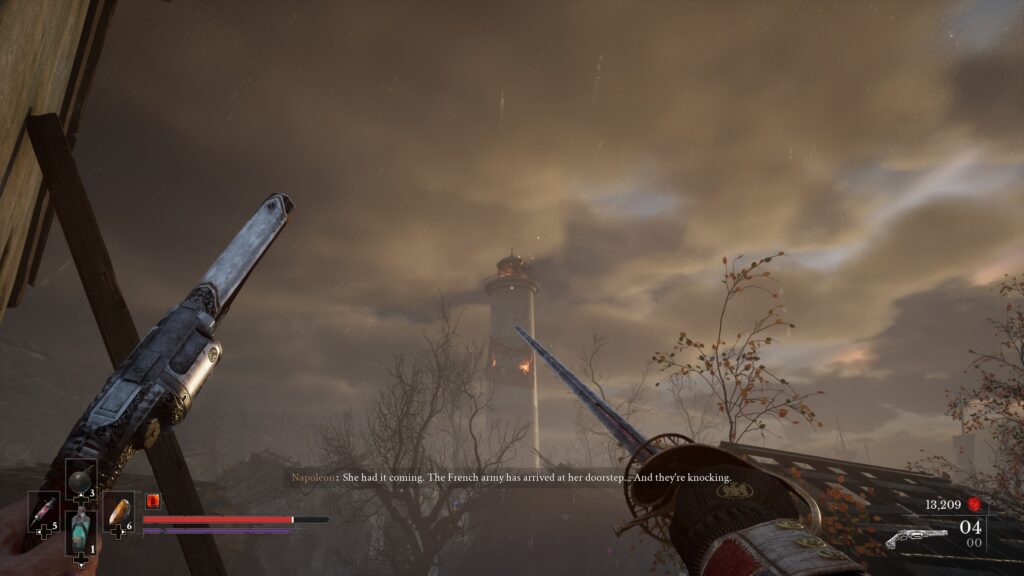
I did not expect to enjoy Valor Mortis as much as I did. As I had stated, I am a fan of One More Level, so any new game they dropped would be on my radar. This demo moved the game so much higher on my list. The first-person combat is insanely tight and fun, clicking so much more as you’re parrying this enemy and slipping past that one with a dodge. The boss fights were punishing but rewarding as you slowly mastered the technical components. The world of Valor Mortis is also inviting, in a messed-up sort of way, but I want to see everything else that the demo doesn’t offer, because what the demo had to offer intrigued me so much. Valor Mortis is the most interesting twist on a popular format, and one I don’t think you are going to want to miss.
Valor Mortis will arrive on October 13, 2026, for PlayStation 5, Xbox Series, and PC.
Remember to follow us on Twitter, Facebook, and Bluesky to keep up to date on everything we have going on!
