

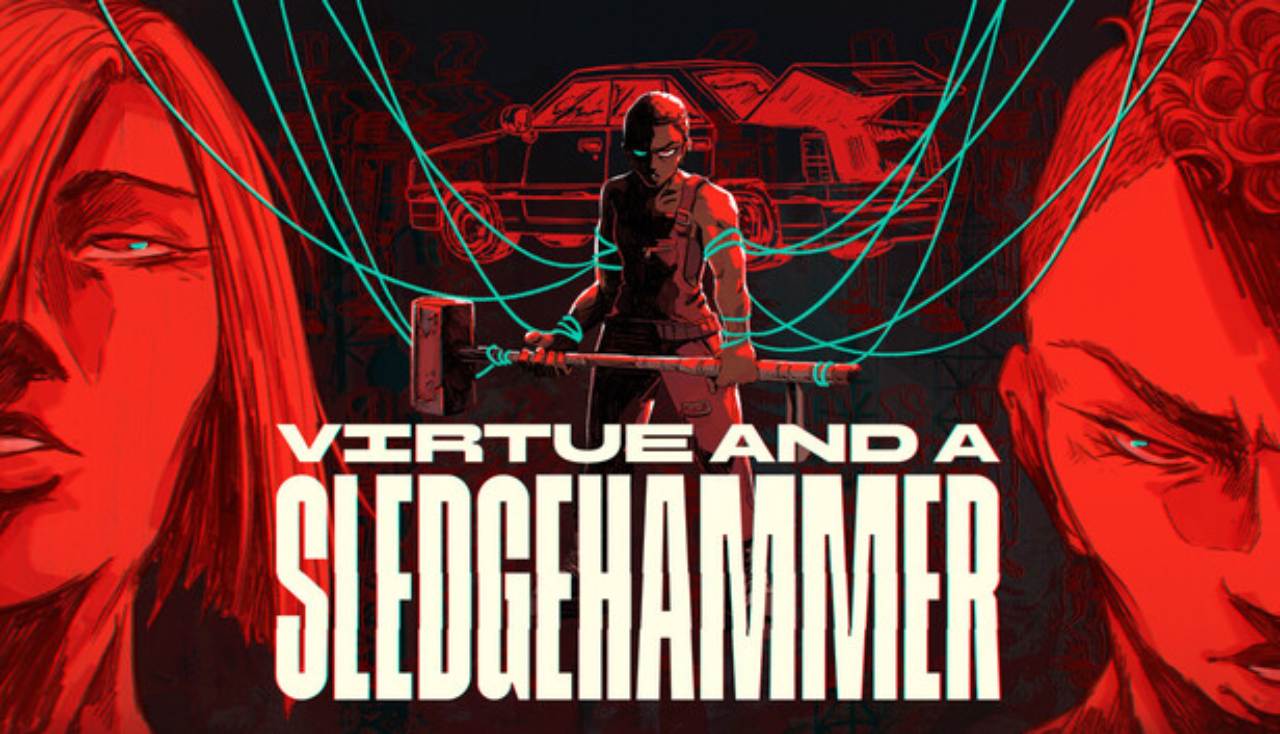
Virtue and a Sledgehammer was a highlight of the Steam Next Fest. In this preview, we dive into the implications of what a game full of rage and poetic revenge entails.
I played a couple dozen demos for the June 2026 edition of Steam Next Fest, Valve’s triannual celebration of upcoming indies. Many were well worth my time, finding a spot on my wishlist as soon as I exited back to desktop, but one game stopped me in my tracks, hit me like a truck.
Or should I say, like a sledgehammer.
Do you know that feeling when you aren’t sure if you’re going to cry or laugh or vomit? I most recently had that feeling in therapy when I led myself to some answers I hadn’t expected to find. I’ve also had that feeling when finding out someone I loved died, or when a community I’d helped build suddenly teetered on the edge of dissolution. Each time it felt like my body hung in the balance between three distinct but related convulsions, overloaded and spitting like a wall socket on the fritz.
Virtue and a Sledgehammer, the forthcoming game from the folks at Selkie Harbour and Deconstructeam, has something of this feeling. In the hour or so it takes to finish the demo, I felt totally immersed in its seething, raging world. When it ended, I couldn’t shake the sense that whatever Virtue and a Sledgehammer is doing, I needed to come back and see it through. I felt — still feel — perilously left in the lurch. And t’s fitting that Virtue and a Sledgehammer should remind me of something I felt in therapy. The official press kit’s description of the game starts this way:
Most people resort to therapy. But you chose the brave option. A sledgehammer.
The game begins with a car crash and a question. A young woman crawls out the windshield of a sedan, crumpled into a tree trunk. A screen-faced robot sprawls limp on the roof and an old woman lies dead(?) in the trunk. Then, the question: “How far would you go to keep a family member from doing something terrible?” The game offers you multiple choices to respond and then a short back-and-forth on the subject. Quickly, then, you’re whisked back to the scene of the woman in the accident, given a sledgehammer, and told to start smashing.
The beautiful thing about the question is it’s not clear at first whether the question is for you or about you. I descend the wooded hill from the wrecked car getting used to the game’s verbs: WALK and SMASH. Gradually I emerge from the woods into a small town populated entirely by robots who not only recognize me, but fear me. The first few I encounter just let me walk by — seemingly fail to notice me at all.
But then, suddenly, three robots see me and come after me, arms outstretched as if George Romero had written the three laws of robotics. They recognize me as well, saying things to each other like “we can’t let her get to town,” and “why is she so angry all the time?” I strike them down one at a time as my rampage begins.
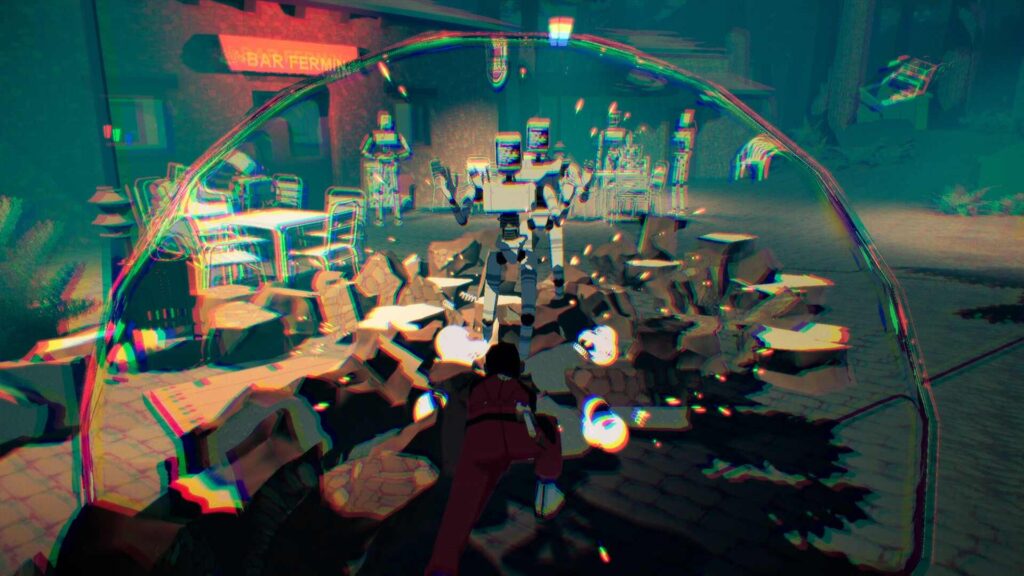
The violence in Virtue is bloodless; metal clanging on metal in the middle of the forest. But the stark, staticky aesthetics that Selkie Harbour and Deconstructeam have deployed here paint the whole experience in a discomforting Giallo wash. The farther I press the worse it feels to strike each robot down — not in terms of the gameplay, but in the pit of my stomach. Some of them cower and run without attempting to lay a hand on me. All of them tell me how I make them feel: disgusted, terrified, sad, desperate. Pratelle, the woman whose sledgehammer I’ve been directing for the past half hour, has only one answer for them:
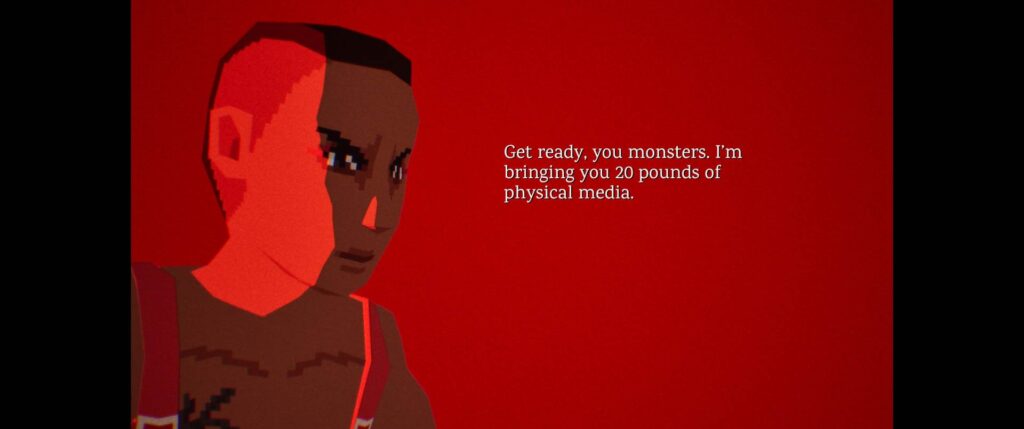
Get ready, you monsters. I’m bringing you 20 pounds of physical media.
Pratelle’s sister makes fun of this self-serious proclamation of violence in a flashback a little later on. Virtue and a Sledgehammer tucks these low-poly dramas away inside crystalline structures strewn throughout the map. When you smash one, the same way you’d smash a wall or a bot, the scene warps away from the site of your grim destruction to pastoral scenes of adolescent awkwardness between Pratelle, her mother Merche, and her sister Nina. Each moment shades your sledgehammer destruction differently, making Pratelle’s anger more legible and her hesitance more queasy.
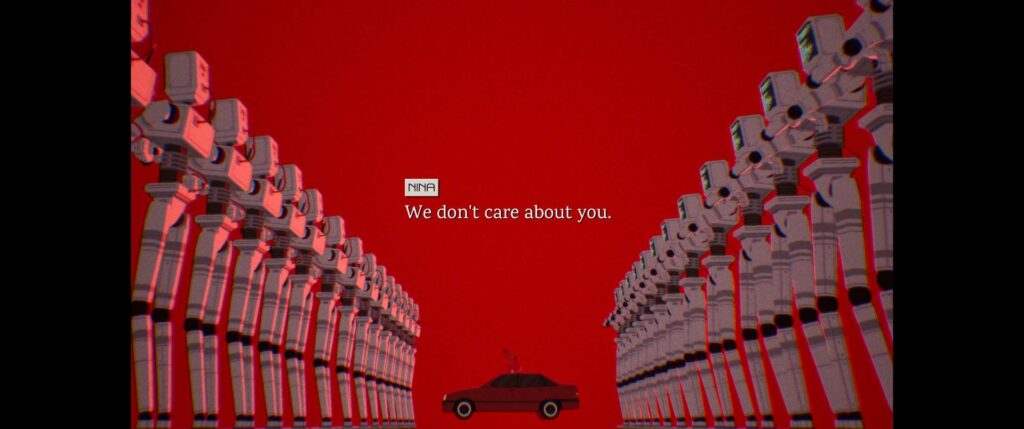
Merche and Nina, incidentally are the ones who ask you that question at the start.
Video games are always posing this question to you in one way or another. How far would you go… is red meat for the kinds of power fantasies that video games have been slinging since Mario ate the magic mushroom. Likewise, video games are always selling rage: Kratos’ flaming chains, Doomguy’s roaring guns, Marcus Fenix’s heaving metal bosom.
Virtue with a Sledgehammer is the first time in a while that a game has let me feel that rage’s onset and its nervous receding waters, instead of just staging it all for me as spectacle. Reflecting on the question, I don’t know how far I’d go, but I know that it already feels bad going as far as I did, and when the game gets its full release later this summer, I know I’ll be going farther still.
