
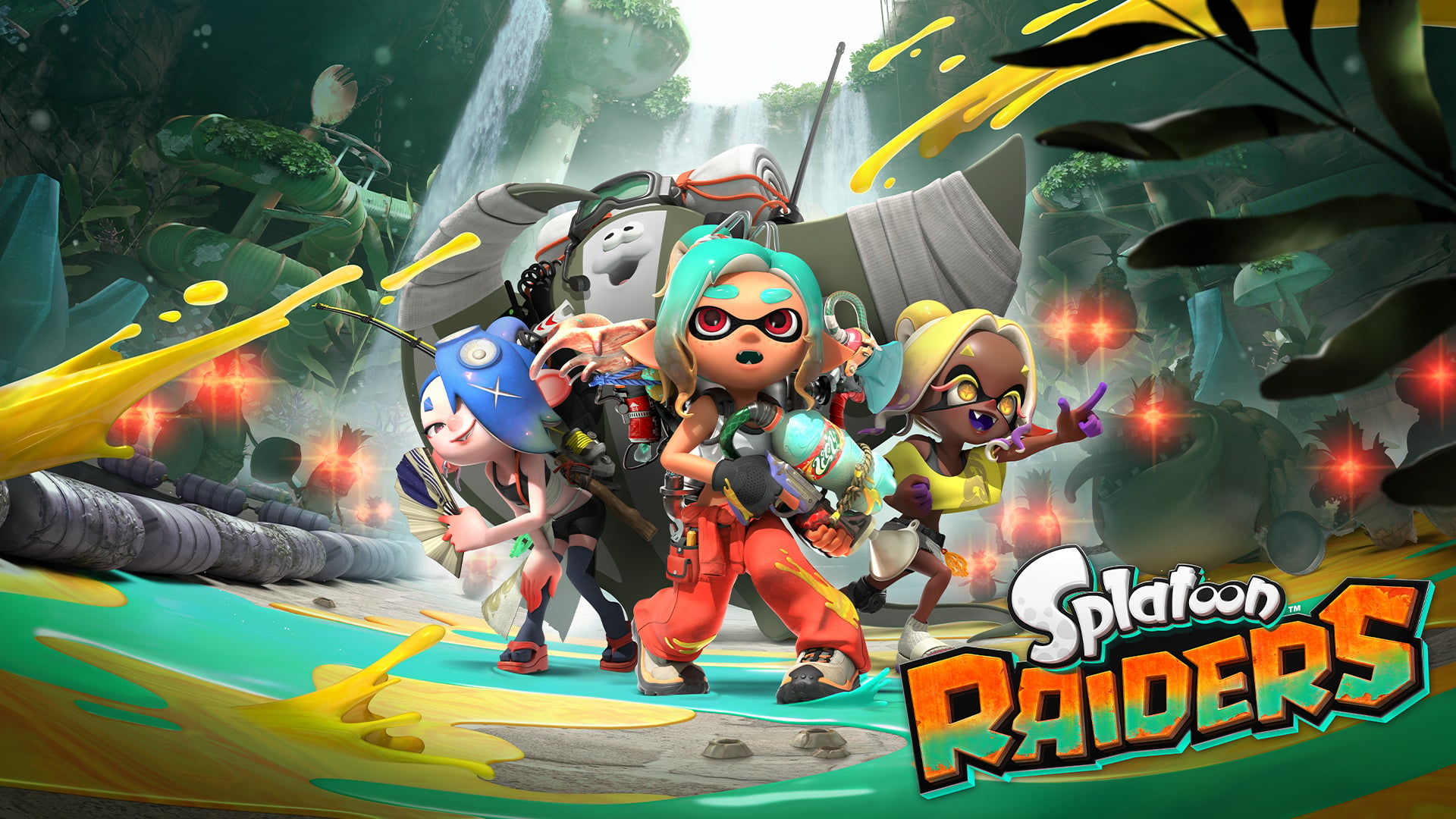
The Nintendo Switch had a lot of great games on it, but I’ll be honest: my big addiction was Splatoon 2. I had around 600 hours on that and 200 on the 3rd, which might not seem like a lot when you go all in on a multiplayer game, but for me that was a lot. Even more so compared to JRPGs, which were the big thing I broke out the Switch for. I don’t have time to get bogged down on comp games, especially when there is a massive and never-ending influx of games that absolutely need my attention. So for me, that is an insane amount of time to give to games. Hence why I went into Splatoon Raiders with far more excitement than I probably should have.
Now, I have played the single-player modes before in the series, which can annoyingly waffle between very straightforward and frustratingly complex at the drop of a dime. And by this I mean you can be doing just fine only for one singular thing to require something oddly technical, which kills the flow. Still, though, I mostly had fun with those games. Old-school platforming fun with the twist of ink navigation to traverse past barriers or across platforms. The idea of a full-length campaign with co-op was sounding enticing. On the other end, it was still everything I expected it to be, though maybe too much. That might be weird.
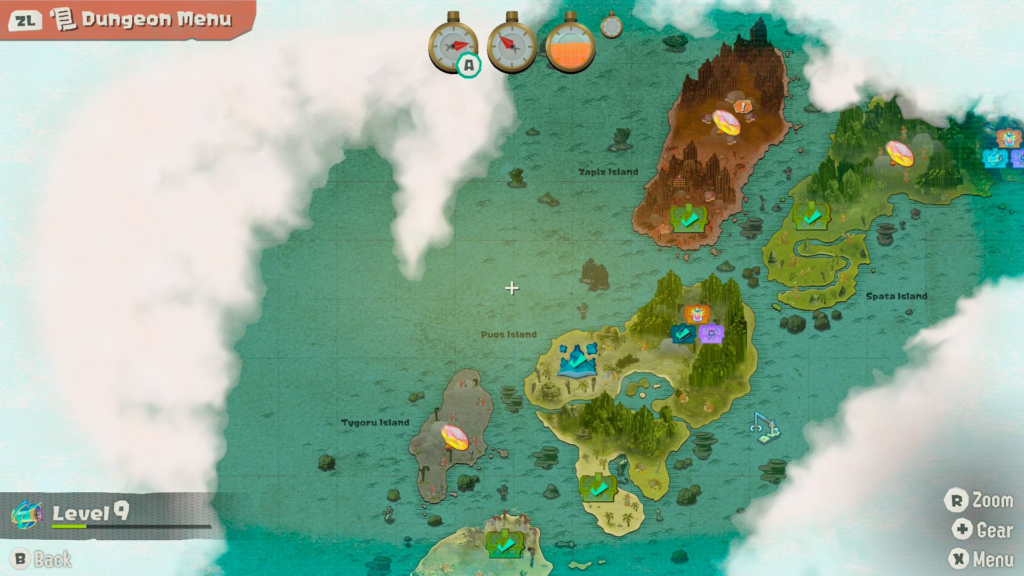
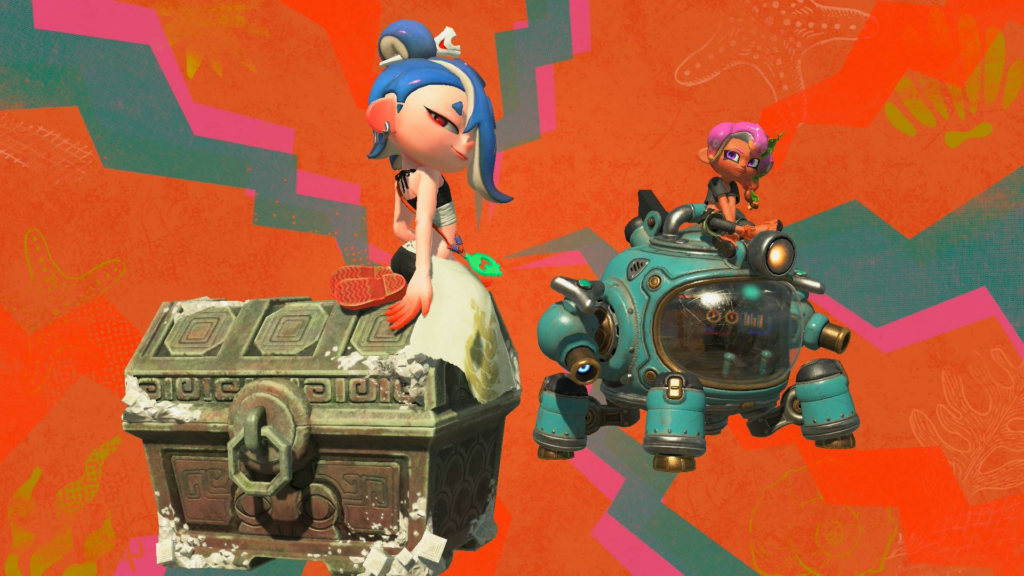
The story takes you through the game to a series of islands after getting stranded there, having teamed up with the Splatoon 3 hosts. Deep cuts to find ancient treasures and more. It’s a fun premise that leads to the player exploring stages that feel, in large parts, like the traditional Splatoon campaign, though now the levels have more depth and personality. You also get a more in-depth look at the main cast, even more so than in the mainline.
There is a part of me let down by the premise, though. In classic Nintendo fashion, the experience feels divorced from the main series in a big way. I get it, but the main goal of Splatoon Raiders doesn’t feel impactful on the experience. It is an interesting new side of the world of Splatoon, but I was hoping for an experience where you hunt lost treasures that might fill in more of the lore of the world, and they largely don’t. You also have this whole squid and octopus-filled world we only get to see briefly in the main games, but to have a single-player game, they completely departed from all of that, which feels like a lost opportunity. This doesn’t hurt the experience; let’s make that clear. It’s more food for thought.
As stated, the core experience remains relatively unchanged. Along the islands, you unlock stages and take these on. They are limited in scope but play out in several subgenres, such as treasure stages that feel the most like the platforming stages players will be familiar with. They have a start point and an endpoint, with the player using every tool they have to traverse land masses or avoid obstacles. The typical traversal types like ink trails tend to crop up here as well.
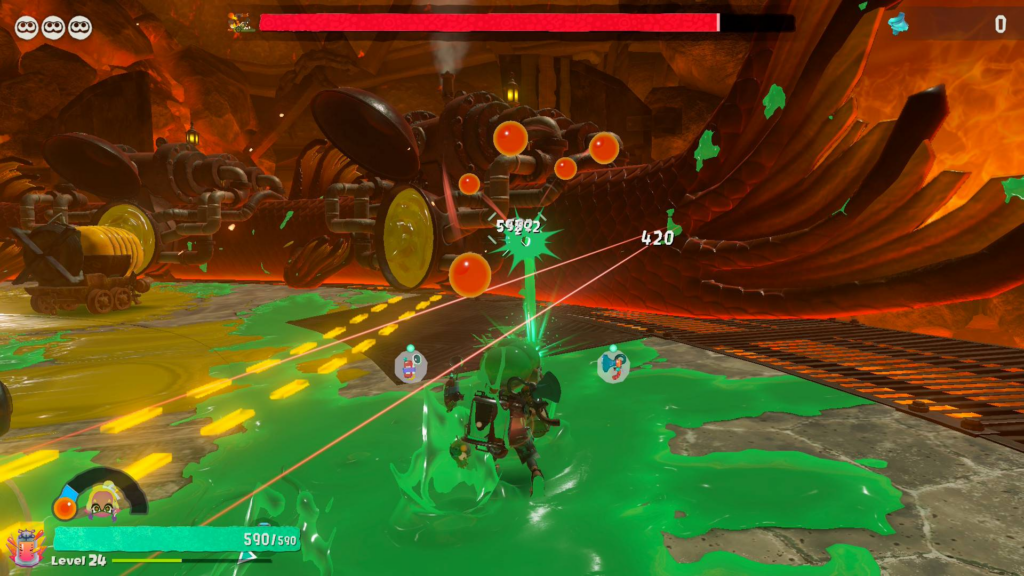
In another mode, you fight through waves of salmonid, this game’s key enemy type, as you race a clock to collect salmon eggs. Again, this mode shouldn’t be too unfamiliar because it closely resembles Salmon Run with a few minor shifts to functionality. The last of the modes is one in which you run around an open map collecting eggs as well as trying to power up your drill to destroy a big piece of ore. These grant Spirhalite Shards, an important item for leveling.
All the while, the gunplay is also as solid as the typical, with a selection of weapons to choose from. There is a gear-based drop system that can be annoying, with some guns having a significant markup on damage only to not find another on par in several full missions. There were also a few weapons that felt less practical more often, especially when not every enemy is on even footing with you. That said, I have always been a dual splattys person, and they are still fun as hell. They also have, for me, the most consistency in aim, which has also been an issue in Splatoon.
Honestly, I very much enjoyed the main treasure stages. They could be lengthy, though never massively long, but they threw the most fun elements at you. There was clever platforming to be found here as you still had waves of salmonids to fight along the way. These stages also remained the most constant in actually completing. More so, these feel built for the single-player experience a hell of a lot better than the others.
It was the salmon run-type missions that generated the most frustration for me. A lot of them are structured around specific enemy types, some of which aren’t hard; they move around and to weird angles, making it frustrating to eliminate them. These stages are timed and require collecting eggs rather than kills. One stage in particular, in which you have to defeat these UFO-type enemies, became the bane of my existence. There is strategy to it, but even with that, the process of getting the UFOs to slam the ground so you can climb and kill them, and keep doing what amounts to a process to win.
This was also the first stage I really played where it became noticeable that your ink tank doesn’t get you far. There are many a fight you feel completely underpowered as enemies surround you while ink clouds and beams bar the entire floor from letting you recharge. In the traditional co-op horde, this is like a late-stage overwhelming that you can understand. Here, though, these are the main stages where you feel like you can’t react because your runway is removed, dampening the experience.
Why this really matters is that there are points where the game feels geared almost exclusively towards multiplayer co-op. It’s easy to access multiplayer. There is a help mode right in the corner at any time, so you are never far away from relief if the game gets to be too much, at least when it comes to the main games. Even after you beat the main campaign, it is made clear that there is a lot left to accomplish, and you are going to want to play with friends.
There are also several challenge stages you can find and unlock that were arguably worse. They run through challenge modes that lock your abilities, requiring you to use powers mostly to complete them. At times they could feel like tutorials, but they explain nothing to you until later tasks that can be more time-consuming than anything else in the game. These can inconsistently shift from one you just walk through, then require you to perfectly use your ability, or else the challenge resets over… And over… And over… Till your brain gets all spinny.
You do have a robot ally that aids you throughout, which has the drill for those ore pillars. It does suffer from an inconsistent AI. There are moments when your robot is right where it needs to be, instantly eliminating some of the more nightmarish enemies, like this long snake-like thing with the sweet spot to shoot in the back. Other times the bot seems to do and kill nothing as you watch it shooting into a wall. It does add some new traversal modes, and the three power moves you get are actually really fun to unleash. All of them are too, which I was not expecting.
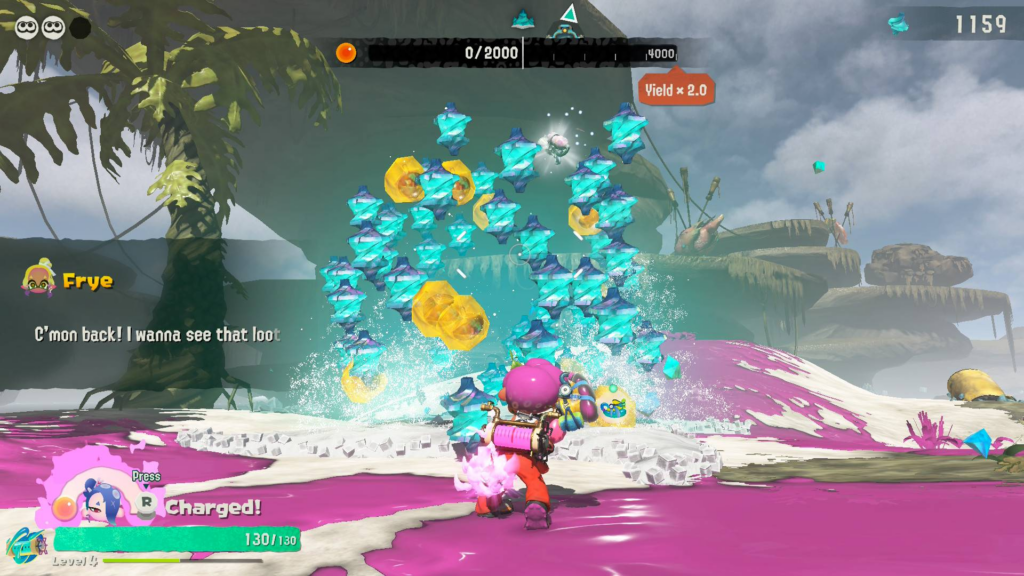
The biggest issue is that, even with multiple modes, the game does very little to evolve itself as you play. I mean, inking things has not been fun, but the level of repetition can get too much. New stages might add a new traversal tool, which is cool, but you walk, ink, jump, and repeat. Much of this, though, can feel like static rehashes constantly throwing the same thing at you over and over and over. The multiplayer offered relief from complete repetition that you don’t get here. Even if you play in co-op, you have to commit to running the same challenges in Splatoon Raiders for materials and more. This was a task I fear I might not have been up to.
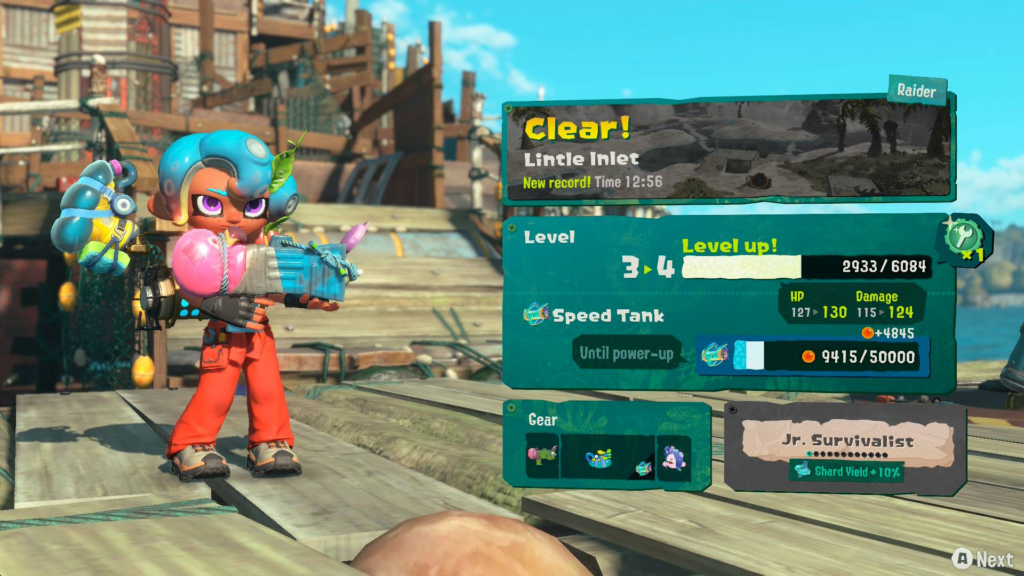
The big shift in focus, though, does mean that the game gets at least a somewhat robust leveling system. Eliminating enemies helps you gain full levels that add damage and health, which works well in the overall experience. Each level also gives you skill points to level your stats further. Then you earn chips for your guns that diversify abilities and three tanks to use that all offer a slight twist on the core shooting. Each tank has different gadgets that work with it, though you will see a heavy overlap between using them.
This is before the fact that the main base of operations for the Deep Cut team is also upgradable, allowing it to take on some pretty drastic new looks. More importantly, there are many features that can be added to the base, such as targets and more. Playing around here is fun, especially while waiting for your next game. I will say that it was here I realized I didn’t like the menu system for switching gear, especially when you have plenty of weapons you need to wade through.
Verdict
Splatoon Raiders, for the most part, does what it sets out to do. Whether it will be a successful entry point for players who want to start inking everything in sight, I cannot say, but it should be. There is an interesting experience in here, collecting long-forgotten treasures and bursting Salmonids. This is also a great game to play with friends, which you really need. The issue is the game never grabbed me the way I was hoping it would. Some points were downright frustrating, and not in a challenging way. Other parts just felt repetitive as missions fail to grow the further you get. This is a good Splatoon experience, but I do think the lack of the game’s steadfast multiplayer is a noticeable absence the game never meaningfully overcomes.
Remember to follow us on Twitter, Facebook, and Bluesky to keep up to date on everything we have going on!
Reviewed for the Nintendo Switch 2
Developer/Publisher: Nintendo
Release Date: July 23, 2026
Pros
+Enjoyable third person shooting
+Enjoyable level design
+good co-op gameplay
+leveling and upgrading is fun
Cons
-Occasionally feels hostile towards playing alone
-Some combat becaomes extremely fustrating
-very repetitive with stages that drag on
-Not enough variety.
-
Splatoon Raiders
