

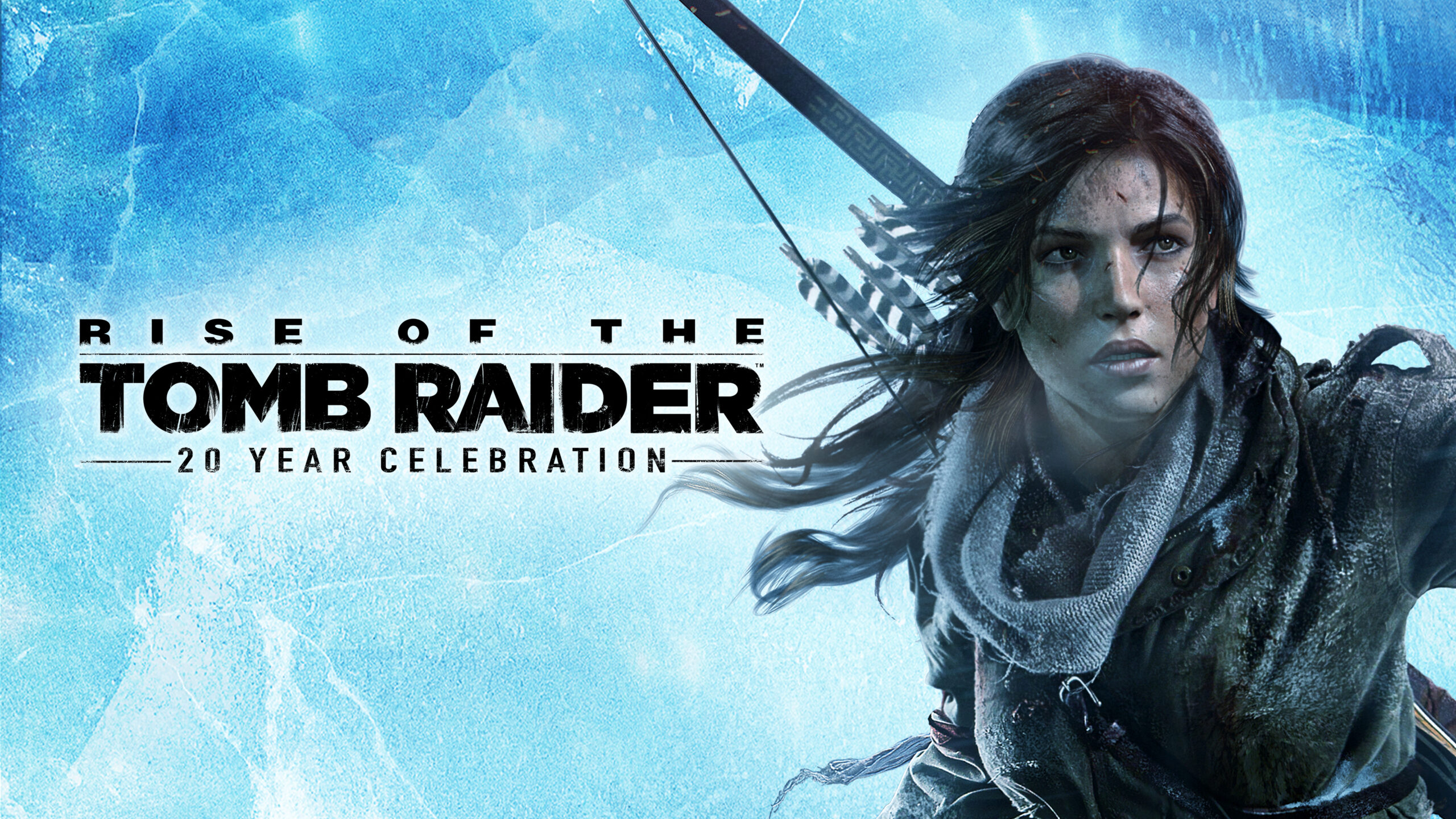
Over the summer, during Summer Games Fest, we got a much more in-depth look at where Lara Croft is going. Ironically, where she is going is back to the beginning with Tomb Raider: Legacy of Atlantis, a retelling of her original action game from 1997. Returning to the traditional format next year makes this year a great one to remind yourself where Lara has been for the past decade. After a long wait, Nintendo Switch 2 players finally have access to the second part of her Survivor trilogy, in which the titular character no longer backflips by dual-wielding and instead hides behind crates and brutally strangles enemies with her bow.
Of this trilogy, Rise of the Tomb Raider is by far the most complete experience and a testament to the team at Crystal Dynamics, given how well a game with minimal tweaks has aged. On the Nintendo Switch 2, it is important to note that there are some textural issues, especially with trees that populate the wilderness, along with some enemies. It is a dated title, so it’s more forgivable, but a glance between the versions will make it difficult to unsee. Thankfully, most of the technical limitations are relegated to visuals and not gameplay, as there were very minor framerate dips that mostly occurred during cutscenes, at the start or end.
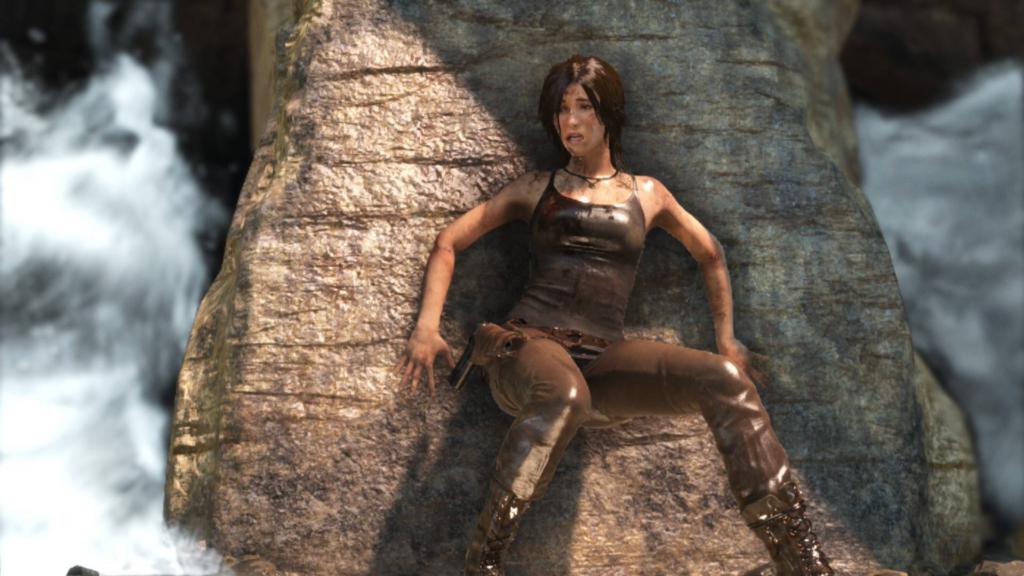
I will note that there was a much bigger issue that occurred across handheld and docked, and this was a persistent crash. This reminded me of the old Cyberpunk 2077 when the game launched (and occasionally on the Switch 2 launch as well), which happens when you cross a loading threshold. Rise of the Tomb Raider hides loading screens in transition animations like shimmying on slipping through a hold in a wall, and typically, this was when the game crashed. I was nearing the endgame when an update came to the system that removed this issue, after which I never had the issue again. Because of this, I’m hesitant to judge the game on this, but feel it should be stated. Glitches and bugs remain as well, though they were always there.
With all of that out of the way, let’s get into the game itself. Rise of the Tomb Raider starts slightly after the previous one, but with some distance. It is a perfectly fine place to jump into the game without having played the first (though it is equally as good, and also on Switch). Lara Croft has been haunted by the apparent suicide of her father years before the previous game. When we rejoin her, she is slipping into paranoia as she attempts to solve the last mystery her father ever worked on, which led to him becoming disgraced. This is complete with Lara going everywhere with a hoodie up, as well as slipping into the madness, depressing apartment with an investigation board.
She eventually cracks the code, off-screen, of course, because explaining how Lara solved this mystery with maps and recording from the person who had it wrong would be a little much, but soon after, we set off for adventure. Hot on our favorite Tomb Raiders’ heels, though, is an organization known as Trinity that has some religious affiliation, absolutely worshiping the Abrahamic god Yahweh, intend on getting the source before you, or after, and just killing you, whatever works.
Lara, at this point, has killed before. Actually, a lot if you are familiar with this arc, so the player is given weapons to fight back against this group early on, but much of the title is still a platformer and puzzle solver. Most areas involve navigating tight corridors that might involve you climbing, shimmying through tight areas, and clinging to walls when the path ends. These mechanics are still tight for what they are, but they can feel their age, as you might often throw yourself to your death as you try to lock onto the next grab. I’ll admit, though, that games I played on the PlayStation 5 can also be troubling for me when you get the A and B reversed to the Japanese layout. My brain can’t wrap its head around it, so I was responsible for many of my deaths mixed into that.
Eventually, though, you will find yourself in front of a series of objects that somehow interact with each other, and you need to solve for X. If I had to lodge a criticism of these, it’s that they can be big and grandiose. Great to look at, but a lot of area to clear searching for that one thing that is required to further progress. That said, these tasks aren’t complex to solve and remain fun all these years later. What’s even cooler is interacting with what you can and seeing what impact they have. You pull a cord, water rushes out, and it moves a platform that allows you to cross the deep water, or if nothing is solved, you see what that did and can ask, “What step next will make this work?”
Along the way, too, are tons of hidden tombs for the player to solve that have all the depth of the main ones. There is both the fun of searching them out on the main map as well as completing the actual challenge you find inside. Even better than actually tackling the tasks is the reward at the end. I had actually forgotten this, but upon reaching the end of these, you get to read a book that actually adds more abilities to Lara that have a wide range of benefits as you explore.
The biggest note of the Survivor era is that, especially during this era of gaming in general, Metroidvania elements were a big thing to increase replayability. There are a multitude of points that just flow into big in-scope locations that you can explore at leisure, with checklists for all the things you can find here. The hidden tombs are in these areas, but alternative guns are locatable here as well. It is also effortless to jump between these locations at campfires so that you can explore and complete all the side content. Side quests will also group up, and while they can often feel like fetch quests, they also offer rewards that benefit the player overall.
The thing with these locations, though, is that they can typically become the blandest the quickest. Upon reaching these areas, there are usually enemies to clear out, which you do, and then you are left to figure out the next step. Even upon the first time you find yourself in an open area or in the wilderness, there are things to grab, but abilities you pick up later allow for further traversal. These include the ability to build bombs or the rope arrows to reach higher places or pull down boarded doors. On returns, though, you will typically have the option of traversal, but combat becomes relegated to forward progression.
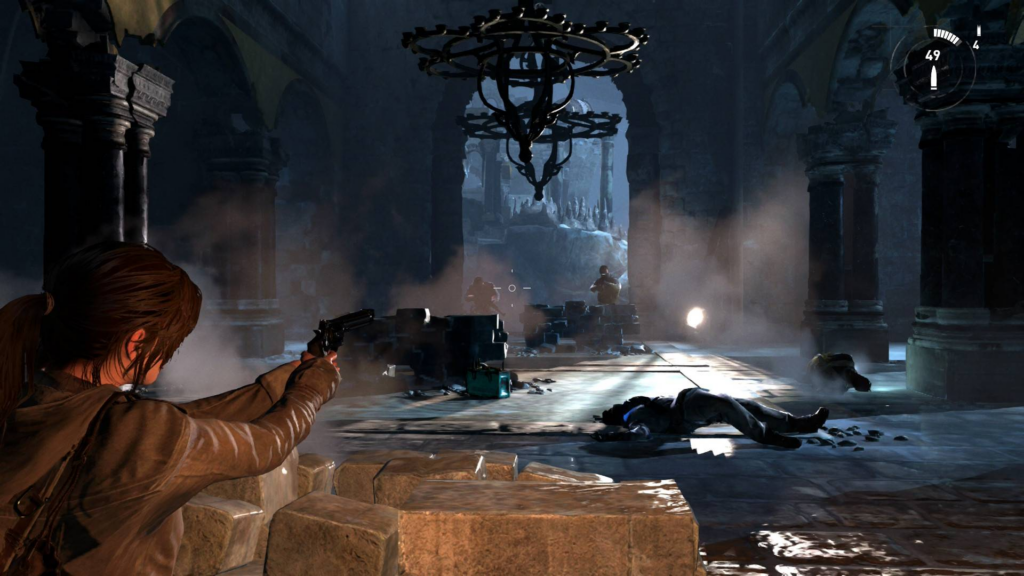
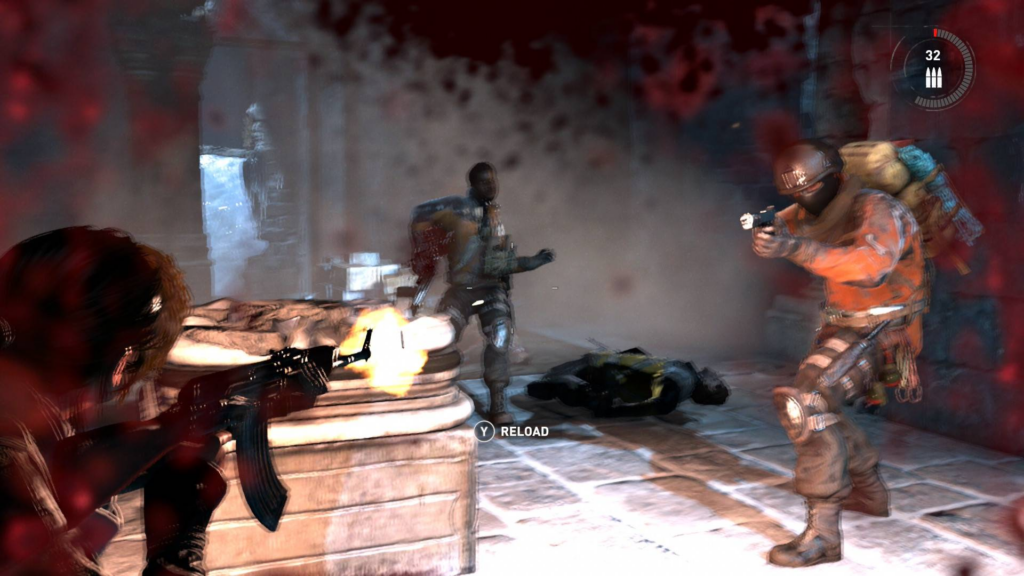
The issue with that is that combat is a highlight of the game. As stated above, gunplay is regularly down through cover-based shooting, but Rise of the Tomb Raider often mixes in the platforming with shootouts. Climbing platforms to get the advantage or jumping across platforms to get some distance. Later, when you gain new abilities, you can even swing across platforms to survive. Of course, there are standard shootouts as well, with enemies flanking and pushing the advantage as you scramble around the area from destructible cover to the next.
This is in between the high-octane sequences that feature you running from helicopters or getting thrown by explosions. These sequences all run extremely well, too, which was my biggest concern, as these moments have the most moving parts on screen at any time. Most platforming segments can have a lot of major action as you grab a platform, only for it to swing out. A rock wall crumbles around, and Lara gets slammed around. She also wields dual pickaxes for melee combat or climbing more free-flowing rock walls, with a lot of the action using these elements to keep progression dynamic.
Rise of the Tomb Raider also has a great strength with its level progression, having each discovery give experience to improve her skills. You will also find a vast range of materials that can be used to upgrade weapons, as well as gear like ammo packs. There are plenty of alternate guns to switch up play, and depending on the type, certain guns have different level trees. This rewards the exploration part, as this could easily fall to the wayside if you don’t wander the open areas to fill these out.
One of my favorite elements of the game that is part of these is the language that Lara learns through finding collectables. We all know Lara as the globe-hopping hero, but this is still an origin story. Finding a journal from a russian soldier increases her Russian. There are a few languages to grow her proficiency in, eventually making it possible to read pillars you might have missed, again, giving the player a great reason to go to and fro in the experience.
The 20th Anniversary Edition of Rise of the Tomb Raider also includes just about everything released for the game over the years, which gives even more ways to play. There are two additional story expansions baked into the main game and highlighted, so it is pretty clear that is what you are doing. There is also an Endurance Mode and the wave-based Lara’s Nightmare mode, a few weapons, and cosmetics, which are available from the get-go. This makes the value of the game, especially if you have yet to play this entry, well worth it.
Verdict
Rise of the Tomb Raider is slightly dated, but it manages to age quite well. There is an enjoyable story in here with plenty of action sequences to keep the player engaged, regardless of where they are in the world. Arguably, there are probably better places to play Lara’s second journey of the Survival trilogy, but there is nothing inherently wrong with choosing the Nintendo Switch 2 as the place to do it. The biggest issue is just how long it took the game to finally make its way there, over a decade after release. If you are looking for action and adventure, you could do a lot worse.
Remember to follow us on Twitter, Facebook, and Bluesky to keep up to date on everything we have going on!
Reviewed on Nintendo Switch 2
*A code was provided by Crystal Dynamics for the purpose of this review
Developer: Crystal Dynamics
Publisher: Aspyr
Release Date: June 9th, 2026
Pros:
+Enjoyable narrative with great setpieces and action sequences.
+Solid gunplay and platforming
+Great puzzles to discover
+metroidvania exploration
Con:
-Bugs and glitches
-Some pacing issues
-some textual and visual downgrades
-
Rise of the Tomb Raider
