
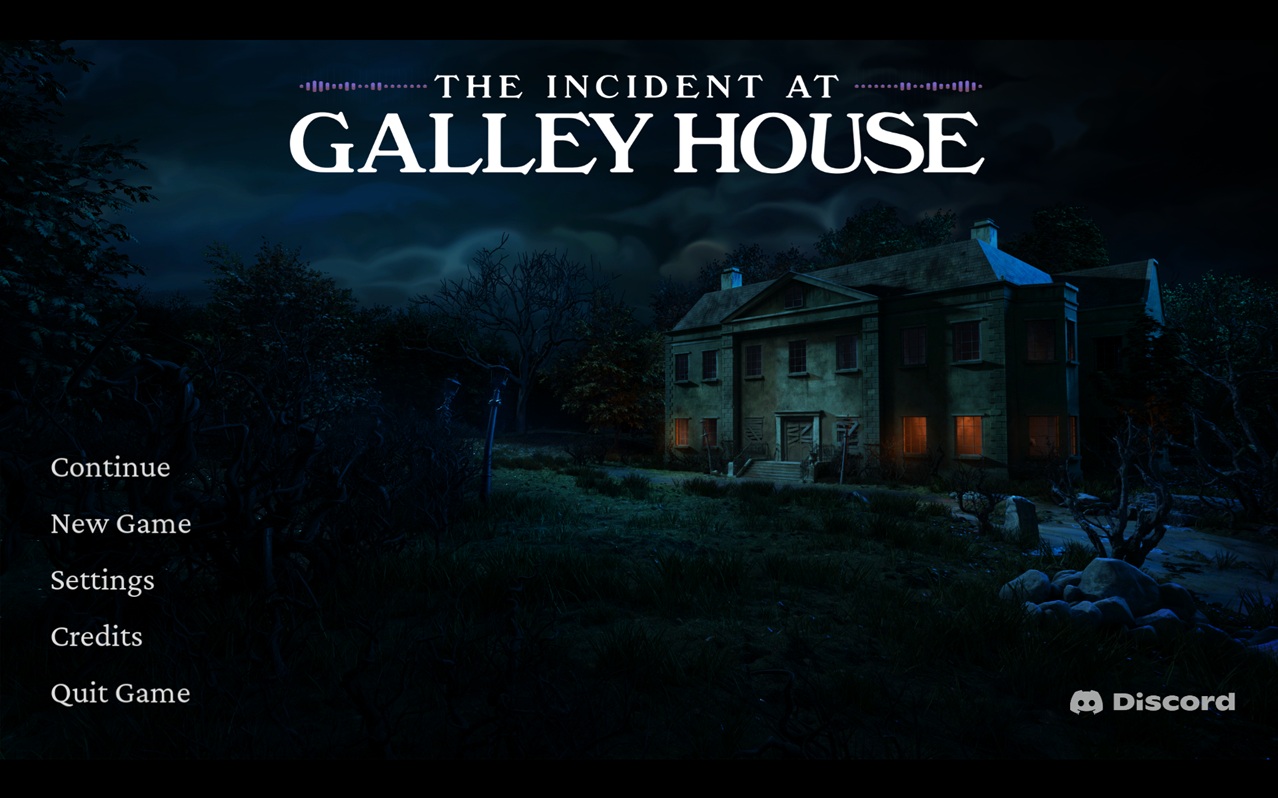
The Incident At Galley House envelops players in a delicious mystery that will keep them coming back for more as its eureka moments click.
As a kid, I had a lot of board games. Battleship was fun because we’d imitate the commercial—“You sunk my battleship!” Mouse Trap was fun until we realized it meant we’d have to break down the whole thing at the end. Perfection introduced me to a lifelong relationship with clinical anxiety. Sorry was great purely for the fact that I would try to launch my little sister’s pieces across the length of my grandma’s house just to watch her have to get up and go after it. My favorite, however, was Clue.
I don’t know how I initially discovered the game, but being placed in the middle of a murder mystery always registered with me. I wanted to know who killed Mr. Boddy, with what weapon, and where in the mansion. It was different every time, and I would make up backstories: Mr. Boddy knew of Colonel Mustard’s war crimes. Mrs. Peacock wanted to leave her husband, and Mr. Boddy wouldn’t have her. And this was long before I knew they made a movie out of the game, which was released just after my fourth birthday, and I wouldn’t see until decades later.
From that point on, though, I couldn’t get enough. I would watch Murder, She Wrote with my grandma to try to figure out who that week’s killer is. As I got older, I would begin to read the classic mysteries of Agatha Christie. I even threw a murder mystery party for my birthday one year. I fancied myself a certified gumshoe. There wasn’t a mystery I didn’t like.
Fast forward to last month, when I discovered The Incident at Galley House. I was hyped when I found out the premise, only to discover it simulated one of my least-favorite movie genres: the screenlife film. I’m glad I didn’t let that stop me, because the mystery of the events that occurred inside Galley House is meaty and will hook you after your first puzzle solution.
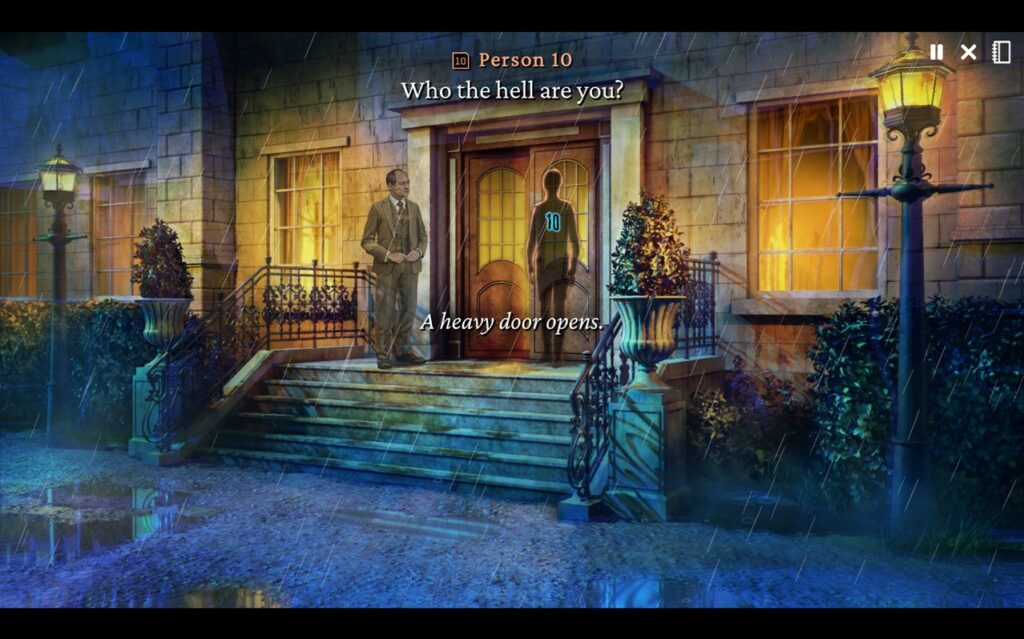
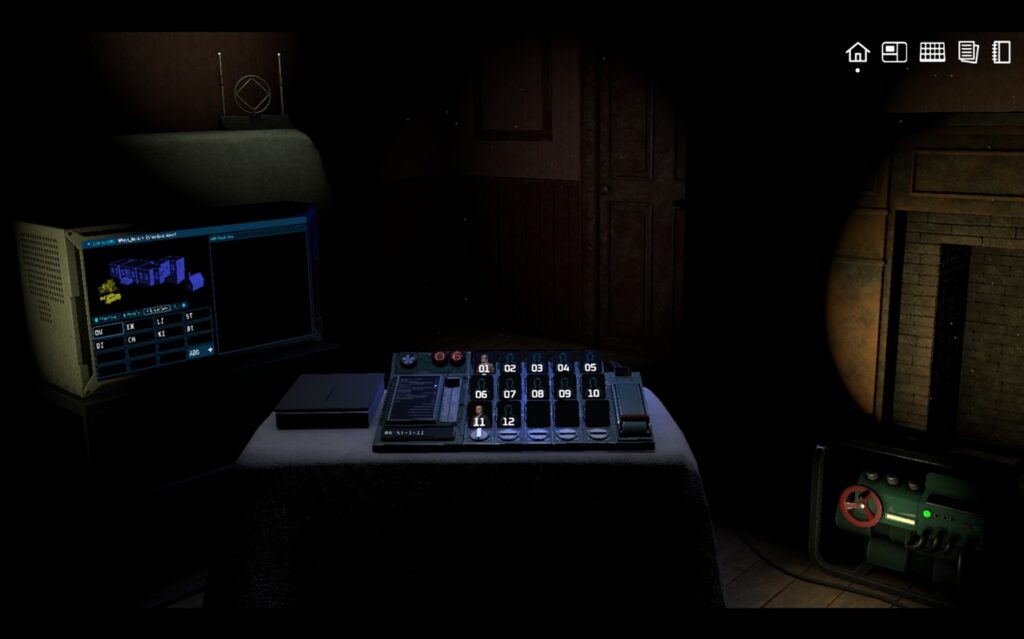
Players take control of Reya, an engineer for a company that specializes in spectronautic technology, better known as remote viewers. Her seance machine allows her to “see” events that happened in the past, using the proper coding. Using a board with dials corresponding to people, players are tasked with finding out what happened on that fateful night in 1936. As it happens, a stranger arrived in the rain at Galley House, and the night ended with a house full of corpses.
Gameplay, as it were, is not much. Players will turn dials, flip switches, build house maps, and investigate scenes. Entering correct codes will prompt the machinery to play back scenes from the past, showing where an entity was, who they were conversing with, and where in the timeline these events fall. Extrapolating from these conversations, logged by the machine, players will find clues to either the next scene or scenes in the past that provide further details.
The game lends itself to comparisons to screenlife films like Unfriended or the abysmal Ice Cube War of the Worlds remake, or the well-regarded screenlife game Desktop Explorer. Players utilize the seance machine, a monitor, and conversation logs to parse the next clue. On paper, it doesn’t sound terribly exciting.
This game, however, is not played on paper, and it contains an element crucial to all great puzzle and mystery games: satisfaction. Multiple times through my playthrough, I put a code into the machine and pulled the handle, unsure if I had crafted the right one. When the machine popped and began playing a new event, the satisfaction was substantial enough to elicit an audible “Hell yeah!” while the scene played out. It was the sort of feeling that would change an “I’ll come back to this” mindset to “I gotta keep playing; I’m on to something here.”
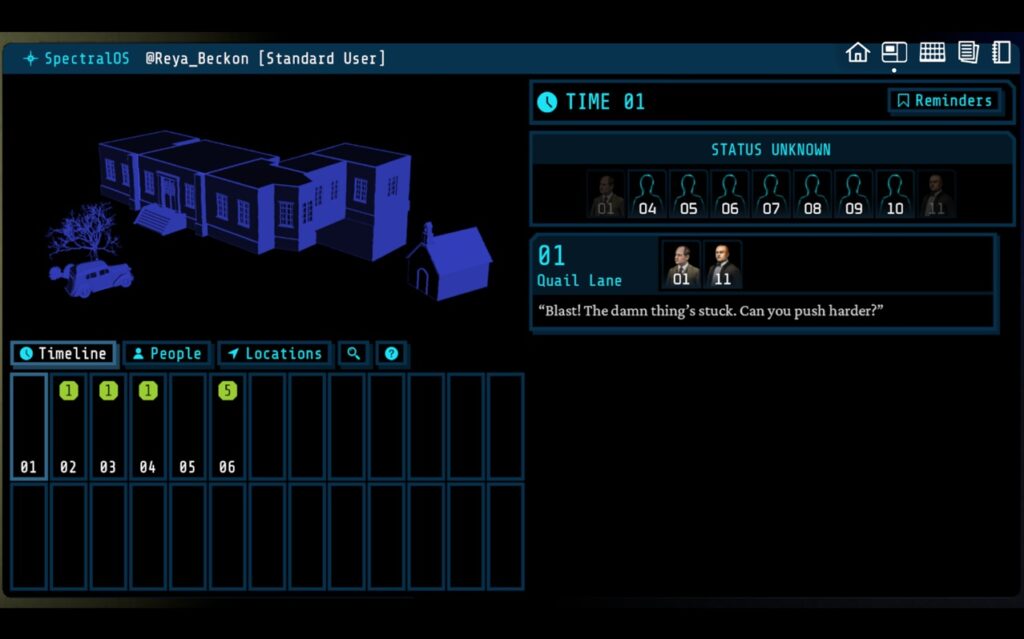
The Incident at Galley House engages the little grey matter, as Hercule Poirot used to call it, but respects the player while doing it. It encourages note-taking, be it via the on-screen notebook or a player’s own physical one. It also provides dialogue texts for cross-referencing after the scene plays out, so if a player recalls a small tidbit, they can go back and check instead of just being stuck or unable to backtrack.
I’d also like to commend Evil Trout for a feature I normally don’t use, let alone enjoy: the Hint feature. While I believe that video game narratives should be enjoyed by all skill levels—hence I support easy modes—I stubbornly don’t use them. But there were multiple times, either after coming back to my playthrough or after a particularly confusing scene, where I was stumped as to what to do next. The Hint system in Galley House solves this problem masterfully.
When players use the Hint option, the game doesn’t simply go, “Well, you should do this.” It guides you to it slowly, starting with something vague, like, “Didn’t this person mention a watch to so-and-so?” That alone could be enough to trigger the next step, but if it doesn’t, the feature leads you further. “I think that watch was found in this room.”
The player can stop using the hints at any time or could use them all the way to the point where the game says, “That must mean the next code is ___________.” Either way, there’s no penalty. The game doesn’t saddle you with a chicken hat and say, “Wow, you really suck.” It simply moves on. No harm, no foul, and most importantly, no impediment to the game’s progress.
Evil Trout’s knack for mysteries shines in The Incident at Galley House. It’s a game that will sneak up on you even when you’re not playing. At work, running errands, or even in the shower, you may find yourself turning over in your head the relationship between two people. You may have something click and find yourself racing to your computer to launch the game and see if you’re right.
And that, friends, is a killer feeling.
