
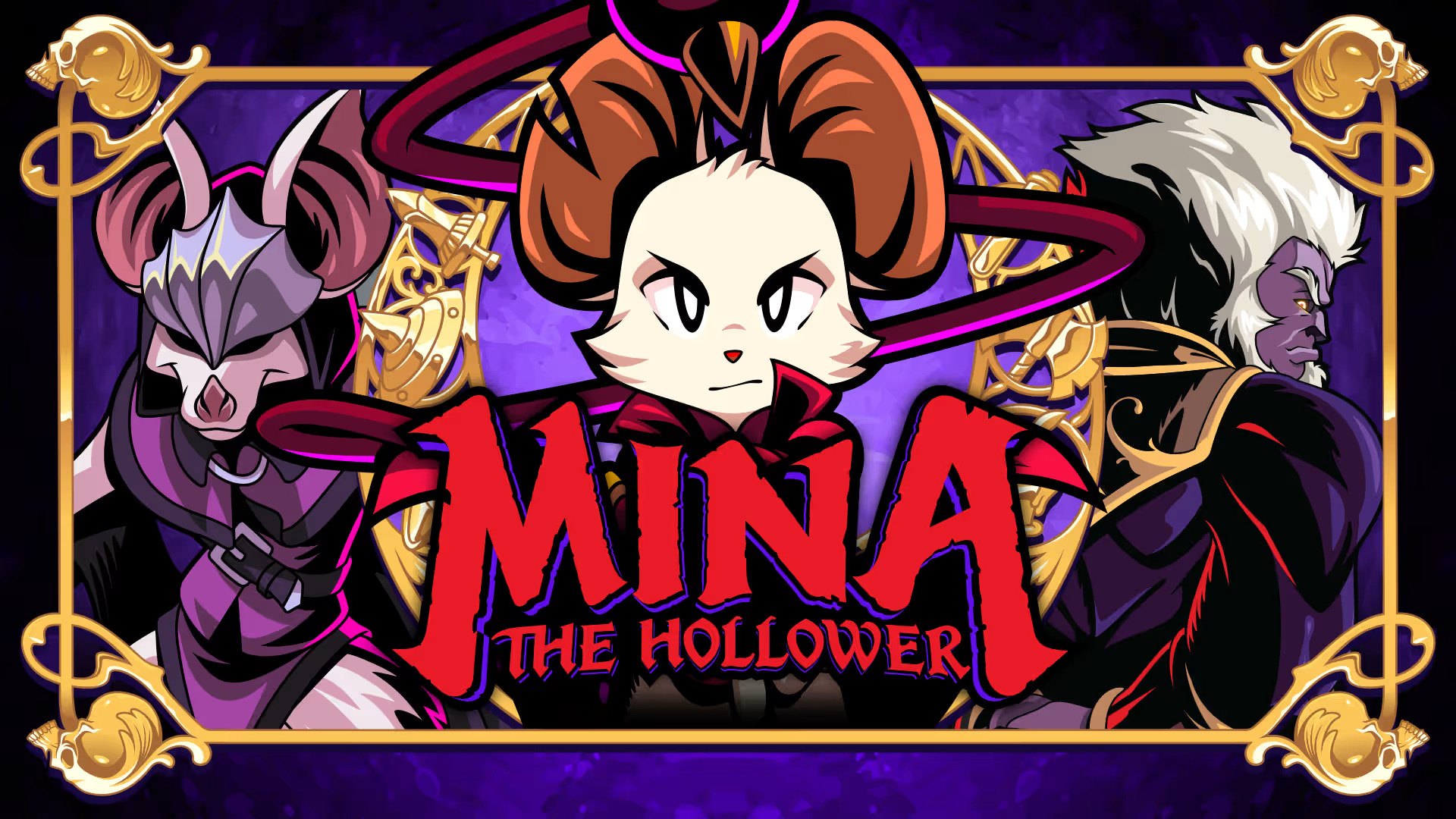
There was a point I wasn’t sure if Mina the Hollower could or would hook me. I was trapped in a vicious loop, trying to save a character trapped in a house. This was a tall order of a quest, given that Mina had only 10 minutes prior had her ship attacked and was thrown into a bleak battle for survival as the Tenebrous Isle seemingly burned down around her. At this point, I had a choice of three weapons (I picked the whip, of course), then was sent on my way to figure it all out or die in the process. There was a lot of dying, as it turned out.
This task, which I stubbornly needed to complete on my honor, was my first introduction to just how fast you need to react to situations, despite the appearance of a Game Boy title that you put into a Game Boy Color. I had to jump a leg, then quickly start hitting the enemy there, dodge a spinning while clearing out two enemies, and navigate some tight platforming, all on minimal heals. It was a daunting task, and I had yet to even figure out the extent of my Hollowing powers and just how that factored into increasing my survival chances. Thirty tries later, I came out of the other side like a king, bloodied but unbound. My adventure had well and truly begun.
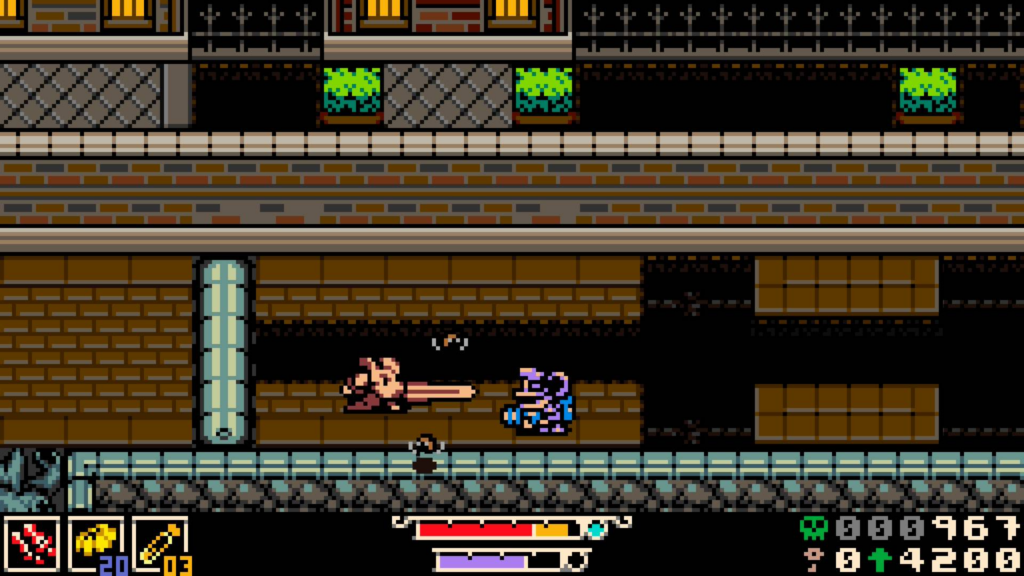
You see, had I taken another road on my path, away from this completely optional nightmare, I would have reached the main city of Ossex. Up to this point, you have been mostly battling along a linear path. One could possibly describe this as a tutorial, though the game really doesn’t waste time explaining anything, never breaking the immersion. You will figure out a lot of what you need to, though you might do so accidentally. For instance, hollowing, the ability to dig underground, allows for a longer jump, which a platforming pathway forces you to do to proceed. Yes, I attempted to jump the gap like 6 times the normal way before I was dodging an enemy with this ability and threw myself further and pieced this together.
It’s not like this pathway takes a long time, but I wasn’t expecting the game to open up as much as it did upon reaching the main city, which is at the center of the game map. Mina the Hollower is here to activate 6 separate generators that she had installed on the island 10 years prior. Somebody named Thorne has attacked and destroyed them, throwing the island out of whack in the process, or maybe that was Mina’s fault for installing them in the first place. While the story is light, with minimal narrative beats, it is still engaging, with dialogue that feels meaningful, at least in the way it fills in the lore. There is so much more that is hidden, furthering your understanding. Though a few you really have to work for.
Despite getting some information in scenes, the most nostalgic aspect of the experience is that you are given zero direction, which is part of the experience. You need to figure out where you are heading and how you are getting there. Every generator requires traversing several distinct areas, which almost always bring unique challenges to overcome, a twist to the formula that takes your knowledge of traversal and combat and forces you to add new context to keep progressing forward.
There are also tons of hidden paths you can unlock to gain upgrades, among other things. Nearly every single panel of the game (Mina the Hollower uses traditional screens that transition to the next open, hitting the door panel). Hidden tiny doors you need to burrow through, treasure chests on ledges that require further traversal to backtrack to, and objects you need to get around. Some of these lead to just a simple reward, but others turn into journeys of their own, reaching the end, typically getting a bonestone.
I wouldn’t describe this adventure as Souls-like, but there are some similarities. The first of these is the way you level Mina, which requires collecting bones. You get a set amount for each enemy killed, but some drop more bones, or you burrow to get the ones half sticking out. Trying to collect the meaningless five-bone item while on a difficult platforming section was the bane of my existence. Falling off the map happens a lot, and there is a penalty to health upon respawning. The more annoying thing is how often areas force you to begin at the start, sometimes with three or four platforming sections between where you spawn and where you fall. Once you start to get the rhythm, though, both penalties feel far less steep than they could be.
As one might have gathered from the start of my journey, the game can also be incredibly punishing as you attempt to balance multiple elements, while even the base-level tasks can hurt. Enemies are fast for a game where you have four cardinal attack directions that sometimes require precision on a sprite that looks in line with your attack but isn’t. Enemies that throw items at you are usually spot-on, and even with your burrow skill, frontal attacks have a large hit radius, so you need to get clever in just how you engage and react. The game doesn’t teach you just how to achieve this balance, but you will learn. I mean, you have to, or you will not get far.
One area has Mina dodging lightning strikes, while an unkillable enemy chases them, and wind pushes them off edges, and standard enemies stand in their way. This is a lot to micromanage. It can also be frustrating as all hell, especially because this feeds directly into a boss fight, giving players very little breathing room to recenter. For me, this area took 40-50 tries. I remember watching two episodes of Top Chef before I finally reigned victorious. Then you get rewarded with a tower climb to power the generator in a break from all other gameplay. If you think this will be easy, think again, but at least getting hit doesn’t kill you, just forces you to restart, which is much lower stakes than anything else.
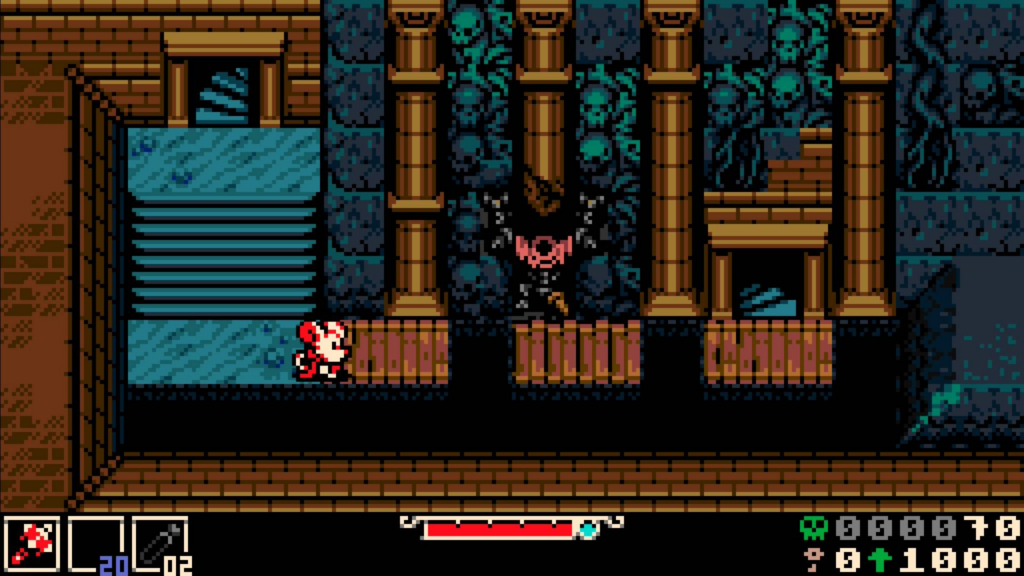
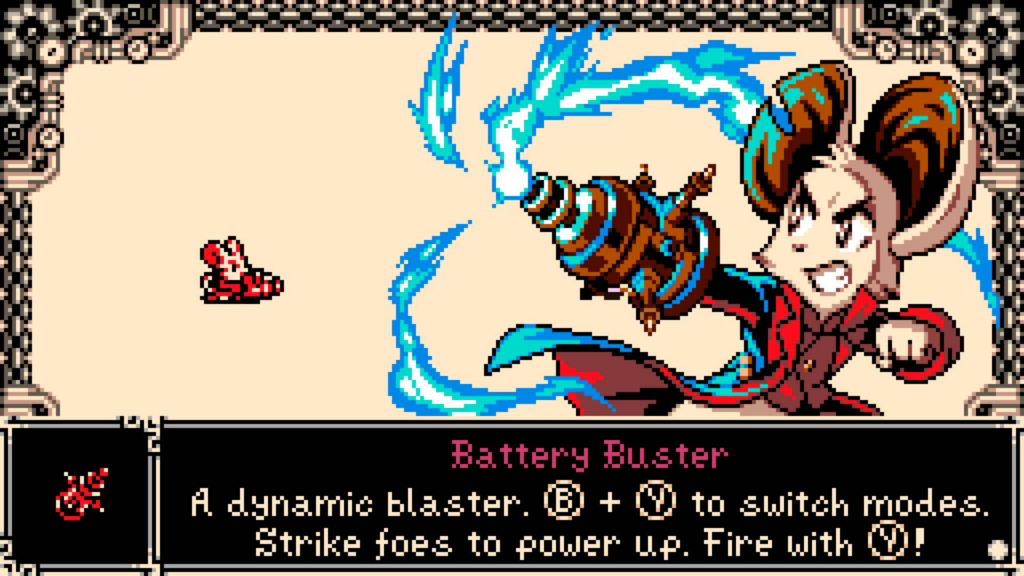
If you’re struggling, Mina the Hollower also gives you many ways to overcome this. The main city has a multitude of shops that have valuable resources. Leveling up and buying items require using bones, so there is a balancing act, but the ability to improve Mina stretched far beyond my imagination. Remember, I said you get a choice of weapons at the start? Well, here you can buy the weapons you skipped, plus a few more. All bring drastic shifts to how you fight, such as fast daggers for a close ranger or a powerful hammer. The most interesting was actually a shield that has like no range, but a well-placed counter in combat changes up the flow really fast.
You can also upgrade your health and how many trinkets and sidearms you can carry. There are countless sidearms to collect, each bringing drastic shifts to your arsenal. You get axes to throw or ghosts you can summon to help in combat. The real story, though, is trinkets. Much of just how you upgrade Mina is tied to items rather than her gaining a new ability. One of these trinkets lets you burrow on walls, while another lets you float after your relatively short jump. Things like this tie into the Metroidvania backtracking and create way more paths for you to travel and explore. This is the tip of the iceberg, though.
Side quests are baked into exploration, just bumping into a character and talking to them only to get asked to do something basic. Trinkets usually serve as the reward for all these quests, though the best reward is the fact that most of them also end with optional boss fights. Bosses can be challenging, as you need to get a handle on not just avoiding attack but understanding just how to capitalize on openings. The game is much harder in the beginning since getting and combining all these abilities makes encounters, even bosses, far more manageable. There were a few I managed to try and a lot more that smacked me down for such hubris. I can name you zero, though I did not welcome it with open arms.
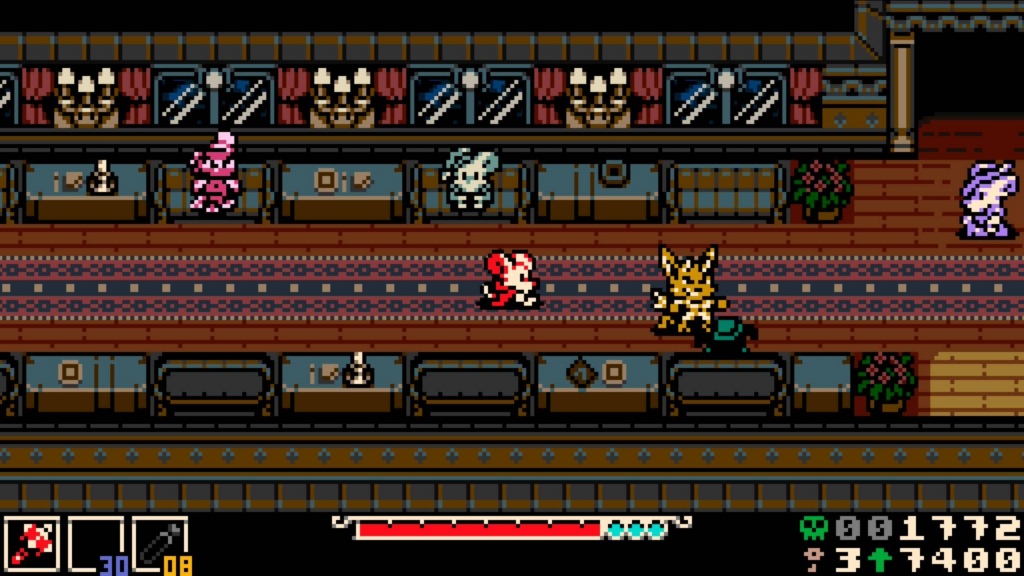
You can also greatly upgrade the burrowing hole that acts as a save point and healing space for Mina. The best part of this? I figured out how to access it long after the point I could have. The sense of discovery, even for normal functions, is always there. The main town itself has blocked pathways that start to unravel at the sight of a weird hole in a corner. The map design itself is always fantastic, allowing you to simply follow the sense of interconnection across the map and be rewarded with the solution.
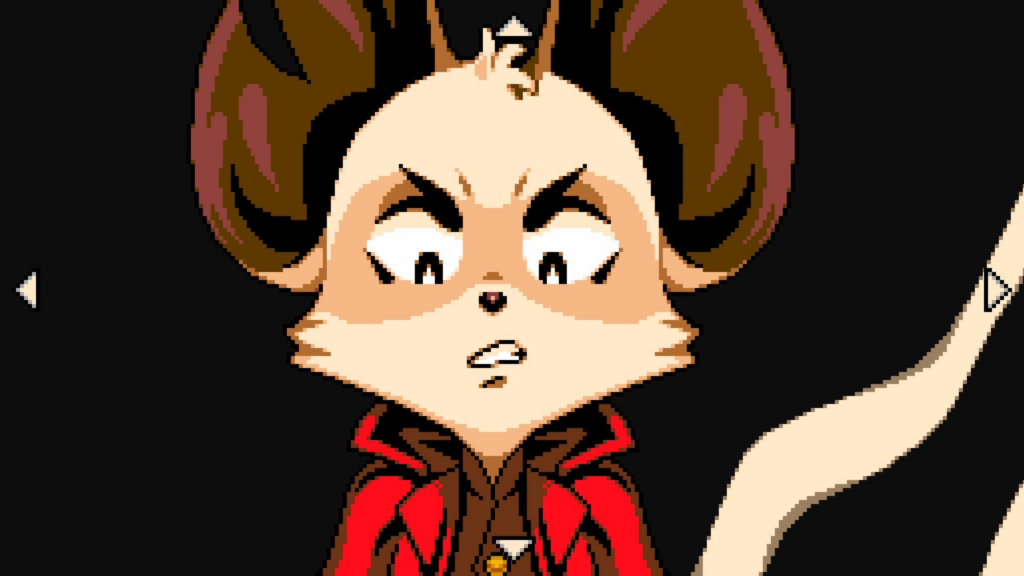
This is beyond just the fact that the art direction is astounding from top to bottom. Mina herself is charming to spend time with, and the world is populated with plenty of interesting characters. Each area is meticulously crafted, both in the layout and the visuals that fully flesh out the world around you. Since you will probably get lost a lot (I know I did), the fact that nothing feels bland keeps you going, well past the point you want to take a break. All of this, with a chiptune soundtrack playing in the background, feels perfectly in step with everything. Not to mention all the highly detailed still panels that crop up along the way with fantastic pixel art.
The music can be particularly aggressive at times, but this helps to highlight just how bleak the world is. In this, Mina the Hollower and Castlevania have something in common, much more so than just a whip you can wiggle around. Fixing these generators starts as a simple task to complete, but as the characters engage, it is clear there is more at play. There is a certain sadness in the world that is both compelling and haunting, questioning the maldevelopment of progress. It manages to be a driving force in the journey, with you wanting to know what conclusion the game ultimately reaches for these themes, or even if they can even reach one.
Verdict
Don’t let frustration throw you off. Mina the Hollower delivers everything it sets out to in spades. The combat is basic enough, but mix in quick traversal and a world that never stays stagnant, and it is equally frustrating and addictive. As you learn just how to match wits with a world that wants you to suffer, it transcends this into something mesmerizing. It has been the most engaging game for me in such a long time. The level design is beyond reproach, where discovery is around every single corner as long as you look for it. Even leveling and upgrading are far beyond expectations in all the best ways.
Mina the Hollower does what a great game should: it pays homage to the games that inspired it but never feels like an imitation. In doing so, Yacht Club Games created a game that reaches a height that most can’t even fathom. Something as close to perfection as you get.
Remember to follow us on Twitter, Facebook, and Bluesky to keep up to date on everything we have going on!
Reviewed for Nintendo Switch 2, Also available on PlayStation 5, Xbox Series, Nintendo Switch, and PC
*A code was provided by Yacht Club Games for the purposes of this review.
Developer/ Publisher: Yacht Club Games
Release Date: May 29, 2026
Pros:
+Evolving combat with some many items to diversify it
+fantastic retro level design and chiptune soundtrack
+Light story but still engaging
+Sense of discovery
Con:
-Can be frustrating at times
-
Mina The Hollower
