

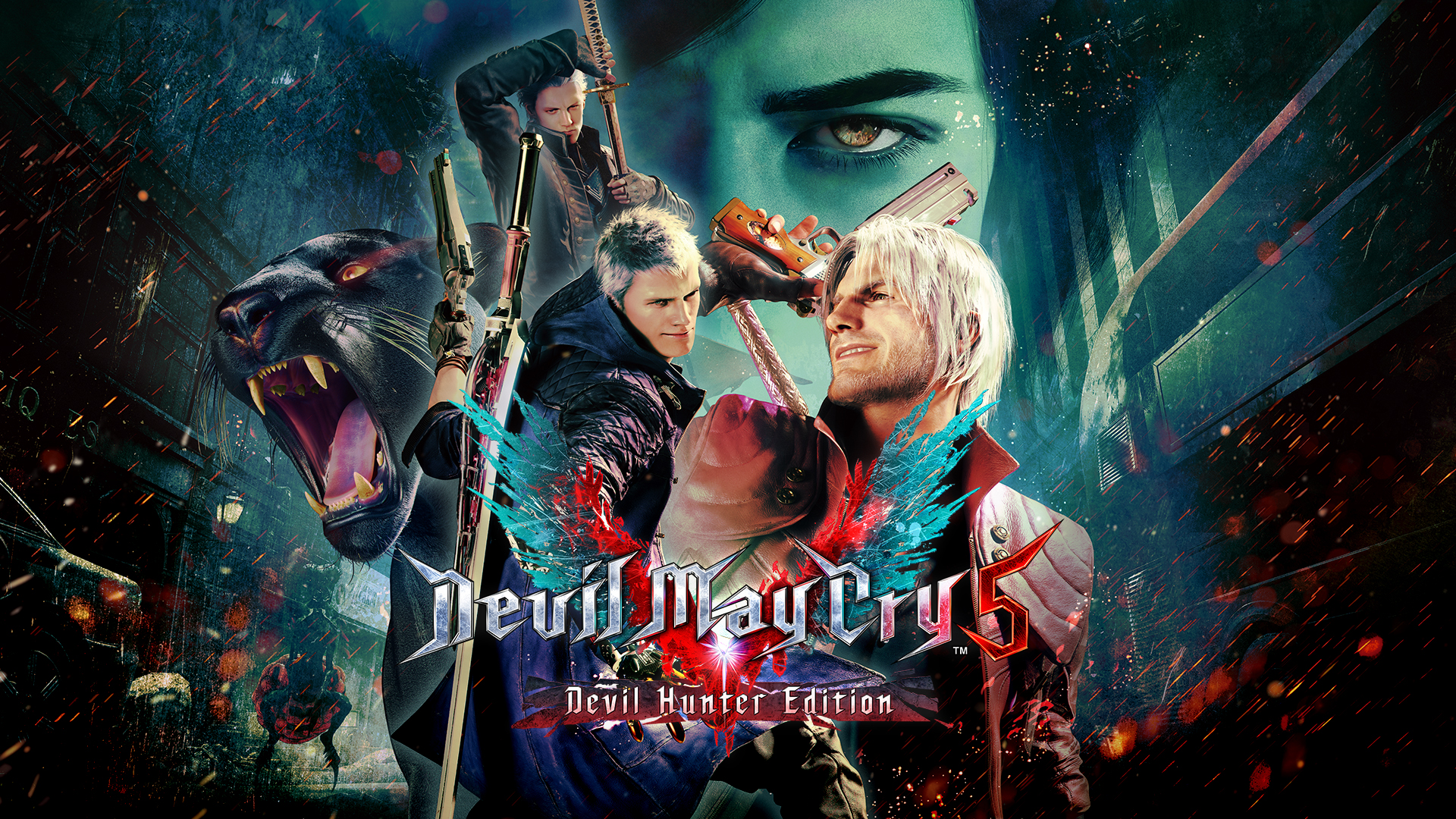
Years ago, on G4 TechTV, I remember seeing a review for Devil May Cry 3, arguably the best game in the entire series. The review itself wasn’t negative, but it was critical of the game to some degree, though one specific criticism stood out to me, remaining in my head all these years later. In particular, Devil May Cry 3 was one of many games that shifted the difficulty UP in their regional releases, with North America getting a version with a normal mode being the original hard mode for Japanese players. The bigger thing, though, is that there was a disconnect trying to play the game with Dante in cutscenes. It felt strange to destroy 10 or so demons while flipping around and eating a pizza, only for the player to take control with limited combos by comparison and a health gauge that withstood three hits.
In comparison, Devil May Cry V starts with Dante getting his ass handed to him by a demon too lazy to get off its throne and actually fight him itself. The same goes for the rest of the characters. Looking back, it would be a welcome change of pace, but it does not last long. Nero shows up flipping around a mobile war machine of a van, killing everything, and the players’ big gambit in combat is a backstep that allows them to air launch an enemy. This was something that made me laugh, having hated that review at the time, but at least now, I see where they were coming from.
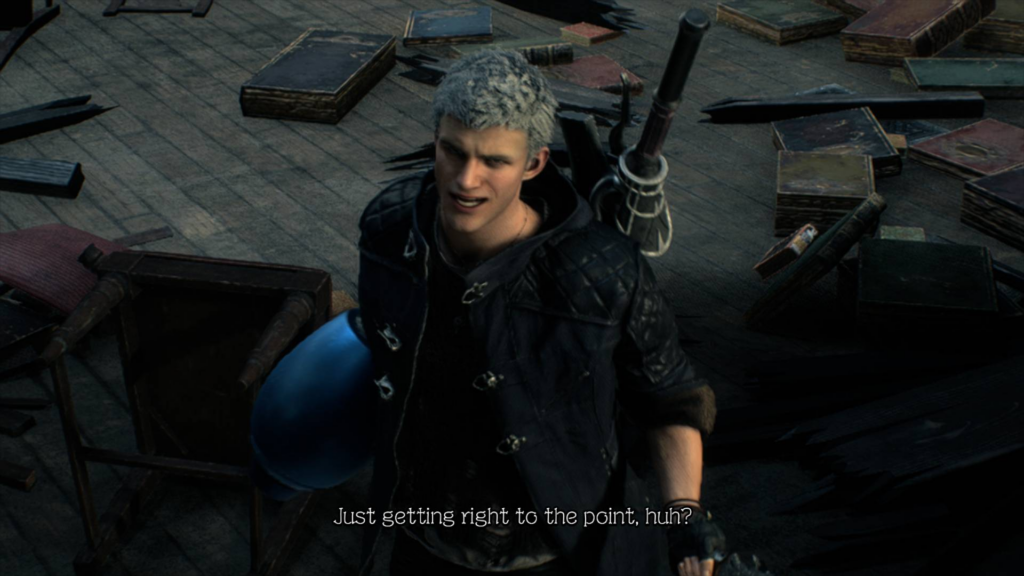
Dante and the rest of the crew have demonic blood, and their main characteristics are humorous one-liner machines that never really take everything around them too seriously. This lightens things up even when the world is literally on the brink of collapse like it is in this game. It kind of only works when they are so unaffected by the discord because, you know, they will be fine anyway. A Devil May Cry game then makes a point in its gameplay to remind you that, no, your style meter isn’t just some cool gauge to measure the effectiveness of your combos. You better be raising, cause if you ain’t, you are probably dying. Years between that particular criticism and now, and Capcom drastically did balance the series, so at least you don’t feel this outright disconnect.
Devil May Cry V, for lack of a better term, is a front-heavy game. Much of the challenge is up front at the start, both because you are still learning how to play and because you have no improvements yet. I would also factor in that Nero, who returns from DMC IV to lead the charge into a city overrun by demons, is the hardest of the three protagonists to lather into a honey funk of pure carnage. Point being, right as soon as you get out of the van, you might feel this disconnect coming on. Reminder, you just watched the guy slo-mo murder a battalion.
The combat returns to what the series was known for, which can be both a positive and a negative. On the one hand, and this is a me thing, I loved DMC: Devil May Cry. Forget what they did to Dante for a moment; the combat was far more free-flowing and easier to create a rhythm. It almost broke me in this game on the original release. Traditionalists will prefer classic combat, I’m sure, but honestly, as time goes on, I have changed my perspective as well. There is a technical aspect to creating chains of attacks that only a studio with a popular fighting game… I don’t know, maybe like Street Fighter… Could hope to achieve here.
Every new move means nothing if you can’t factor in the move set for how you actually trigger it in combat. Each has a string of buttons to work in, or a way to shift a combo from the basic to a more complex one. Experimenting with these is part of the fun. Better yet, the game does have something akin to frame counting to figure out how you actually string attacks together, though the style gauge can be pretty forgiving at times, even if you drop the next move to jump around. There is also a lot of combat stuffed into the controller, with elements like locking on providing access to different movesets than when loose engaging. Since mixing and matching is rewarded with points, there is a lot to jump between and explore.
That said, the coolness of this can be undercut by its functionality. For instance, dodging left and right is only accessible through locking onto an enemy, and even then, it is an additional ability built onto the jump button. The characters already have a semi-static and clunky jump; now, try being surrounded by demons and going for a dodge, only to jump right onto multiple up slashes. At least the game gives the player many ways to recoup vitality, so mistakes like that aren’t massively punished. It can just be frustrating.
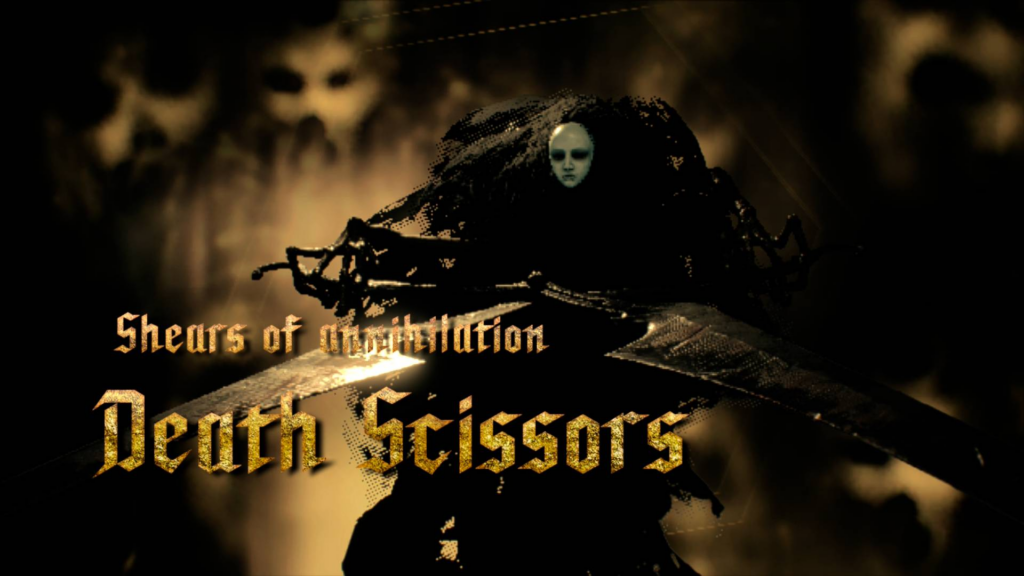
In the case of Nero, who has lost an arm as part of the narrative, his mechanical arms can be just as frustrating. His big gimmick is picking up robotic arms that serve as special abilities in combat. The button that triggers them, though, when locked on, is a grappling hook to pull in enemies or pull him towards bigger ones. The first boss in the game became the testing ground for frustration as I kept pulling myself into devastating hits while trying to dodge and follow up with a hit from my robotic arm. I literally dodged an attack, then pulled myself into that same attack because the dodge required me to lock on, then my follow-up required a quick adjustment to unlock on. Combat is fast, so such mental translations can get lost in the process.
The game has three total characters who, given the game’s age, I don’t really feel are spoilers, so yes, eventually you play as Dante, which early trailers made clear anyway, but the game takes its time building to this. The other protagonist, V, asks the question, what if Chris Angel and Adam Driver (sexy sexy Adam Driver) had a baby, then gave them a Cyberpunk 2077 name? The best aspect of these characters is that while they level similarly, their move sets vary up the experience quite a bit. They also help explain why I didn’t really like playing as Nero in the first place.
V has a story playing out perpendicular to Nero’s for the most part, as both battle their way through the city, but he plays insanely differently. The magic wielder mind-freaks enemies with two to three summons, one for shooting and one for melee attacks. The big twist is that these can’t kill enemies, so he then needs to hit them once their gauge is full to actually destroy the enemy. This leads to two fairly glaring issues when he is the character you control.
The first is that V is the one who takes damage in the first place, so if you play back, his combat is painfully easy. There are a few branching points in the game where you can select a character to play, and he was never my first choice for this reason. The second, his summons act independently on your button prompt, so there are legitimate moments they get stuck in a loop of attacking nothing, with the player having no real way to fight through that. It can lead to a lot of frustration.
The man, the myth, the legend, Dante, then arrives on the scene, just inherently being better than both. Basically playing like Nero, except having swappable stances, multiple weapons, and special moves. Basically, being the total package you remember. The difference here is the pacing that makes it less effective. In Devil May Cry IV, Dante was the protagonist of Act Two after you had beaten the Nero portion. It didn’t matter if he was more complete. Here you are constantly swapping between your characters, and his inclusion, the way it is, makes the other two pale in comparison. Nero has one sword and a few arms, and a rev ability that doesn’t change much. While I preferred the challenge to V, the latter could get double S-style ranks with his eyes closed, while Nero required you to be technical and flawless.
Stage design between the three doesn’t change much, and it’s honestly pretty linear. Also, it is absolutely, utterly, and extremely painfully dark. Handheld mode in particular can often have you fighting just sort of guessing at enemy location because you can’t see. That said, there are a few secrets hidden along the path to watch out for, offering classic challenges like hidden stages. The stages themselves are also great-looking, especially the city areas, which have a great vibe. Since they are battling across it, each one has a sense of progression from the last, which is cool. There are a few more bland areas that devolve into the typical generic demonic feel, but few and far between are those ones.
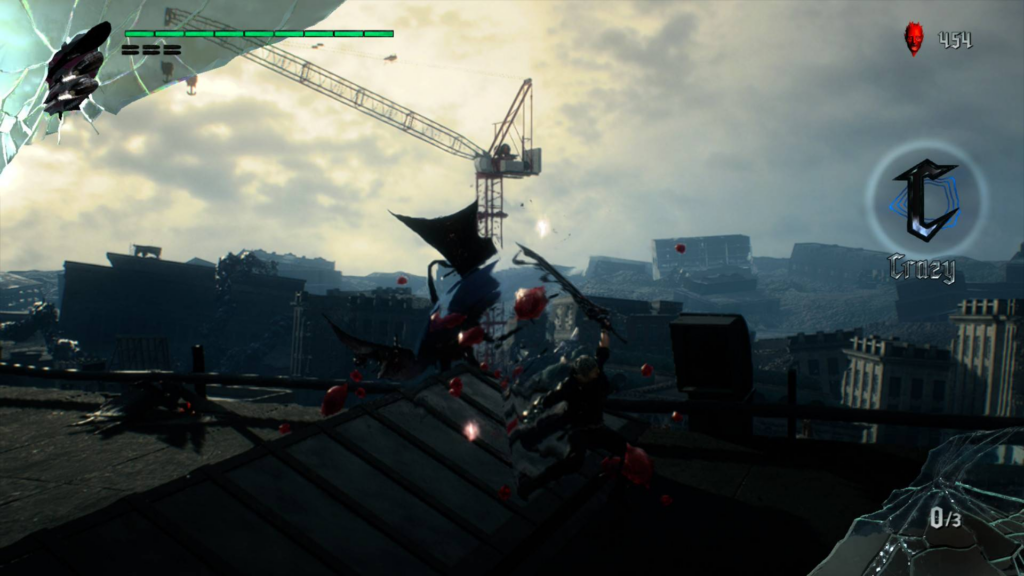
You can find health and Devil Trigger orbs, which come in very handy fighting some later bosses. Harkening back to my initial thoughts, there was a point in the series when standard enemies would destroy your day. Devil May Cry V allows these fights, which are mostly arena-based, to be a test of your skill in combo development. There are points when one of these might throw a big, tough enemy at you just to mix it up, but as long as you learn even one or two dodge patterns, you will probably not die.
When you do die, the game allows you the option to revive quickly using two currencies. If memory serves, Capcom was selling red orbs in the game for real-world money through console stores, which might explain why the process can be semi-annoying. Red orbs are the in-game currency for skills or upgrade items but can also be used to revive, with each revive costing more. On the other front, gold orbs revive you fully but are rare. The thing is, once you use them, either way, you lose them fully, even if you die and need to restart more. I have never liked functions like that. I needed to use both and died. Why now is your answer? Well, do it without these?
Typically it’s not a big issue, as I said, I was able to fight most basic enemies without any real issue. It’s the boss fights where this becomes a problem. These enemies are big, don’t really get stunned, and, more importantly, throw everything but the kitchen sink at you. They make for great spectacles, don’t get me wrong, and are enjoyable as hell when you dodge through a multitude of attacks to go in for a few slashes. Then you get to power up and give them a bang bang bang from your Devil Trigger. It’s just that their big counter is almost always here; there are a ton of attacks that prevent you from attacking me.
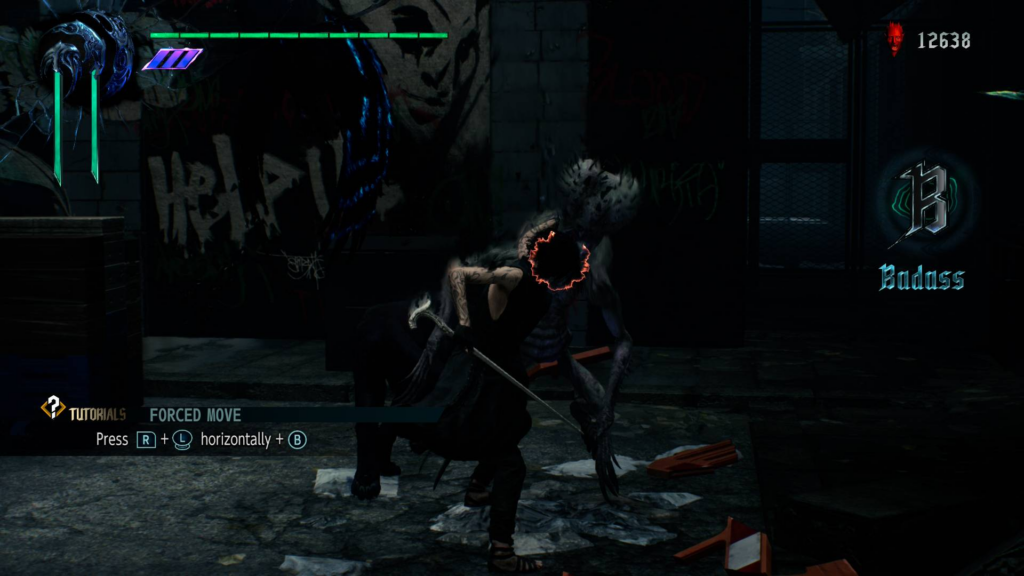
Throughout your playthrough, the Devil Trigger is a pretty important tool, which, once again, the other characters have that a certain one-armed man does not. These aren’t really all-powerful, but a well-placed usage can have a devastating effect. The better part is this isn’t just some long gauge to charge, and during most boss fights, you will probably trigger it four to five times. The bigger thing, though, is that it does not prevent being knocked back, so during these long stints of dodging, even triggering it doesn’t really cut through the ebb and flow in a way that has meaning. You could end up wasting it because you just took a hit and never recovered. Not that, like, I ever did that. I’m perfect; triple S ranks all day. Watching me play this game wouldn’t be like embarrassing or anything.
This does feel like the perfect spot to plug the real thing; any Capcom game does it very right, and that is New Game Plus. Not only do you unlock the hardest mode, if you weren’t punished enough already, but you basically get to take everything into your next playthrough from the start, which makes life worth living. You do spend MOST of the first mode gaining new abilities and powers, so by the time the credits roll, you will see the value of going back in and seeing what a fully formed demon hunter looks like.
You will also unlock more modes as well, giving you even more ways to enjoy the game that only come to fruition once you have rolled those credits. Capcom is being awesome with rereleases; you will also have all the DLC available at launch, with one adding a new storyline with another character. That said, if this is your first time, avoid that until you have beaten the game once, as it does contain some late-stage spoilers. That said, the name itself in the menu might be spoiler enough, which is a shame.
All the characters have enjoyable voice work and sound design in general, with banter between the cast being a highlight. I would say that there is an occasion that the humor then verges into juvenile, especially where the character of Nico is concerned. There is also a great soundtrack of hype music to get you in the mood for ripping demons apart. Not to mention that Devil Tigger, composed by Case Edwards, has been a mainstay on my playlist since launch.
The reason I saved this for last, though, is the Nintendo Switch 2 portion of our review. One of the strengths of the series upon return was the ability to take cutscenes like the series already had and really move them to the next level, creating polished and action-packed sequences. On the Nintendo Switch 2, these also have framerate stuttering and dips. Handheld mode was far worse than docked, possibly the only time I, personally, have seen a drastic difference in performance between the two.
Thankfully, combat has far less stuttering, which could have hurt solid, rapid-fire swordplay, but in cutscenes and can be distractingly noticeable. It aims for 60FPS, which you definitely get, though not constantly. Even more annoying, the game doesn’t pause for a disconnect, so a few points in, my Joy-Cons decided to get fussy with a screen covering narrative sequences. Overall, this is a solid port, but not without a few gripes that needed to be addressed before we bring this to a close.
Verdict
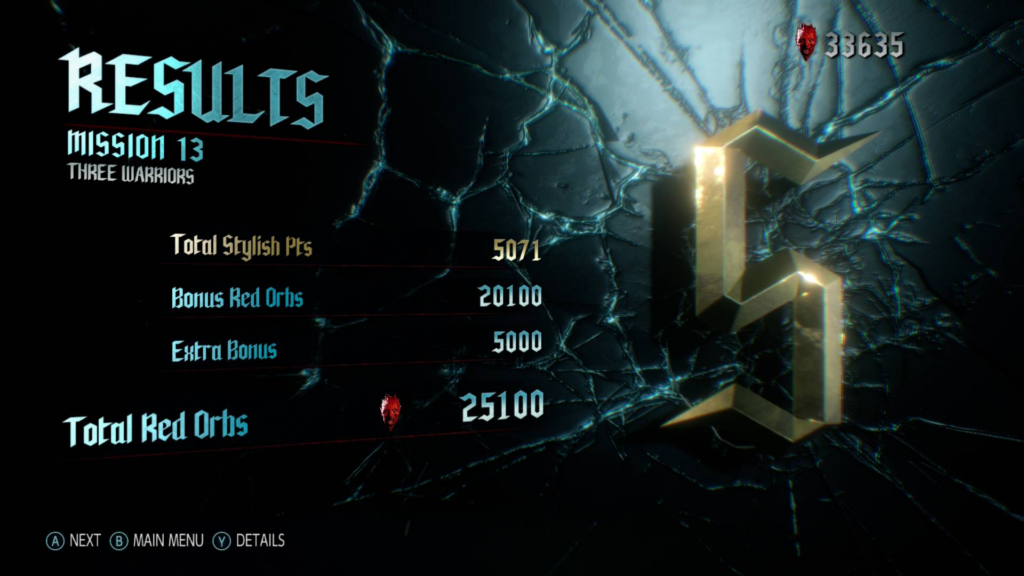
If I didn’t make this clear at the beginning of my review, I never beat Devil May Cry V when it initially released. I now know that I tapered off at around the midway point of what is an action game with a solid runtime. If I had stuck with it, I probably would have enjoyed my remaining time, as the back end of the experience is when everything starts to really come into its own. That isn’t to imply that the game isn’t good before that; mind you, the technique-based combat is present from start to finish. It’s just that there is when you start to receive the payoff to your patience and any struggle you had to overcome, and it took me this long to figure that out.
Devil May Cry V: Devil Hunter Edition is a wild ride, and one that rewards effort and practice. Is this the best port I have ever played? No. Ironically, Capcom’s recent Pragmata release was an extremely solid day-one release for the platform that I might use as an example for the issues here. Dante and friends are still in top form on the Nintendo Switch 2, so if this is your first time, or 100th, slaying demons with the fate of the world at stake, you should be just fine. You will never be as skilled as cutscene Dante, though; you just need to accept that.
Remember to follow us on Twitter, Facebook, and Bluesky to keep up to date on everything we have going on!
Reviewed on Nintendo Switch 2
*A code for this title was provided by Capcom for the purposes of this review
Developer/Publisher: Capcom
Release Date: June 23, 2026
Pros:
+Fun story with some humorous dialogue
+Great combat that evolves through technical additions
+Very Replayable
+enjoyable big boss enemys
+Constantly earning new skills
Con:
-Insanely dark
-Not all characters hit the same way
-Some performance issues
-
Devil May Cry V: Devil Hunter Edition
